



Sorting through stacks of old band t-shirts can feel like a quest for treasure, especially when you are searching for true 1990s vintage heavy metal gems. For collectors, the vintage status goes beyond how old a shirt is, revealing a blend of cultural identity and historic value. Defining what makes a heavy metal tee authentically vintage is critical for building a collection with real musical heritage and proven authenticity.
Table of Contents
- Defining Vintage In Heavy Metal Tees
- Identifying Authentic Vintage Band Shirts
- Key Markers Of 1990s Tour Merchandise
- Spotting Reprints, Fakes And Deadstock
- Common Pitfalls For Vintage Collectors
Key Takeaways
| Point | Details |
|---|---|
| Vintage Status | Vintage heavy metal t-shirts are defined by historical significance and cultural authenticity, not just age. Key factors include original tour dates and printing techniques. |
| Authenticity Indicators | Look for original screen printing methods, unique tour dates, and specific fabric compositions to verify a shirt’s authenticity. |
| Identifying Reprints | Be cautious of overly vibrant prints and modern tags, which indicate reprints or fakes that lack true vintage characteristics. |
| Collector Knowledge | Continuous learning about vintage garments and recognition of subtle details are crucial for avoiding common pitfalls in collecting. |
Defining Vintage In Heavy Metal Tees
The world of vintage heavy metal t-shirts is more complex than simply owning an old shirt. Vintage status isn’t just about age - it’s a nuanced combination of historical significance, cultural authenticity, and collector’s appreciation. Vintage fashion research indicates that true vintage pieces typically originate from periods at least 20 years prior to current trends, representing more than mere clothing but cultural artifacts.
For heavy metal t-shirt collectors, vintage status hinges on several critical factors:
- Original tour dates from specific decades (predominantly 1980s-1990s)
- Authentic concert merchandise from specific shows
- Original printing techniques and fabric composition
- Condition and preservation of the shirt
- Provenance and documentation of the shirt’s history
Authentic vintage metal tees are not just garments - they’re tangible pieces of music history. Cultural consumption practices reveal that wearing these shirts represents a form of personal identity and connection to a specific musical era. Each shirt tells a story, capturing the raw energy and spirit of legendary bands and unforgettable concerts.
Pro tip: When evaluating a vintage metal t-shirt’s authenticity, always examine the print quality, fabric tag, and original tour details carefully.
Identifying Authentic Vintage Band Shirts
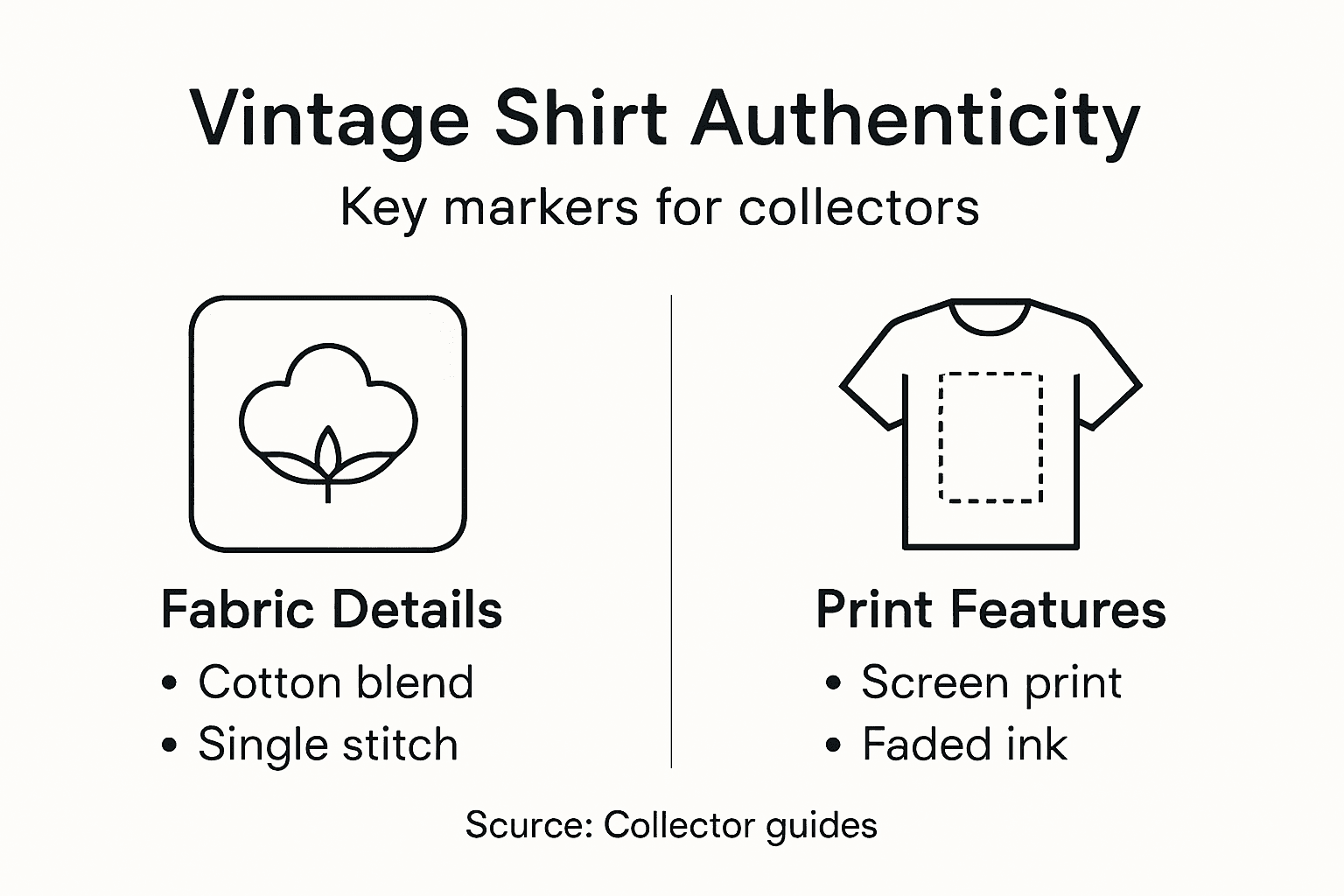
Authentic vintage band shirts are more than just old clothing - they’re historical artifacts that capture the essence of musical legends. Distinctive vintage shirt characteristics reveal crucial details about their origin and legitimacy. Collectors meticulously examine multiple aspects to determine a shirt’s true vintage status, understanding that authenticity goes far beyond simple age.
Key indicators of an authentic vintage band shirt include:
- Original screen printing techniques
- Period-specific fabric composition
- Unique tour dates from 1970s-1990s
- Original band logos and artwork
- Specific manufacturing tags and labels
- Natural fabric ageing and wear patterns
Fabric composition and printing techniques play a critical role in verification. Vintage shirt authentication methods emphasise that genuine vintage shirts exhibit specific manufacturing characteristics that modern reproductions struggle to replicate. The materials, stitching, and print quality serve as forensic evidence of a shirt’s true origins.

Experienced collectors understand that verifying a vintage band shirt requires a holistic approach. They look beyond surface-level details, examining everything from the fabric’s texture to the subtle nuances of original screen printing. Provenance, documentation, and a deep understanding of the band’s merchandise history become essential in distinguishing authentic pieces from clever imitations.
Pro tip: Always photograph and document the key identifying features of a vintage band shirt before adding it to your collection.
Key Markers Of 1990s Tour Merchandise
The 1990s represented a golden era for heavy metal tour merchandise, with unique characteristics that distinguish authentic pieces from modern reproductions. Distinctive tour merchandise indicators reveal nuanced details that collectors passionately seek, transforming these shirts from simple clothing into historical artifacts of musical culture.
Key markers that define genuine 1990s tour merchandise include:
- Original silk-screen printing techniques
- Single-stitch construction methods
- Band tour dates and specific concert locations
- Manufacturer tags from era-specific brands
- Faded graphics with natural aging patterns
- Specific textile compositions typical of the decade
- Tour-specific artwork and band line-up information
Textile composition and printing quality play crucial roles in authentication. The manufacturing techniques of the 1990s created distinctive shirt characteristics that modern reproductions struggle to replicate. Screen printing from this era typically featured more hand-crafted techniques, with slightly imperfect alignments and unique colour graduations that mass-produced shirts cannot match.
Experienced collectors understand that verifying 1990s tour merchandise requires a comprehensive approach. Beyond visual inspection, they examine subtle details like thread count, fabric weight, and the specific printing techniques that define this remarkable period in music merchandise history. Each shirt tells a story - not just of the band, but of an entire musical movement captured in fabric and ink.
Pro tip: Invest in a high-quality magnifying glass to examine the intricate printing details of vintage 1990s tour shirts.
Spotting Reprints, Fakes And Deadstock
Navigating the complex world of vintage heavy metal merchandise requires a keen eye and deep understanding of vintage shirt authentication techniques. Collectors must develop sophisticated skills to distinguish genuine vintage pieces from skilfully crafted reprints and deceptive fakes that flood the market.
Key indicators of reprints and fake vintage shirts include:
- Overly vibrant, perfect print colours
- Modern manufacturing tags
- Uniform fabric without natural wear
- Consistently sharp graphic edges
- Machine-precise stitching
- Lack of typical vintage fabric degradation
- Suspiciously pristine overall condition
Deadstock shirts represent a unique category in vintage collecting. These are unused, original stock from specific tour periods, typically sealed or unworn. However, experienced collectors understand that not all deadstock is automatically valuable. Vintage shirt identification methods emphasise that authentic deadstock must still demonstrate era-specific production characteristics and original manufacturing tags.
Authentication requires more than surface-level inspection. Serious collectors employ forensic-level examination techniques, studying thread count, print crack patterns, fabric weave, and manufacturing nuances that modern reproductions cannot perfectly replicate. The subtle details tell a story - revealing whether a shirt is a genuine piece of music history or a well-crafted imitation.
Here’s a comparison of vintage, deadstock, and reprint heavy metal tees often encountered by collectors:
| Type of Shirt | Key Traits | Collector Value |
|---|---|---|
| Vintage | Era-authentic, aged, original print | Highly collectable |
| Deadstock | Unworn, original stock, pristine | Moderate to high, varies |
| Reprint/Fake | Modern fabrication, lacks ageing | Low to negligible |
Pro tip: Invest in ultraviolet light and a high-quality magnifying glass to reveal hidden details in vintage shirt authentication.
Common Pitfalls For Vintage Collectors
Navigating the complex landscape of vintage heavy metal shirt collecting requires more than passion - it demands sophisticated understanding. Vintage collection challenges reveal numerous potential pitfalls that can trap even experienced collectors, potentially leading to significant financial and historical misunderstandings.
Common mistakes vintage collectors frequently encounter include:
- Mistaking high-quality reprints for authentic pieces
- Overlooking subtle fabric degradation patterns
- Failing to verify manufacturer tag authenticity
- Undervaluing cultural significance of merchandise
- Allowing current market trends to distort perceived value
- Neglecting provenance documentation
- Confusing vintage with retro styling
Collector knowledge represents the most critical defence against these pitfalls. Vintage garment authentication methods emphasise that understanding nuanced differences between genuine vintage items and modern reproductions requires continuous learning and meticulous attention to detail. Each shirt tells a complex story beyond its physical appearance.
Experienced collectors develop a forensic approach to authentication, combining historical research, technical fabric knowledge, and an almost intuitive sense of a piece’s genuine origins. They understand that value transcends monetary considerations, representing instead a tangible connection to musical history and cultural movements.
Pro tip: Invest in specialised reference books and connect with experienced collectors to continuously expand your authentication skills.
The following table summarises specialist authentication techniques used by experienced collectors:
| Technique | Description | What It Reveals |
|---|---|---|
| Ultraviolet Light | Highlights hidden marks and repairs | Detects modern alterations |
| Magnification Inspection | Reveals ink texture and stitching detail | Confirms vintage production |
| Provenance Documentation | Collects records of shirt’s history | Validates authenticity |
| Reference Comparison | Checks features against trusted sources | Identifies fakes quickly |
Discover Genuine Vintage Heavy Metal Tees to Elevate Your Collection
Finding an authentic vintage heavy metal shirt can be challenging with reprints and fakes flooding the market. This article highlighted key markers like original screen printing and fabric ageing that define true vintage status. If you want to confidently build your collection with verified pieces that carry genuine history and cultural significance, explore our curated selection. Each shirt offers a unique story from iconic heavy metal tours and eras.

Start your journey today by browsing Vintage Metallica Shirts Australia known for original 80s and 90s tour tees or dive into our extensive range at All Shirts for more vintage and deadstock options. Trust Vintage Metal Store to provide expertly sourced pieces that meet the exacting standards discussed in this article. Act now to secure authentic merchandise that can genuinely enrich your vintage heavy metal collection.
Frequently Asked Questions
What defines a vintage heavy metal t-shirt?
Vintage heavy metal t-shirts are defined by their age (typically at least 20 years), historical significance, cultural authenticity, and collector appreciation. They are not just old garments; they serve as cultural artifacts representing a specific musical era.
How can I identify an authentic vintage band shirt?
To identify an authentic vintage band shirt, look for original screen printing techniques, specific manufacturing tags, unique tour dates from the 1970s to 1990s, and signs of natural fabric ageing. Examine the shirt’s details holistically for an accurate assessment.
What are the key characteristics of 1990s tour merchandise?
Genuine 1990s tour merchandise is marked by features such as original silk-screen printing techniques, single-stitch construction, faded graphics, specific textile compositions, and accurate tour details. Each of these elements helps distinguish authentic pieces from modern reproductions.
What are the common pitfalls to avoid when collecting vintage shirts?
Common pitfalls include mistaking high-quality reprints for authentic vintage shirts, overlooking fabric degradation patterns, failing to verify manufacturer tags, and not understanding a piece’s cultural significance. Developing collector knowledge and meticulous attention to detail is essential to avoid these mistakes.
Recommended


