



Run your fingernail across the print. If it catches like a sticker edge and the shirt shows a plastic-like sheen with no ink bleeding through the fabric, you’re likely holding a heat transfer. If the ink sits slightly raised with a soft, worn edge and faint colour ghosting on the inside, that’s screen-printed plastisol, the gold standard for collector value. Authentic plastisol also tends to crack in a random, spiderweb pattern rather than peel in sheets.
TL;DR:
- Authentic screen-printed shirts display raised ink films, irregular cracking patterns, and faint reverse ghosting, which are difficult to fake convincingly.
- Heat transfer shirts show sharp edges, plastic-like surfaces, and are more prone to cracking, peeling, and lifting, especially with age and washing.
- Running a fingernail across the print edge and inspecting the reverse fabric reveals key differences, with a gentle catch indicating screen print and a sticky feel suggesting heat transfer.
- Genuine vintage heat transfer pieces from 1993-2000 can be authentic but typically carry lower value than screen-printed alternatives from the same period.
- Careful inspection of print, tag, stitching, and fabric together is necessary for accurate authentication, as no single feature guarantees authenticity.
Table of Contents
- Heat transfer vs screen print: the tactile and visual tells
- A five-minute inspection checklist for heat transfer vs screen print
- Why the print method changes what a vintage tee is actually worth
- Caring for screen prints and heat transfers without ruining either
- What years of handling these shirts actually teaches you
- The real skill isn’t the checklist, it’s the scepticism
- Buying with confidence from Vintage Metal Store
- Sources
- FAQ
Heat transfer vs screen print: the tactile and visual tells
Screen printing pushes plastisol ink through a mesh stencil directly onto the fabric, and that process leaves fingerprints you can feel. The ink sits as a distinct film on top of the weave, giving it a slightly raised texture that most collectors learn to recognise within seconds of handling a genuine tour shirt. Because the ink is thick enough to saturate a little into the weave, you’ll often spot faint colour ghosting when you flip the garment inside out. That reverse bleed is one of the most reliable screen print quality indicators going, and reproductions rarely fake it convincingly.
Heat transfer works differently. A design gets printed or cut onto vinyl or film, then bonded to the fabric with heat and pressure. The result sits on top of the shirt rather than in it, which is why heat press methods produce sharp, almost sticker-like edges and a plastic-like surface that a screen print never has. There’s little to no ink migration on the reverse, because nothing has soaked through. Over years of wear, that bonded layer becomes more susceptible to cracking, peeling, and lifting at the seams, particularly around the collar and underarms where fabric flexes most.
Don’t confuse either of these with direct-to-garment printing, a technique that didn’t exist commercially until well after most of the shirts collectors chase were made. DTG ink soaks into the fibres and sits almost flat, with none of the raised texture plastisol leaves behind. If a “vintage” shirt feels dead flat with vivid, photographic detail, you’re not looking at a 90s screen print or a period heat transfer. You’re looking at something printed far more recently.
Key differences at a glance:
- Screen print (plastisol): slightly raised ink film, faint reverse bleed, irregular ageing cracks
- Heat transfer (vinyl/digital): sharp die-cut edges, plastic-like surface, minimal reverse bleed, peeling or uniform cracking
- DTG (modern): ink absorbed into fabric, flat feel, photographic detail, no reverse bleed at all
A loupe check backs this up fast: under 10x magnification, plastisol shows a discrete ink film sitting on the weave, while DTG shows the weave itself through a thin, absorbed layer of colour. Once you’ve felt the difference between these three techniques on a few shirts, you’ll rarely need more than a glance and a fingernail test to sort them again. If you want the deeper mechanics of how the ink bonds to fabric, Vintage Metal Store has covered how silk-screening actually works in more detail.
A five-minute inspection checklist for heat transfer vs screen print
Work through these checks in order, cheapest and fastest first. There’s no point booking an in-person inspection before you’ve exhausted what a handful of photos or thirty seconds with the shirt can tell you.
- Run the fingernail test. Drag a nail lightly across the print edge. A screen print gives slightly with a soft, worn boundary. A heat transfer catches, almost like peeling the corner of a sticker.
- Flip it inside out. Look for faint ghosting or ink bleed on the reverse of the fabric. A clean, untouched reverse points to heat transfer or DTG, not plastisol.
- Bend the print over a rounded edge, like your knuckle or a rolled magazine. Genuine ageing cracks should follow the fabric’s natural stress lines, thickest where the shirt has folded or moved most over the years.
- Get a 10x loupe on it if you can. Discrete ink dots or a raised film mean screen print. A flat, absorbed look with visible weave through the colour means DTG.
- Request specific photos if buying remotely. Ask the seller for close-ups of the collar tag, sleeve stitching, print edge, and the inside of the print. Macro shots of these four areas cross-check period authenticity far better than a single front-on listing photo ever will.
Pro Tip: Ask sellers for a photo of the print bent slightly at a 45-degree angle under natural light. Cracking patterns that are invisible flat-on suddenly become obvious once the ink film catches the light differently to the fabric around it.
Photos first, loupe second, hands-on last. Most fakes and mislabelled reproductions fall over at step two, long before you’d need to inspect anything in person.
Why the print method changes what a vintage tee is actually worth
Here’s where a lot of collectors get caught out. Heat transfer isn’t automatically fake. Between roughly 1993 and 2000, plenty of legitimate tour merchandise used heat transfer instead of screen printing, usually because it was cheaper and faster to produce for smaller print runs. A heat transfer tee from that window can be a completely genuine period piece. It’s just generally worth less than a silk-screened original from the same tour, because plastisol was the premium, longer-lasting process at the time and collectors price accordingly.
The trap is treating any single feature as proof of authenticity. A period-correct tag or single-stitch hem means nothing if the print itself doesn’t age the same way. Authentic ageing shows up consistently across the tag, the stitching, the fabric, and the print, not isolated to one convenient detail a seller happens to photograph well.
Common ways collectors overpay:
- Trusting a front-on listing photo with no macro shots of the print edge or reverse
- Reading uniform, evenly spaced cracking as “vintage wear” when genuine plastisol cracks irregularly, following stress zones rather than in straight lines
- Assuming a correct tag or tour date automatically confirms the print method
Check the print, the tag, the stitching, and the fabric together, or you’re just guessing with extra steps.
Caring for screen prints and heat transfers without ruining either
Both print methods punish the same mistakes, but heat transfer is noticeably less forgiving. Because the vinyl or film layer is already prone to cracking and lifting at the seams, extra heat or aggressive washing accelerates damage that’s already baked into the material.
- Washing: turn the shirt inside out, use cold water, and a gentle detergent. Skip the tumble dryer entirely — heat is the fastest way to stress both ink types.
- Ironing: never iron directly over a print. If you must de-wrinkle a shirt, use a low heat setting with a protective cloth between the iron and the fabric.
- Storage: fold or hang with acid-free tissue between layers, away from direct sunlight and humidity swings that cause fabric and ink to expand and contract at different rates.
- Restoration: resist the urge to “clean up” cracking or fading. Aggressive restoration can wipe out the exact ageing patterns that prove a shirt is genuine.
Pro Tip: If a print shows early signs of lifting at a corner, don’t press it back down with heat. A light hand-press while flat and completely dry does far less damage than a warm iron ever will.
For a longer rundown on stopping print damage before it starts, Vintage Metal Store’s guide to preserving shirt prints covers the finer points.
What years of handling these shirts actually teaches you
David from Vintage Metal Store has seen both sides of this call go wrong in the same afternoon. One shirt in stock was a mid-90s heat transfer tour tee, completely genuine, tag and stitching all period-correct, but priced below a screen-printed shirt from the same era simply because the print method was less durable and less prized. Another was a plastisol tee with textbook spiderweb cracking radiating from the shoulder seams, exactly where the fabric had flexed for three decades.
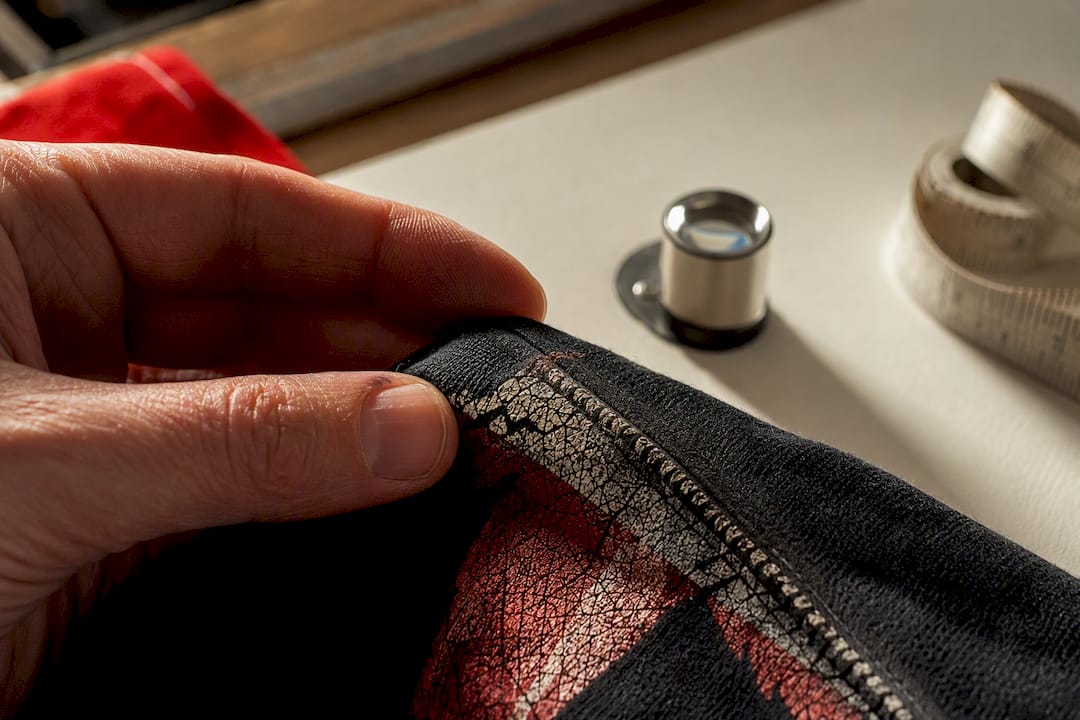
Neither shirt told its story through one feature alone. That’s the habit worth building: check the print, then the tag, then the stitching, and only trust a verdict when all three agree.
The real skill isn’t the checklist, it’s the scepticism
Most guides treat authentication as a single test you either pass or fail. That’s backwards. The fingernail test, the loupe, the reverse-side check, none of them are proof on their own. They’re inputs. The collectors who get burned are the ones who find one convincing detail, a correct tag or a plausible tour date, and stop looking.

The bigger blind spot is assuming heat transfer automatically means fake. It doesn’t. Plenty of genuine late-90s tour stock used it, and treating every heat transfer tee as a red flag means walking past legitimate period pieces priced fairly for what they are.
If you take one thing from this guide, make it this: run the reverse-side check every time, no exceptions. It’s the fastest way to catch a mismatch between what a seller claims and what the shirt actually is, and it takes about four seconds once you know what you’re looking for.
— David
Buying with confidence from Vintage Metal Store
You’ve now got the checklist. What you might not have is the time to run it on every listing you’re tempted by, or the confidence to trust photos from a seller who won’t answer follow-up questions. Vintage Metal Store lists authenticated screen-printed tees with print method notes and honest condition grading upfront, so you’re not reverse-engineering a shirt’s history from a single blurry photo.

Every listing invites questions. If you want a macro shot of the print edge, a close-up of the tag, or details on how a specific print has aged, ask before you buy, not after. Browse the rare Metallica 1992 tour tee as an example of how provenance and print detail get documented, or head straight to the Metallica shirts collection if you’re hunting a screen-printed tour original. Whatever era or band you’re chasing, start with the full range at Vintage Metal Store and request the close-ups before you commit.
Sources
FAQ
How do I tell heat transfer vs screen print by feel alone?
Run a fingernail across the print edge. Screen print gives slightly with a soft boundary, while heat transfer catches like a sticker edge because the design sits on the fabric rather than in it.
Does heat transfer mean a shirt is fake?
No. Heat transfer was commonly used for genuine tour merchandise between roughly 1993 and 2000, though these pieces are usually valued lower than screen-printed originals from the same era.
What does authentic ageing look like on a screen-printed shirt?
Genuine plastisol develops irregular, spiderweb-like cracking that follows fabric stress lines, unlike the uniform or striped cracking typical of artificial distressing.
Can I authenticate a print from photos alone?
Often, yes. Macro shots of the print edge, the underside of the print, the collar tag, and the stitching give you most of what an in-person inspection would, and Vintage Metal Store provides these details on request for every authenticated listing.
Should I wash a vintage screen-printed tee differently to a heat transfer one?
Both need cold water, inside-out washing, and no tumble drying, but heat transfer prints are more prone to lifting and cracking, so extra care with heat and handling matters even more.
Recommended


