



TL;DR:
- Proper care including cold inside-out washing and air drying is essential to preserve the print quality of vintage shirts over time. Heat exposure and abrasion cause cumulative damage, making gentle handling the key to extending shirt lifespan. Storage and routine maintenance further protect prints from environmental stress and deterioration.
Proper print preservation is the difference between a vintage heavy metal shirt that looks show-worn and one that looks show-ready decades later. This preserving shirt prints guide covers the specific care habits that protect screen prints, direct-to-garment (DTG) prints, and iron-on transfers from cracking, fading, and peeling. Screen-printed shirts with properly cured plastisol ink can last 50+ washes when cared for correctly, but improper washing can cause visible fading within 20 to 30 washes. The difference comes down to temperature, cycle choice, drying method, and how you store the shirt between wears.
What is the best preserving shirt prints guide for washing vintage tees?
Washing is where most print damage begins. The two main failure modes for printed shirts are cracking and fading, and both are largely preventable. Turning shirts inside out before washing removes the print surface from direct drum contact and friction with other garments. Combined with cold water, this single habit protects against the most common causes of print deterioration.
Follow these steps every time you wash a vintage printed shirt:
- Turn the shirt inside out. This keeps the print face away from mechanical abrasion during the wash cycle.
- Wash in cold water at or below 30°C. Cold water preserves plastisol and water-based inks better than warm or hot water, which softens and breaks down ink bonds.
- Select a gentle or delicate cycle. Mechanical agitation is as damaging as heat; reducing shear forces during the wash protects ink bonding at the fabric level.
- Avoid bleach, fabric softeners, and harsh detergents. These degrade both the ink layer and the cotton fibres underneath it.
- Sort by colour and fabric type. Washing with abrasive items like denim or towels causes friction and colour bleeding that accelerates fading.
- Remove the shirt promptly after the cycle ends. Leaving a wet shirt bunched in the drum creates creasing stress across the print.
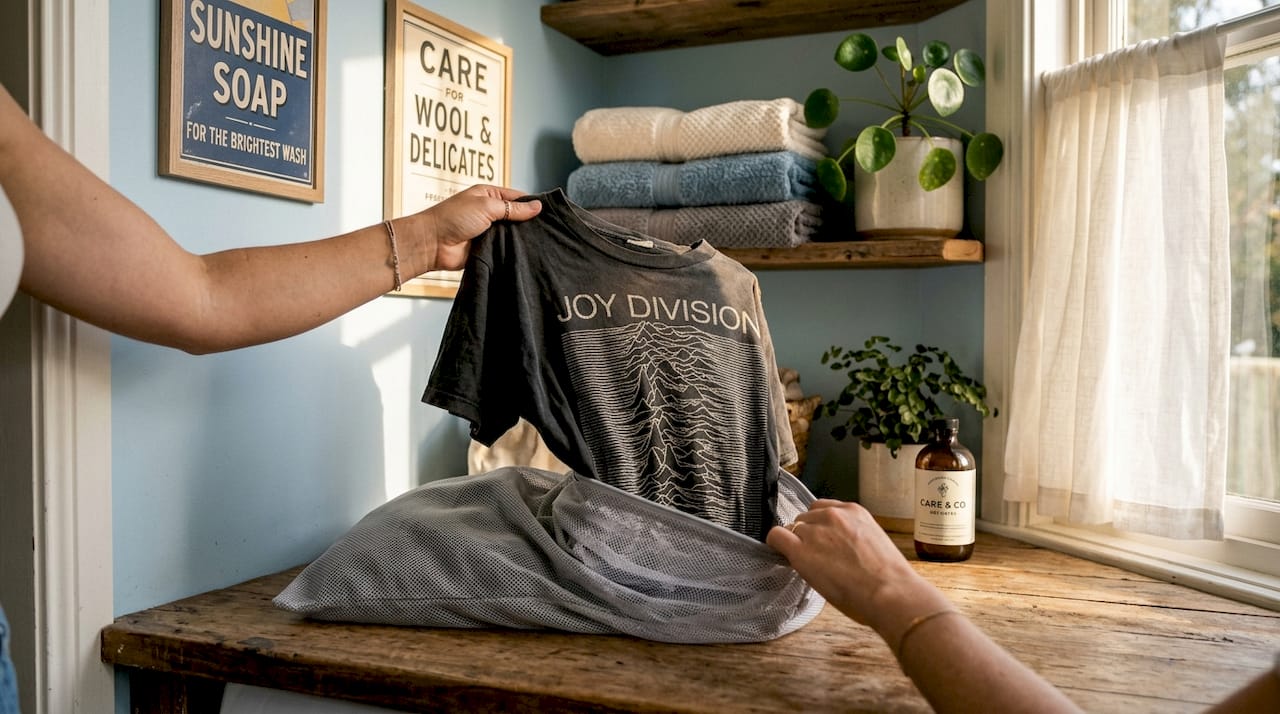
Pro Tip: Place detailed or vinyl prints inside a mesh laundry bag before washing. The bag absorbs friction from the drum and other garments, giving the print an extra layer of protection without any change to your normal routine.
How should vintage shirts be dried and ironed to preserve print quality?
Heat is the leading cause of print deterioration over time. High heat from tumble dryers softens plastisol and degrades water-based inks, causing progressive cracking and peeling across repeated wash cycles. The damage is not visible after one cycle. It accumulates, and by the time you notice cracking, the ink layer is already compromised.
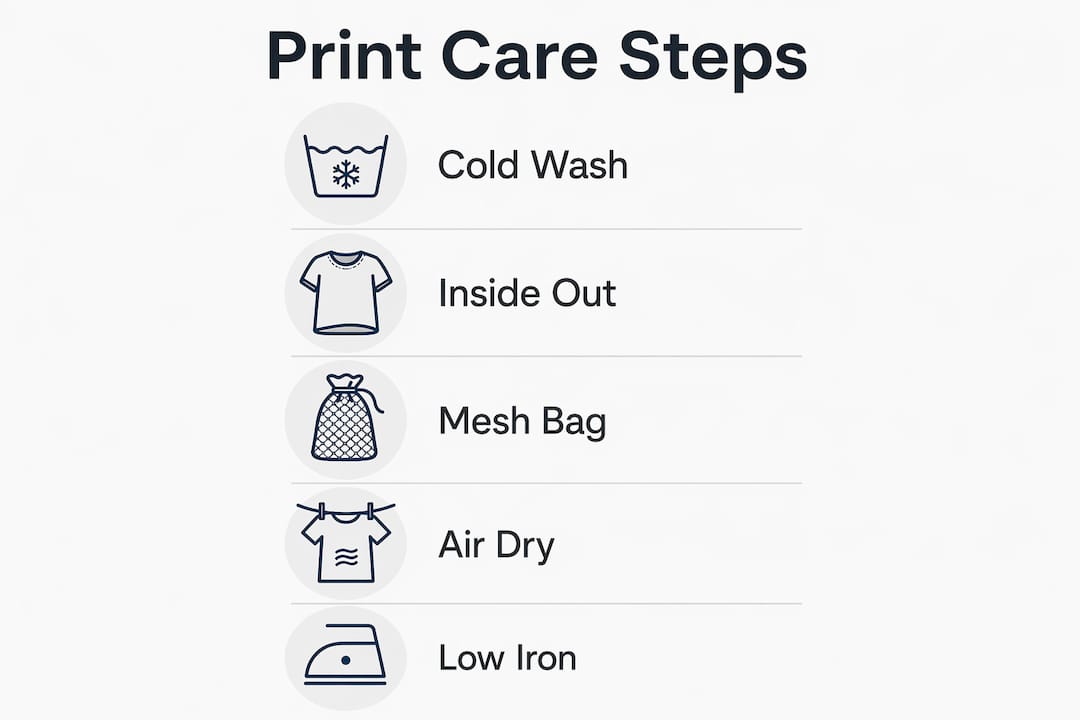
Air drying is the correct method for any vintage shirt you want to preserve long term. Hang the shirt on a padded hanger or lay it flat on a clean surface, away from direct sunlight. UV exposure during drying fades colour in both the fabric and the ink, particularly on older plastisol prints that have already experienced some wear.
If tumble drying is unavoidable, use the lowest heat setting or an air-only cycle. Remove the shirt while it is still slightly damp and allow it to finish drying at room temperature. This limits total heat exposure without leaving the shirt wet long enough to develop odour or mildew.
Ironing requires the same caution. Ironing directly on screen prints or transfers causes immediate ink melting or flattening damage. Always iron inside out, or place a pressing cloth between the iron and the fabric. Use low heat and avoid steam on or near the printed area.
Pro Tip: If a print has developed minor surface cracks, careful low-heat pressing inside out can partially re-adhere the ink to the fabric. Press gently and briefly. Do not hold the iron in place.
What print types are common in vintage shirts and how do they affect care?
Vintage heavy metal shirts from the 1980s and 1990s typically use one of three print methods, and each has different durability characteristics and care sensitivities.
Screen printing is the most common method on tour shirts and band merchandise from that era. It uses plastisol inks pressed through a mesh stencil and heat-cured onto the fabric. Plastisol is durable when properly cured, but it is thermoplastic, meaning heat softens it. Strict cold washing and air drying are non-negotiable for screen-printed shirts.
Direct-to-garment (DTG) printing uses water-based inks applied directly to the fabric surface, similar to an inkjet printer. DTG prints are more sensitive to heat and abrasion than screen prints, typically fading after 40 to 60 washes under normal conditions. Cold water, mild detergent, inside-out washing, and air drying are the minimum requirements to reach that lifespan.
Iron-on transfers are the most fragile of the three. Iron-on photo transfers last 20 to 40 washes before cracking or peeling, depending on application quality and washing conditions. Hot water washing and insufficient curing at the point of application cause early failure. Many vintage transfer shirts from the 1980s are already at or past that threshold, so extra care is warranted.
| Print type | Durability | Key care requirement |
|---|---|---|
| Screen print (plastisol) | 50+ washes if cured correctly | Cold wash, air dry, never iron directly |
| DTG (water-based ink) | 40 to 60 washes | Gentle cycle, cold water, low-heat drying |
| Iron-on transfer | 20 to 40 washes | Cold wash only, no tumble drying, handle with care |
Understanding which print type your shirt uses changes how you prioritise care. For vintage collector shirts with transfer prints, every wash counts against a finite lifespan.
How does storage and handling impact vintage shirt print longevity?
Storage is where collectors often lose ground they gained through careful washing. A shirt washed perfectly and then stored badly will still deteriorate. The print faces physical and environmental stress even when the shirt is not being worn.
Follow these storage principles to protect prints between wears:
- Fold shirts with the print facing inward. This prevents the print surface from rubbing against other garments or the storage container.
- Avoid hanging heavy or vintage shirts long term. Hanging stretches the shoulder seams and distorts the fabric, which can stress print areas near the collar and chest.
- Store in a cool, dry, and dark environment. UV light fades both fabric and ink over time, and humidity encourages mildew and fabric breakdown. A drawer or sealed box in a dark wardrobe is better than an open shelf.
- Avoid folding creases directly across the print. Repeated folding along the same line weakens the ink layer at that point and eventually causes cracking. Vary your fold lines or store flat where possible.
- Layer carefully if stacking shirts. Place heavier items at the bottom and avoid compressing printed areas under significant weight.
For shirts you consider display pieces rather than wearable items, the complete guide to displaying collector shirts covers framing and mounting options that eliminate the storage risks above entirely.
Pro Tip: Air your stored shirts every few months, even if you are not wearing them. Folded fabric in enclosed spaces accumulates moisture and odour over time. A brief airing in a shaded, ventilated space prevents fabric deterioration without any UV exposure.
What are the common mistakes that destroy vintage shirt prints?
Most print damage is not accidental. It follows predictable patterns from specific care errors. Recognising these mistakes is the fastest way to improve your shirt print care tips practice.
- Washing before the ink has fully cured. Waiting at least 24 hours before the first wash allows the ink to fully bond with the fabric. Early washing mechanically stresses uncured prints and shortens their lifespan significantly. This applies to newly acquired shirts as much as freshly printed ones.
- Using hot water or bleach. Hot water softens plastisol and breaks down water-based inks. Bleach attacks both the ink chemistry and the cotton fibres, weakening the entire print substrate.
- Drying on high heat. Heat damage to prints is cumulative. Each high-heat drying cycle embrittles the ink layer further, and the cracking that results cannot be reversed.
- Ironing directly on the print. Direct iron contact melts or flattens the ink surface immediately. There is no recovery from this type of damage.
- Skipping the inside-out step. Inside-out washing is the simplest and most consistently skipped protection habit. Without it, the print surface contacts the drum and other garments directly on every wash cycle.
- Washing with abrasive fabrics. Mixing printed shirts with denim jeans or towels creates friction that scratches and wears the ink surface. Wash printed shirts together or with similarly soft garments.
- Overloading the washing machine. A full drum increases friction between garments and reduces the effectiveness of the gentle cycle setting. Wash printed shirts in smaller loads.
Key takeaways
Protecting vintage shirt prints requires cold water washing, inside-out orientation, air drying, and cool dark storage applied consistently across every wash and storage cycle.
| Point | Details |
|---|---|
| Cold water is non-negotiable | Wash at or below 30°C to prevent ink breakdown in plastisol and water-based prints. |
| Inside-out washing protects the surface | Turning shirts inside out removes the print from direct drum contact and abrasion. |
| Heat damage is cumulative | Each tumble-dry cycle embrittles ink further; air drying prevents this entirely. |
| Print type determines care priority | Iron-on transfers last 20 to 40 washes; screen prints can reach 50+ with correct care. |
| Storage matters as much as washing | Fold prints inward, store dark and dry, and air shirts regularly to prevent deterioration. |
What I’ve learned from years of handling vintage metal shirts
The most common thing I see with damaged vintage shirts is not neglect. It is well-intentioned care done slightly wrong, repeatedly. Someone washes a shirt inside out but uses warm water. Someone air dries but leaves the shirt in afternoon sun. Each individual mistake seems minor. Over 30 washes, the print is gone.
The habit that makes the biggest difference is also the easiest to skip: turning the shirt inside out. It takes three seconds and it protects the print from the single most damaging force in a washing machine, which is friction. I have seen shirts from 1988 Metallica and Slayer tours that still have vivid prints because someone consistently did this one thing.
Heat is the other factor people underestimate. Plastisol ink is thermoplastic. Every time it gets hot, it softens slightly and then re-hardens in a slightly more brittle state. You cannot see this happening. But after 20 or 30 dryer cycles, the ink layer has lost enough flexibility that the first significant fold or stretch cracks it. The solution is not complicated. It is just air drying, every time.
I also think collectors wash their shirts more often than necessary. A shirt worn once to a show does not need an immediate wash unless it is visibly soiled. Reducing wash frequency is the simplest way to extend print life, because every wash cycle, no matter how careful, adds some wear. For shirts you are preserving as much as wearing, that is worth keeping in mind.
For shirts with existing minor cracks, restoring vintage band tees without causing further damage is possible with the right approach. But prevention is always easier than recovery.
— David
Find vintage band shirts with prints worth preserving
If you are serious about maintaining shirt designs for the long term, it helps to start with shirts that have been properly stored and handled before they reach you.

At Com, every shirt in the collection comes from ex-tour stock, dead stock, and second-hand sources that have been assessed for print condition before listing. The rare 1992 Metallica tour shirt is a good example of what properly preserved screen printing looks like after three decades. Browse the full range of vintage Metallica shirts to see original tour prints that have held up. Every shirt comes with the context you need to care for it correctly from day one.
FAQ
How do I wash a vintage screen-printed shirt without damaging it?
Wash inside out in cold water at or below 30°C on a gentle cycle, using a mild detergent without bleach or fabric softener. Remove promptly after the cycle and air dry away from direct sunlight.
How long do vintage shirt prints last with proper care?
Screen-printed shirts with cured plastisol ink can last 50+ washes with correct care, while iron-on transfers typically last 20 to 40 washes depending on application quality and washing conditions.
Can I tumble dry a vintage band shirt?
Air drying is strongly preferred. If you must use a dryer, select the lowest heat or air-only setting and remove the shirt while still slightly damp to limit total heat exposure.
When should I do the first wash on a newly acquired printed shirt?
Wait at least 24 hours before the first wash to allow any residual ink curing to complete. Early washing stresses uncured ink bonds and shortens print lifespan.
How should I store vintage shirts to protect the prints?
Fold with the print facing inward and store in a cool, dry, dark environment. Avoid folding creases directly across the print and air the shirts every few months to prevent moisture build-up and fabric deterioration.
Recommended
- How to display collector shirts: the complete guide – Vintage Metal Store
- How to Store Vintage Metal T Shirts for Lasting Quality – Vintage Metal Store
- Preserve your vintage metal shirts with proper care – Vintage Metal Store
- How to organise your heavy metal shirt collection: 4 steps – Vintage Metal Store


