



TL;DR:
- Combining vintage band shirts with new merchandise creates cohesive, era-focused outfits that highlight the vintage piece. Modern accessories should support the vintage shirt without competing for attention, maintaining authenticity and visual harmony.
Combining vintage shirts with new merch is the art of pairing era-specific band tees with contemporary pieces to build a look that feels lived-in, intentional, and genuinely yours. For collectors and heavy metal enthusiasts, this goes beyond fashion. It is about wearing the legacy of a Metallica 1992 tour or a Pentagram show while staying wearable in 2026. The key is purposeful blending: choosing modern pieces that support your vintage shirt rather than compete with it. Vintage Metal Store stocks authentic ex-tour stock and deadstock tees that form the perfect centrepiece for exactly this kind of wardrobe.
What are the essential style principles for combining vintage shirts with new merch?
The single most important rule is committing to one decade per outfit. Mixing an 80s thrash tee with 90s grunge accessories creates visual noise. Picking one era and building around it creates cohesion. Successful retro designs use a three-element formula: a decade-appropriate font, a retro icon, and a specific colour palette such as muted mustard or dusty rose. That same logic applies when you dress around a vintage shirt.
Your vintage tee is the statement. Everything else is structure. New merch works best as a supporting layer, not a second headline. An oversized 80s Iron Maiden tee reads strongest when paired with a plain white long-sleeve underneath and neutral cargo pants. Adding another graphic piece splits the viewer’s attention and dilutes the impact of the original shirt.
Era-appropriate colour is the detail most collectors overlook. The faded blacks, washed-out reds, and off-whites of genuine vintage shirts do not sit well next to bright, saturated modern prints. New merch in muted, desaturated tones will always harmonise better. Think dusty olive, slate grey, or washed navy rather than neon or stark white.
- Commit to one decade: 70s, 80s, or 90s per outfit
- Use new merch as a base layer or neutral frame, not a second focal point
- Match colour temperature: muted and faded tones on modern pieces
- Choose era-appropriate fonts and graphics on any new printed merch
- Keep proportions in check: oversized vintage tee pairs well with slim or straight-cut modern bottoms
Pro Tip: Layer a plain white or black baseball tee under your vintage shirt and leave it unbuttoned for a relaxed, modern finish that lets the original graphics do the talking.
Which types of new merchandise best complement vintage heavy metal shirts?
The collector community has shifted well beyond pairing tee with tee. High-conversion merch lines start with a hero product plus one to three curated accessories for a professional, cohesive feel. For vintage metal collectors, the hero is almost always the vintage shirt itself. The accessories are where modern merch earns its place.
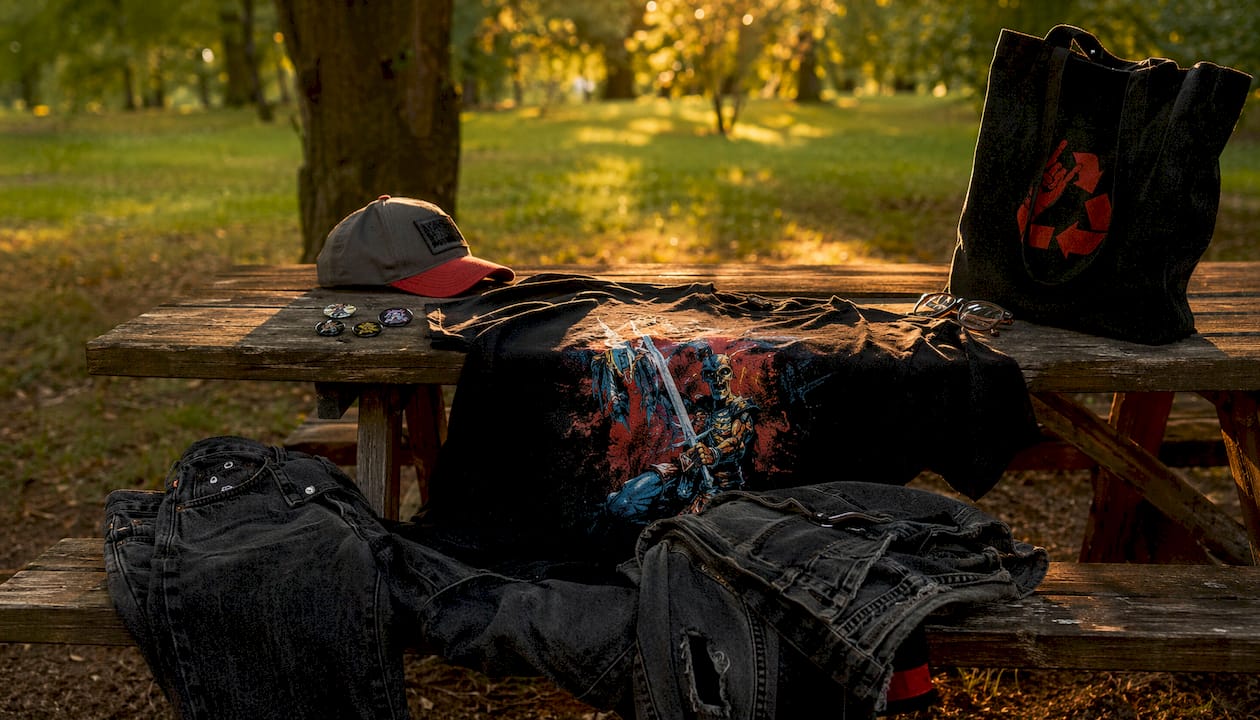
Embroidered patches are the most natural bridge between old and new. They carry the same handcrafted, tactile quality as vintage tour merch and can be added to jackets, bags, or caps without touching the shirt itself. Custom fanny packs and tech accessories like embroidered cable pouches or printed tote bags add daily utility while keeping the vintage aesthetic front and centre. Learning how to wear vintage hats with modern accessories is another way to extend the retro look without overloading any single garment.
The goal is to keep the vintage shirt as the focal point. Collectors who combine styles well treat new merch as functional accessories rather than competing garments. A walking museum look, where every piece screams vintage, actually weakens the impact of your best piece.
- Embroidered patches for jackets and denim vests
- Custom caps or beanies in muted tones
- Printed or embroidered tote bags
- Enamel pins referencing band iconography
- Tech pouches or fanny packs with retro-inspired graphics
Pro Tip: Limit yourself to one new printed item per outfit. If your vintage shirt has a graphic, every other printed piece competes with it.
How can collectors maintain authenticity and collector value when mixing vintage and new merch?
Authenticity is the foundation of collector value, and it starts with knowing what you actually own. Authentic vintage shirts carry era markers like single-stitch hems and original tag blanks from manufacturers like Screen Stars or Hanes Beefy-T. These details separate genuine pieces from modern reproductions. Checking the original versus fake markers before you build an outfit around a shirt is non-negotiable.
Bootleg tees from the 80s and 90s occupy a special category. Off-registration ink printing, where colours are printed slightly misaligned, is the defining feature of genuine bootleg pieces. This is what separates a collectible bootleg from a cheap knock-off. When you pair new merch with a bootleg tee, the new pieces need to respect that handmade, imperfect quality rather than clash with it through machine-perfect graphics.
Fabric choice on new merch matters more than most collectors realise. Tri-blend and ringspun cotton fabrics with halftone dot patterns and off-registration ink effects echo the feel of vintage pieces. A stiff polyester hoodie next to a soft, worn-in 1989 tour tee creates an uncomfortable contrast that undermines both pieces.
- Verify single-stitch hems and original tag blanks before buying
- Treat bootleg tees as collectibles, not just graphics
- Choose tri-blend or ringspun cotton for new merch fabrics
- Avoid flashy logos or mass-market finishes on modern accessories
- Keep new merch graphics muted and era-consistent
Pro Tip: Check the design elements collectors value before sourcing new merch to pair with a specific shirt. Knowing what makes your vintage piece special tells you exactly what modern pieces will complement it.
What styling techniques create standout looks blending vintage and modern merchandise?
The vintage shirt is your graphic centrepiece. Every other choice in the outfit should direct attention toward it, not away from it. Layering with long-sleeve white tees or baseball shirts underneath a vintage tee adds structure and modern polish without competing with the original graphic. This technique also protects the vintage fabric from direct skin contact, which extends its life.
Avoid dated styling tropes that pull focus from the shirt. Tie-dye bottoms, heavily distressed jeans, or loud patterned overshirts all fight for visual attention. Neutral bottoms, straight-cut black jeans, or olive cargo pants let the vintage shirt breathe. The cultural power of vintage metal tees comes from the graphic itself. Your job is to frame it, not decorate around it.
Texture mixing adds depth without adding noise. A washed denim jacket over a vintage tee introduces a different surface quality that reads as intentional rather than accidental. Open-weave knits, worn leather, and faded canvas all sit naturally alongside vintage cotton. Shiny, synthetic, or heavily structured modern fabrics create a jarring contrast.
For event-appropriate combinations, the same principles apply with slightly more care. A rare 1992 tour tee at a gig looks right with clean black jeans and a plain cap. The same shirt at a casual dinner works with a linen overshirt left open. The vintage piece stays constant. The modern layers shift to suit the context.
Pro Tip: Read the authentic 90s styling guide for specific layering combinations that work with heavy metal tees across different occasions.
How do you plan a merch collection that harmonises vintage aesthetics with new product lines?
A cohesive merch collection starts with a single decade commitment. Nostalgia is hardwired into visual appeal, and design catalogues built around one era create compounding recognition that outlasts trend cycles. Mixing decades in a single collection creates confusion. Picking one, say the 80s thrash era, and executing it consistently builds a recognisable identity.
Variation within that identity is what allows a collection to scale. Design systems that vary decade, niche, colour, and layout let creators build extensive catalogues without diluting the core aesthetic. An 80s fishing theme, an 80s motorsport theme, and an 80s metal theme can all live in the same collection because they share the same visual language. The niche changes. The era does not.
The table below compares three common approaches to building a vintage-inspired merch collection.
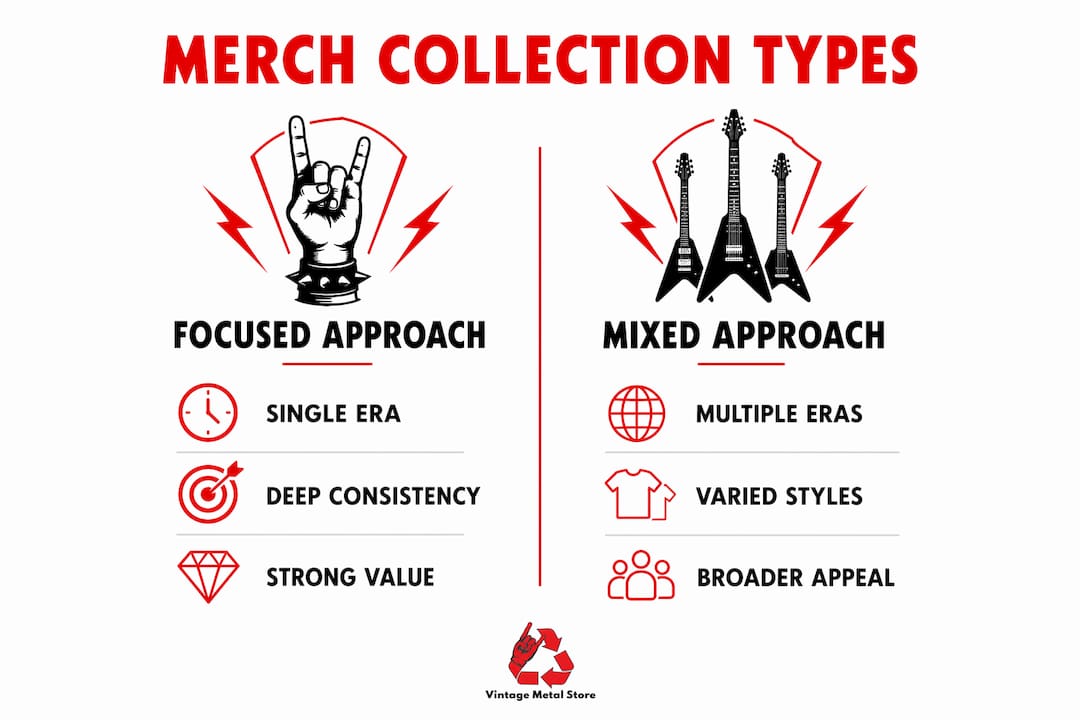
| Approach | Aesthetic focus | Best for | Risk |
|---|---|---|---|
| Single era, single niche | Deep consistency | Dedicated collector audiences | Limited reach |
| Single era, varied niches | Broad appeal within one decade | Growing a catalogue quickly | Needs strong visual discipline |
| Multi-era, single niche | Niche depth across decades | Experienced designers | High risk of visual inconsistency |
| Hero product plus accessories | Lifestyle integration | Collectors wanting daily wearability | Accessories must match hero quality |
The hero product plus accessories model suits vintage metal collectors best. Your rarest vintage shirt is the hero. A curated set of patches, caps, and bags built around its era and colour palette forms the collection. Platforms suited to vintage style merch, such as Etsy and Redbubble, reward this kind of cohesion with repeat buyers who trust the aesthetic.
Selling vintage metal tees successfully relies on the same principle: present each piece within a clear, consistent visual world so buyers immediately understand its value and context.
Why remix culture makes vintage metal merch more powerful than ever
The most interesting thing happening in vintage merch right now is not nostalgia. It is co-authorship. Remix culture in retro merch means creators and fan communities embed inside jokes, regional references, and subtle nods into new pieces that only the initiated will recognise. This is exactly what made 80s and 90s bootleg tees so compelling in the first place. They were not official. They were made by fans, for fans, with all the imperfection and personality that implies.
I have spent years watching collectors treat their vintage shirts as museum pieces, kept in acid-free bags and never worn. I understand the impulse. But the most powerful thing you can do with a rare piece is wear it well. A 1992 Metallica tour tee on a real person, styled with intention, tells a story that a framed shirt on a wall never can.
The collectors I respect most treat new merch as a conversation with the vintage piece, not a replacement for it. They choose modern accessories that reference the same era, the same band, or the same visual language. The result feels like a curated collection rather than a costume. That distinction matters enormously to anyone who takes this seriously.
My honest advice: do not wait until you have the perfect outfit planned before you wear your best piece. Wear it now, with what you have, and refine from there. The cultural knowledge behind preserving band tees is worth absorbing, but it should inform your choices, not paralyse them.
— David
What Vintage Metal Store has for collectors building their wardrobe
Vintage Metal Store carries the kind of pieces that form the centrepiece of any serious collection. The rare Metallica 1992 “Don’t Tread on Me” USA tour shirt is exactly the hero product that a well-chosen set of modern accessories can frame without overshadowing. For collectors who want to explore the full range, the Vintage Metallica shirts collection covers 80s, 90s, and Y2K era pieces across club tees and tour shirts.

For those wanting to add a contemporary limited-edition piece alongside their vintage finds, the Pentagram 2024 limited edition tour shirt shows exactly how new merch can carry the same weight and intention as the classics. Every piece at Vintage Metal Store is sourced from ex-tour stock and deadstock, so authenticity is never in question. Browse the full range and find the piece that anchors your next outfit.
FAQ
What does “combining vintage shirts with new merch” actually mean?
It means pairing authentic vintage band tees with contemporary accessories or garments to create a cohesive, intentional outfit. The vintage shirt stays the focal point, and modern pieces provide structure, utility, or era-consistent detail.
How do I know if my vintage shirt is authentic?
Authentic vintage shirts carry single-stitch hems and original tag blanks from manufacturers like Screen Stars or Hanes Beefy-T. Bootleg tees from the 80s and 90s show off-registration ink printing, which is a key marker of genuine collector pieces rather than cheap reproductions.
What new merch items work best with vintage heavy metal tees?
Embroidered patches, custom caps, printed tote bags, and enamel pins in muted, era-consistent tones complement vintage shirts without competing with them. Limit new printed items to one per outfit to keep the vintage graphic as the clear focal point.
Does wearing a vintage shirt reduce its collector value?
Wearing a vintage shirt does not inherently reduce its value, but improper care can. Layering a plain base tee underneath protects the vintage fabric from skin contact and extends its life. Proper washing and storage remain important for long-term preservation.
Which decade should I commit to when building a vintage-inspired merch collection?
Pick one decade and execute it consistently across all pieces in the collection. Single-era collections build stronger visual identity and collector recognition than mixed-era approaches, and they are far easier to scale without losing coherence.
Key takeaways
Combining vintage shirts with new merch works best when the vintage piece leads and every modern item is chosen to frame, not compete with, its era-specific graphic and fabric character.
| Point | Details |
|---|---|
| Commit to one era | Choose one decade per outfit or collection to maintain visual consistency and avoid mixed signals. |
| Vintage shirt leads | Treat the vintage tee as the hero product and select modern accessories that support rather than overshadow it. |
| Authenticity markers matter | Check single-stitch hems, original tags, and off-registration print details to confirm genuine vintage pieces. |
| Fabric and colour harmony | Choose tri-blend or ringspun cotton in muted, desaturated tones for new merch to match vintage comfort and colour temperature. |
| Accessories over extra tees | Embroidered patches, caps, and bags add utility and style without splitting visual attention away from the vintage shirt. |
Recommended
- How to display collector shirts: the complete guide – Vintage Metal Store
- Collector’s guide to vintage heavy metal t-shirts: spot, value, collec – Vintage Metal Store
- Why fans collect old shirts: Cultural power of vintage metal tees – Vintage Metal Store
- Why old band shirts cost more: a collector’s value guide – Vintage Metal Store


