



Finding genuine 1990s heavy metal tour shirts can feel like searching for a needle in a haystack. Vintage collectors know that authentic period-specific details and material authenticity are what separate truly rare finds from modern reproductions. These shirts showcase unique printing techniques, handcrafted touches, and fabric blends rooted in their era, reflecting the music history and subcultural identity cherished by collectors worldwide. This guide offers clear insights on spotting real vintage design elements, so you can confidently enhance your collection.
Table of Contents
- What Defines Vintage Shirt Design Elements
- Key Motifs In Vintage Heavy Metal Shirts
- Era-Specific Styles And Print Methods
- Spotting Authentic Versus Reproduction Prints
- Common Pitfalls In Vintage Shirt Collecting
Key Takeaways
| Point | Details |
|---|---|
| Understanding Vintage Elements | Authentic vintage shirt designs include era-specific details such as material composition, print techniques, and tag information that distinguish them from reproductions. |
| Significance of Motifs | Key motifs like band logos and album artwork reflect identity and subcultural values, vital for collectors to identify authenticity. |
| Authenticating Print Methods | Knowing printing techniques and characteristics, such as ink texture and fading patterns, is essential for distinguishing genuine pieces from modern imitations. |
| Awareness of Common Pitfalls | Collectors should avoid inadequate research, overpaying for damaged items, and relying on unreliable sellers to enhance their collection’s quality. |
What Defines Vintage Shirt Design Elements
Vintage shirt design elements are the specific visual, structural, and material characteristics that distinguish authentic vintage pieces from modern reproductions or retro-inspired knock-offs. For heavy metal collectors, understanding these elements separates genuine 1990s tour merchandise from newer imitations flooding the market.
At its core, a vintage design element reflects the era it was created in. Authentic period-specific details tell the story of when and where a shirt was produced. Think screenprinting techniques, ink formulations, tag placement, sizing conventions, and fabric blends that simply didn’t exist in other decades.
Material authenticity forms the foundation of collector value. Vintage fashion comprises garments made at least 20 years ago with construction methods and textiles representative of their historical period. A genuine 1993 Metallica tour shirt will feature 100% single-stitched cotton with a specific weight and weave that modern bulk production cannot replicate.
Key design characteristics include:
- Screenprint quality: Original 1990s prints show slight colour variations, cracking patterns, and hand-screen irregularities
- Ink degradation: Authentic vintage ink fades predictably; modern inks behave differently over time
- Tag construction: Neck tags, sleeve tags, and care labels reveal manufacturing location and era
- Stitching patterns: Single-needle stitching on sleeves and sides indicates genuine vintage production
- Graphic placement: Chest positioning, sleeve placement, and back print dimensions follow period standards
Vintage design also embraces handcrafted details and nostalgic appeal. Each shirt carries the imperfections of its original production. Slightly misaligned prints, colour inconsistencies between runs, and natural wear patterns authenticate the piece rather than diminish it.
Tag analysis proves particularly revealing for metal collectors. A genuine dead stock 1990s tour shirt displays specific label fonts, care instruction formatting, and country-of-origin markers. Bootleg reproductions often use fonts or tag styles that didn’t appear until years later.
Authentic vintage pieces reflect period-specific construction and materials that modern manufacturers deliberately avoid for cost efficiency and consistency.
Fabric composition deserves close attention. Textiles used in vintage fashion differ significantly from contemporary options. A legitimate 1989 Iron Maiden shirt uses heavyweight cotton with a particular feel and drape that changed as production shifted to cheaper blends in the late 1990s.
Colour fading patterns reveal authenticity too. Museum-quality vintage shirts show expected wear zones—neck collar, shoulder seams, cuff edges. The fade follows gravity and friction patterns. Artificially distressed modern reproductions fake these patterns without understanding the physics of genuine aging.
Pro tip: Photograph suspect shirts under UV light to reveal screenprint layers and detect reprints; original 1990s tour merchandise shows distinct ink separation patterns that bootlegs cannot replicate.
Key Motifs In Vintage Heavy Metal Shirts
Key motifs in vintage heavy metal shirts are the visual symbols and design elements that communicate identity, rebellion, and subcultural belonging to other metalheads. For collectors, recognising these motifs separates authentic vintage pieces from modern reproductions that misunderstand metal aesthetics.
The band logo remains the most recognisable motif. These aren’t just names—they’re visual declarations of allegiance. A 1988 Slayer logo differs dramatically from a 2010 reissue. Early logos featured custom lettering, hand-drawn distortion, and band-specific variations that bootleggers struggle to replicate consistently.
Album artwork imagery transforms shirts into portable galleries. Vintage metal shirts featured heavy metal band artistry and symbolism that extended beyond simple decoration—they told stories of musical identity and ideological positioning. A genuine 1991 Sepultura shirt reproduces the album cover art with specific colour separations and detail levels.
Common visual elements include:
- Skulls and skeletons: Representing mortality and rebellion within subcultural aesthetics
- Demonic and gothic imagery: Dragons, demons, and dark fantasy art reflecting metal’s darker themes
- Album-specific artwork: Cover art faithfully reproduced with hand-screened precision
- Band member imagery: Photos and illustrations showing the musicians themselves
- Tour-specific graphics: Concert dates, venue names, or tour titles adding historical context
Horror and fantasy art dominates vintage metal aesthetics. These designs draw from fantasy illustration traditions, horror cinema, and countercultural iconography. A legitimate 1990s Bathory shirt displays sophisticated fantasy artwork typical of that era’s metal visual language, not the simplified graphics modern reproductions use.
Distressed and hand-crafted visual styles signal authenticity. Original screenprints show intentional weathering, layered inks, and variations between print runs. Vintage heavy metal shirts feature intricate graphical elements and hand-crafted visual styles that communicate subcultural authenticity through their very imperfection.
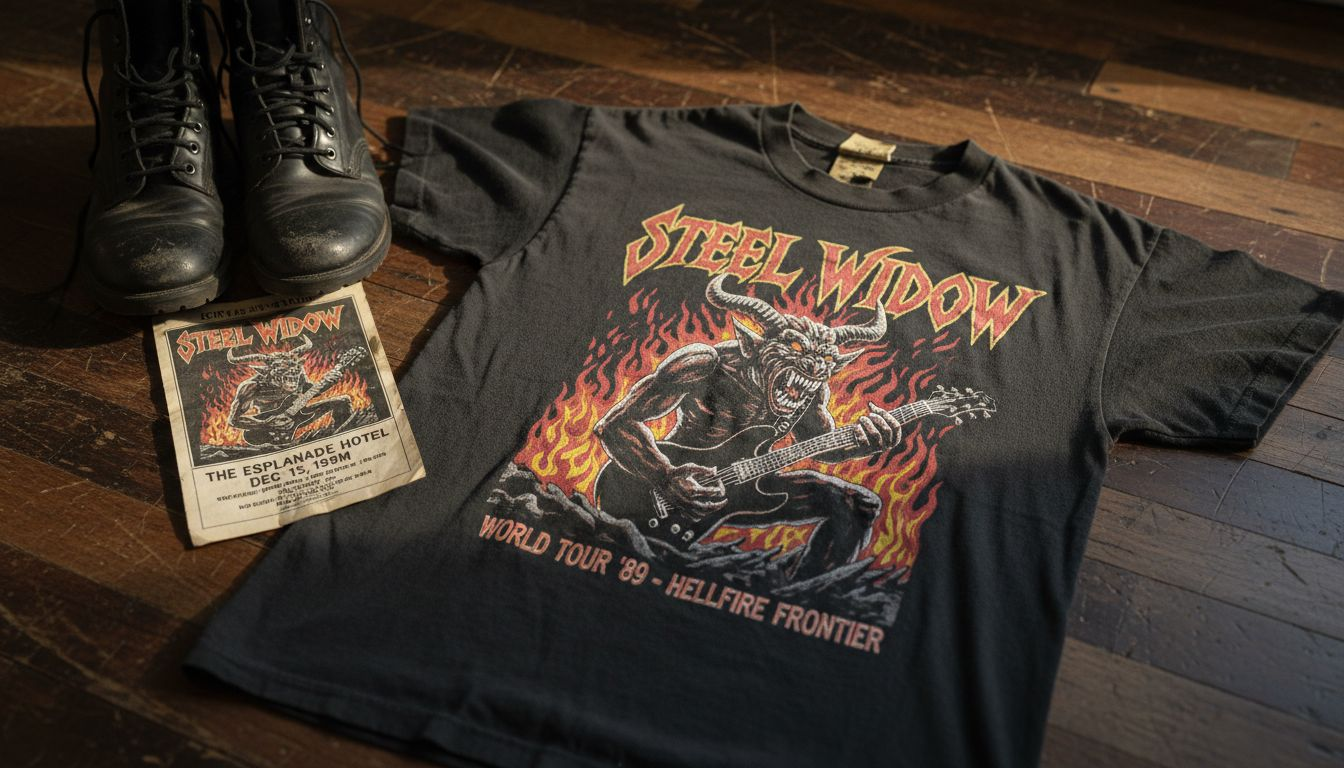
Colour palettes reveal era-specific production methods. 1980s shirts often feature vibrant reds, blues, and golds because of ink chemistry available then. 1990s pieces shifted toward darker palettes. Modern reproductions frequently get these colour combinations wrong, using contemporary ink formulations that didn’t exist in the vintage era.
Symbolic messaging extends beyond visuals. Tour shirts included specific dates, locations, and graphics that documented metal history. A 1992 Pantera tour shirt identifies exactly which dates and cities the tour covered—information bootleggers must research and replicate accurately.
The most valuable vintage metal shirts combine recognisable iconography with era-specific production techniques that modern printing cannot authentically reproduce.
Sleeve prints and back graphics carry equal weight as chest designs. Collectors examine whether sleeves feature original artwork or reprinted elements. Authentic vintage often shows wear patterns on sleeves revealing the original art underneath.
Pro tip: Compare suspected tour shirts against concert databases and archival databases online to verify dates, venues, and graphic details—bootleggers frequently make errors in tour information that collectors catch immediately.
Era-Specific Styles And Print Methods
Era-specific styles and print methods are the production techniques and design approaches that define heavy metal shirts across different decades. For collectors, understanding these distinctions separates a genuine 1980s Metallica shirt from a 1990s reissue or modern bootleg.
The 1980s metal aesthetic prioritised bold, aggressive imagery with maximum visual impact. Screen printing techniques evolved significantly across decades with 1980s shirts featuring thicker plastisol inks that created dimensional, textured prints. These inks cracked predictably as shirts aged, creating the signature weathered look collectors value.
Screenprint quality from this era showed specific characteristics:
- Thick ink deposits: Plastisol inks sat noticeably on fabric surfaces
- Colour separation variations: Hand-separated screens produced slight misalignment between colours
- Visible halftone patterns: Dots become apparent under magnification
- Single-stitched construction: Sleeves and sides used one needle thread only
- Heavy cotton blends: Thicker, stiffer fabric than modern alternatives
The 1990s shift moved toward slightly thinner inks and more refined registration. Tour merchandise from this era shows vintage printing methods using plastisol or water-based inks that created textured feels and subtle imperfections. Heavy metal tour shirts specifically adopted discharge printing on dark garments, where ink chemically removed the fabric’s colour rather than sitting atop it.
This discharge technique created distinct characteristics. The print feels softer than direct screenprinting. Colours appear faded and slightly mottled from the original application. Bootleggers struggle to replicate this specific texture because modern discharge methods differ substantially from 1990s chemistry.
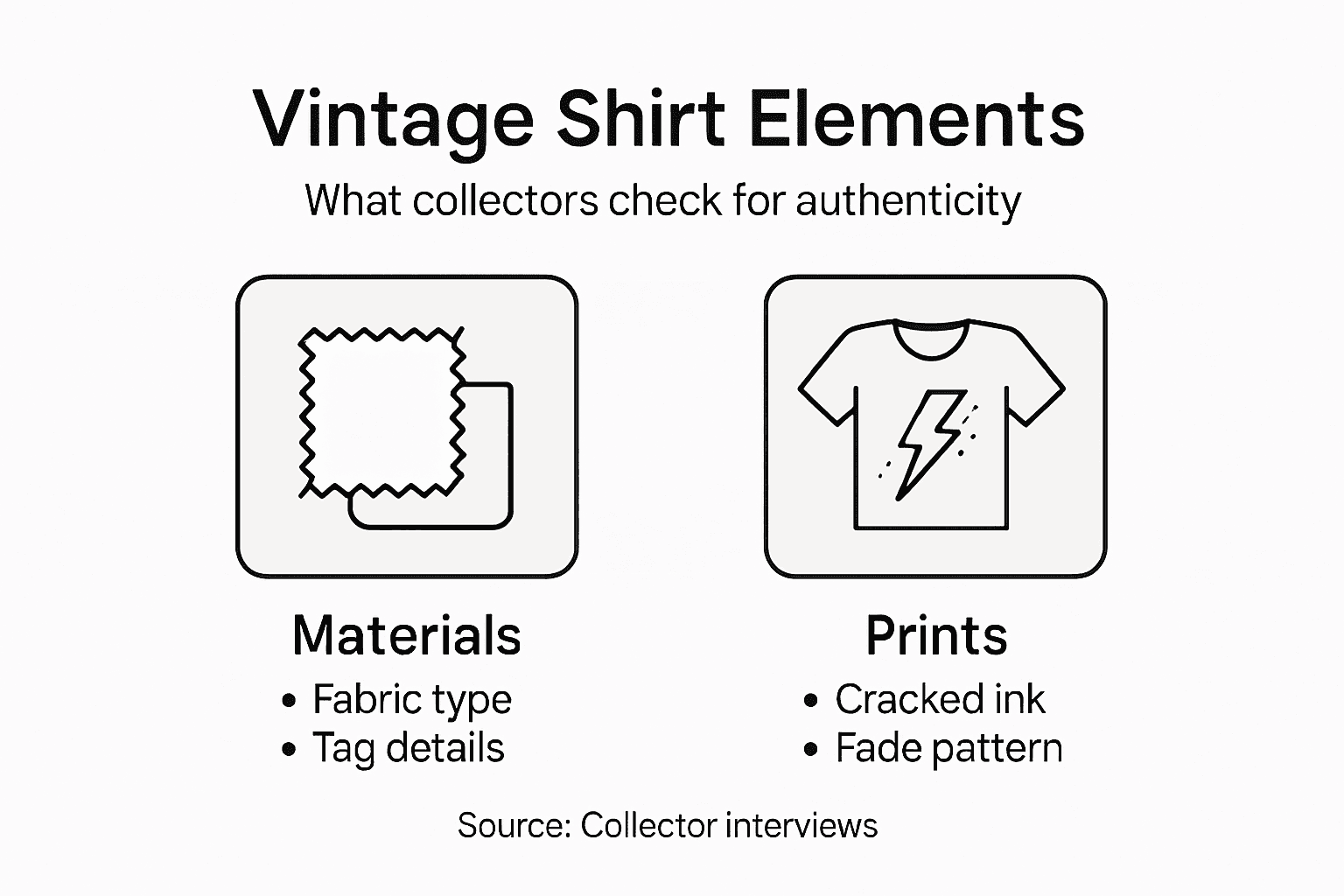
Tag construction reveals era-specific details instantly. A genuine 1989 tour shirt displays specific label fonts, care instruction formatting, and care symbols that changed multiple times throughout the decade. Modern reproductions often use tag styles that didn’t exist until years later.
Fabric weight and weave patterns shifted over time. 1980s metal shirts featured heavier 20-ounce single-stitched cotton. By the mid-1990s, manufacturers reduced weight to 14-16 ounces for cost savings. Collectors can distinguish eras by simply holding and feeling the fabric weight.
Authentic vintage metal shirts reveal their era through ink thickness, tag styles, fabric composition, and wear patterns that cannot be artificially recreated using modern manufacturing methods.
Sleeve tag placement and sizing conventions changed significantly. Early 1980s shirts printed sizing on the back neck tag exclusively. Later decades added sleeve tags. A mismatch between tag locations and shirt condition immediately signals a bootleg or mislabelled piece.
Colour fading patterns indicate authenticity and era. Original 1989 inks fade in predictable patterns—neck collars lighten first, shoulder seams show wear, and chest logos fade unevenly. Modern reproductions cannot replicate these specific fade patterns without understanding the original ink chemistry.
Here’s how key vintage heavy metal shirt eras differ in style and production methods:
| Decade | Fabric & Weight | Printing Methods | Visual Impact |
|---|---|---|---|
| 1980s | Heavy cotton, 20 oz | Thick plastisol, hand-separation | Bold, vibrant, aggressive imagery |
| 1990s | Moderate cotton, 14–16 oz | Discharge, refined registration | Darker palettes, faded look |
| Modern | Light blends, synthetic | Digital print, smooth surface | Uniform, less textured graphics |
Pro tip: Examine the screenprint under direct sunlight to identify ink layers and separation—authentic 1980s-1990s metal shirts reveal distinct colour separation lines where screens slightly misaligned, whilst bootlegs use modern digital printing that shows no such variations.
Spotting Authentic Versus Reproduction Prints
Spotting authentic versus reproduction prints requires understanding how vintage band tees age differently from modern bootlegs. This skill separates serious collectors from those easily deceived by convincing fakes flooding online marketplaces.
Authenticprint texture tells the story immediately. Authentic vintage prints show fading, misalignment, and textured plastisol inks that modern digital methods cannot replicate. Run your fingers across genuine vintage—the ink sits noticeably raised, creating a tactile three-dimensional feel.
Reproduce prints feel completely different. Modern digital-to-garment printing creates smooth, flat surfaces. The ink bonds chemically to fabric rather than sitting atop it. Reproductions lack the dimensional quality that defines authentic 1980s and 1990s screenprinting.
Key authentication indicators include:
- Ink cracking patterns: Authentic prints crack predictably along colour separation lines
- Halftone dot visibility: Original screens created visible dots under magnification
- Colour misalignment: Slight offsets between colour layers indicate hand-separated screens
- Fade consistency: Natural fading concentrates on high-wear areas like collars and shoulders
- Print softness: Vintage ink becomes softer over decades; reproductions stay uniform
Stitching reveals crucial details. Authentic 1990s metal tour merchandise featured single-stitched construction on sleeves and side seams. Modern reproductions often use double-stitching for durability. Bootleggers frequently miss this detail because they source from contemporary manufacturers.
Thread colour inconsistencies signal problems. Original vintage shirts sometimes show slight colour variations in stitching due to manufacturing runs and dye lots. Perfect thread colour uniformity across an entire shirt suggests modern production.
Artificial distressing immediately reveals bootlegs. Non-destructive authentication methods examine artificial distressing patterns that don’t match natural aging. Reproductions show uniform, intentional distressing. Authentic vintage features random wear patterns tied to how the shirt was actually worn and stored.
Tag examination provides definitive proof. Genuine vintage displays period-specific label fonts, care symbols, and manufacturing details that changed frequently. A tag with fonts that didn’t debut until years after the purported shirt’s creation date immediately disqualifies authenticity.
Fabric fiber inspection works non-destructively. Authentic 1990s tour shirts used 100% cotton with specific weave patterns. Reproductions often blend polyester or use contemporary cotton blends. Hold the shirt to light—vintage cotton shows different light transmission than modern alternatives.
Reproducers cannot authentically replicate the combination of ink texture, natural wear patterns, stitching methods, and tag styles that together prove vintage authenticity.
Colour consistency across the entire print suggests fakery. Authentic screenprints show slight colour variations between runs. One 1989 run might feature slightly brighter red ink than another batch from the same tour—something modern batch printing eliminates.
Pro tip: Photograph the screenprint under raking light from the side to reveal ink raised texture and cracking patterns; genuine vintage shows three-dimensional ink geography that flat digital prints cannot duplicate.
Common Pitfalls In Vintage Shirt Collecting
Common pitfalls in vintage shirt collecting cost collectors thousands of dollars and undermine collection quality. Understanding these mistakes separates seasoned buyers from those repeatedly deceived by bootlegs, overpriced pieces, and poor purchasing decisions.
The first major mistake is lack of focused research. Many collectors purchase randomly without specialising in specific bands, eras, or print methods. Common collecting pitfalls include insufficient knowledge of manufacturing history that leads to mislabelling and overpaying for incorrectly identified pieces. Without specialisation, you cannot develop the expertise needed to spot fakes instantly.
Overpaying for damaged goods represents another costly error. Collectors frequently accept poorly preserved items at premium prices. A shirt with significant fading, cracking screenprints, or staining loses substantial value. Condition affects both authenticity assessment and wearability—yet many buyers ignore this critical factor.
Common collection mistakes include:
- Buying overly pristine items: Perfect condition suggests bootlegs or modern reproductions
- Ignoring sizing variations: 1990s tour shirts ran smaller than current standards
- Neglecting provenance verification: No documentation means no proof of authenticity
- Skipping community engagement: Experienced collectors catch fakes you might miss
- Purchasing without inspection: Online photos hide critical authentication details
Authenticity ignorance destroys collection value rapidly. Many collectors lack understanding of authentic wear patterns, ink degradation, and stitching conventions. Lacking awareness of authenticity markers leads to purchasing fakes that flood the market. One bootleg in a collection compromises its credibility.
Poor care and preservation compounds the damage. Collectors invest heavily acquiring shirts, then store them improperly. Exposure to sunlight, humidity, and heat accelerates degradation. Incorrect washing destroys irreplaceable prints. Many collectors learn these lessons only after damaging valuable pieces.
Sizing ignorance frustrates many beginners. Vintage clothing sizing differs significantly from modern standards, making 1989 medium actually fit like today’s small. Collectors purchase based on tag size without researching era-specific sizing charts. This leads to unwearable pieces or discovering sizing errors after purchase.
Overconfidence in online sellers creates serious problems. Some vendors deliberately misrepresent reproductions as vintage. Others unknowingly sell bootlegs. Establishing relationships with knowledgeable, reputable sellers protects against these issues dramatically.
The costliest mistakes stem from purchasing without proper authentication knowledge, then discovering bootlegs after investing significant money and emotional energy.
Expecting museum-condition vintage pieces signals amateur collecting. Every authentic vintage shirt shows some wear. Perfect condition usually indicates recent production or artificial distressing. Embrace the patina and age markers that prove authenticity.
For collectors, understanding these common pitfalls is crucial for building a valuable collection:
| Pitfall | Impact on Collection | Best Prevention Method |
|---|---|---|
| Inadequate research | Misidentification, overpayment | Specialise and study manufacturing history |
| Overpaying for damage | Reduced value, less wearable | Inspect for wear and condition |
| Sizing ignorance | Unwearable shirts, disappointment | Reference vintage sizing charts |
| Trusting unreliable sellers | Risk of bootlegs, wasted investment | Build relationships with reputable dealers |
Pro tip: Build relationships with established heavy metal merchandise dealers and join authentication communities where experienced collectors verify questionable pieces before you commit financially to acquisitions.
Discover Authentic Vintage Heavy Metal Shirts Crafted for True Collectors
If you value the intricate design elements and era-specific details that define genuine vintage heavy metal shirts, you understand how challenging it can be to find authentic pieces. From original screenprint textures and tag constructions to fabric weights and period-specific motifs, every detail matters when adding to your collection. Avoid common pitfalls like reproductions, artificial distressing, and inaccurate sizing by choosing from carefully curated stock.

Explore our exclusive selection of All Shirts – Vintage Metal Store that highlights authentic 80s and 90s tour merchandise with those unmistakable vintage characteristics. For devoted Metallica fans, our collection of Vintage Metallica Shirts Australia offers true club tees and dead stock that match your collector standards. Visit Vintage Metal Store today to secure rare finds verified for authenticity and vintage value. Act now and elevate your collection with pieces that tell the real story of metal history.
Frequently Asked Questions
What key elements define a vintage shirt’s authenticity?
Key elements include screenprint quality, material authenticity, tag construction, stitching patterns, and graphic placement. These characteristics reflect the era in which the shirt was produced and help distinguish genuine vintage pieces from modern reproductions.
How can I determine if my vintage shirt is truly authentic?
To determine authenticity, examine the fabric composition, stitching methods, tag details, and fading patterns. Authentic vintage shirts typically feature specific weights, weaves, and construction styles that are not replicated in modern manufacturing.
What specific motifs should I look for in vintage heavy metal shirts?
Look for band logos, album artwork, and common visual elements like skulls, demonic imagery, and tour-specific graphics. These motifs communicate identity and subcultural belonging and should reflect the stylings of the period.
How do era-specific styles differ in the production of vintage shirts?
Era-specific styles differ in fabric weight and composition, printing methods, and visual impact. For example, 1980s shirts often use thick plastisol inks and heavy cotton, while 1990s shirts may use discharge printing on lighter fabrics, leading to different textures and fading patterns.
Recommended
- 7 Steps to the Ultimate Heavy Metal Shirts Buying Checklist – Vintage Metal Store
- Top Fabrics for Vintage Shirts: Collector Value Explained – Vintage Metal Store
- Why Vintage Heavy Metal Shirts Matter to Collectors – Vintage Metal Store
- Why Vintage T-Shirts Matter for Metal Fans – Vintage Metal Store


