



Every collector knows the thrill of unearthing an authentic piece of metal history hidden in a pile of old merchandise. For fans who lived through unforgettable 1990s tours or crave the era’s rebellious spirit, vintage heavy metal t-shirts are far more than garments—they’re wearable archives of metal culture. Understanding what truly sets genuine vintage shirts apart helps collectors embrace their identity, appreciate cultural significance, and avoid being fooled by modern reproductions.
Table of Contents
- Defining Vintage Heavy Metal T-Shirts
- What Defines Vintage vs Modern Reproductions
- Styles, Eras And Notable Band Artwork
- Distinctive Design Elements by Era
- Cultural Identity And Scene Significance
- Why Scene Significance Matters to Collectors
- Rarity, Value And Collector Insights
- What Elevates Certain Shirts to Premium Status
- Sustainability And Ethical Fashion Impact
- Environmental Benefits Beyond Fashion
Key Takeaways
| Point | Details |
|---|---|
| Authenticity Matters | Genuine vintage heavy metal t-shirts have distinct features that set them apart from modern reproductions, such as single-stitch construction and specific tag styles. |
| Cultural Significance | These shirts serve as important cultural artefacts, representing the identity and history of the metal community across different eras. |
| Value Drivers | Rarity, condition, and historical context significantly influence the desirability and market value of vintage t-shirts among collectors. |
| Sustainable Choice | Collecting vintage shirts is an environmentally friendly practice, as it reduces waste and avoids the environmental impact of new garment production. |
Defining Vintage Heavy Metal T-Shirts
Vintage heavy metal t-shirts represent far more than basic clothing—they’re wearable archives of metal culture. These pieces capture pivotal moments in music history, band aesthetics, and the identity of fans who lived through iconic eras. Understanding what makes a t-shirt genuinely vintage requires knowing the key characteristics that distinguish authentic collectables from modern reproductions.
A true vintage heavy metal t-shirt typically originates from the 1970s through early 2000s, with the most sought-after examples coming from the 1980s and 1990s tour merchandise and official band releases. The definition extends beyond age alone—it encompasses the shirt’s design lineage, manufacturing techniques, and cultural significance within metal communities. The metal t-shirt’s role as transmedia storytelling reveals how these garments function as material representations of social identity and musical allegiance rather than disposable fashion.
What Defines Vintage vs Modern Reproductions
Authentic vintage pieces exhibit specific markers that modern prints simply cannot replicate:
- Single-stitch construction rather than today’s double-stitched seams
- Faded, cracked graphics that show genuine wear patterns over decades
- Tag styles reflecting the era—Fruit of the Loom, Hanes Beefy-T, or region-specific manufacturers
- Paper-thin fabric from lower-weight cotton than contemporary t-shirts
- Yellowed or darkened collars and cuffs from age and use
- Band logos and artwork specific to particular tour years or album cycles
These visual and tactile elements serve as authentication markers. Modern reproductions attempt to recreate this aesthetic artificially, but the results lack the organic quality that comes from genuine ageing.
Vintage heavy metal t-shirts function as badges of identity and allegiance within metal subculture, signifying far more than personal taste in music or fashion.
Design authenticity matters enormously. A shirt bearing artwork from Metallica’s 1991 “Black Album” tour carries historical weight—it documents when the fan attended that specific show or purchased the merchandise during that album’s peak cultural moment. Reproduction prints may use similar imagery, but they lack the temporal authenticity and provenance that collectors value.
The distinction between genuine dead stock (unworn merchandise from band warehouses) and legitimately worn vintage pieces is crucial for collectors. Dead stock items maintain original condition tags and packaging. Worn vintage pieces show evidence of actual use—fading concentrated in high-friction areas, neck stretching, and collar darkening. Both categories hold value but appeal to different collector preferences.
These shirts also represent specific manufacturing eras and techniques that changed over time. Screen printing methods evolved, band merchandise distributors shifted, and vintage heavy metal t-shirt authenticity and verification requires understanding these historical details. A genuine 1990s Slayer tour shirt tells a different story than a 1980s original—different print quality, different tag construction, different fabric weight.
Pro tip: Examine the tag placement, care instructions format, and thread colour when evaluating authenticity—reproduction tags often use modern printing conventions that didn’t exist in the original era.
Here’s a side-by-side look at how authentic vintage and modern reproduction heavy metal t-shirts differ:
| Attribute | Authentic Vintage | Modern Reproduction |
|---|---|---|
| Era Produced | 1970s–early 2000s | 2000s–present |
| Fabric Feel | Soft, often paper-thin | Heavier, less worn-in |
| Graphics | Naturally faded or cracked | Intentionally aged effects |
| Tag Details | Era-accurate sewing, classic tags | Modern print tags, new fonts |
| Collector Value | High—especially rare prints | Low—mainly aesthetic value |
Styles, Eras And Notable Band Artwork
Heavy metal t-shirt aesthetics evolved dramatically across decades, with each era developing distinctive visual languages. The 1980s thrash and death metal movements produced some of the most collectible designs ever created, featuring grotesque imagery, elaborate band logos, and provocative artwork that pushed cultural boundaries. Understanding these stylistic shifts helps collectors recognise authentic vintage pieces and appreciate why certain shirts command premium prices.
The evolution of band artwork reflects broader changes in metal subgenres. Early 1980s thrash metal shirts emphasised aggressive typography and demonic imagery, whilst death metal embraced increasingly graphic and macabre visuals throughout the late 1980s and 1990s. Black metal aesthetic introduced minimalist designs and raw production values that became symbols of the genre’s anti-commercial philosophy. Iconic heavy metal t-shirts from bands like Venom, Death, Bathory, and Pantera became visual touchstones defining entire subgenres.
Distinctive Design Elements by Era
Each decade produced recognisable shirt characteristics:
- 1980s: Bold, hand-drawn logos with heavy outlining; airbrushed graphics; vibrant colour schemes
- Early 1990s: Refinement of 1980s styles; increased photo-realistic artwork; gradual shift toward darker palettes
- Mid-to-late 1990s: Minimalist black metal designs; grunge influence; experimental typography
- 2000s: Digital printing techniques emerging; nostalgia-driven revivals of 1980s aesthetics
These visual markers help distinguish genuine vintage from reproductions. An authentic 1986 Slayer shirt exhibits entirely different printing techniques than a 1994 reprint, even featuring identical artwork.
The most valuable vintage shirts combine exceptional artwork, cultural impact, and limited original production runs—creating collectible artifacts worth hundreds of pounds.
Band-specific artwork became iconic status symbols within metal communities. Bathory’s bold red logo and demonic imagery, Death’s intricate and grotesque designs, and Pantera’s aggressive visual branding all achieved legendary status. Collectors specifically seek original prints because these designs capture the era’s aesthetic philosophy and technical printing capabilities.
Tour merchandise shirts carry additional significance. A shirt from a specific 1991 tour documents where the fan was geographically and temporally situated during that moment in metal history. The artwork often features tour dates, venue names, or special edition designs created exclusively for that tour run.
Colour variations matter significantly to collectors. Some bands produced shirts in multiple colour variations during single tours—black versions, grey variants, or limited-run colours. These variations affect rarity and desirability. A grey Metallica “Black Album” tour shirt might be rarer than the standard black version, making it considerably more valuable.
Pro tip: Research specific tour dates and artwork variations for bands you collect—original tour programmes or concert posters help confirm authentic merchandise from particular shows.
Cultural Identity And Scene Significance
Wearing a vintage heavy metal t-shirt transcends fashion—it’s a declaration of allegiance and cultural belonging. These garments function as visible markers that communicate identity, values, and subcultural membership to fellow metal enthusiasts. For collectors and fans alike, a shirt bearing a band logo represents far more than musical preference; it embodies ideology, rebellion, and community connection.
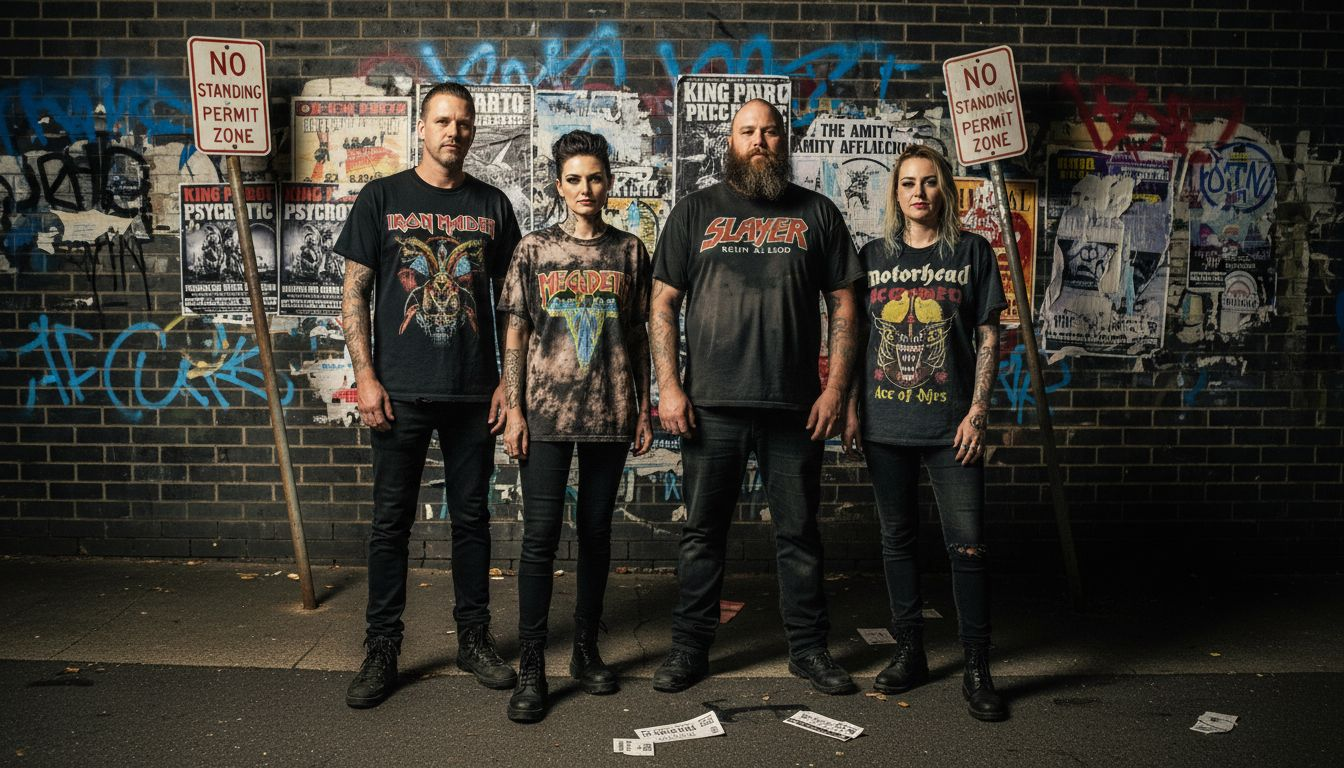
Vintage metal shirts served as tangible links to specific moments in metal history. When you wore a 1990s Metallica or Slayer shirt, you weren’t just advertising your musical taste—you were signalling participation in a global counterculture. The shirt became a conversation starter, a way to identify kindred spirits in crowds, and a physical manifestation of your subcultural identity during an era before social media.
The construction of cultural identity through metal t-shirts reveals how wearable merchandise shaped metal community formation worldwide. Band shirts facilitated social negotiation, rebellion against mainstream culture, and cohesion amongst dispersed fan communities. In small towns where metal fans felt isolated, wearing a death metal shirt meant you weren’t alone—others shared your musical values and outsider perspective.
Why Scene Significance Matters to Collectors
Understanding a shirt’s cultural context increases its collectible value:
- Band status during release: Shirts from bands’ breakthrough years carry more cultural weight
- Geographic scene origins: Early European black metal shirts hold different significance than American thrash originals
- Subcultural moment captured: A 1994 black metal shirt documents the Norwegian scene’s explosion
- Community resonance: Shirts worn by influential scene figures become historically important
- Rarity within the scene: Limited original prints from smaller labels increase desirability
These factors combine to create shirts that represent more than merchandise—they’re historical artefacts documenting metal culture’s evolution.
Metal t-shirts fostered community sense, authenticity, and selfhood amongst fans globally, transforming simple garments into symbols of personal and collective identity.
Collectors often seek shirts tied to pivotal scene moments. A genuine 1991 Darkthrone “A Blaze in the Northern Sky” shirt captures the exact moment Norwegian black metal achieved international recognition. That shirt documented where you stood culturally during that specific historical juncture.
The battle jacket tradition—vests adorned with band patches and pins—evolved directly from t-shirt culture. Fans layered vintage shirts under denim jackets, creating personalised visual narratives of their metal journey. Today’s collectors understand that vintage shirts represent chapters in individual metal fan histories.
Authenticity matters profoundly within metal communities. Wearing reproductions sends an unspoken message that you didn’t live through those eras or lack commitment to genuine scene history. Collectors wearing original vintage pieces claim membership in an exclusive group who experienced metal’s most transformative decades firsthand.
Pro tip: Research the band’s scene position and cultural moment when the shirt was released—this context transforms a t-shirt from merchandise into a meaningful historical document worth preserving.
Rarity, Value And Collector Insights
Vintage heavy metal t-shirt values fluctuate based on rarity, condition, and historical significance. Understanding what drives collector demand separates smart investments from impulse purchases. The most valuable shirts command premium prices because they represent scarce originals from pivotal metal moments, not simply because they’re old.
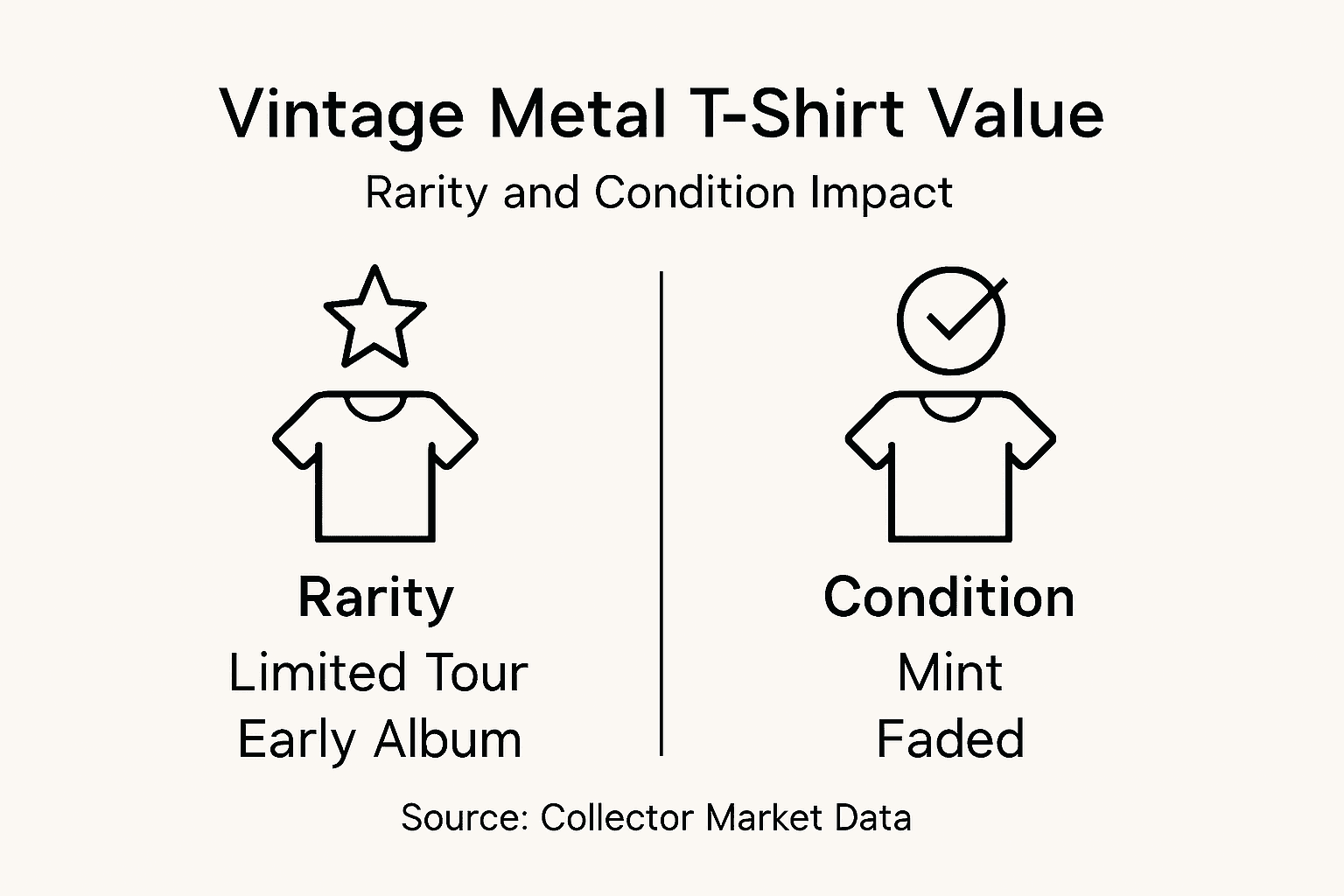
Rarity operates as the primary value driver. A shirt printed in limited quantities during a small tour generates more collector interest than mass-produced merchandise from major tours. Death metal shirts from underground European labels often appreciate significantly because fewer copies entered circulation. By contrast, mainstream Metallica tour shirts, though desirable, exist in greater abundance and typically hold lower resale values per unit.
Condition fundamentally impacts worth. A pristine, unworn 1987 Slayer shirt with original tags commands substantially higher prices than the identical shirt bearing visible wear, fading, and stretched fabric. Collectors increasingly preserve deadstock items—never-worn merchandise still in original packaging—as investment-grade collectables. Vintage band merchandise values reflect quality, authenticity, and scarcity as core pricing factors.
What Elevates Certain Shirts to Premium Status
Specific characteristics separate ordinary vintage from genuinely collectible:
- Tour-specific artwork: Limited edition designs created exclusively for particular tours
- Band career moments: Shirts released during breakthrough albums or farewell tours
- Original label runs: Early merchandise before bands achieved mainstream success
- Geographic scarcity: Shirts distributed only in specific regions or countries
- Manufacturing variations: Different colour variants or printing technique versions
- Deadstock condition: Unworn original merchandise preserving era-accurate details
These factors combine to create shirts worth thousands of pounds rather than dozens.
The most valuable vintage metal shirts combine exceptional rarity, pristine preservation, and undeniable cultural significance—transforming merchandise into investment-grade collectables.
Authenticity documentation increases value substantially. Original receipts, concert programmes, or band-signed packaging dramatically elevate prices. A 1991 Pantera shirt becomes exponentially more valuable if accompanied by proof of purchase from that specific venue or tour date. Provenance transforms casual merchandise into historically documented artefacts.
Market trends favour specific genres and eras. Norwegian black metal shirts from the 1990s have appreciated consistently as the genre’s cultural importance became recognised globally. By contrast, certain thrash metal shirts from prolific bands plateau in value because supply exceeds collector demand. Understanding how quality and historical context impact merchandise value helps collectors make informed acquisitions.
Investment collectors increasingly focus on early-career merchandise. Shirts from bands’ first albums or initial tours appreciate more reliably than later releases because fewer original prints exist. A 1984 Metallica “Kill 'Em All” tour shirt represents a scarcer commodity than a 1995 reissue, making it strategically more valuable for long-term collectors.
Storage conditions matter perpetually. Shirts stored in dark, climate-controlled environments preserve colour vibrancy and fabric integrity far better than those exposed to sunlight, humidity, or temperature fluctuations. Collectors treating shirts as investment-grade items employ archival storage techniques.
Pro tip: Document everything—purchase receipts, photos of original tags, provenance details—because detailed records transform collectables into investment-grade assets whilst significantly increasing resale value.
Sustainability And Ethical Fashion Impact
Collecting vintage heavy metal t-shirts represents one of the most environmentally responsible fashion choices available. Every shirt you purchase second-hand prevents one new garment from entering production cycles that consume water, energy, and generate textile waste. For metal fans, collecting becomes an act of environmental stewardship alongside cultural preservation.
Fast fashion generates catastrophic environmental consequences. New t-shirt production requires approximately 2,700 litres of water per garment and produces significant carbon emissions through manufacturing and transportation. By purchasing vintage shirts, collectors bypass this entire destructive cycle. That 1990s Slayer shirt already completed its manufacturing footprint decades ago—acquiring it creates zero new environmental impact whilst preserving cultural history.
Vintage consumption as sustainable fashion supports ethical consumption practices by reducing landfill waste and environmental degradation. Younger generations increasingly reject fast-fashion throwaway culture, recognising that vintage pieces offer superior quality, authentic design, and genuine sustainability credentials compared to mass-produced reproductions.
Environmental Benefits Beyond Fashion
Vintage t-shirt collecting delivers tangible sustainability advantages:
- Zero new production emissions: Eliminates manufacturing carbon footprint entirely
- Extended garment lifecycles: Keeps existing textiles circulating rather than discarded
- Reduced water consumption: Avoids the 2,700+ litres required for new shirt production
- Decreased landfill impact: Prevents functional clothing from entering waste streams
- Fair labour practices: Bypasses exploitative fast-fashion manufacturing conditions
- Cultural preservation: Maintains historical artefacts rather than replacing with reproductions
These factors combine to make vintage collecting genuinely sustainable.
Purchasing vintage metal t-shirts represents responsible consumption that protects environmental resources whilst championing ethical fashion practices over disposable fast-fashion models.
Second-hand market dynamics challenge the fast-fashion industry’s unsustainable expansion. When collectors invest in authentic vintage pieces, they signal market demand for quality, longevity, and authenticity—the opposite of planned obsolescence. This shift encourages other consumers to reconsider throwaway mentality.
Authenticity within vintage markets reinforces ethical consumption. Genuine vintage shirts cost more than cheap reproductions, encouraging deliberate purchasing decisions rather than impulsive acquisitions. This mindfulness transforms collecting into conscious consumption aligned with environmental values. You’re not accumulating disposable merchandise; you’re curating historically significant pieces.
Ethical labour practices distinguish vintage markets from exploitative fast-fashion production. No workers suffered in dangerous conditions manufacturing your vintage shirt—it was already ethically produced decades ago. Ethical perspectives on fashion consumption emphasise how second-hand markets promote responsible consumer behaviour whilst reducing environmental harm.
The vintage market directly competes with fast-fashion expansion. Money spent on authentic vintage pieces doesn’t fund sweatshops or contribute to overproduction cycles. Collectors become inadvertent environmental activists by choosing sustainability through authenticity.
Pro tip: When collecting, prioritise preservation and longevity—store shirts properly, handle them carefully, and wear them thoughtfully so your collection remains wearable for decades, maximising environmental benefit per garment.
Here’s how vintage heavy metal t-shirt collecting supports sustainable fashion compared to buying new:
| Aspect | Vintage Collecting | Buying New Shirts |
|---|---|---|
| Water Usage | Zero additional use | Over 2,700 litres per shirt |
| Carbon Footprint | None from new manufacturing | High due to production & transport |
| Waste Impact | Extends garment life | Adds to landfill over time |
| Ethical Considerations | Supports reuse & preservation | Often involves unfair labour |
| Cultural Significance | Preserves metal history | Typically lacks provenance |
Celebrate Your Metal Legacy with Authentic Vintage Shirts
If you value the story behind every vintage heavy metal t-shirt and want to wear a piece of true metal history then our curated collection of Rare Vintage Heavy Metal Concert Shirts is exactly what you need. These shirts are more than merchandise they are authentic cultural artefacts carrying the weight of iconic tours and legendary bands that shaped the scene.
Don’t miss your chance to own truly authentic pieces that echo the spirit and identity of the metal community. Dive deeper into metal heritage with our impressive range of Vintage Metallica Shirts Australia or explore unique band collectibles like our Vintage Becoming the Archetype Band Shirts Australia. Visit Vintage Metal now to secure your connection to metal’s most transformative decades and wear your allegiance proudly today.
Frequently Asked Questions
What characteristics define a vintage heavy metal t-shirt?
A vintage heavy metal t-shirt typically features single-stitch construction, faded or cracked graphics, era-specific tags, paper-thin fabric, yellowed collars, and band logos specific to certain tours or albums.
How can I identify a genuine vintage t-shirt from a modern reproduction?
To identify a genuine vintage t-shirt, check for markers like tag placement, care instruction format, and thread colour. Modern reproductions often use printing conventions and tag designs that did not exist during the original era.
Why do vintage heavy metal t-shirts have high collectible value?
Vintage heavy metal t-shirts have high collectible value due to their rarity, historical significance, and condition. Shirts from limited production runs or pivotal moments in a band’s career, especially those in pristine condition, are particularly sought after by collectors.
What role do vintage heavy metal t-shirts play in metal culture?
Vintage heavy metal t-shirts serve as badges of identity and cultural belonging, facilitating connections among fans and symbolising participation in the metal subculture. They communicate personal taste, values, and community ties, marking significant moments in music history.
Recommended


