



TL;DR:
- Knowing how to date vintage tour shirts involves analyzing multiple physical signals such as tags, stitching, and fabric. Authentic shirts display specific features like pre-1996 single-stitch hems and heavyweight cotton, while fakes often have inconsistent details. Cross-referencing these clues carefully can help collectors verify genuine vintage tour shirts and avoid reproductions.
Knowing how to date a vintage tour shirt separates serious collectors from those who overpay for reproductions. The core tour shirt dating methods rely on reading multiple physical signals together: tag era, stitch type, print ageing, copyright marks, fabric composition, and provenance. No single clue is definitive on its own.
Table of Contents
- How to date and authenticate vintage tour shirts
- How Australian production affects your dating markers
- Real ageing vs. artificially distressed shirts
- How print techniques reveal a shirt’s era
- Common counterfeit tactics you need to know
- Building a decade-by-decade dating timeline
- Key takeaways
- FAQ
How to date and authenticate vintage tour shirts
The tag is your first stop. Blanks like Screen Stars, Hanes Beefy-T, and Salem Sportswear dominated the 1980s and early 1990s. A Gildan tag on a shirt “from 1987” is an immediate red flag.
Single-stitch hems on sleeves and the bottom hem strongly indicate pre-1996 American production. Double-stitch became the volume standard after 1996, though some premium blanks kept single-stitch into the early 2000s.
Copyright dates act as a hard floor. A 1992 © stamp means the shirt was printed in 1992 or later, never earlier. Missing copyright lines on a supposed vintage band tee are a serious warning sign.
Fabric tells its own story. Tri-blend fabrics (cotton/poly/rayon) are mostly post-2005. Genuine 1980s and 1990s tour shirts used heavyweight 100% cotton or 50/50 blends.
Core dating clues at a glance:
- Tag brand and style (Screen Stars, Hanes, Salem Sportswear = pre-mid-90s)
- Single-stitch hem = pre-1996; double-stitch = post-1996
- Copyright date on print (hard earliest manufacture date)
- Fabric weight and blend (tri-blend = post-2005)
- Plastisol cracking pattern (irregular = genuine; uniform = suspect)
- Collar construction (tubular = 1980s–early 1990s; side seams = later)
- Provenance: original owner history, purchase receipts, collection sourcing
Pro Tip: Never authenticate on one signal alone. Experts at DJR Authentication advise assessing the total package: fabric, tag, stitch, ink cracking, and copyright must all align historically.
How Australian production affects your dating markers
Australian tour shirts from the 1980s and 1990s were often printed locally on imported blanks, which creates some quirks for collectors. Local distributors sometimes used different blank suppliers than their American counterparts, meaning the tag brands you’d expect on a US tour shirt won’t always appear on an Australian pressing of the same tour.
Licensing arrangements also differed. Australian releases occasionally carried different copyright text or omitted US-specific licensing marks entirely. Stitch-type timelines broadly followed international shifts, but smaller local print runs sometimes lagged by a year or two. When you’re spotting genuine vintage tour shirts from Australian sources, cross-reference the blank brand against known local suppliers rather than assuming US-market norms apply directly.
Real ageing vs. artificially distressed shirts
Genuine decades-old wear concentrates at stress points: collar, armpits, and hem. Artificial distressing shows symmetric wear, uniform cracking stripes, and chemical staining that doesn’t match how fabric actually breaks down over time.
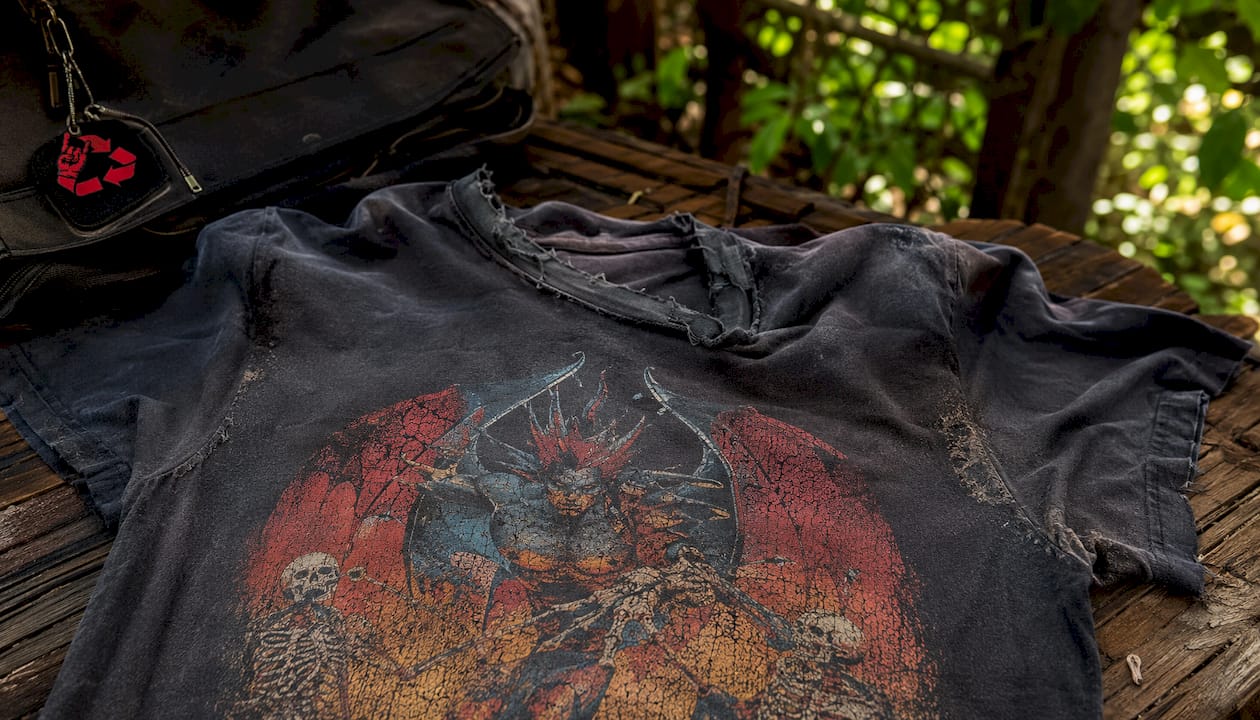
Run your fingers across the print. Real vintage cracking follows the fabric’s natural stress lines irregularly. Faked ageing tends to look like a machine tried to simulate 30 years of wash cycles in an afternoon.
How print techniques reveal a shirt’s era
Plastisol screen printing from the 1980s and 1990s develops fine, irregular surface cracking after decades of washing. It sits raised and slightly rubbery on the fabric. Modern direct-to-garment (DTG) printing sinks into the fibres and feels flat.
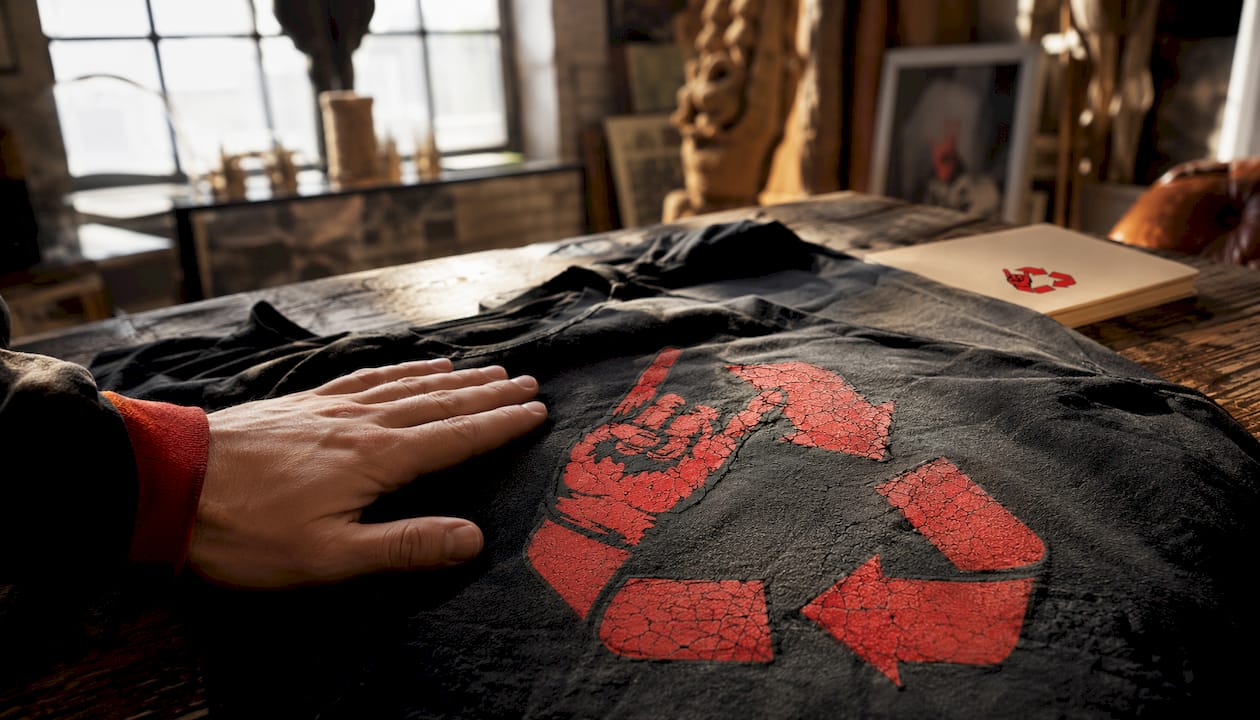
Discharge printing, which bleaches the fabric and dyes it rather than sitting on top, was used for softer-hand prints from the late 1980s onward. It leaves no raised texture at all. Knowing which technique was standard for a given era and band helps you identify authentic prints versus modern reproductions.
Common counterfeit tactics you need to know
Counterfeiters now use retro blanks, reproduction tags, DTG printing, faux ageing, and accurate copyright text. The tell is always in the mismatches: a vintage blank with a suspiciously crisp print, or correct copyright text paired with double-stitch on a shirt claimed to be from 1989.
Check our guide on avoiding counterfeit tour shirts for a deeper breakdown of specific red flags by era.
Building a decade-by-decade dating timeline
| Era | Key indicators |
|---|---|
| 1980s | Tubular construction, Screen Stars/Hanes tags, single-stitch, heavy 100% cotton, plastisol prints |
| Early 1990s | Single-stitch persists, Salem Sportswear common, copyright lines standard, 50/50 blends appear |
| Mid-1990s | Double-stitch transitions in post-1996, tag brands shift, side seams become common |
| 2000s | Ringspun cotton emerges, tags modernise, DTG printing begins appearing |
| Post-2005 | Tri-blend fabrics, modern blanks, DTG standard on reproductions |
The seriation method used in archaeology applies directly here: ordering shirts by their stylistic and construction evolution builds a reliable chronology for dating tour shirt styles across decades.
Provenance strengthens any dating conclusion. Original owner history, tour purchase receipts, and known collection sourcing all support authenticity claims when the physical evidence aligns.
Ready to own a piece of metal history you can actually verify? Vintage Metal Store stocks authenticated ex-tour and dead-stock heavy metal shirts, including a rare Metallica 1992 tour tee that ticks every dating marker covered here. Shop the legacy.

Key takeaways
Authentic vintage tour shirts require every physical signal, from tag brand to stitch type to print cracking, to align with the claimed era before you can trust the date.
| Point | Details |
|---|---|
| Tag brand is your first filter | Screen Stars, Hanes Beefy-T, and Salem Sportswear indicate pre-mid-1990s production. |
| Single-stitch means pre-1996 | Double-stitch became standard after 1996; single-stitch strongly suggests earlier manufacture. |
| Copyright is a hard date floor | A © date tells you the earliest possible print year, never the latest. |
| Fabric blend dates the blank | Tri-blend fabrics are mostly post-2005; heavy 100% cotton or 50/50 points to the 1980s–1990s. |
| Authenticate the total package | Fabric, tag, stitch, cracking, and copyright must all align; mismatches reveal fakes. |
FAQ
What is the seriation method and how does it apply to tour shirts?
Seriation arranges artefacts chronologically through stylistic evolution. Applied to tour shirts, it means ordering shirts by construction and design changes across decades to build a reliable dating framework.
What does single-stitch vs. double-stitch tell you about a shirt’s age?
Single-stitch hems on sleeves and the bottom strongly indicate pre-1996 production; double-stitch became the volume standard after 1996.
How do archaeologists’ dating methods relate to vintage shirt authentication?
Archaeologists use chronometric and relative dating techniques, including seriation, to order objects by age. Collectors apply the same logic by reading construction details like stitch type, tag era, and print technique as sequential, era-specific markers.
How can you tell if a vintage shirt’s ageing is genuine?
Real ageing concentrates irregularly at stress points like the collar and armpits. Artificial distressing shows symmetric wear patterns and uniform cracking stripes inconsistent with natural fabric breakdown.
Recommended
- Vintage vs. reissue shirts: the collector’s guide – Vintage Metal Store
- How to identify tour years on vintage heavy metal t-shirts – Vintage Metal Store
- Collector’s guide to vintage heavy metal t-shirts: spot, value, collec – Vintage Metal Store
- 7 Steps to the Ultimate Heavy Metal Shirts Buying Checklist – Vintage Metal Store


