



TL;DR:
- Accurate tour year verification increases a shirt’s value and cultural significance for collectors.
- Key clues include shirt tags, copyright lines, tour date lists, and artwork style.
- Cross-check multiple features and official archives to confidently confirm a vintage heavy metal tour shirt.
You’re staring at a listing for what looks like a genuine 1992 Metallica tour shirt. The price is steep, the seller claims it’s original, and the artwork looks right. But something feels off. Getting the tour year wrong on a vintage heavy metal tee isn’t just an embarrassing mistake — it can cost you hundreds of dollars and leave you holding a reprint instead of a grail. This guide walks you through every practical step for reading the clues, avoiding the traps, and confirming the exact tour year of any vintage metal shirt with confidence.
Table of Contents
- Why tour years matter for vintage metal tees
- Key features: How to spot tour years on t-shirts
- Classic pitfalls and common mistakes when dating shirts
- From clues to confirmation: Researching and verifying tour years
- Maximising value: Presenting and selling by tour year
- What most collectors get wrong about tour year authentication
- Explore vintage heavy metal tees and tour gems
- Frequently asked questions
Key Takeaways
| Point | Details |
|---|---|
| Tour year impacts value | Accurate tour year matches increase a shirt’s collectability and price significantly. |
| Key features to check | Tag details, copyright year, and tour lists are all essential for dating. |
| Avoid common errors | Don’t rely on artwork alone—cross-check all signs for authenticity. |
| Research boosts confidence | Use official archives and collector resources to confirm a shirt’s exact year. |
| Presentation adds value | Selling with clear, verified tour years attracts serious buyers and higher offers. |
Why tour years matter for vintage metal tees
Heavy metal tour shirts aren’t just clothing. They’re physical records of a specific night, city, and moment in music history. When Metallica rolled through North America in 1992 or Pantera hit the road behind Vulgar Display of Power, the shirts sold at those shows captured something that can never be recreated. That’s the core reason tour year accuracy matters so deeply to serious collectors.
Financially, the difference between a true 1994 original and a 2005 reissue of the same design can be enormous. Verified originals from iconic 90s tours regularly sell for $300 to $800 or more, while reprints of the same artwork might fetch $30 to $60. Collectors view shirts from authentic tour years as more valuable and culturally significant, and that gap in perception drives the entire secondary market.
Beyond money, there’s a cultural weight to owning the real thing. A shirt worn at a show carries a different energy than one printed a decade later for nostalgia. That’s why vintage shirts are so collectible in the first place. The community values provenance, and tour year is the clearest form of provenance a shirt can carry.
Here’s what accurate tour year identification does for your collection:
- Confirms the shirt was produced during the actual tour cycle
- Separates original merchandise from licensed reissues and bootlegs
- Supports accurate pricing when buying or selling
- Builds your reputation as a knowledgeable, trustworthy collector
- Protects you from overpaying for items misrepresented by sellers
“A shirt without a verified year is just a shirt. A shirt with a confirmed tour year is a piece of history.”
Getting the year right separates casual fans from serious collectors. Now that we’ve established the importance of getting the year right, let’s break down the classic tell-tale features to inspect.
Key features: How to spot tour years on t-shirts
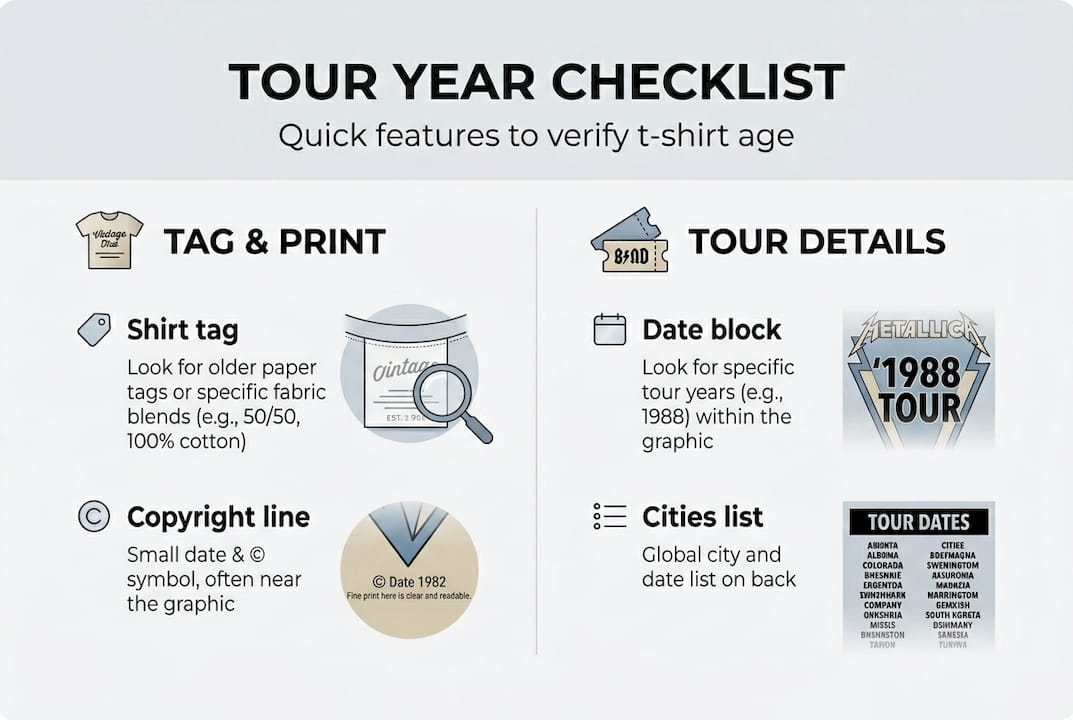
Understanding the impact, let’s dig into the finer details that distinguish the real thing. Collectors identify tour years using shirt tags, copyright lines, tour date lists, and artwork design. Each of these elements tells part of the story, and reading them together gives you the full picture.
1. The shirt tag The tag is your first port of call. In the early to mid 90s, the dominant blank shirt brands were Hanes Beefy-T, Fruit of the Loom, and Anvil. Each brand changed its tag design multiple times across that decade. A Hanes tag from 1991 looks noticeably different from one used in 1998. Learn the tag timelines for these brands and you’ll instantly narrow down the production window.
2. The copyright line Most legitimate tour shirts carry a copyright line printed inside or on the back hem. This typically reads something like “© 1993 Band Name / Brockum” or references a licenced merchandise company. Brockum, Winterland, and Giant Merchandising were the dominant licensees throughout the 90s. Matching the licensee name to its active years is a fast cross-check.
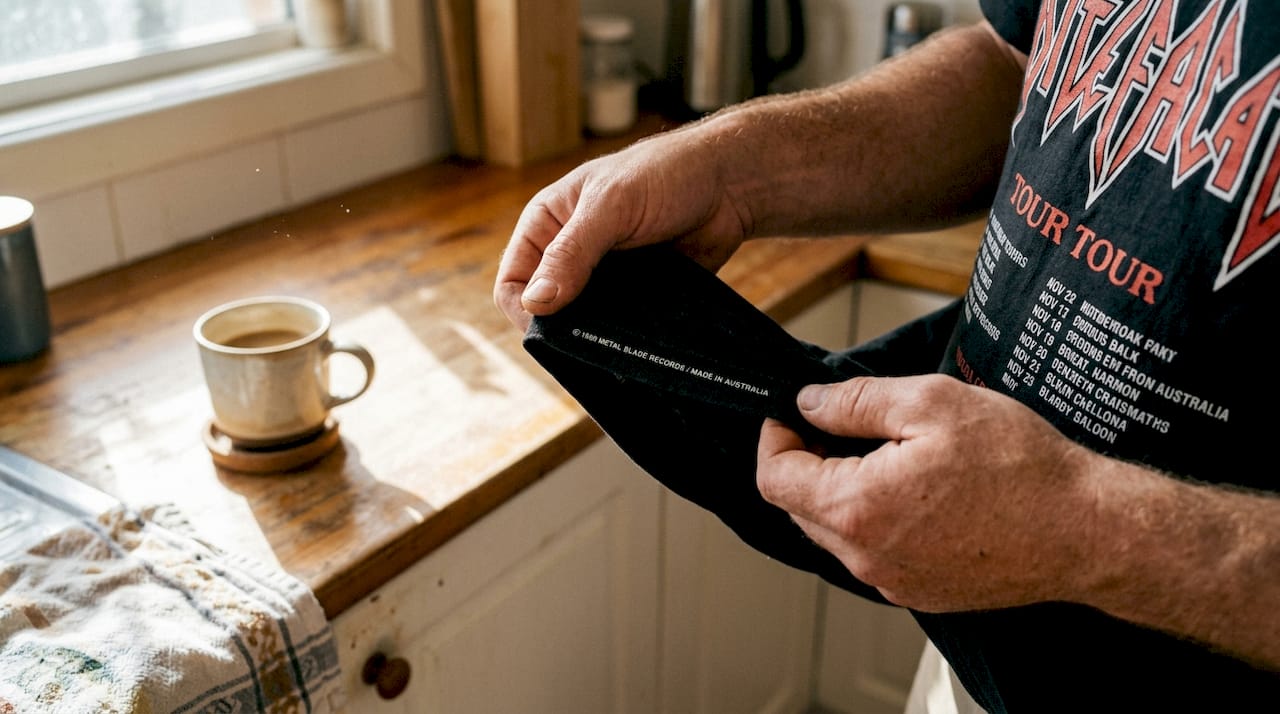
3. The tour date block The back of the shirt often lists every city and date on the tour. This is gold. Cross-reference those cities against known setlist archives or official band histories. If the dates match a documented tour leg, you’ve got strong evidence for the year.
4. Artwork and graphic style Print techniques, colour palettes, and graphic styles evolved throughout the 90s. Screen printing in that era produced a slightly different texture and ink saturation compared to modern digital printing. Check examples of vintage band tees to train your eye on what authentic period printing looks like.
| Feature | Authentic 90s original | Modern reprint | |—|—|—|| | Tag brand | Hanes, Fruit of the Loom, Anvil | Gildan, Bella Canvas | | Print texture | Raised, slightly cracked ink | Flat, smooth, vivid | | Copyright line | Brockum, Winterland, Giant | Generic or missing | | Tour dates | Specific cities and dates | Often absent or vague | | Fabric weight | Heavier cotton | Lighter, softer blend |
Pro Tip: Use the tour shirt checklist as a quick-reference guide when assessing any shirt. Running through each point systematically takes less than five minutes and dramatically reduces the chance of a costly mistake.
Classic pitfalls and common mistakes when dating shirts
Armed with what to look for, be wary of these traps collectors often fall into. The most common error is assuming the copyright date printed on a shirt automatically reflects the tour year. It doesn’t always. Some reissues use old art or copyright dates but don’t match the original tour at all. A shirt might carry a 1994 copyright on artwork that was reprinted in 2002.
Another frequent mistake is trusting the artwork alone. Bootleggers and reissue producers have access to the same iconic images. A perfectly rendered Metallica skull or a Pantera logo doesn’t confirm anything about when the shirt was made. The artwork is a starting point, not a conclusion.
Here are the most common pitfalls to avoid:
- Relying on a single clue. No one feature confirms a year. Always cross-check at least three indicators before drawing a conclusion.
- Ignoring the tag. Sellers sometimes remove or replace tags on reprints to make them look older. A missing tag is a red flag, not just an inconvenience.
- Confusing official and unofficial releases. Bootleg shirts were sold outside venues throughout the 90s. They may have the right look and feel but lack official licensing marks. Check tour merchandise tips for guidance on spotting the difference between official and unofficial stock.
- Trusting seller descriptions without verification. Even experienced sellers make honest mistakes about tour years. Always do your own checking.
- Overlooking fabric composition labels. The percentage of cotton and polyester listed on care labels changed across the decade and can help narrow down production periods.
Pro Tip: When you’re unsure about what makes a shirt vintage, focus on the combination of tag construction, stitching style, and print technique together. These three physical elements are much harder to fake convincingly than artwork alone.
Being aware of these traps puts you well ahead of most buyers in the market.
From clues to confirmation: Researching and verifying tour years
Now that you know pitfalls, here’s how to verify your finds with certainty. Suspecting a tour year is one thing. Confirming it is another. Cross-referencing official tour archives and community databases can confirm tee authenticity and give you the documented evidence to back up your assessment.
Here’s a step-by-step verification process:
- Start with the setlist archives. Setlist.fm and official band websites often carry complete tour histories including cities, venues, and dates. Match the cities on your shirt’s back print against these records.
- Search collector forums. Communities on Reddit (r/heavymetaltshirts), the Metal Shirt Archive on Facebook, and dedicated Discord servers are full of experienced collectors who have seen thousands of shirts. Post clear photos and ask for input.
- Compare against reference shirts. Find verified examples of the same tour shirt in collector databases or museum-style archives. Differences in print placement, colour, or tag style between your shirt and the reference can confirm or challenge your dating.
- Check the licensor’s active years. If the shirt lists Brockum as the licensor, that narrows the window to roughly 1987 to 1998 when Brockum was active in North America.
- Consult the official tour checklist. A structured checklist keeps your research systematic rather than relying on gut feeling.
| Verification method | Reliability | Time required |
|---|---|---|
| Setlist archive match | High | 10 to 15 minutes |
| Collector forum consensus | Very high | 1 to 24 hours |
| Tag era comparison | High | 5 minutes |
| Licensor history check | Medium to high | 10 minutes |
| Reference shirt comparison | Very high | Variable |
Understanding what a tour t-shirt actually represents in terms of production and distribution also helps you ask the right questions during research.
Maximising value: Presenting and selling by tour year
Once you’ve cracked the code, here’s how to maximise both enjoyment and resale. Knowing the tour year is only half the battle. Communicating it clearly and credibly to buyers is what actually moves the needle on price. Clear tour year and provenance can significantly increase a shirt’s selling price online, and the difference between a vague listing and a well-documented one can be hundreds of dollars.
Follow these steps when listing a verified vintage tour shirt:
- State the tour year in the title. Don’t bury it in the description. Buyers searching for a specific year need to find it immediately.
- Photograph every piece of evidence. Shoot the tag, the copyright line, the tour date block, and the front and back graphics in good natural light. Buyers who can see the evidence themselves are far more confident bidders.
- Reference your sources. Mention the setlist archive or collector forum thread that confirmed the year. This shows you’ve done the work and builds trust.
- Note the condition honestly. Vintage shirts with minor fading or cracking can still command strong prices. Trying to hide wear and tear destroys credibility.
- Use the correct terminology. Terms like deadstock, ex-tour stock, single stitch, and screen stars tag are understood by serious buyers and signal that you know what you’re talking about.
Listings with documented tour years and multiple supporting photographs consistently outperform vague listings on every major resale platform. The extra fifteen minutes spent on documentation pays off every time.
What most collectors get wrong about tour year authentication
Having covered the practical how-to, it’s time for an honest look at collector habits and real-world lessons. The uncomfortable truth is that most collectors, even experienced ones, still rely too heavily on a single indicator. They see a Brockum tag and stop looking. Or they match the copyright year and assume the job is done. That’s where costly mistakes happen.
Authentication is never about one clue. It’s about building a case. Every authentic shirt from a specific tour year will have multiple features that align: the tag era, the licensor, the print style, the tour date block, and the artwork all pointing to the same window. When even one of those elements doesn’t fit, that’s a signal to dig deeper rather than explain it away.
The best collectors we’ve seen treat every shirt like a detective problem. They gather evidence, check it against known references, consult the community, and only then commit to a year. That process, outlined in our famous tour tips resource, is what separates confident, accurate collectors from those who get burned. There are no shortcuts worth taking when real money and real history are on the line.
Explore vintage heavy metal tees and tour gems
Ready to find your next tour grail or confirm your collection? We stock authenticated vintage and ex-tour heavy metal shirts sourced directly from tour stock and deadstock, so you can buy with confidence knowing the provenance is real.

Whether you’re hunting for a Metallica 1992 tour shirt or browsing through Iron Maiden vintage shirts, every piece in our collection comes with the detail and transparency serious collectors expect. Browse all vintage shirts by band and era to find exactly what you’re looking for, with the documentation to back it up.
Frequently asked questions
How do I verify if my t-shirt is from the actual tour year?
Check the tag era, copyright line, and tour city list, then cross-reference tour details against official band archives or trusted collector resources for confirmation.
Are all original tour shirts marked with a year?
Not always. Some vintage shirts do not display an explicit year but can still be dated accurately through tag style, print technique, and tour location lists.
Can reprints be as valuable as original tour shirts?
Collectors value original tour shirts far more highly than reissues. Reprints rarely match original prices unless the reissue itself becomes a sought-after collector piece in its own right.
What is the most reliable sign of a shirt’s year?
Using multiple evidence points gives the strongest result. A matching combination of tag era, copyright print, and tour date block together offers the most reliable dating accuracy.
Recommended
- Why Vintage Heavy Metal Shirts Matter to Collectors – Vintage Metal Store
- What Makes A Shirt Vintage: Keys For Collectors – Vintage Metal Store
- Vintage tour shirt checklist for 90s metal collectors – Vintage Metal Store
- 7 Iconic Famous Heavy Metal Tour Merchandise Tips – Vintage Metal Store
- Basic Tees Punk Vintage T-Shirts For Men Men’s Bauhaus Spirit Logo Black T-Shirt - Post Punk Gothic Rock Graphic Tee (100% Cotton) Basic Tees Black Punk Vintage T-Shirts For Men


