



Ex-tour stock are original band t-shirts that were produced for a specific tour but never sold at the shows — leftover or unsold merch that eventually reaches collectors. The industry term you’ll also hear is deadstock, meaning unworn, often still-folded shirts that bypassed the merch table entirely. Before you buy, one thing matters above everything else: provenance and tag photos beat any seller’s verbal claim. Vintage Metal Store lists provenance notes and measured dimensions on every item, which is exactly the transparency you want from a local Australian seller.
This guide covers:
- How to tell a genuine ex-tour shirt from a reprint or modern reproduction
- What drives value and what to expect to pay in Australia
- How to care for fragile vintage tees and where to source them safely
Key takeaways
Genuine ex-tour stock is identified by era-correct blanks, single-stitch hems, cracked plastisol prints, and verifiable back-print tour dates — provenance documentation separates the real from the reproduction.
| Point | Details |
|---|---|
| Definition | Ex-tour stock are original, often unsold tour shirts; deadstock means unworn and unfolded. |
| Authentication priority | Check tag maker, stitch type, ink texture, and back-print dates before trusting any claim. |
| Value drivers | Band significance, deadstock condition, size rarity, and documented provenance all push prices higher. |
| Care essentials | Cold-water hand wash, air dry flat, store folded in acid-free bags with desiccant pouches. |
| Vintage Metal Store | Lists Australian ex-tour and deadstock metal shirts with measurements, tag photos, and provenance notes. |
Table of Contents
- What is ex-tour stock, and how does it differ from reprints?
- How do you identify an authentic ex-tour or deadstock shirt?
- What drives value, and what should you expect to pay in Australia?
- How to care for and preserve your vintage tees
- What should you check before buying — and what are the red flags?
- Where can Australian collectors reliably source authentic ex-tour stock?
- Why ex-tour stock matters more than most collectors realise
- Vintage Metal Store: Australian ex-tour stock, properly documented
- Sources
- FAQ
What is ex-tour stock, and how does it differ from reprints?
Tour shirts are printed in bulk before a band hits the road. Venues sell them at the merch desk, but overruns happen constantly — a show gets cancelled, a size runs slow, or the promoter simply over-ordered. Those leftovers are ex-tour stock. Deadstock is the narrower term: shirts that have never been worn or washed, sometimes still in original poly bags. Both categories sit at the top of the collector market.
The confusion starts with reprints. Licensed reprints from the 2000s used the same artwork but on modern blanks, with screen-printed tags and different stitching. Modern reproductions go further: they copy the look of vintage tees but are printed today on new fabric. According to a market overview at WEAR2AM, the vast majority of items listed as “vintage” band tees are reproductions, reprints, or modern vintage-style prints. Genuine originals are the minority.
A classic illustrative example is the Metallica 1992 “Don’t Tread on Me” USA tour tee — a shirt produced for a specific leg of a real tour, with back-print dates that can be cross-referenced against known itineraries. That specificity is what separates ex-tour stock from anything printed after the fact.
| Type | Origin | Typical age | Common blank | Relative value |
|---|---|---|---|---|
| Genuine original tour shirt | Printed for a specific tour | 1990s | Hanes Beefy-T, Fruit of the Loom | Highest |
| Licensed reprint | Official but post-tour production | 2000s | Modern Gildan or Anvil | Moderate |
| Modern reproduction | Unofficial copy of vintage artwork | 2010s | New-weight cotton, DTG print | Lowest |
How do you identify an authentic ex-tour or deadstock shirt?
Authenticity lives in the details, and photos are your first line of defence when buying online. Here is what to check, in order:
Photo checklist (request these from any online seller):
- Tag close-up: care label, maker name (Hanes, Fruit of the Loom, Screen Stars), and size stamp
- Collar and seam stitching: single-stitch hems are a strong indicator of pre-1994 manufacture
- Print placement and back tour-date list: dates should match a verifiable itinerary
- Ink type: original plastisol prints show cracking and fading consistent with age; modern DTG prints look flat and even
- Wash tag: the presence of a separate wash-instruction tag (rather than a printed-in label) is era-specific
In-hand checks:
- Fabric weight: genuine vintage blanks feel heavier and denser than modern 100% cotton tees
- Preshrunk stamp: many 80s/90s blanks carry a “pre-shrunk” stamp on the tag
- Collar ribbing: original shirts often have a thicker, tighter rib collar that has relaxed with age
- Label brands: Screen Stars, Hanes Beefy-T, and Fruit of the Loom single-stitch are the era-correct blanks to look for
One point collectors often miss: wear is not automatically a problem. Ryan Wodson of Retrostar, a Melbourne vintage retailer, notes that imperfections like moth holes and natural fibre softening can validate a shirt’s age and contribute to its historical identity. A shirt with believable, consistent wear across the fabric and print is often more convincing than one that looks suspiciously pristine. For a deeper breakdown of ex-tour stock categories and what physical cues to look for, the Vintage Metal Store collector’s guide is worth bookmarking.
Pro Tip: When buying online, always request a photo of the shirt laid flat under natural light, plus a close-up of the tag and a detail shot of the print surface. If a seller can’t or won’t provide these three angles, treat that as a red flag.
What drives value, and what should you expect to pay in Australia?
Value in ex-tour stock is never just about age. Several factors stack on top of each other, and understanding them helps you spot a fair listing fast.
Core value drivers:
- Band and tour significance: a shirt from a landmark tour (a farewell run, a first Australian date, a tour that never happened again) carries a premium
- Print design: front-only prints are common; unusual artwork, multi-colour back prints, or designs that were tour-exclusive command more
- Deadstock vs worn: an unworn, unfolded shirt in original condition can be worth two to three times a comparable worn example
- Size rarity: large and XL sizes from the 80s and 90s sell faster and often higher because collectors wear them; small sizes can be harder to move
- Provenance: a shirt with a receipt, a photo from the era, or documented chain of ownership multiplies its credibility and price
The Vintage Metal Store value and rarity guide documents how Australian collectors benchmark these factors against real listings. For broader context on why limited and tour-exclusive pieces hold value over time, the rarity and smart buying guide at Naise Shopper is a useful read.
A mint condition large from a rare tour can outprice a good-condition medium of the same shirt by a significant margin — size scarcity and wearability combine. Provenance documentation can push a shirt from the mid range to the top of it.
How to care for and preserve your vintage tees
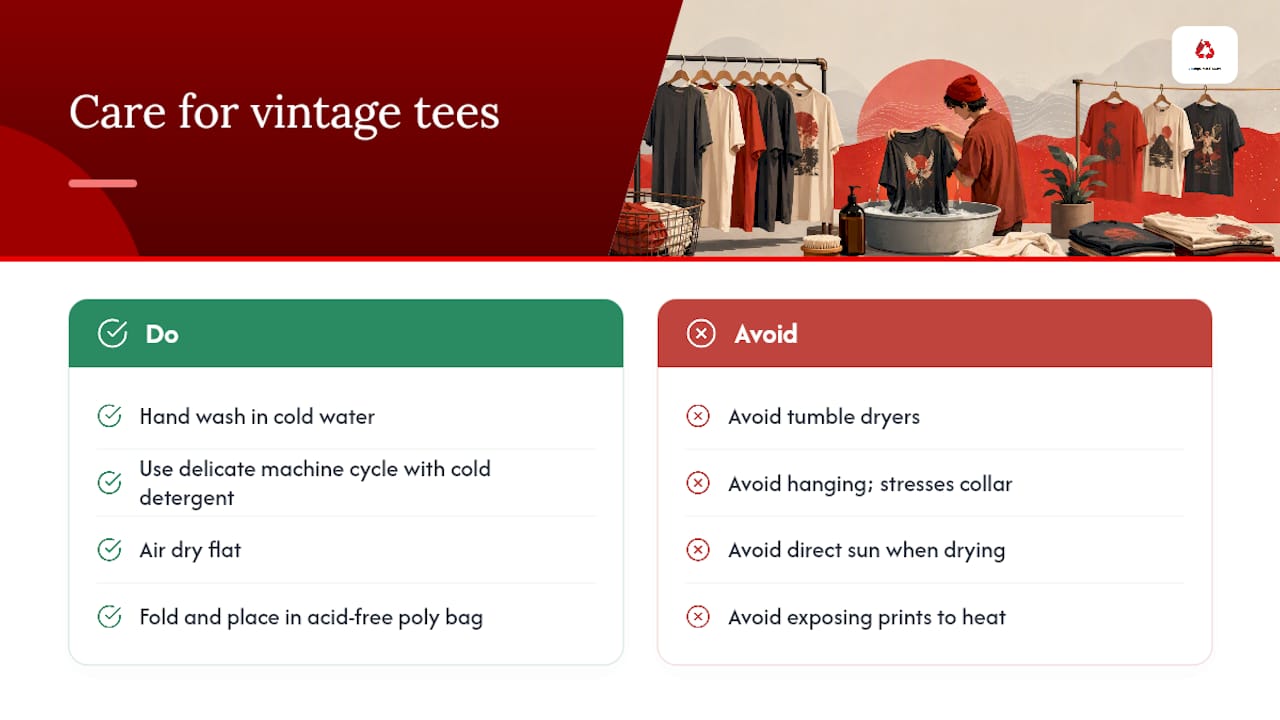
Handle vintage fibres gently, minimise washing, and keep heat away from the print. That is the whole philosophy, and every other tip follows from it.
For washing, hand washing in cold water is the safest method. If you use a machine, a delicate cycle with a cold-water detergent like Woolite keeps fibres intact. ThriftCon’s laundering guide recommends air drying flat rather than hanging, which prevents collar stretch, and avoiding tumble dryers entirely — the heat degrades both the fabric and the plastisol print. Keep shirts out of direct sun during drying; UV exposure fades prints faster than almost anything else.
The Guardian’s vintage tee care piece quotes Ryan Wodson directly on this:
For storage, fold rather than hang — hangers stress the collar and shoulders of aged cotton. Plastic bins with desiccant pouches control humidity, which is especially relevant in Australia’s coastal climates where moisture accelerates fabric degradation. The Vintage Metal Store storage guide covers folding technique, bin selection, and humidity thresholds suited to Australian conditions.
Pro Tip: Store each shirt in a separate acid-free poly bag before placing it in a bin. This prevents dye transfer between shirts and keeps dust off the print surface.
What should you check before buying — and what are the red flags?
Buyer checklist (online and in person):
- Request pit-to-pit, length, and sleeve measurements — compare against known era-blank sizing charts
- Ask for tag photos: care label, maker name, size stamp, and any neck print
- Request a full-print photo front and back, plus a close-up of the print surface showing texture
- Check seller history and return policy before paying above AU$100
- Ask directly: where did this shirt come from, and is there any documentation?
Red flags that suggest a reproduction or scam:
- Low-resolution or heavily filtered photos
- Generic “vintage style” wording with no specific tour, year, or blank named
- Tag era doesn’t match the claimed tour year (e.g. a printed-in Gildan tag on a claimed 1991 shirt)
- Ink looks flat, even, and uncracked on a shirt claimed to be 30+ years old
- Seller refuses to provide additional photos or measurements
- Price is dramatically below market without explanation
Detailed listing photos and garment measurements are the single most reliable safeguard for online purchases — any seller confident in their stock will provide them without hesitation.
Where can Australian collectors reliably source authentic ex-tour stock?
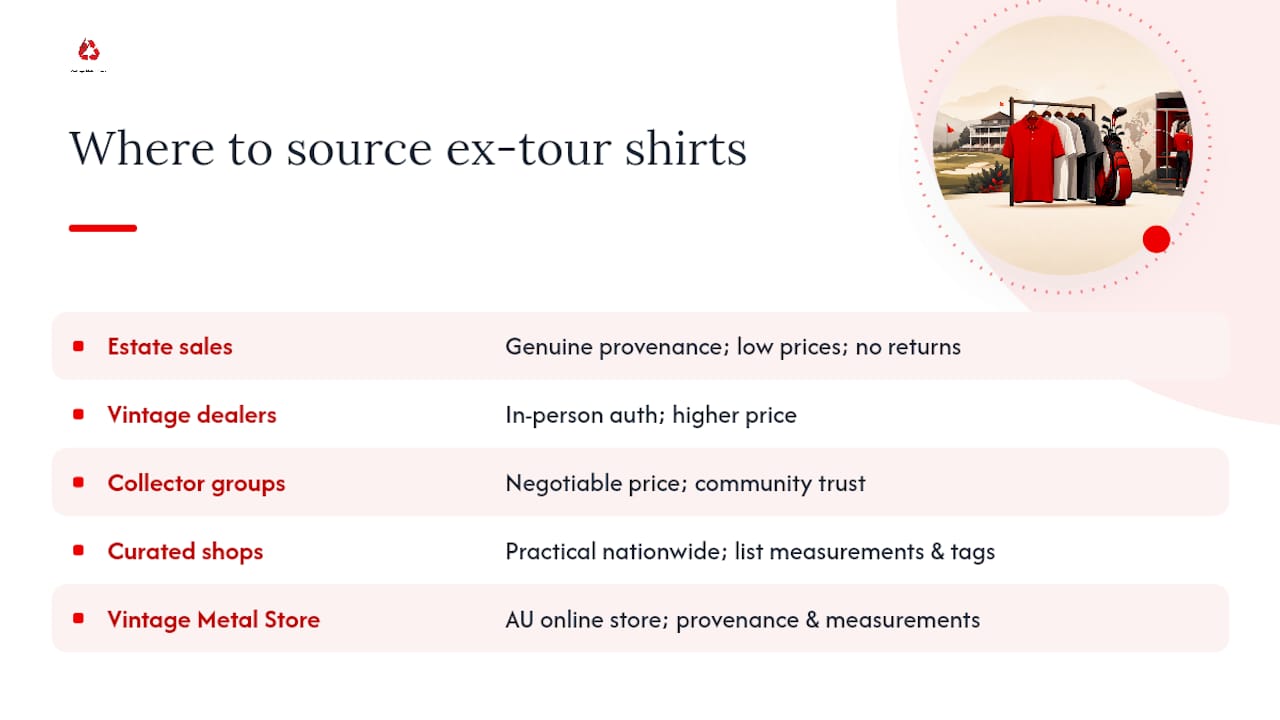
Estate sales are the classic hunting ground. Shirts surface here with genuine provenance — sometimes still in the original owner’s wardrobe — and prices can be well below specialist retail. The trade-off is unpredictability and no returns.
Specialist vintage dealers like Retrostar in Melbourne offer higher confidence at higher prices. Staff can authenticate in person, and the curation filters out obvious reproductions. Worth visiting if you’re in a major city.
Collector groups and forums (Facebook groups, Reddit communities focused on vintage metal merch) connect buyers directly with other collectors. Prices are negotiable and provenance conversations happen naturally, though you’re relying on community trust rather than a formal returns policy.
Curated online shops are the most practical option for most Australian buyers, particularly outside Melbourne and Sydney. Look for sellers who list measurements, tag photos, and provenance notes on every item.
Vintage Metal Store is an Australian online store specialising in ex-tour and deadstock heavy metal shirts, with listings that include provenance notes and measured dimensions. Browse the Metallica tour shirt collection as a starting point for seeing what a well-documented listing looks like.
Pro Tip: Before paying, ask every seller three questions: Where did this shirt come from? Can you provide measurements? What is your return policy if the item is not as described? A seller who answers all three confidently is worth trusting.
Why ex-tour stock matters more than most collectors realise
The conventional wisdom treats ex-tour stock as a sub-category of vintage fashion. That framing undersells what these shirts actually are.
A genuine tour tee is a primary document. It was printed for a specific event, worn or not worn by someone who was there, and survived decades through luck and care. The back-print dates are a verifiable record. The blank tells you when it was made. The crackle in the ink tells you how it was stored. Every physical detail is evidence, not decoration.
What collectors sometimes overlook is that the shirt’s value is inseparable from its story. A Metallica 1992 tour tee without provenance is a nice piece of cotton. The same shirt with a receipt, a photo, and a documented chain of ownership is a piece of metal history you can hold. That gap between the two is where most of the price difference lives, and it’s also where most buyers get caught out — paying original prices for shirts with no story to back them up.
The market has corrected since the speculative peak of the early 2020s. Pricing is more grounded now, which is genuinely good news for serious collectors. The shirts that held their value are the ones with the clearest provenance and the most specific documentation. That pattern will continue.
Vintage Metal Store: Australian ex-tour stock, properly documented
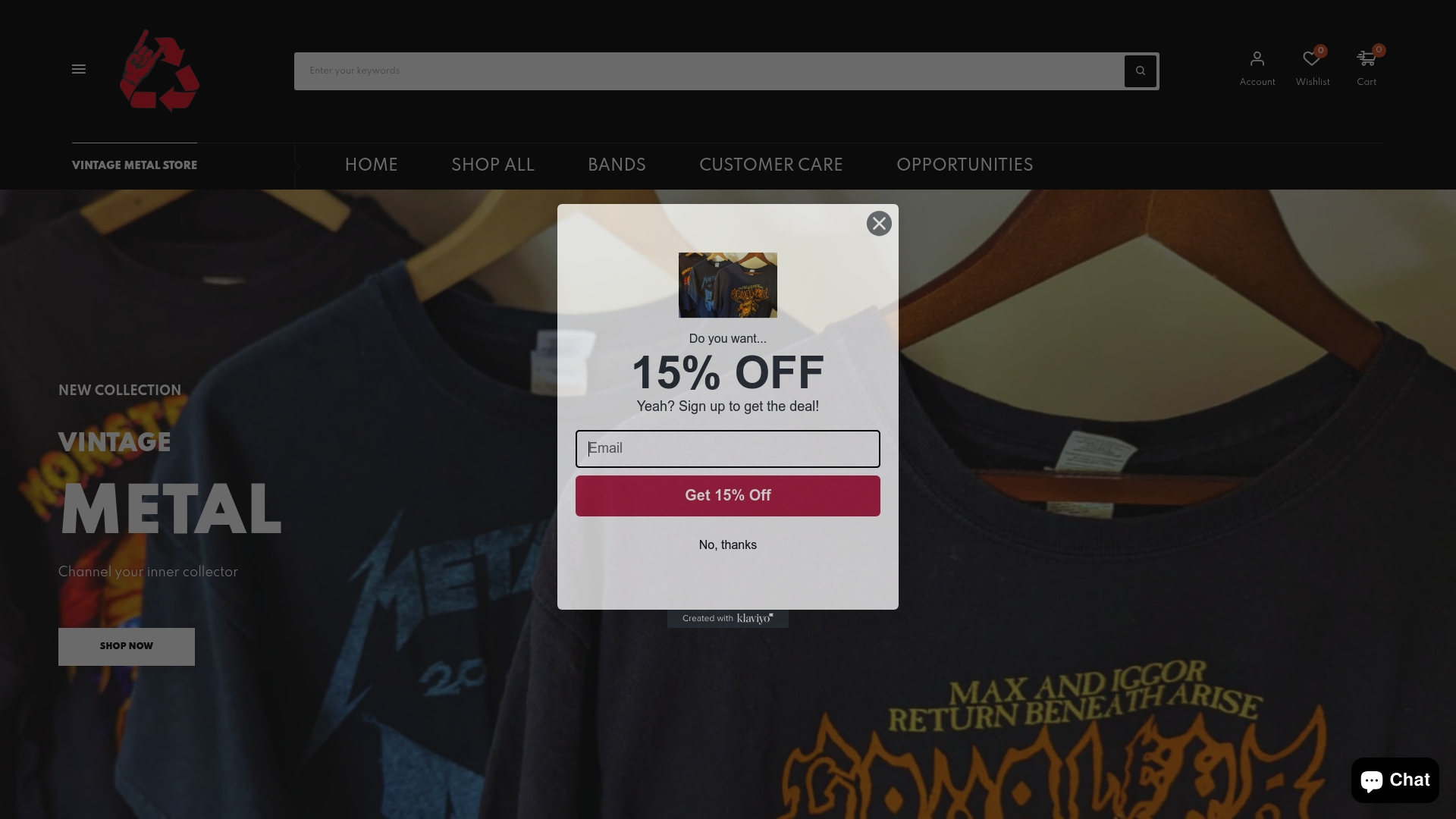
Vintage Metal Store is an Australian online store built specifically for heavy metal collectors who want ex-tour and deadstock shirts with the documentation to back them up. Every listing includes provenance notes, pit-to-pit and length measurements, and tag close-ups — the exact details this guide says to demand from any seller.
The rare Metallica 1992 “Don’t Tread on Me” USA tour shirt is a live example of what a fully documented ex-tour listing looks like: verified blank, back-print dates, and condition notes. If you’re ready to browse, the Metallica collection is the place to start. Domestic shipping, transparent listings, and a store that knows the difference between a Screen Stars single-stitch and a Gildan reprint.
Sources
- Caring for vintage T‑shirts: ‘If you want it for a long time, treat it that way’ | The Guardian
- Vintage Band Tees: A No-BS Buying Guide for 2026 — WEAR2AM Blog | WEAR2AM
- Washing, Wearing and Storing a Vintage Tee So It Lasts Forever – ThriftCon
- MAG-4.2.pdf (Brooklyn College repository) — includes quoted insight from Retrostar co‑owner Ryan Wodson
FAQ
What does ex-tour stock mean for band t-shirts?
Ex-tour stock refers to original band t-shirts that were printed for a specific tour but left unsold at the merch desk. They are genuine period items, not reprints or reproductions, and are sold to collectors after the tour ends.
How do you tell a genuine vintage tour tee from a reprint?
Check the tag maker (Hanes, Screen Stars, Fruit of the Loom), look for single-stitch hems, and examine the print surface for age-consistent cracking. Back-print tour dates that match a verifiable itinerary are one of the strongest authenticity signals.
What is deadstock, and is it worth more than a worn tour shirt?
Deadstock means the shirt was never worn or washed after manufacture. An unworn deadstock example in original condition can be worth significantly more than a comparable worn shirt, particularly for rare designs or sought-after tours.
Where can Australian collectors buy authentic ex-tour stock?
Estate sales, specialist vintage dealers like Retrostar in Melbourne, collector groups, and curated online stores are the main sources. Vintage Metal Store is an Australian option with documented listings that include measurements and provenance notes.
How should you store a vintage metal tour shirt long-term?
Fold rather than hang, store in acid-free poly bags inside plastic bins with desiccant pouches, and keep away from direct sunlight and humidity. Australian coastal climates make moisture control especially important for preserving both fabric and print.
Recommended
- Types of ex tour stock shirts: a collector’s guide – Vintage Metal Store
- Tour stock shirts explained: Value, rarity and collector secrets – Vintage Metal Store
- The real value of tour stock shirts for collectors – Vintage Metal Store
- 7 Types of Vintage Band Tees Every Collector Should Know – Vintage Metal Store


