



TL;DR:
- Vintage heavy metal t-shirts are valuable pieces of wearable history that require careful preservation to maintain their condition. Following a step-by-step care routine involving gentle washing, proper storage, and minimal intervention helps protect these collectible garments for decades. Using archival-quality supplies and avoiding harsh chemicals or high heat ensures these iconic shirts retain their original print and fabric integrity.
There’s a particular gut-punch feeling that every serious collector knows. You pull your prized Slayer 1988 South of Heaven tour tee out of the dryer, and the iconic skull print has cracked straight down the middle. That shirt, once worth serious money, is now a shadow of itself. Vintage heavy metal t-shirts aren’t just clothing — they’re wearable history, tangible proof you were part of something, or rare pieces of tour memorabilia that took years to track down. One careless wash is all it takes to strip that value away permanently. This guide gives you a proven, step-by-step care routine built around archival and expert sources, so your collection stays in prime condition for decades to come.
Table of Contents
- What you’ll need to care for vintage metal shirts
- Step-by-step cleaning: From wash to dry
- Archival storage: Preserving your shirt between wears
- Special cases: Troubleshooting fragile or distressed shirts
- What collectors miss about shirt care: Real talk from the trenches
- Find authentic vintage metal shirts and supplies
- Frequently asked questions
Key Takeaways
| Point | Details |
|---|---|
| Gentle cleaning is key | Always use cold water, mild detergent, and avoid heat to keep prints intact. |
| Archival storage preserves value | Pad folds with acid-free tissue and use proper storage boxes to avoid damage. |
| Minimise unnecessary washing | Every wash risks wear—clean only when needed and use spot cleaning often. |
| Special shirts need special care | Distressed or fragile prints may demand hand-washing or unique handling steps. |
| Avoid shortcuts and myths | Stick to expert-approved basic methods, not untested cleaning hacks. |
What you’ll need to care for vintage metal shirts
Now that you know the high stakes for your favourite band tour tee, let’s get everything you need ready before starting step one.
The right supplies aren’t expensive or hard to find, but skipping even one of them creates risk. Think of this as your pre-wash checklist — the same way a mechanic lays out tools before pulling an engine, you want every item on hand before you touch your shirt. Rushing mid-process and grabbing whatever is nearby is exactly how irreversible mistakes happen.
A generally recommended routine for vintage graphic and band t-shirts involves washing inside out in cold water on a gentle cycle with a mild detergent, skipping bleach and fabric softener, minimising heat, and air drying. Every item in the checklist below supports at least one of those steps.
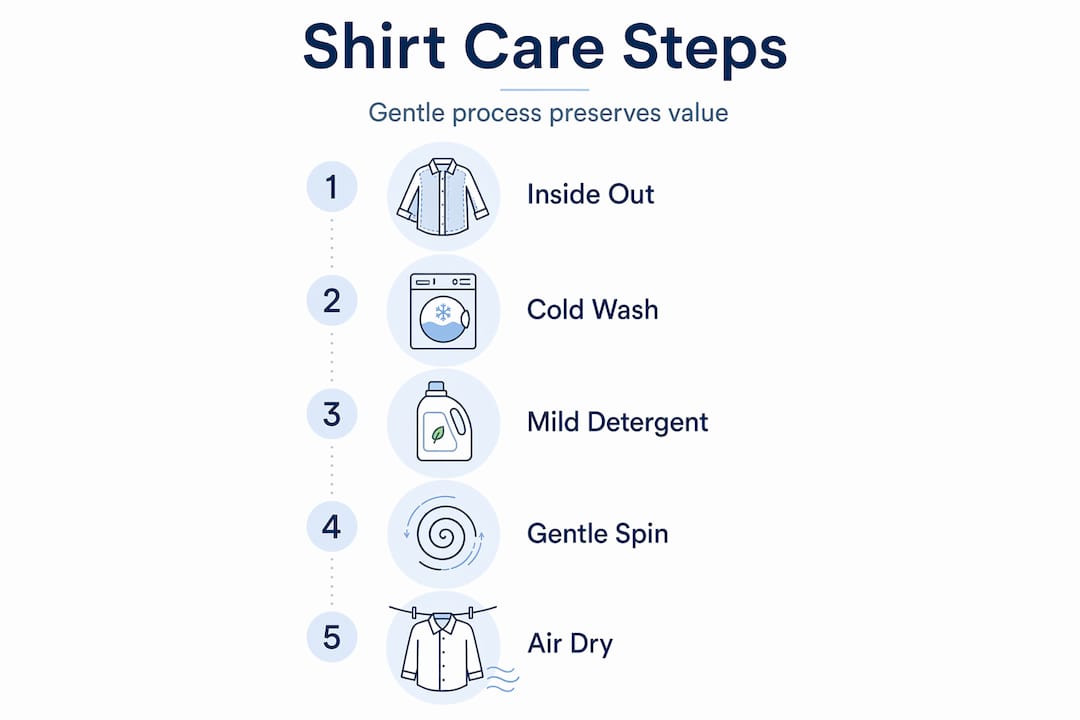
Winterthur archival guidance also recommends lining archival boxes with cotton muslin or an undyed bed sheet as a supportive sling when storing folded textiles. That single detail separates a good storage setup from a museum-grade one.
Essential supplies checklist:
- Mild, pH-neutral detergent — Look for fragrance-free, dye-free formulations. Harsh surfactants attack screen-print ink layers and degrade vintage cotton fibres over time.
- Cold water — Never hot. Heat is the enemy of both print adhesion and aged cotton weave.
- Soft-bristle brush — For gentle surface dusting before washing. A clean, dry toothbrush works well for spot areas.
- Acid-free tissue paper — Unbuffered, used to pad fold lines during storage and prevent harsh creasing.
- Cotton muslin or undyed cotton sheet — Acts as a supportive sling inside archival boxes or as a press barrier during ironing.
- Archival storage box — Flat, lidded, and made from acid-free materials. Available from art supply or conservation stores.
- Clean sink or basin — For hand-washing fragile or particularly valuable shirts.
| Material | Purpose | Acceptable alternative |
|---|---|---|
| pH-neutral detergent | Cleans without attacking ink or fibres | Wool wash or baby shampoo (unscented) |
| Acid-free tissue | Pads fold lines in storage | Unbuffered white tissue paper |
| Cotton muslin | Storage sling and press barrier | Clean undyed cotton pillowcase |
| Archival box | Protects from dust, light, and acid | Clean, uncoated cardboard box (short-term only) |
| Soft-bristle brush | Surface dust removal | Clean, dry makeup brush |
| Cold water | Safe washing temperature | Lukewarm water (20°C max) |
For collectors interested in the long game, pairing your care routine with eco-conscious laundry practices not only protects the environment but also tends to use gentler methods that happen to be better for vintage fabric anyway. Think cold wash, air dry, and minimal product — exactly what vintage shirts need.
If you’re planning storage alongside your washing routine, read our guide on storing shirts for lasting quality to build out both ends of the care process at once.
Pro Tip: Lay all your supplies out on a clean, flat surface before you begin. Once your shirt is wet, you don’t want to be searching for the detergent or a clean towel.
Step-by-step cleaning: From wash to dry
With supplies on hand, it’s time to walk through the process — step by step — so each wash protects your tee’s legacy.
The difference between a collector and a casual fan often comes down to this: collectors treat cleaning as a form of preservation, not just hygiene. Archival preservation principles tell us to minimise washing frequency, reduce mechanical agitation, and prioritise air drying over tumble drying. Hand-washing is often safer than machine washing for fragile or particularly valuable pieces.
Step-by-step cleaning process:
- Inspect the shirt first. Check for loose inks, cracks in the print, thinning fabric, or loose seams. If the shirt is extremely fragile, skip to the special cases section below.
- Turn the shirt inside out. This single step protects the print from direct friction during the wash cycle and significantly reduces surface wear.
- Choose your wash method. Machine wash on a cold, delicate cycle for shirts in solid condition. Hand-wash in a clean basin of cold water for fragile, rare, or high-value pieces.
- Add mild detergent only. A small amount — roughly half the usual dose — is sufficient. No bleach. No fabric softener. No scent boosters.
- Wash gently. In the machine, use a mesh laundry bag for extra protection. By hand, gently press and swirl the shirt rather than scrubbing or wringing.
- Rinse thoroughly. Detergent residue left in fibres can degrade cotton and screen-print inks over time. Rinse until the water runs clear.
- Press out excess water carefully. Do not wring or twist. Gently press the shirt against the basin wall or roll it loosely in a clean, dry cotton towel.
- Air dry away from direct sunlight. Hang on a padded hanger or lay flat on a clean surface. UV exposure fades colours and degrades printed graphics faster than almost anything else.
Critical heat warning: Heat is a major enemy of printed garments. Tumble drying on high heat causes ink to crack, bond lines to fail, and vintage cotton to shrink or distort. If you must use a dryer, the lowest heat setting is the absolute ceiling — but air drying remains the only safe standard for true collector pieces.
Machine wash vs. hand wash — when to use each:
| Factor | Machine wash | Hand wash |
|---|---|---|
| Shirt condition | Good structural integrity | Fragile, thinning, or cracked prints |
| Print type | Sealed, well-bonded graphics | Peeling, raised, or distressed prints |
| Age of shirt | Post-1980s in good condition | Pre-1980s or unknown print history |
| Washing frequency | Occasional, not repeated | Rarely, when genuinely needed |
| Risk level | Low to moderate | Lowest possible |
Pro Tip: Never iron directly on a print. Always iron from the reverse side using a cotton muslin cloth as a barrier, and keep the heat on the lowest effective setting. Even then, less is more.
For a full breakdown of collector-grade shirt care principles, including guidance on specific print types and era-specific fabrics, our dedicated guide goes deeper into the archival side of the process. And if you’re building a collection worth protecting, understanding what makes a vintage shirt valuable in the first place helps you prioritise your care efforts accordingly.
Archival storage: Preserving your shirt between wears
After cleaning, storage is where most value is won or lost — here’s how to safeguard your shirts for the long term.

Plenty of collectors nail the wash routine, then fold the shirt and shove it in a drawer. That’s where long-term damage quietly accumulates. Repeated pressure on fold lines, exposure to light, and contact with acidic materials all degrade vintage cotton and screen-print inks over months and years.
Archival textile storage guidelines specify that folded textiles should be stored in archival boxes with unbuffered acid-free tissue padding each fold line to minimise harsh creasing. Hanging is an option, but only for shirts in strong structural condition and made from non-stretchy fabrics — hanging a fragile vintage tee by the shoulders causes permanent distortion at the seams over time.
Archival storage essentials:
- Archival box — Flat, acid-free, and lidded. Keeps out dust, moisture, and ambient light.
- Acid-free tissue — Fold gently and pad each crease line. This prevents the cotton fibres from breaking along repeated stress points.
- Cotton muslin sling — Lines the box and supports the shirt’s weight evenly, reducing point pressure on any one area.
- Cool, dark, dry location — Avoid attics and garages where temperature and humidity fluctuate. A climate-controlled wardrobe or shelving unit is ideal.
- Clear labelling — Record what’s in each box without opening it. Unnecessary handling adds up over time.
Structural stress warning: Hanging a vintage shirt that has thin, weakened shoulder seams will cause those seams to elongate and eventually tear. If the fabric shows any sign of stress along the neckline or armholes, folded flat storage in an archival box is the correct choice, full stop.
| Storage method | Pros | Cons |
|---|---|---|
| Archival box (folded) | Protects from light, dust, and handling | Fold lines can crease if not padded properly |
| Hanging (padded hanger) | Keeps shape, easy to view | Risk of shoulder distortion, UV and dust exposure |
| Plastic bag or bin | Cheap and accessible | Traps moisture, acids from plastic degrade fabric |
| Drawer storage | Convenient | No protection from acid, light, or pressure |
For a complete guide to textile storage best practices including shelf organisation and climate management, we’ve put together a detailed resource specifically for heavy metal shirt collectors. You can also explore structured textile storage methods that apply directly to vintage cotton garments.
Special cases: Troubleshooting fragile or distressed shirts
Not all band shirts are built to survive classic care — sometimes, unique or damaged garments need extra protection.
Distressed, worn, or heavily aged shirts from major tours are often the most valuable and the most fragile. The very thing that makes them desirable — the broken-in print, the paper-thin cotton, the faded graphics — also makes them vulnerable. Standard washing routines that work fine on a solid vintage tee from the 1990s can destroy a 1970s or early 1980s original in a single cycle.
Distressed shirts and very fragile prints may warrant deviating from standard machine-wash routines entirely. Sometimes hand-washing is the right call. Sometimes the goal is simply removing dust or odours without introducing any water at all. Ironing should only happen from the reverse side with a cloth barrier and tightly controlled heat.
Special handling steps for fragile pieces:
- Assess before you act. Hold the shirt up to a light source and look for thinning fabric, cracking print layers, or fraying seams. If in doubt, do less, not more.
- Try surface dusting first. A clean, dry soft brush removes surface dust without any moisture risk. This is often enough for shirts that just need freshening up.
- Spot clean with care. Dampen a cotton cloth with plain cold water and very gently press (never rub) the specific soiled area. Test on a hidden seam area first.
- Deodorise without washing. Place the shirt in a clean, breathable bag with a small sachet of activated charcoal or baking soda for 24 to 48 hours to neutralise odours without any moisture contact.
- If you must wash, hand-wash only. Submerge gently in cold water with a minimal amount of mild detergent. No agitation. Press and release. Rinse carefully.
- Know when to call a professional. If a shirt has significant staining, structural damage, or historical significance, a textile conservator is worth the cost. No online guide is a substitute for professional assessment on a genuinely rare piece.
Pro Tip: Always test any cleaning method on a hidden internal seam or hem area first. If the fabric reacts badly or the test spot shows any colour bleed or ink movement, stop immediately.
For collectors trying to determine whether a shirt qualifies as true dead stock or tour stock, our guide on identifying dead stock will help you understand what you’re working with before you decide on a care approach.
What collectors miss about shirt care: Real talk from the trenches
Here’s the truth even some seasoned collectors overlook, even after mastering every step above.
The internet is full of niche cleaning hacks. Salt soaks to set colours. White vinegar rinses to soften fabric. Specific pH targets for washing water. Some of these ideas come from hobbyist sources that sound authoritative but haven’t been tested against the reality of aged screen-print inks on 40-year-old cotton. The risk isn’t just that the hack doesn’t work — it’s that by the time you realise it hasn’t worked, the damage is already done.
We’ve seen it happen. A collector soaks a rare Iron Maiden 1984 World Slavery Tour shirt in a vinegar solution to “brighten” the print. Forty minutes later, the acid has lifted portions of the ink and the white lettering has a pinkish bleed around its edges. The shirt still exists, but it’ll never look right again. That’s not a recoverable situation.
Some hobby and retail sources advocate specific soaking additives or pH targets that deviate from broadly agreed conservator methods. For best results aligned with actual textile conservation practice, stick to what the archival community consistently recommends: cold water, mild neutral detergent, minimal agitation, air dry. Simple. Tested. Repeatable.
The one rule every successful collector eventually accepts is this — less intervention is better. A shirt that smells faintly of age but retains its full print is worth more than one that’s been freshened up and lost half its graphic detail. Before you reach for any product or method, ask: is this wash actually necessary, or am I just anxious about the shirt?
Before you start building your care habits, make sure your buying decisions are sound from the start, because the best care routine in the world can’t rescue a shirt that was already compromised when you acquired it.
Find authentic vintage metal shirts and supplies
Once your collection is secured, sourcing the next must-have tee or care accessory is the natural next step.
At Vintage Metal, we specialise in genuine ex-tour stock and dead stock heavy metal shirts — the real deal, not reproductions. Every shirt in our catalogue has been sourced with collectors in mind, and we understand what makes these pieces worth preserving in the first place.

Whether you’re hunting for a specific era or band, our Metallica shirt collection is one of the strongest in Australia, with original tour pieces that rarely surface on the open market. For something truly exceptional, the rare Metallica 1992 Don’t Tread on Me tour shirt is exactly the kind of grail piece that rewards a meticulous care routine. Browse the full range of all available vintage shirts and find your next addition to a collection worth protecting.
Frequently asked questions
Can I use regular fabric softener on vintage metal shirts?
No, avoid fabric softener as it coats fibres and can compromise both print adhesion and fabric integrity. A mild, neutral detergent used sparingly is the safest option.
How often should I wash a rare tour shirt?
Minimise washing frequency as much as possible. Spot clean when needed, and only fully wash the shirt when surface dusting and deodorising aren’t sufficient.
What is the safest way to store a vintage tee for long periods?
Use archival boxes and pad fold lines with unbuffered acid-free tissue. Avoid plastic bags and fluctuating temperature environments, and only hang shirts that are in strong structural condition.
Should I iron my vintage metal shirt if it’s wrinkled?
Only iron on the reverse side at a low heat setting, always with a cotton muslin barrier between the iron and the fabric. Never iron directly on the print or you risk permanently damaging the ink layer.
Are there eco-friendly methods to care for vintage shirts?
Yes. Cold water washing, air drying, and using minimal amounts of earth-friendly detergent reduce environmental impact while also being among the gentlest methods available for preserving vintage fabric and screen-printed graphics.
Recommended


