



Vintage heavy metal shirts represent more than fabric and ink. They’re tangible pieces of music history, often worth hundreds or thousands of dollars, yet vulnerable to irreversible damage from improper handling. Many collectors watch helplessly as necklines stretch, prints crack, and patches delaminate simply because they lack proper preservation knowledge. This comprehensive guide delivers expert-backed techniques for storage, washing, and maintenance that will keep your prized vintage band shirts in museum-quality condition for decades. You’ll learn the exact methods professional archivists use to protect textile collectables, adapted specifically for heavy metal memorabilia.
Table of Contents
- Understanding The Vulnerabilities Of Vintage Band Shirts
- Preparing Your Vintage Band Shirts For Storage And Cleaning
- Step-By-Step Washing And Handling Guide For Vintage Band Shirts
- Verifying And Maintaining Vintage Band Shirt Condition Over Time
- Explore Authentic Vintage Heavy Metal Shirts At Vintage Metal Store
- Frequently Asked Questions
Key takeaways
| Point | Details |
|---|---|
| Storage matters most | Proper folding and archival materials reduce fabric degradation by 50% compared to hanging |
| Washing requires precision | Inside-out cold water hand washing protects screen prints from cracking and fading |
| Necklines are vulnerable | Bias-cut construction makes collars prone to stretching without proper support |
| Professional help exists | Rare or fragile shirts benefit from specialist textile conservation services |
Understanding the vulnerabilities of vintage band shirts
Vintage heavy metal shirts face unique preservation challenges that modern reproductions simply don’t encounter. The neckline is structurally vulnerable because manufacturers cut this area on the bias, meaning the fabric grain runs diagonally rather than straight. This creates inherent stretch that worsens with each wear and improper storage. Unlike contemporary shirts with spandex blends, vintage tees from the 1980s and 1990s used pure cotton that lacks elasticity to recover from deformation.
Screen-printed graphics present another critical vulnerability. The plastisol inks used in tour merchandise from decades past become brittle as they age, making them susceptible to cracking with every fold, wash, or temperature fluctuation. You’ll notice this deterioration first along print edges and in areas of heavy ink coverage, where the aged plastic literally separates from the fabric underneath. Understanding vintage heavy metal t-shirt authenticity helps you identify which shirts require the most careful handling based on their construction methods.
Patches and embroidered elements add complexity to preservation. Adhesive-backed patches common on 1980s metal shirts used glues that degrade over time, causing patches to lift at corners or separate entirely. Heat from washing or storage accelerates this process dramatically. Embroidered patches fare better structurally but can still snag on other fabrics or develop loose threads that unravel if not monitored.
The fabric itself ages in ways that demand attention. Cotton fibres weaken through oxidation, UV exposure, and mechanical stress from wearing and washing. Vintage shirts often show thinning in high-friction areas like underarms and along seams. This natural degradation means every handling decision matters more as shirts age.
Key vulnerability factors:
- Bias-cut necklines stretch permanently without proper support
- Aged plastisol inks crack when flexed or exposed to heat
- Adhesive patches delaminate as glue deteriorates
- Pure cotton construction lacks recovery from stretching
- UV exposure accelerates fabric and print degradation
“The structural integrity of vintage band shirts depends entirely on how collectors store and handle them. Neckline deformation and print cracking are preventable with proper technique.” — Textile Conservation Specialist
Preparing your vintage band shirts for storage and cleaning
Creating the right storage environment forms your first line of defence against deterioration. Storage in dark, cool environments reduces fading by 50% compared to light-exposed storage. Temperature stability matters as much as darkness. Fluctuations cause fabric fibres to expand and contract, weakening their structure over time. Aim for consistent temperatures between 18-21°C with relative humidity around 50%. Basements and attics fail this test spectacularly, as they experience extreme seasonal swings.
Folding technique prevents the neckline stretching that ruins so many valuable shirts. Never hang vintage band shirts, even on padded hangers, because gravity constantly pulls on that vulnerable bias-cut collar. Instead, fold shirts with the print facing inward to protect graphics from light and friction. Place acid-free tissue paper between folds to prevent crease lines from becoming permanent. The tissue also absorbs any residual moisture that might encourage mildew growth.
Archival storage boxes provide superior protection compared to plastic bins or cardboard. Proper archival materials extend textile lifespan by decades because they’re pH neutral and won’t leach acids into fabric over time. Standard cardboard boxes contain lignin that breaks down into acids, gradually yellowing and weakening cotton fibres. If archival boxes exceed your budget, wrap shirts individually in acid-free tissue before placing them in clean cotton pillowcases as an intermediate solution.
Pro Tip: Label storage boxes with shirt details using pencil on acid-free tags rather than adhesive labels. Sticky residue from regular labels can transfer to fabric and attract dirt.
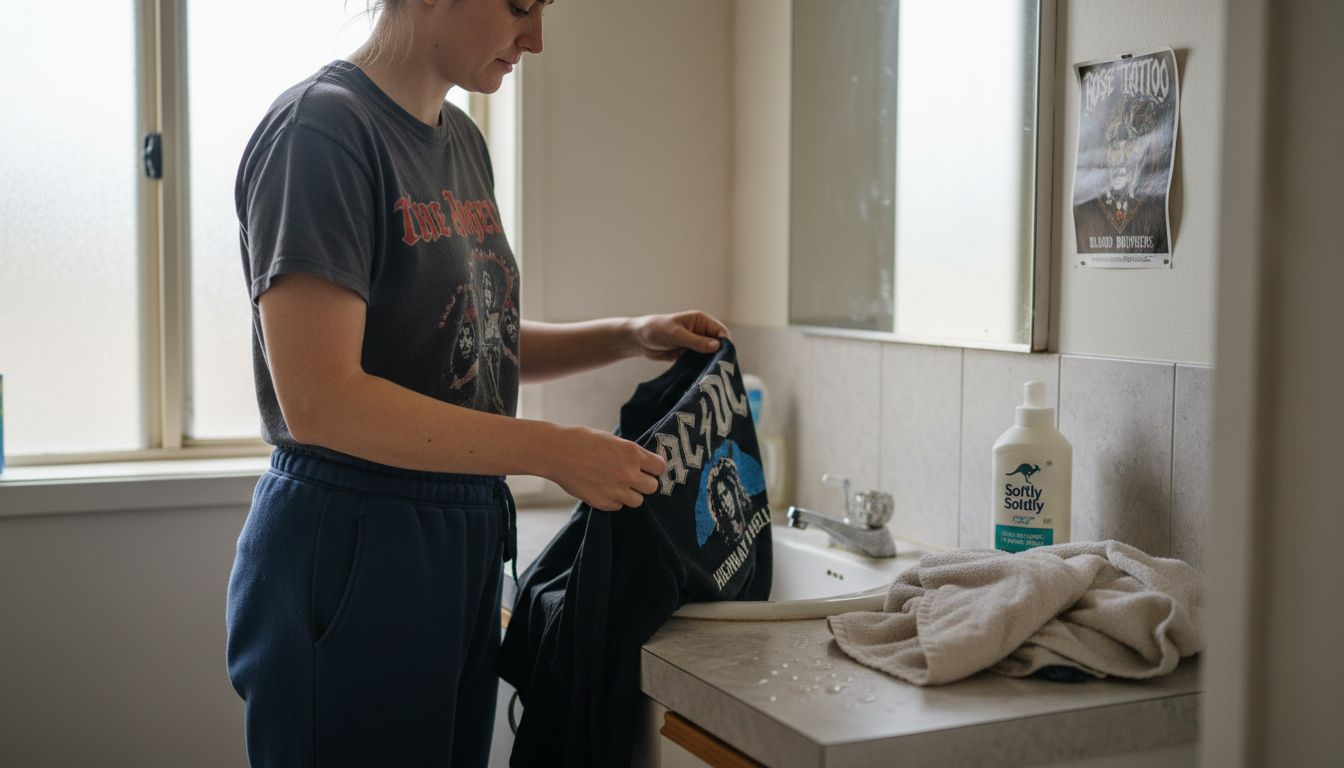
Washing preparation requires methodical care to minimise damage risk. Always turn shirts inside out before any water contact. This simple step protects screen prints from direct friction against washer drums, other garments, or your hands during washing. Check for loose threads, separated seams, or lifting patches before washing. Address these issues first or avoid washing entirely if damage is severe. For guidance on different shirt conditions, review storing vintage metal t-shirts best practices.
| Storage Method | Pros | Cons | Best For |
|---|---|---|---|
| Archival boxes with tissue | Maximum protection, pH neutral, breathable | Higher cost, requires space | Rare/valuable shirts |
| Cotton pillowcases | Breathable, washable, affordable | Less structure, no acid protection | Regular rotation pieces |
| Plastic bins | Water resistant, stackable | Traps moisture, not breathable | Short-term only |
| Hanging | Easy access | Stretches necklines, causes shoulder bumps | Never recommended |
Step-by-step washing and handling guide for vintage band shirts
Hand washing delivers the gentlest clean for vintage band shirts. Fill a clean basin with cold water and add a small amount of pH-neutral detergent designed for delicate fabrics. Avoid regular laundry detergents containing optical brighteners, enzymes, or fabric softeners, all of which can damage aged cotton and prints. Submerge your inside-out shirt and gently agitate the water with your hands rather than rubbing fabric together. Let the shirt soak for 10-15 minutes maximum.
Washing inside out reduces print surface abrasion that causes premature fading and cracking. After soaking, drain the basin and refill with clean cold water for rinsing. Press water through the fabric gently rather than wringing, which can distort the shirt shape and stress screen prints. Repeat rinsing until water runs clear and no soap residue remains. Soap residue attracts dirt and can leave visible marks on dark fabrics.
Machine washing becomes necessary for some collectors with large collections, but requires strict protocols:
- Use only cold water on the gentlest cycle available
- Place shirt in a mesh laundry bag to prevent tangling
- Wash vintage shirts separately from other garments
- Select minimal spin speed to reduce mechanical stress
- Remove immediately when cycle completes
Never tumble dry vintage band shirts. Avoiding the dryer preserves ink vibrancy and prevents cracking that heat causes in aged plastisol prints. Instead, lay shirts flat on clean towels in a shaded area with good air circulation. Reshape the shirt to its original dimensions while wet, gently pulling the neckline, sleeves, and hem back to proper proportions. This prevents the distortion that occurs when fabric dries in a bunched or twisted position.
Pro Tip: Roll the wet shirt in a dry towel and press gently to remove excess water before air drying. This speeds drying time without the mechanical stress of wringing.
Patch care demands extra attention during washing. Embroidered patches generally withstand gentle washing, but adhesive-backed patches may not. If you notice lifting corners or edges, avoid washing entirely until you can have the patch professionally reattached. For shirts with multiple patches, consider spot cleaning only the areas that actually need it rather than washing the entire garment.
Frequency guidelines:
- Worn once: Air out instead of washing
- Light wear with no visible soiling: Spot clean only
- Noticeable dirt or odour: Full gentle wash
- Display pieces: Clean only every 2-3 years unless needed
Professional textile conservation services offer the safest option for extremely rare or fragile shirts. These specialists use museum-grade cleaning methods and can repair damage that home care cannot address. The investment makes sense for shirts valued over $500 or those with significant historical importance. Check vintage shirt washing tips for additional handling recommendations.
Verifying and maintaining vintage band shirt condition over time
Regular inspection catches deterioration before it becomes irreversible. Examine your vintage band shirts every three to six months, checking specific vulnerability points systematically. Start with the neckline, looking for stretched ribbing, separated seams, or distorted shape. Neckline deformation ranks as the most common preservation issue collectors face. Measure the neckline opening if you want precise tracking over time.
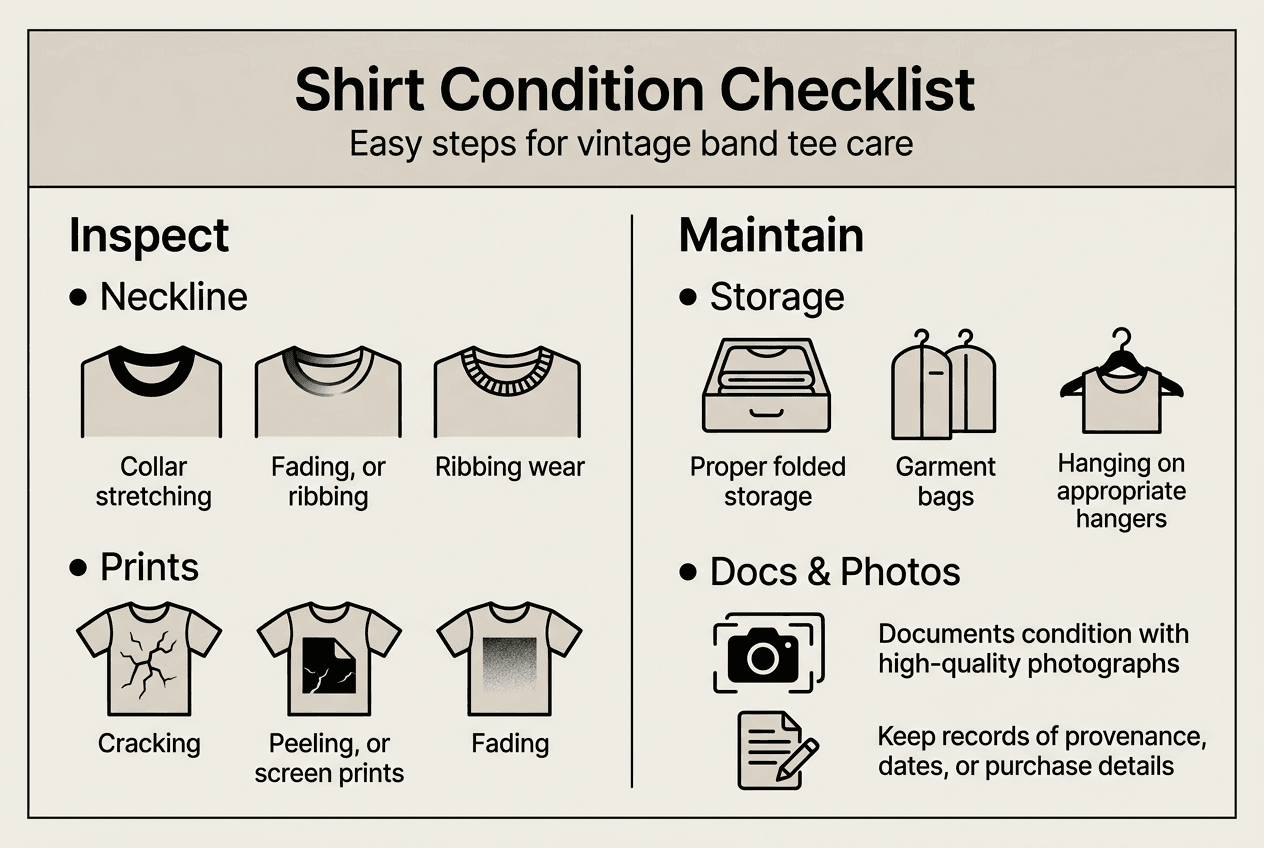
Screen print condition requires close scrutiny under good lighting. Look for hairline cracks in the ink, especially in areas of heavy coverage or along design edges. Flaking or peeling indicates advanced deterioration that needs immediate attention. Check whether prints feel brittle or flexible when you gently manipulate the fabric. Brittleness signals that the plastisol has aged significantly and requires extra care going forward.
Patch integrity assessment should cover both attachment and the patch material itself. Run your fingers along patch edges to detect lifting or separation. Examine embroidered areas for loose threads or areas where stitching has pulled away from the base fabric. Adhesive-backed patches show their age through yellowing of the glue or visible separation between patch and shirt. Document these conditions with photos so you can track progression.
Storage method verification ensures your preservation efforts remain effective. Check storage boxes for signs of moisture, pests, or temperature damage. Replace tissue paper annually because it absorbs environmental contaminants over time. Refold shirts along different lines each year to prevent permanent creases from forming. This simple rotation distributes stress across different fabric areas.
| Inspection Area | Check Frequency | Warning Signs | Action Required |
|---|---|---|---|
| Neckline | Every 3 months | Stretching, loose ribbing | Adjust storage method |
| Screen prints | Every 6 months | Cracking, flaking | Reduce handling, consider conservation |
| Patches | Every 3 months | Lifting, loose threads | Professional repair |
| Fabric body | Every 6 months | Thinning, holes, yellowing | Climate control adjustment |
Understanding the relationship between condition and value helps prioritise your preservation efforts. Shirts in mint condition command premium prices, but even pieces with minor wear retain significant value when properly maintained. Knowing the difference between vintage vs second hand shirt condition helps you make informed decisions about which pieces warrant professional conservation services versus standard careful handling.
Maintenance schedule:
- Monthly: Visual check of storage environment
- Quarterly: Detailed shirt inspection
- Annually: Refold along new lines, replace tissue paper
- As needed: Professional cleaning or repair
Documentation serves both preservation and valuation purposes. Photograph each shirt from multiple angles, capturing details of prints, tags, and any unique features. Record provenance information, including where and when you acquired each piece. This documentation becomes invaluable for insurance purposes and helps future collectors understand each shirt’s history and significance.
Explore authentic vintage heavy metal shirts at vintage metal store
Now that you understand proper preservation techniques, you’ll want to ensure any additions to your collection meet authenticity standards and arrive in optimal condition. Finding genuine vintage metal shirts requires connecting with specialists who understand the difference between authentic tour merchandise and modern reproductions. Vintage Metal offers carefully curated Vintage Metallica shirts Australia collections, each piece verified for authenticity and documented with provenance details.

The store specialises in rare finds like the Rare Metallica 1992 tour tee, sourced from original tour stock and deadstock. You’ll also discover Vintage Cannibal Corpse band shirts and other sought-after pieces from metal’s golden era. Every shirt comes with expert guidance on care and preservation, ensuring your investment remains protected for years to come.
Frequently asked questions
How should I store vintage band shirts to avoid neck stretching?
Fold shirts flat with acid-free tissue paper between layers and store them in archival boxes in cool, dark conditions. Never hang vintage tees, even on padded hangers, because gravity constantly pulls on the vulnerable bias-cut neckline, causing permanent deformation over time.
Can I machine wash my vintage band shirt safely?
Machine wash only on the gentlest cycle using cold water, with the shirt turned inside out and placed in a mesh laundry bag. Avoid bleach, fabric softeners, and tumble drying completely, as these destroy screen prints and weaken aged cotton fibres.
What if I notice a patched area starting to delaminate?
Stop washing the shirt immediately and store it flat to prevent further separation. Seek professional textile conservation services for proper patch reattachment, as home repair attempts often cause additional damage to both patch and fabric.
How often should I wash vintage band shirts?
Wash only when genuinely necessary, typically after visible soiling or odour develops. For shirts worn briefly without heavy activity, air them out in a shaded area instead of washing, and use spot cleaning for minor marks to minimise overall wear.
Do professional cleaning services really make a difference?
Professional textile conservators use museum-grade methods that home washing cannot replicate, especially for fragile or high-value shirts. They can safely clean delicate fabrics, repair damage, and apply protective treatments that extend shirt lifespan significantly.
Recommended
- 7 Steps to the Ultimate Heavy Metal Shirts Buying Checklist – Vintage Metal Store
- How to size vintage band shirts for the perfect metal fit – Vintage Metal Store
- How to Store Vintage Metal T Shirts for Lasting Quality – Vintage Metal Store
- Top Fabrics for Vintage Shirts: Collector Value Explained – Vintage Metal Store


