



TL;DR:
- Reissued band tees are authorized reproductions of vintage designs created after the original production period. They vary from originals in materials, tags, and print techniques, with authentic reissues displaying clear licensing and period-accurate details. Collectors value reissues for nostalgia, accessibility, and investment potential, but must scrutinize tags and print quality to distinguish genuine items from fakes.
Walk into any heavy metal collector’s space and you’ll find at least one tee that sparks a heated debate about whether it’s an original or a reissue. The confusion is completely understandable. Reissued band tees replicate beloved vintage designs so convincingly that even seasoned collectors get caught off guard. Yet knowing the difference matters enormously for your collection’s value, authenticity, and personal satisfaction. This article cuts through the noise, giving you a clear framework for understanding, identifying, and appreciating reissued band tees the way serious heavy metal collectors do.
Table of Contents
- Defining reissued band tees: what makes a tee a reissue
- How reissued band tees evolved: context and historical trends
- Spotting authentic reissued tees: key signs and collector tricks
- Why collectors value reissued band tees: rarity, nostalgia, and investment
- The uncomfortable truth about reissued band tees that most collectors miss
- Where to find authentic reissued band tees in Australia
- Frequently asked questions
Key Takeaways
| Point | Details |
|---|---|
| Reissued tees explained | A reissued band tee is an officially produced replica of vintage designs, typically from iconic tours. |
| Authenticity signs | Collectors should check tags, licensing, and print quality when buying reissued band tees. |
| Cultural importance | Reissued tees offer nostalgic and collectible value, especially if tied to landmark heavy metal tours. |
| Collector strategies | Focus on meaning and community behind tees, not just authenticity details. |
| Trusted sourcing | Buy from specialty retailers with a proven reputation for authentic merchandise. |
Defining reissued band tees: what makes a tee a reissue
Having set the scene on collector confusion, let’s clarify what a reissued band tee actually is.
A reissued band tee is a shirt produced after the original release run, intentionally replicating a vintage design, often tied to a landmark tour or era. It is not a bootleg, and it is not standard current merchandise. Think of it as an authorised revival of a design that originally appeared on, say, the Metallica “Wherever I May Roam” 1992 tour, now reproduced decades later with proper licensing. The goal is to give collectors and fans access to iconic imagery that was previously only available through rare, ageing originals.
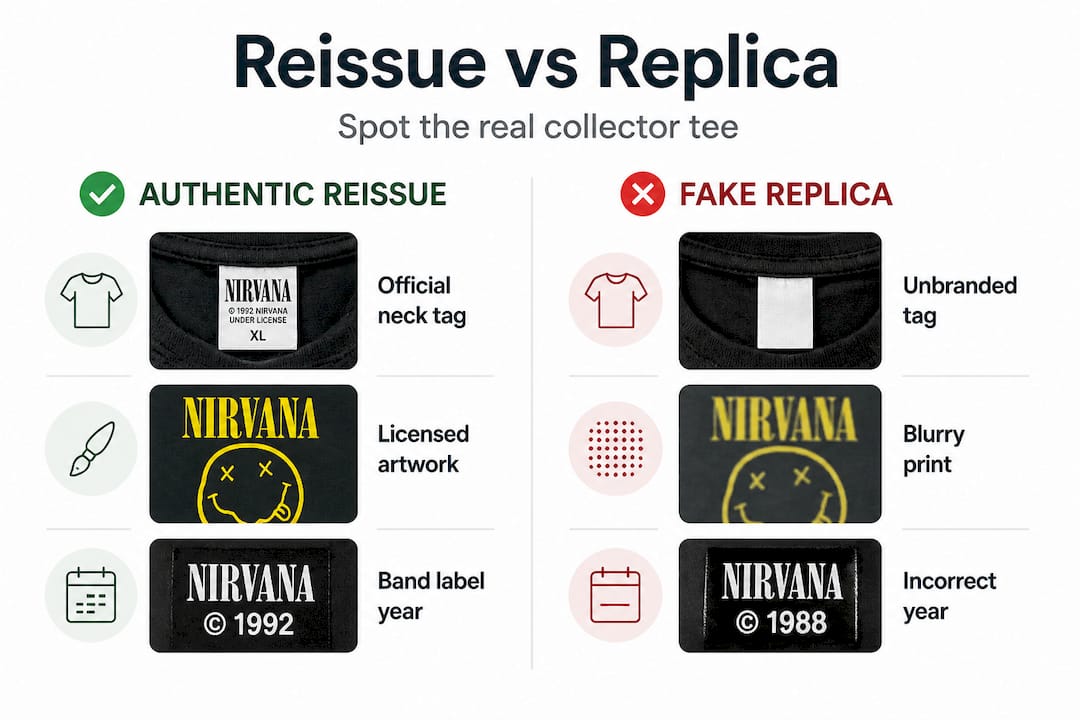
Understanding band tee definitions is the first step toward building a collection with real integrity. The vintage keys for shirts make it clear that originals and reissues differ in material, tag style, print technique, and overall construction, even when the graphic design is nearly identical.
Here is what separates an original, a reissue, and standard current merchandise at a glance:
- Originals were produced during the actual tour or album release period, with era-specific tags, single-stitch construction, and screen print methods consistent with that decade.
- Reissues are authorised reproductions of those original designs, typically printed on more modern blanks, with updated neck tags that often include a year, a licensing logo, or both.
- Standard merchandise is contemporary product tied to a currently active band or release, not specifically designed to replicate a vintage look.
Key features to check when determining if a tee is a genuine reissue include:
- A year tag or copyright date printed on the inside neck
- Official band or label licensing stamps on the tag
- Print style consistent with vintage aesthetics, including cracked or distressed ink on reissues designed to mimic age
- Fabric weight and construction that differs slightly from true single-stitch originals
- Artwork that exactly matches a documented historical design from a specific tour or era
“The first thing I look at is the neck tag. Reissues almost always carry a year or a rights statement that originals simply didn’t include. Once you train your eye to read tags the way you read liner notes, you start seeing the whole story of a shirt.” — A long-time heavy metal collector
Reissues exist because demand for iconic designs never dies. Band anniversaries, reunion tours, and estate-driven catalogues all create legitimate occasions for authorised reissues. The motivations are commercial but also cultural. Collectors who missed out on the original 1994 Pantera “Far Beyond Driven” tour are not going to accept a blank-faced replica. A proper reissue gives them something meaningful to wear and own.
How reissued band tees evolved: context and historical trends
Now you know what a reissued band tee is, let’s see how reissues took root in heavy metal culture.
The band merch history of heavy metal is inseparable from the t-shirt itself. In the 1980s and early 1990s, tour shirts were functional souvenirs. Nobody called them collectibles. They were worn, washed, and discarded. By the mid-1990s, as grunge shifted mainstream attention away from metal, those surviving shirts became artefacts. Scarcity created desirability. Desirability created a secondary market. And that market created the conditions for reissues.

The economics of tour shirts shifted dramatically when major bands began reuniting in the early 2000s. Black Sabbath’s Heaven and Hell tour, Iron Maiden’s ongoing world tours, and Metallica’s anniversary releases all generated enormous appetite for period-correct merchandise. Bands and their management recognised that reproducing classic tour designs as officially licensed reissues was both profitable and respectful of their heritage.
Here is a brief timeline of how reissued tee popularity evolved in the heavy metal world:
| Year range | Key events | Reissue trend |
|---|---|---|
| 1994 to 1997 | Pantera, Sepultura, and Slayer tour cycles | Original shirts becoming scarce and collectable |
| 1998 to 2002 | Major band reunions begin | First wave of official licensed reissues appears |
| 2003 to 2008 | Online collector forums grow | Demand spikes, counterfeit reissues also rise |
| 2009 to 2015 | Anniversary releases surge | Bands produce limited run reissues for anniversaries |
| 2016 to present | Resale platforms mature | Authenticated reissues command premium prices |
Studies tracking vintage tee examples in collector communities show a consistent pattern: when a major band announces a reunion or anniversary, reissued tee sales from specialist retailers increase by as much as 40 to 60 percent in the months surrounding the announcement. This is not casual fan buying. This is deliberate, informed collecting.
The cultural shift here is important. Reissues moved from being seen as “lesser” alternatives to being recognised as legitimate collectibles in their own right, particularly when produced in limited quantities or tied to specific anniversary milestones. A numbered, officially licensed reissue of a 1991 Slayer tour design is not a consolation prize. It is a document of living heavy metal history.
Spotting authentic reissued tees: key signs and collector tricks
Once you understand the history, here’s how collectors sort the real reissued gems from mere replicas.
The biggest challenge is not telling a reissue from an original. It is telling an authentic, licensed reissue from an unauthorised fake dressed up to look like one. Guidance on spotting genuine reissued band merchandise points to three primary inspection areas: tags, print quality, and licensing evidence.
Here is a direct comparison of what separates genuine reissues from knockoffs:
| Feature | Authentic reissued tee | Fake or unauthorised replica |
|---|---|---|
| Neck tag | Official band or label tag with licensing date | Generic printed tag with no copyright info |
| Print quality | Clean, intentional distressing or bold ink | Inconsistent bleeding, blurry edges |
| Fabric | Consistent weight, often Gildan or similar known blanks | Unknown or very cheap fabric |
| Artwork accuracy | Matches documented historical design exactly | Slightly altered graphics or wrong fonts |
| Licensing stamp | Clearly visible rights holder information | Absent or obviously fabricated |
Understanding the types of heavy metal t-shirts available to collectors helps calibrate your expectations. The distinctions between vintage tee types also clarify how ex-tour stock and deadstock differ from reissues, which is crucial for accurate valuation.
Red flags to watch for when buying reissued tees:
- No year, copyright, or licensing information on the tag
- Artwork that looks “close but not quite right” compared to documented originals
- Fabric that feels unusually thin or has a plasticky print texture
- Sellers unable to provide provenance or sourcing details
- Pricing that seems too good to be true for a supposedly rare design
When comparing vintage versus second hand shirts, keep in mind that a second hand reissue is still a reissue. Its value is not diminished simply because it has been worn. What matters is that it was legitimately produced and officially licensed in the first place.
Pro Tip: Search for the specific tour name and year in the artwork, then cross-reference it against documented setlist databases or collector archives online. If the graphic shows a date or city that does not match the actual tour itinerary, you are looking at a fabricated design, not a genuine reissue.
Why collectors value reissued band tees: rarity, nostalgia, and investment
So, why do collectors focus so much on reissued band tees? Here is what really drives the obsession.
The reasons to collect band tees cover a wide emotional and financial spectrum. Reissued tees sit at a fascinating intersection of accessibility and cultural weight. Here is how collectors prioritise their motivations:
- Nostalgia and personal connection. Many collectors were teenagers during the 1990s heavy metal boom. A reissued tee from a Sepultura or Testament tour they attended, or wished they had attended, carries enormous sentimental weight that no amount of market logic can replace.
- Accessibility to otherwise unattainable designs. True originals from iconic 1990s tours can cost hundreds of dollars in good condition. A properly authorised reissue makes those designs accessible without compromising on cultural legitimacy.
- Investment and resale value. Limited edition reissues, particularly those tied to band anniversaries or produced in numbered runs, appreciate in value. The resale market treats them seriously when provenance is clear.
- Wearability without destroying history. Wearing a genuine original from 1993 accelerates its deterioration. A reissue lets you wear the design proudly without risking irreplaceable fabric.
- Completing a collection thematically. Serious collectors build around bands, eras, or tours. A reissue might be the only way to fill a gap in a thematic collection without paying extreme prices.
“Reissues get dismissed by purists, but they’re the reason younger collectors can participate in this culture at all. A 17-year-old who wasn’t alive for the Arise tour deserves to own that design if it means something to them. The shirt is a gateway to the music and the era.” — A collector and retailer with over two decades in the heavy metal merchandise space
The investment angle deserves particular attention. Reissues produced in runs of under 500 units, with numbered tags and period-accurate printing, have sold on collector platforms for two to three times their original retail price within five years of release. This is not speculation. It follows the same scarcity logic that governs vinyl reissues and limited edition gaming releases.
Pro Tip: When acquiring reissued tees with investment in mind, prioritise numbered editions, designs tied to specific anniversary milestones, and releases from bands with loyal, multigenerational fanbases. Metallica, Iron Maiden, Slayer, and Pantera consistently maintain collector demand across decades.
The uncomfortable truth about reissued band tees that most collectors miss
Here is a perspective that tends to get buried under discussions of provenance, tag styles, and resale charts.
The heavy metal collecting community has a tendency to fetishise the label at the expense of the story. Collectors will spend hours debating whether a shirt is a first print or a second run reissue, whether the ink is period-correct, whether the tag matches documented sourcing. All of that has genuine value. But it can also become a distraction from the thing that made these shirts matter in the first place, which is the music, the community, and the lived experience they represent.
We have seen collectors dismiss genuinely meaningful reissues because of minor tag discrepancies, while simultaneously overpaying for originals they would never wear and rarely show. That is collecting as hoarding, not collecting as passion. The distinction matters.
A reissued band tee from a 1994 Pantera tour is not simply a piece of fabric with licensing information. It is a prompt. It makes you pull up the album, tell a story to someone younger, or connect with another collector at a market who has the same shirt in a different colour. That cultural function does not require a single-stitch hem to be valid.
We believe, after years in this space, that the collector’s guide perspective that endures is one where meaning and market value coexist, not compete. Know your tags, check your prints, verify your licensing. But also remember why you started collecting in the first place. A reissued tee that connects you to a defining moment in heavy metal history is worth more than any authenticity checklist suggests.
The collectors who build the most rewarding collections are not the ones with the rarest originals. They are the ones who can tell you exactly why every shirt in their wardrobe matters.
Where to find authentic reissued band tees in Australia
Ready to build or refine your collection with genuine reissued band tees? Australia has a thriving market for serious collectors, and Vintage Metal is the go-to destination for sourced, vetted heavy metal merchandise.
At Vintage Metal, the catalogue covers ex-tour stock, official deadstock, and properly licensed reissued designs from the bands that defined heavy metal’s golden era. Whether you are hunting for Metallica shirts from iconic 1990s tours, classic heavy metal concert tees, or second hand metal tees that carry genuine history, the collection is curated with the informed collector in mind. Every piece is selected for its authenticity, and the team can speak to the provenance of what they stock. This is not a generic merchandise store. It is a resource built specifically for collectors who understand the difference between a reissue and a replica, and who want their collection to reflect that knowledge.
Frequently asked questions
How can I tell if a band tee is a reissue or an original?
Check the year tag, licensing stamp, and print details. As explained in the context of band tee distinctions, reissues typically use updated materials and neck tags that originals from the 1980s and 1990s simply did not include.
Why do bands reissue tees from old tours?
Bands reissue tees to meet collector demand, celebrate anniversaries, and revive iconic tour designs. The broader band merchandise history shows this practice accelerated significantly from the early 2000s onward as the secondary collector market matured.
Are reissued band tees worth as much as vintage originals?
Reissued tees can hold significant value, especially limited numbered editions, but vintage originals generally command the highest prices among serious collectors due to their rarity and era-specific construction.
What should I avoid when buying reissued band tees?
Avoid tees with generic tags, inconsistent print quality, or absent licensing information. As noted in guidance on authentic band merchandise, these are clear indicators of unauthorised copies rather than genuine licensed reissues.
Recommended
- 7 Types of Vintage Band Tees Every Collector Should Know – Vintage Metal Store
- Why preserve old band tees? Value, culture and know-how – Vintage Metal Store
- 7 Iconic Types of Heavy Metal T Shirts for Collectors – Vintage Metal Store
- What Is a Band Tee and Why It Matters for Collectors – Vintage Metal Store
- Why vintage jerseys are iconic: style, culture, value – Gear&Glory UK


