



TL;DR:
- Vintage metal shirts hold significant cultural value as tangible records of iconic moments, eras, and subcultural identity. Collectors seek authentic, rare pieces with documented provenance, driven by nostalgia, scene belonging, and the desire to preserve music history. The true value lies beyond market price, representing personal memory and community belonging that endure over time.
A faded Metallica tee from a 1992 tour can sell for more than the original concert ticket ever cost, and that single fact stops most people cold. These are not just old clothes gathering dust in a wardrobe. They are physical records of moments in music history, carrying the sweat, crowd noise, and cultural electricity of nights that will never be repeated. Fans collect old band and concert shirts for nostalgia and cultural memory tied to specific era-defining acts and moments, and once you understand that, everything about the vintage metal shirt market starts to make sense.
Table of Contents
- Nostalgia and cultural memory: Why old shirts matter
- Wearing identity: Shirts as badges of belonging
- Event shirts and rarity: The power of a time-bound collectible
- Authenticity and condition: What sets true collectors apart
- What most collectors miss: The real value behind old shirts
- Explore vintage metal shirts and build your collection
- Frequently asked questions
Key Takeaways
| Point | Details |
|---|---|
| Nostalgia fuels collecting | Most fans seek shirts that connect them to favourite bands, moments, and scenes from the past. |
| Identity and community matter | Wearing a vintage metal shirt is a badge of belonging that immediately signals group membership. |
| Event shirts are key finds | Limited-run tour and festival shirts are highly prized for their rarity and link to unique moments. |
| Condition drives value | The authenticity and preservation of shirts influence both their monetary and emotional worth. |
| Beyond resale prices | True value comes from personal memories and scene connection, not just market trends. |
Nostalgia and cultural memory: Why old shirts matter
With the immense value attached to these shirts, what is it about their history that gives them such weight in collectors’ circles? The answer runs deeper than simple sentimentality.
Nostalgia is one of the most powerful human motivators, and for heavy metal fans, it is particularly acute. A shirt from the 1988 Monsters of Rock festival or the 1994 Dio “Strange Highways” tour is not just cotton and screen print. It is a direct line back to a specific period of life, a scene, and a sound that shaped an entire generation of listeners. Wearing or even holding one of these shirts triggers a flood of memory that no modern reprint can replicate.
“Fans collect old band and concert shirts for nostalgia and cultural memory tied to specific era-defining acts and moments.” — The Globe and Mail
This emotional depth is exactly why vintage t-shirts matter far beyond their physical condition. The cultural memory encoded in a shirt from a seminal tour adds to its prominence and drives real market value. Consider what happens when a band member passes away or a reunion tour gets announced. Shirts from that original era surge in demand almost overnight, because collectors recognise that the cultural window those shirts represent is permanently closed.
Key reasons nostalgia drives collecting behaviour include:
- Era specificity: A shirt tied to a band’s creative peak feels irreplaceable
- Personal memory: Many collectors owned these shirts as teenagers and are reclaiming part of their own history
- Scene documentation: Old shirts record the visual language of a subculture at a particular moment
- Emotional investment: The attachment to the music makes the object feel genuinely irreplaceable
Collectors who understand this dynamic also understand that the collecting band t-shirts guide for serious enthusiasts is never just about hunting bargains. It is about understanding which cultural moments actually mattered, and why.
Wearing identity: Shirts as badges of belonging
Beyond memories, shirts also hold power as signals within the fan community. In heavy metal, what you wear communicates your history, your knowledge, and your credibility within the scene.
Collecting is driven by identity and belonging, with merch functioning as a wearable badge of affiliation with a music community, particularly in metal. This is not a trivial observation. Metal has always had a fiercely protective relationship with authenticity. Turning up to a gig in a shirt from a genuine 1980s Slayer tour says something very specific about who you are and how deep your roots go. A modern reproduction says something entirely different.
The key ways band shirts function as identity markers include:
- Scene credibility: Original tour shirts signal genuine participation in the scene’s history
- Knowledge display: Wearing a shirt from an obscure support act or regional tour shows insider knowledge
- Community recognition: Other collectors immediately spot and respect rare pieces
- Personal narrative: Your collection tells the story of your journey through the music
- Subcultural pride: Metal identity is fiercely maintained, and authentic gear is central to that
Understanding band t-shirts and identity within metal culture helps explain why serious collectors are not simply accumulating objects. They are building and displaying a coherent personal history within a subculture that values authenticity above almost everything else.
Pro Tip: When searching for shirts that carry genuine scene credibility, look for unique design quirks tied to specific tours or line-up changes. A shirt printed before a key member left the band, or one featuring artwork used only on a regional leg of a tour, carries far more authenticity than a generic band logo tee from the same era.
Showing your collection is also a form of dialogue. When two serious collectors meet and compare pieces, they are exchanging stories, debating provenance, and reinforcing the shared values of the scene. This social function is inseparable from the collecting hobby itself.
Event shirts and rarity: The power of a time-bound collectible
If badges of identity matter, collectibles with unique stories go even further, especially for shirts tied to a specific moment in history. Event shirts occupy a category of their own because they can never be truly recreated.
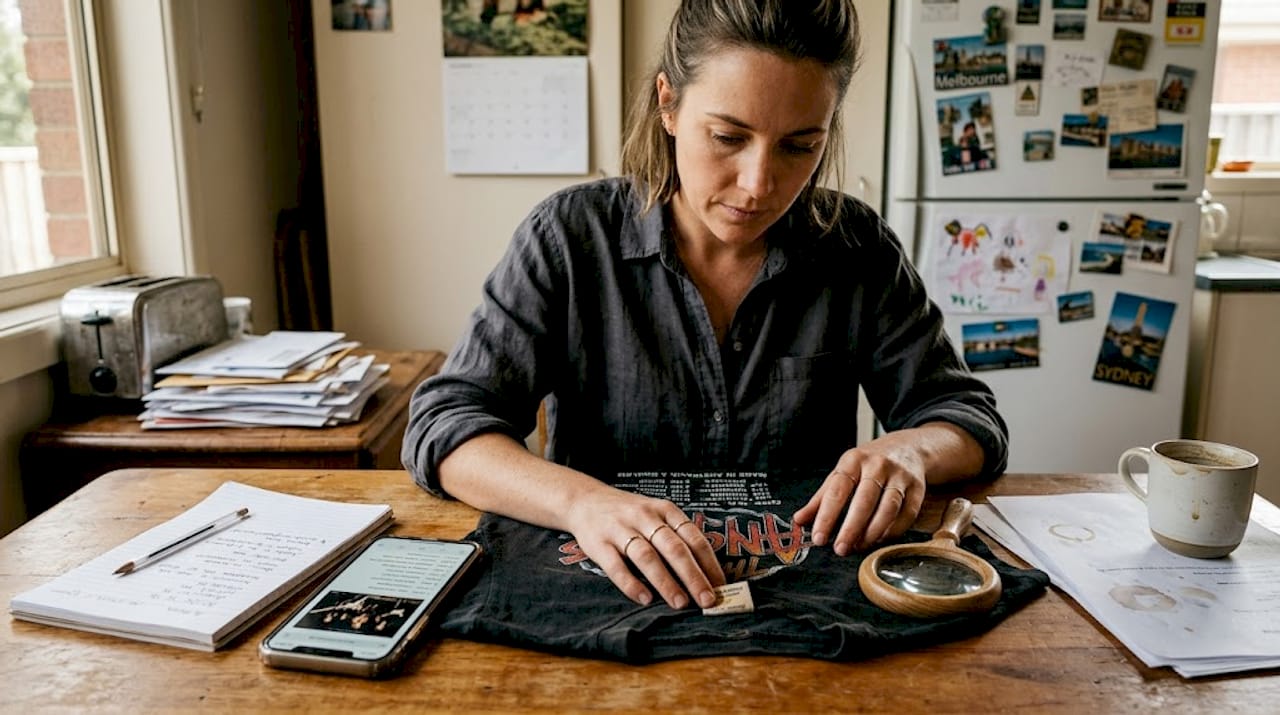
Event and seasonal shirts become collectibles because owning a specific printing ties you to a unique, time-bounded experience that will not be remade in the same way. A shirt from the first night of a legendary tour, a festival exclusive, or a shirt produced in a single print run for a regional date carries an inherent scarcity that modern merchandise simply cannot manufacture. The moment is gone, and the shirt is all that remains.
Comparison of event shirts versus general merchandise:
| Feature | Event or tour shirt | General band merch |
|---|---|---|
| Print run | Limited, often venue-specific | Mass produced |
| Cultural tie | Specific date, tour leg, or festival | Brand general |
| Resale value | High and rising | Lower and stable |
| Provenance story | Strong and documentable | Minimal |
| Collector demand | Very high | Moderate |
What to check before purchasing a rare tour tee:
- Confirm the print matches documented tour artwork from that specific year
- Check the tag brand and format against era-appropriate manufacturers
- Look for signs of genuine wear consistent with the claimed age
- Research the specific tour dates and compare against regional design variants
- Ask the seller for any documentation, photos, or provenance information
- Cross-reference the design with collector communities and reference catalogues
The collector’s guide to vintage metal shirts goes into considerable detail on how to identify genuine event shirts and separate them from later reprints. The core principle is always the same: scarcity plus documented provenance equals lasting value.
Understanding design variants is critical here. Many major tours produced different shirt designs for different legs, different countries, or even different venues. A shirt from the European leg of a Judas Priest tour may feature completely different artwork from the North American version produced during the same tour. Collectors who know this hunt specifically for regional variants, which are often printed in far smaller quantities.
Authenticity and condition: What sets true collectors apart
Having highlighted what makes a shirt rare or important, attention turns to how collectors separate authentic pieces from the merely old. This is where serious collecting becomes a genuine skill.
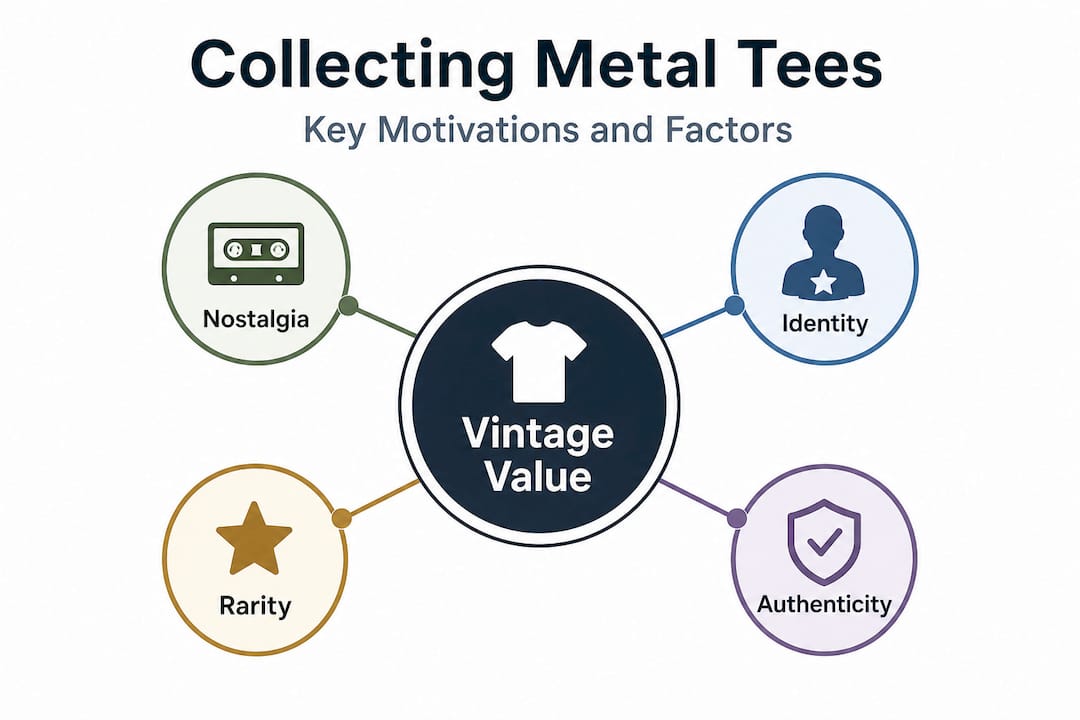
Collectors treat authenticity and condition as part of a methodology, using construction and print ageing details as evidence of era rather than fandom alone. In practice, this means developing a working knowledge of how shirts were made in each decade, which tag brands were used by which manufacturers, and how genuine print distress differs from artificially aged reproductions.
Key authenticity markers versus modern replicas:
| Marker | Authentic vintage shirt | Modern replica |
|---|---|---|
| Tag type | Single stitch, era-specific brand | Modern tag or removed tag |
| Print texture | Cracked, faded naturally | Artificially distressed or sharp |
| Fabric weight | Heavier cotton, pre-shrunk feel | Lighter modern cotton blend |
| Stitching | Single stitch sleeve and body | Double stitch modern construction |
| Colour fading | Uneven, natural light exposure | Uniform or chemical fade |
| Collar wear | Genuine stress and stretching | Minimal or artificial |
What to inspect before adding a shirt to your collection:
- Examine the tag closely for manufacturer name, care instructions format, and country of origin labelling
- Run your fingers across the print to feel for genuine cracking versus artificial distress
- Check the stitching along the sleeves and hem for single versus double stitch construction
- Hold the fabric up to light and look for genuine thinning consistent with age and washing
- Compare the colour saturation of the print to documented examples from the same era
- Inspect the collar for authentic stress patterns that come from years of actual wear
Pro Tip: Beware of clever fakes where small era details make all the difference. Counterfeiters often get the big things right but slip on minor details like the exact font used on the back of the shirt, the specific shade of ink used in that era, or the precise placement of the tag. Build a reference library of documented authentic examples so you have something concrete to compare against.
Knowing how to authenticate vintage metal shirts is not a skill you develop overnight. Most experienced collectors recommend using the buying checklist for metal shirts consistently until the process becomes instinctive. The investment of time in learning these details pays off significantly when you avoid expensive mistakes.
What most collectors miss: The real value behind old shirts
After examining the practicalities, it is worth stepping back for an honest look at what collecting old shirts actually means in the bigger picture. And here, the mainstream conversation often gets things slightly wrong.
The market for vintage metal shirts has grown significantly, and with that growth comes a tendency to frame collecting almost entirely in financial terms. Resale values, investment potential, price trajectories. These conversations are not wrong, but they miss the point in a way that matters.
The same collecting behaviour can be framed as conspicuous consumption, but mainstream coverage still frames merch collection as a central part of fan culture and an economic engine for bands. That tension is real, but it does not diminish what these shirts actually represent for the people who genuinely care about them.
The truth is that the collectors who get the most from this hobby are rarely the ones treating their wardrobes as portfolios. They are the ones who understand why vintage shirts endure as cultural objects precisely because they carry something no financial metric can capture: the feeling of being part of something that mattered.
Rarity and price tell only part of the story. A shirt might be worth several hundred dollars on the current market, but what actually keeps it in a collector’s possession is the memory of the tour it came from, the community it represents, and the sense of personal history it carries. Scene connection genuinely outlasts market trends. Bands that were considered commercially irrelevant in the late 1990s now have shirts worth serious money, not because the market decided so arbitrarily, but because a community of fans never stopped caring.
The big risk in approaching this hobby as purely an asset class is forgetting that collecting, at its core, is about belonging. It is about owning a piece of a shared cultural experience and keeping it alive. The moment that gets lost, collecting becomes just another form of accumulation, and that is a genuinely poorer experience than what the hobby can offer at its best.
Explore vintage metal shirts and build your collection
With these insights, you might be keen to start or expand your own collecting journey. Knowing what to look for is only part of the picture. Finding shirts with genuine provenance, authentic era-specific construction, and documented histories is where the real challenge begins.
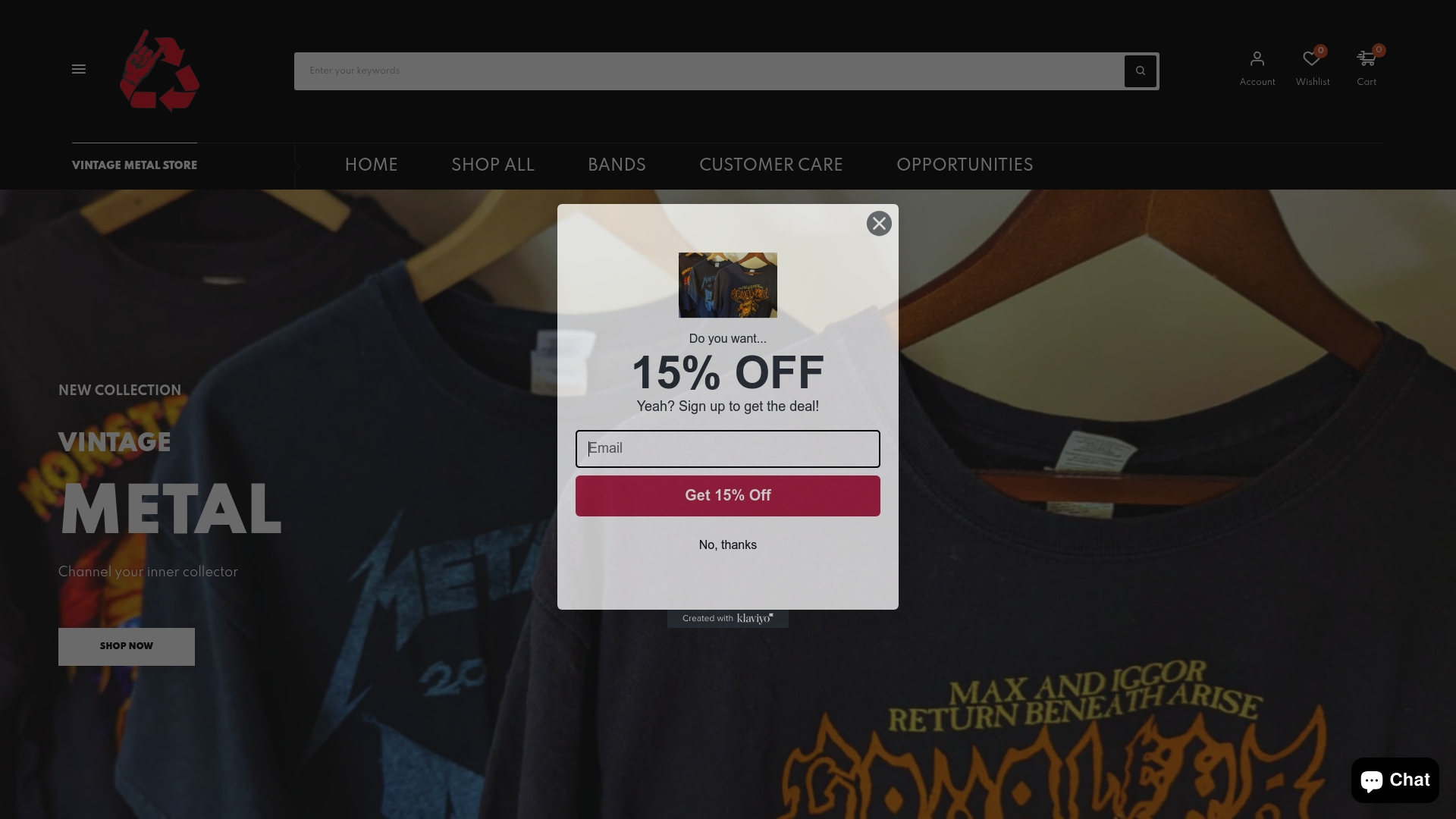
Whether you are hunting for a specific tour piece or building a broader collection of authenticated vintage metal shirts, the quality of the source matters enormously. At Vintage Metal, the focus is on ex-tour stock, dead stock, and second-hand pieces with real histories behind them. Serious collectors will appreciate the attention to provenance across the range, including pieces like this rare Metallica 1992 tour tee that represent exactly the kind of time-bound collectible discussed throughout this article. Browse the full vintage Metallica shirts collection and discover what authenticated era-specific collecting actually looks like in practice.
Frequently asked questions
How can you tell if an old band shirt is genuine?
Check for era-appropriate tags, single-stitch construction, natural print ageing, and documented provenance. As collectors use construction details as evidence of era, expert reference guides and comparison with authenticated examples are essential tools.
Why are some shirts more valuable than others?
Rarity, connection to specific events, and unique design features all drive collectable value. Owning a specific printing ties a collector to a unique, time-bounded experience that cannot be recreated, which is exactly what serious buyers are paying for.
Is collecting vintage shirts mainly about nostalgia?
Nostalgia is a key driver, but identity, scene belonging, and historical significance play equally important roles. Fans collect for nostalgia and cultural memory, but the community and authenticity dimensions of heavy metal collecting run just as deep.
Do old metal shirts always go up in value?
Not every vintage shirt is guaranteed to appreciate in value. Collecting ranges from emotional preservation to quasi-market behaviour where pricing dynamics reinforce the hobby, meaning demand, rarity, and cultural relevance all determine whether a particular shirt rises or holds steady over time.
Recommended
- Band t-shirts in metal culture: identity, value and collecting – Vintage Metal Store
- How band T-shirt trends start: insights for metal collectors – Vintage Metal Store
- Collector’s guide to vintage heavy metal t-shirts: spot, value, collec – Vintage Metal Store
- Why preserve old band tees? Value, culture and know-how – Vintage Metal Store


