



TL;DR:
- Authentic vintage heavy metal t-shirts feature specific stitching, tags, fabric feel, and print details.
- Certain bands and print runs, like Metallica and Soundgarden, are highly sought after and valuable.
- Patience, thorough research, and proper documentation are essential for building a valuable collection.
A genuine 1990s tour shirt can fetch over a thousand dollars in today’s market, yet a convincing reprint costs less than thirty. That gap is where collectors win or lose. The world of vintage heavy metal t-shirts rewards those who know exactly what to look for and punishes those who guess. Whether you’re hunting for a sweat-stained Metallica tour tee from a forgotten support slot or a mint-condition Soundgarden shirt still folded from unsold stock, the difference between a trophy and a dud often comes down to a few telltale details. This guide walks you through how to authenticate, value, and build a collection that actually means something.
Table of Contents
- How to authenticate vintage heavy metal t-shirts
- Iconic bands and the most sought-after tees
- Decoding tags, fabrics, and print details
- Where to buy and how to value your collection
- Our take: Why patience and knowledge always outpace luck
- Build your collection with expert-picked vintage metal shirts
- Frequently asked questions
Key Takeaways
| Point | Details |
|---|---|
| Authenticity criteria | Single-stitch, era-correct tags, and true vintage prints separate real collectables from fakes. |
| Top bands to collect | Shirts from Metallica, Nirvana, and Soundgarden regularly fetch high resale prices among collectors. |
| Spotting value | A shirt’s fabric feel, print method, and provenance directly impact its price and collectability. |
| Smart buying moves | Buy from reputable sellers, check current market value, and document every addition to your collection. |
How to authenticate vintage heavy metal t-shirts
With the boom in demand comes a flood of counterfeits and reprints. Here’s how you can spot a truly collectible vintage heavy metal t-shirt:
Authentication is the single most important skill a collector can develop. Fakes have become increasingly convincing, with some sellers deliberately distressing new shirts to mimic age. Knowing your markers saves you money and heartbreak.
- Check the stitching first. Genuine pre-2000 shirts almost always use single-stitching along the sleeves and hem. Modern reprints almost universally feature double-stitching, which is a dead giveaway you’re looking at something made after the fact.
- Inspect the tag. Period-correct tags from manufacturers like Brockum, Giant, or Screen Stars tell a clear story. If you see a Gildan or Anvil tag on something claimed to be from 1994, walk away. These brands weren’t producing band merch in that era.
- Feel the fabric. Authentic vintage cotton is thin, slightly rough, and has a lived-in quality that synthetic blends simply can’t replicate. If a shirt feels slick, heavy, or plasticky, it’s almost certainly modern.
- Examine the print. Screen printing from the 1990s was imperfect in the best possible way. Edges bleed slightly, colours fade unevenly, and registration isn’t pixel-perfect. Suspiciously crisp or photographic-quality graphics are a red flag on any shirt claiming to be vintage.
- Cross-check the copyright date. The copyright information printed inside or on the back of a shirt must match the claimed era. Inconsistent copyright dates are one of the easiest ways to catch a fake or a reprint.
Our t-shirt authenticity tips go deeper on each of these points if you want to sharpen your eye further.
“Avoid double-stitching, modern tags like Gildan/Anvil, synthetic fabric feel, perfectly smooth or HD graphics, or inconsistent copyright dates when assessing a vintage shirt.”
Pro Tip: Before you buy online, always ask the seller for a clear photo of the tag, both sleeves, and the inside hem. Legitimate sellers of genuine vintage stock will never hesitate to provide these.
Understanding what makes a shirt vintage goes beyond age alone. Provenance, condition, and the rarity of the specific print run all factor into whether a shirt qualifies as a true collectible or simply an old piece of clothing.
Iconic bands and the most sought-after tees
Once you know what authenticity markers to look for, it pays to recognise which bands and shirt designs are most desired and valuable.
Not all vintage metal shirts are created equal. Certain bands, certain tours, and certain print runs command prices that would astonish anyone outside the collecting world. Scarcity drives value hard in this market.
The most consistently sought-after shirts include:
- Metallica “Kill 'Em All” era tour shirts (1983 to 1984)
- Soundgarden early Sub Pop-era shirts from 1989
- Nirvana “Bleach” and early major-label tour shirts
- Pantera “Cowboys from Hell” original tour stock
- Slayer “Reign in Blood” and “South of Heaven” era shirts
- Sepultura late 1980s and early 1990s Brazilian tour exclusives
Here’s a snapshot of current resale benchmarks for some of the most collectible examples:
| Band | Shirt/Tour | Era | Avg resale value |
|---|---|---|---|
| Nirvana | Various tour shirts | Early 1990s | $278 |
| Metallica | “Load” tour tee | 1996 | $1,250 |
| Soundgarden | Original tour shirt | 1989 | $1,350 |
| Pantera | “Cowboys from Hell” | 1990 to 1991 | $400 to $600 |
| Slayer | “Reign in Blood” | 1986 to 1987 | $500 to $900 |
According to research on bands with the most valuable vintage tees, most sought-after metal shirts range from $200 to well over $500 depending on condition and rarity. Shirts from limited regional tours or one-off print runs often outperform their mainstream counterparts because so few were ever made.
Browse some of the finest surviving examples in our rare 1990s band shirt examples feature, or check our curated range of vintage Metallica shirts for a practical look at what authenticated stock actually looks like.
Pro Tip: Don’t overlook support acts and regional tours. A shirt from a band’s opening slot on a major 1992 tour might have had a print run of just a few hundred. That obscurity is exactly what drives serious collector value years later. Our guide to classic collector t-shirts covers several of these hidden gems.
Decoding tags, fabrics, and print details
Next, let’s dig into the nitty-gritty: the tactile and visual details that mark shirts as true vintage.
Tags are the clearest timestamp a shirt carries. Knowing who made which tags and when gives you an almost forensic ability to date a shirt without any other information. The main manufacturers of authentic 1990s band merch tags included Brockum, Giant, Hanes Beefy-T, and Screen Stars. These tags have distinct fonts, stitching patterns, and placement conventions that are difficult to replicate accurately.
Common print methods and their era:
- Screen printing: The gold standard for 1990s band shirts. Ink sits slightly above the fabric surface, edges have gentle bleed, and wear creates natural cracking.
- Puff printing: Raised, three-dimensional ink. Used heavily in late 1980s and early 1990s designs. Very hard to fake convincingly because aged puff print cracks in a specific, organic pattern.
- Heat transfer: Common in the mid-to-late 1990s for more complex images. Transfers peel from the edges inward over time, which is a useful authenticity clue.
Here’s a quick-reference table collectors can use in the field:
| Tag brand | Era | Key traits |
|---|---|---|
| Brockum | Late 1980s to mid 1990s | Woven label, serif font, standard back-neck placement |
| Giant | Early to late 1990s | Printed tag, block font, known for heavier cotton weight |
| Hanes Beefy-T | 1980s to 1990s | Widely used, lightweight for era, tagless versions signal post-2000 |
| Screen Stars | 1970s to early 1990s | Thin fabric, double-needle neck hem, slightly translucent feel |
| Gildan/Anvil | 2000s onward | Red flag on vintage claims, modern construction |
Fabric feel is something you genuinely have to train yourself to recognise. Authentic vintage cotton from this era is noticeably thinner and softer than modern blanks. The t-shirt authenticity guide includes detailed descriptions of fabric weights by era if you want a precise reference point.
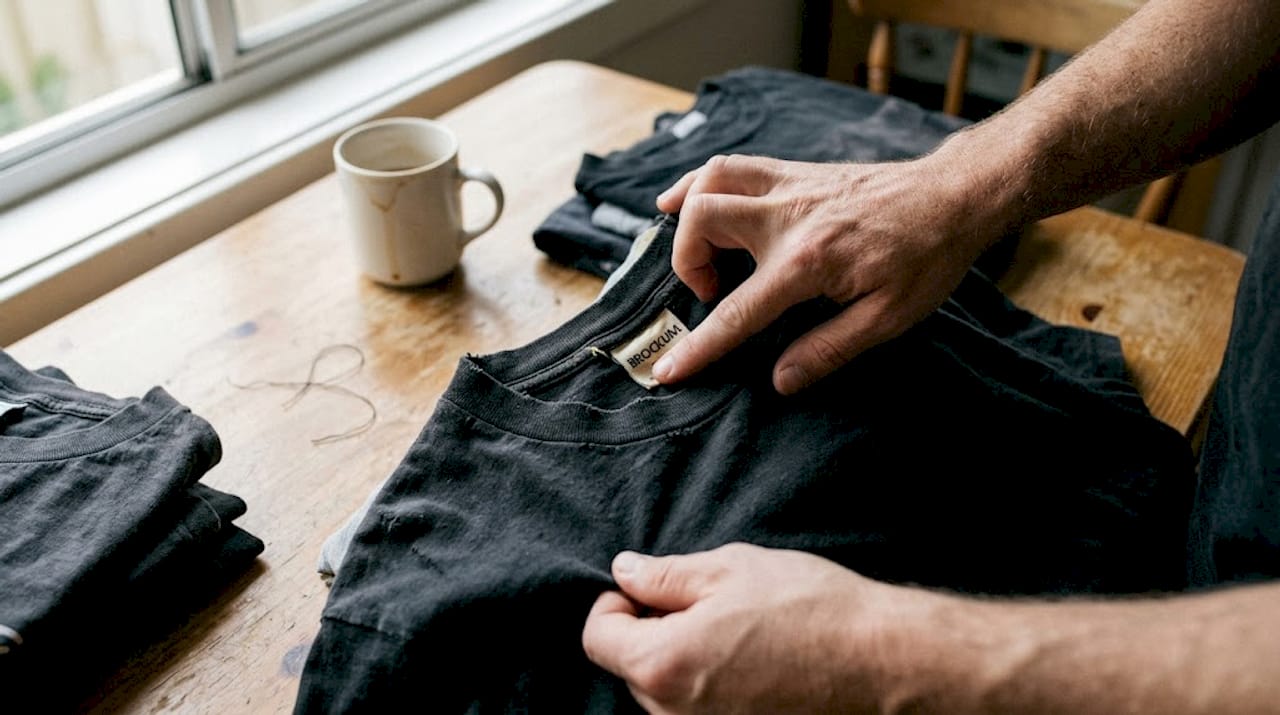
As noted when assessing authentic vintage Motörhead shirts, watch for synthetic fabric feel and inconsistent copyright dates as immediate disqualifiers. These two details catch most fakes before you even get to the print. Our vintage shirt markers guide gives you a printable checklist version of all these points.
Where to buy and how to value your collection
You can’t build an enviable collection without knowing where to source and how to assess true value.
Sourcing is half the battle. The other half is knowing what you’re looking at when you find something. Follow these steps when assessing any potential purchase:
- Start with completed sales on eBay. Filter by “sold” listings for the specific shirt or band and era. This gives you real transaction data, not wishlist pricing.
- Cross-reference on Depop and Grailed. These platforms attract serious vintage buyers and often surface pricing that reflects current collector sentiment more accurately than general marketplaces.
- Join specialist communities. Facebook groups and Reddit communities focused on heavy metal collecting are invaluable for getting a second opinion before committing serious money.
- Buy from established specialist retailers. Dealers who focus exclusively on verified vintage stock have skin in the game. Their reputation depends on authenticity, which gives you a meaningful layer of protection.
- Request provenance documentation. Ask where the shirt came from. Ex-tour stock, deadstock from venue warehouses, and shirts with documented ownership history carry premiums and are far easier to resell later.
Research confirms that metal tee resale values range from $200 to over $500 for many sought-after shirts, with iconic pieces like a 1989 Soundgarden tee reaching $1,350. Knowing these benchmarks protects you from overpaying and helps you recognise genuine bargains when they appear.
Our expert value guide covers valuation methodology in detail, and you can browse authenticated rare concert shirts to calibrate your eye against verified examples.
Pro Tip: When negotiating price on a private sale, always have a comparable completed eBay listing ready. It’s the most neutral, data-driven reference point available and removes emotion from the conversation entirely.
Our take: Why patience and knowledge always outpace luck
Impulse buying is the single biggest mistake we see collectors make. The urgency of a good-looking listing is a powerful thing, and it has convinced plenty of experienced people to skip their own due diligence. We’ve seen it happen repeatedly.
The collectors who build genuinely impressive holdings don’t find more shirts than everyone else. They simply know which ones to pass on. That discipline only comes from sustained research and, honestly, from making a few expensive mistakes early.
Documenting every purchase matters more than most people realise. A photograph of the tag, a note on where you bought it, and any seller information you can record all contribute to provenance that adds measurable value at resale. Treat every shirt like it might be the one you sell for $1,500 in a decade, because some of them will be.
One authenticated, well-researched piece from a significant tour will always outperform a pile of uncertain reprints. Follow our expert guide to collecting and let knowledge be your edge.
Build your collection with expert-picked vintage metal shirts
Finding verified, authenticity-checked vintage heavy metal shirts shouldn’t require months of trawling through uncertain listings and questionable provenance.
At Vintage Metal, every shirt in our catalogue has been assessed against the authentication criteria in this guide. From a rare Metallica 1992 tour shirt to broader vintage Metallica collections, our stock is drawn from ex-tour inventory, deadstock, and verified private holdings. You’re not guessing. You’re building a real collection with pieces that carry genuine history and documented value. Browse the full range and find your next serious addition.
Frequently asked questions
How can I tell if a heavy metal t-shirt is truly vintage?
Check for single-stitching, period-correct tags like Brockum or Giant, and thin, well-worn cotton. A quick look at modern tag indicators such as Gildan or Anvil labels will disqualify most fakes immediately.
What’s the average value of a 1990s band t-shirt?
Values range from $200 to over $1,000 for rare shirts, with common Nirvana shirts averaging around $278 and rare Metallica tees reaching $1,250 or more depending on condition and tour significance.
Are reprints ever collectible or valuable?
Generally, only original shirts from the specific tour era command serious collector prices. Reprints rarely reach comparable resale values and often actively suppress a collection’s credibility.
Where’s the best place to buy authentic metal band shirts?
Established specialist retailers with verified stock and transparent provenance offer the safest path. Avoid general second-hand markets unless you can physically inspect the shirt yourself.
What should I document when I buy a shirt?
Photograph the tag, both sides of the shirt, and the hem stitching, then record seller details and any known history. This provenance documentation directly supports future resale value.
Recommended


