



Collectors hunting rare 1990s heavy metal shirts face a minefield of fakes, inflated prices, and dubious sellers. Distinguishing genuine ex-tour stock from mass-produced reprints demands expertise in authenticity markers, condition grading, and provenance verification. This guide delivers clear selection criteria, real-world shirt examples with pricing, and trusted sourcing strategies to help you confidently build a valuable collection.
Table of Contents
- How To Choose Rare 1990s Heavy Metal T-Shirts: Essential Selection Criteria
- Rare 1990s Heavy Metal T-Shirt Examples And Their Unique Characteristics
- Pricing And Rarity Comparison For Top 1990s Heavy Metal Shirts
- Where To Find Authentic Rare 1990s Heavy Metal Shirts
- Situational Recommendations: Choosing The Right Rare Metal Shirt For Your Collection
- Explore Authentic Vintage Heavy Metal Shirts At Vintage Metal Store
Key takeaways
| Point | Details |
|---|---|
| Authenticity markers matter | Original single-stitch tags and tour dates verify genuine shirts. |
| Dead stock commands premium | Unworn ex-tour stock can fetch 30-50% more than worn originals. |
| Condition impacts value | Minor wear is acceptable, but severe damage drastically lowers price. |
| Provenance protects buyers | Verified sources and documented history guard against reprints. |
| Match goals to budget | Investment buyers need dead stock; casual collectors can accept light wear. |
How to choose rare 1990s heavy metal t-shirts: essential selection criteria
Understanding what makes a shirt truly rare separates savvy collectors from buyers wasting money on overpriced reproductions. Five core criteria determine a vintage metal shirt’s authenticity and collectible value.
Authenticity starts with the tag and print. Authenticity relies on original single-stitch tags and confirmed tour dates printed on shirts. Single-stitch construction was standard in the 1990s, while modern reprints use double-stitch hems. Check tour dates, venue names, and sponsor logos against historical records. Faded screen prints with cracking are normal for genuine shirts.
Condition directly affects price. Dead stock shirts command premium prices because they remain unworn with intact tags. Light wear including minor fading, small holes, or slight collar stretching is acceptable for most collectors. Severe damage like large tears, heavy staining, or missing sleeves reduces value by 40-60%. Examine photos closely and request additional images of problem areas before buying.
Rarity depends on the band, tour, and production run. Shirts from iconic tours like Metallica’s Black Album or Pantera’s Vulgar Display of Power are highly sought. Limited regional releases, festival exclusives, and obscure support act merchandise carry extra scarcity value. Research how many shirts were originally produced and how many survive today.
Provenance verification protects your investment. Dead stock from closed venue warehouses or tour merchandise suppliers offers the strongest provenance. Request documentation including purchase receipts, tour programmes, or photos showing the shirt’s history. Avoid sellers who cannot explain where they acquired the shirt or provide vague stories about “estate sales.”
Market pricing follows consistent patterns once you know the factors above. Iconic band shirts in dead stock condition range from $500 to $800. Worn originals from the same tours typically sell for $300 to $500. Use our heavy metal shirts buying checklist to systematically evaluate every potential purchase.
Pro tip: Compare multiple listings for the same tour before buying. Price variations of 30-40% are common, so patient collectors secure better deals by monitoring the market for 4-6 weeks.
Understanding these criteria transforms you from a casual buyer into an informed collector who recognises genuine value. Apply these guidelines when reviewing the specific shirt examples in the next section.
Rare 1990s heavy metal t-shirt examples and their unique characteristics
Real-world examples illustrate how the criteria above translate into actual collectibles and pricing. These five shirts represent different tiers of rarity and value in today’s market.
The Metallica 1992 ‘Don’t Tread On Me’ USA tour shirt stands as a blue-chip investment piece. This official tour merchandise features the iconic snake graphic from the Black Album era with verified tour dates across the back. Single-stitch construction, original Brockum tag, and documented dead stock provenance justify its $550 to $600 price range. The shirt’s excellent condition and association with one of metal’s biggest albums make it a cornerstone collectible.
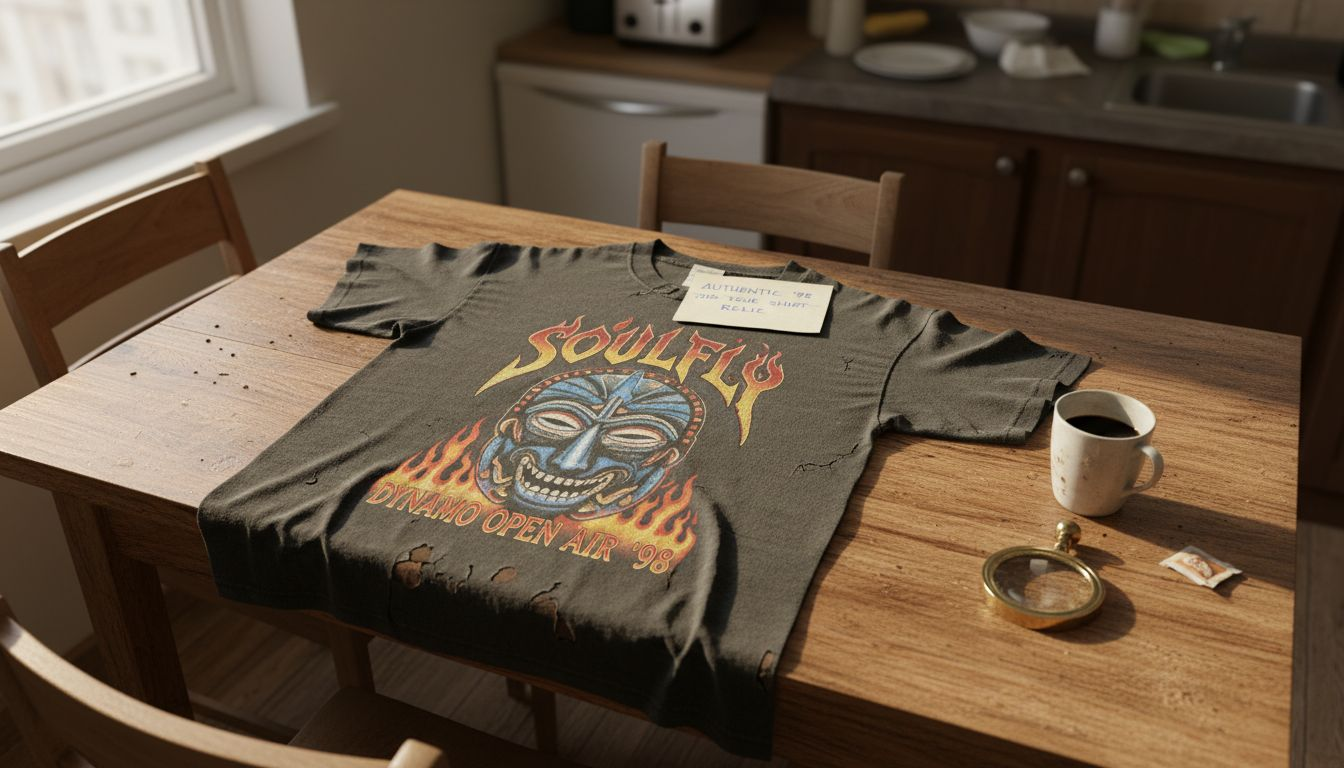
Soulfly’s 1998 Dynamo Open Air festival shirt represents festival rarity at its peak. The Soulfly 1998 Dynamo Open Air festival shirt can reach prices around $800 as a collector’s grail. Limited production for a single festival appearance, combined with Max Cavalera’s cult following, drives demand. The shirt features distinctive tribal artwork and official festival branding, making authentication straightforward.
Pantera’s 1990s long sleeve shirt showcases how format affects value. Long sleeve vintage metal shirts are significantly rarer than standard tees because fewer were produced. This example, priced around $650, features the band’s iconic Cowboys From Hell era imagery. Light wear consistent with age does not diminish its appeal to thrash collectors focused on provenance over pristine condition.
The Slayer 1988 World Sacrifice tour shirt demonstrates that wear patterns tell stories. Priced at approximately $650 despite cut sleeves, this shirt’s documented tour history and original screen print validate its authenticity. Collectors seeking genuine tour-worn pieces accept modifications when provenance is rock-solid. The aggressive pricing reflects Slayer’s legendary status in thrash metal.
Sepultura’s 1992 tour shirt rounds out the mid-tier with consistent $600 pricing. This example balances strong band recognition with more accessible pricing than top-tier Metallica pieces. Original tags, verified tour dates, and good overall condition make it an excellent entry point for serious collectors building comprehensive 1990s thrash holdings.
Explore all rare vintage shirts to compare additional examples across different bands and eras. These five shirts establish benchmarks for evaluating similar pieces you encounter.
Pricing and rarity comparison for top 1990s heavy metal shirts
Systematic comparison reveals clear pricing tiers and helps you identify fair value when opportunities arise. The table below organises rare 1990s metal shirts by price, rarity factors, and investment potential.
| Shirt example | Price range | Rarity factors | Condition impact |
|---|---|---|---|
| Soulfly 1998 Dynamo | $800 | Festival exclusive, limited production | Dead stock commands 40% premium |
| Pantera 1990s long sleeve | $650 | Format rarity, thrash icon | Long sleeves add 25% value |
| Slayer 1988 World Sacrifice | $650 | Legendary tour, early thrash | Modifications accepted with provenance |
| Sepultura 1992 tour | $600 | Strong band recognition, verified dates | Good condition maintains value |
| Metallica 1992 Don’t Tread | $550-$600 | Iconic album era, dead stock | Pristine examples reach top range |
Dead stock vintage metal shirts command a 30-50% premium compared to worn originals. This pricing pattern holds across bands and tours, making condition the primary variable once authenticity is confirmed. A dead stock Sepultura shirt might sell for $750, while a worn example of the same tour fetches $600.
Band recognition and tour significance create pricing floors. Metallica shirts rarely fall below $400 even with moderate wear because demand remains constant. Lesser-known bands from the same era might price at $150 to $250 despite similar age and condition. Research the band’s current fanbase size and historical importance before paying premium prices.
Format variations add value in predictable ways. Long sleeve shirts typically command 20-30% more than standard tees from the same tour. Rare colour variants, regional prints, and festival exclusives can double base pricing. The Soulfly Dynamo example at $800 demonstrates this festival premium compared to standard tour dates.
Authenticity overwhelms all other factors. A pristine reprint is worthless, while a worn original retains significant value. Invest in verification before paying premium prices. Compare your target shirt against documented examples in the rare vintage heavy metal t-shirts collection to confirm period-correct tags, print styles, and construction methods.
Pro tip: Track sold listings for your target bands over 90 days to identify seasonal pricing patterns. Prices often dip in January and February when fewer collectors are actively buying.
This pricing framework enables confident valuation of any 1990s metal shirt you encounter. Apply these benchmarks when sourcing from the channels discussed next.
Where to find authentic rare 1990s heavy metal shirts
Knowing where to shop dramatically improves your odds of finding genuine rare shirts at fair prices. Five sourcing channels offer different advantages and risk profiles.
Specialist vintage heavy metal shirt stores provide the safest entry point. Specialist vintage stores and verified online marketplaces are most reliable for authentic vintage metal shirts. These dealers stake their reputation on authenticity, offer detailed provenance, and typically provide return policies. Prices run 10-15% higher than private sales, but the authentication and guarantee justify the premium.
Verified online marketplaces connect you with vetted sellers. Platforms with seller rating systems and buyer protection let you access a broader inventory than local shops. Check seller feedback, request additional photos, and confirm return policies before purchasing. Avoid listings with stock photos or vague descriptions that cannot answer specific authentication questions.
Dead stock discoveries represent the holy grail of vintage hunting. Closed venue warehouses, defunct merchandise suppliers, and estate sales occasionally yield untouched inventory. These finds require patience and networking within collector communities. Join vintage metal shirt forums and social media groups where members share leads on dead stock sources.
Tour merchandise archives and band-authorised sales occur sporadically. Some bands or their management occasionally release archived tour stock decades later. Subscribe to official band channels and merchandise companies that handled 1990s tours. These releases offer guaranteed authenticity but often sell out within hours.
Private collector sales and trading networks provide access to pieces rarely listed publicly. Established collectors sometimes sell duplicates or trade to fill gaps in their collections. Build relationships at metal festivals, vintage markets, and online communities. This channel demands the most authentication expertise because private sales rarely offer returns.
Shop trusted vintage metal shirt sources to compare current inventory across verified sellers. Multiple sourcing channels increase your chances of finding specific shirts while managing risk through seller reputation and authentication standards.
Situational recommendations: choosing the right rare metal shirt for your collection
Your collection goals and budget determine which shirts offer the best value. Match your buying strategy to one of these common collector profiles.
-
Investment collectors seeking appreciation: Target dead stock shirts from iconic tours like Metallica’s Black Album or Pantera’s Vulgar Display of Power. Pay $550 to $800 for pristine examples with documented provenance. These pieces historically appreciate 8-12% annually as supply diminishes. Dead stock and iconic band rarity maximise long-term investment value.
-
Casual collectors building wearable collections: Choose authentic shirts in good condition priced at $300 to $500. Light wear preserves wearability while keeping costs reasonable. Focus on bands you genuinely love rather than chasing maximum rarity. This approach lets you enjoy your collection daily without anxiety over preservation.
-
Thrash metal specialists curating genre-focused collections: Prioritise rare tour shirts even with moderate wear. A Slayer 1988 shirt with cut sleeves at $650 offers more collector credibility than a pristine reprint. Completeness and authenticity matter more than condition when building definitive thrash holdings. Track the 1990s heavy metal shirts value trend to time major acquisitions.
-
Budget collectors starting with $200 to $400: Look for verified authentic shirts from less mainstream bands like Testament, Obituary, or Machine Head. These pieces offer genuine 1990s provenance at accessible prices. Avoid the temptation to buy questionable Metallica shirts at this price point, because they are almost certainly reprints.
-
Festival and tour historians documenting specific events: Target event-specific shirts regardless of band fame. Regional festival shirts, support act merchandise, and venue-exclusive prints become increasingly rare. Pay premiums for documented festival appearances over standard tour dates.
Each collecting approach succeeds when you match acquisition strategy to your actual goals. Be honest about whether you are investing, wearing, or archiving before committing to premium purchases.
Explore authentic vintage heavy metal shirts at Vintage Metal Store
Applying the selection criteria and pricing insights above becomes effortless when you shop at dedicated vintage specialists. Vintage Metal Store curates authenticated rare 1990s heavy metal shirts with transparent provenance and detailed condition reporting.
Discover the Metallica 1992 tour tee featured in this guide, complete with original tags and dead stock condition. Browse the comprehensive vintage Metallica shirts collection spanning multiple tours and eras. Every piece includes detailed photos, verified tour dates, and authentication documentation.
Expand beyond Metallica by exploring the shop all vintage metal shirts collection featuring Pantera, Slayer, Sepultura, and dozens of other 1990s metal icons. Each shirt undergoes rigorous authentication before listing, giving you confidence in every purchase. Build your collection with pieces that combine genuine history, investment potential, and connection to the music you love.
FAQ
What makes a 1990s heavy metal shirt truly rare?
Original band merchandise from limited tour runs, combined with dead stock status and verified provenance, defines genuine rarity. Mere age or famous band names alone do not create collectible value. Scarcity must be documented through production records, surviving inventory, and authentication markers.
How can I tell if a vintage heavy metal shirt is authentic?
Examine single-stitch construction at hems, original screen prints showing period-appropriate cracking, and verified tour dates matching historical records. Authentic pieces include original tags from manufacturers like Brockum or Giant. Avoid mass-produced reprints lacking provenance or featuring modern double-stitch construction.
Where is the best place to buy authentic rare 1990s metal shirts?
Specialist vintage metal stores and verified online marketplaces with seller ratings offer the most reliable sources. Check return policies, request detailed provenance, and compare multiple sellers before purchasing. Avoid dubious sellers offering suspiciously low prices or unable to document where they acquired inventory.
Does the condition of a vintage shirt affect its value?
Yes, condition significantly influences pricing, with dead stock commanding 30-50% premiums over worn originals. Minor wear including light fading or small holes is typical and acceptable to collectors. Severe damage like large tears or heavy staining reduces value by 40-60% compared to good condition examples.
What should I consider when buying on a budget?
Seek verified authentic shirts from less mainstream bands like Testament or Obituary priced at $200 to $400. Balance condition and rarity by accepting light wear on pieces with strong provenance. Avoid cheap listings for iconic bands, because low prices almost always indicate reprints or misrepresented condition.
Recommended


