



TL;DR:
- Merch serves as a vital symbol of group membership, cultural knowledge, and identity within music subcultures. Its value is rooted in authenticity, scarcity, and shared stories, which distinguish genuine artifacts from mass-produced items. Since 2025, merchandise has evolved into experiential community-building tools, emphasizing emotional connection and insider signals over mere apparel.
Merchandise is the primary tool subcultures use to signal membership, express collective identity, and create social belonging within music communities. The role of merch in subculture goes far beyond a band logo on cotton. It operates as what sociologists call “identity shorthand,” a wearable declaration of values, allegiances, and taste that communicates group membership before a single word is spoken. From the earliest Black Sabbath tour shirts to the cassette USB drops of artists like Worship and Tape B in 2025, merch has always been the physical language of music subcultures. Understanding how it works, and why it matters, tells you something profound about how communities form and sustain themselves.
How has merch shaped subcultures since the 1990s?
The history of band merchandise reveals a clear turning point. Before the 1990s, a tour shirt was an artefact of presence. You were there. You stood in that crowd, bought that shirt from a folding table at the back of a sweaty venue, and wore it as proof. That friction, the difficulty of obtaining the item, was the entire point. Exclusive tour shirts symbolise participation and cultural capital in a way that a mass-produced replica simply cannot replicate. The harder it was to get, the more it meant.
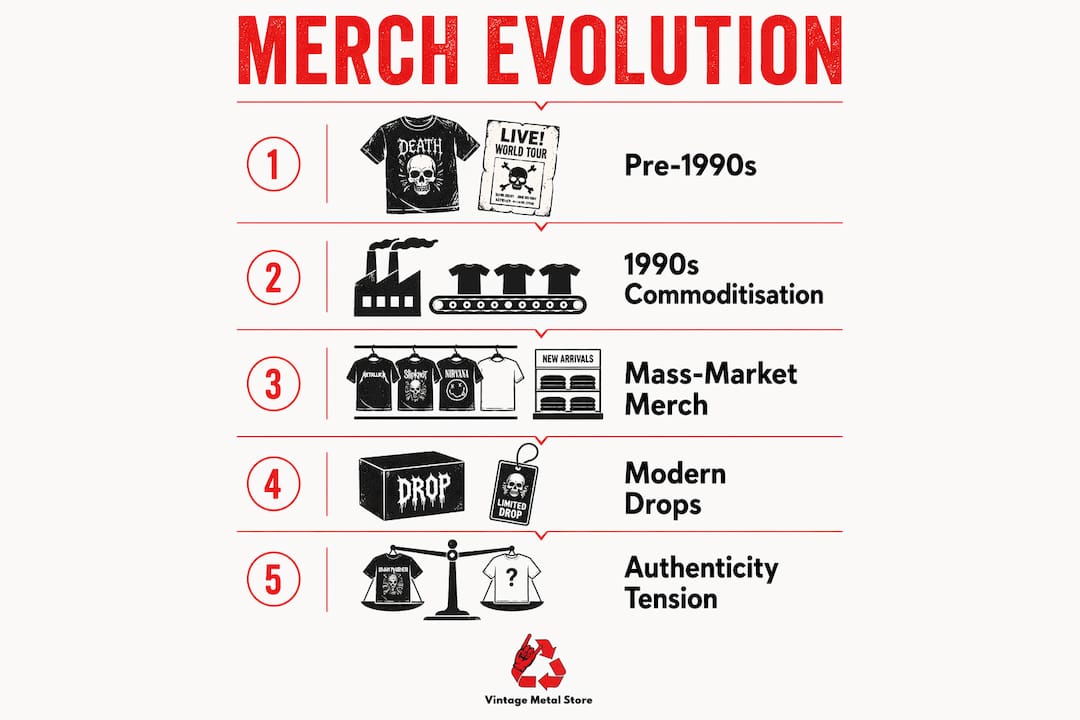
Then came the commoditisation wave. Mass-market retailers like Hot Topic popularised band tees through the 1990s, pulling subcultural symbols off the venue floor and into shopping centre racks. A Metallica shirt became something you could buy without ever hearing Master of Puppets. For long-time fans, this was a genuine loss. The shirt no longer proved anything. It had become decoration rather than declaration.
The contrast between these two eras is stark:
| Era | Merch function | Availability | Cultural weight |
|---|---|---|---|
| Pre-1990s | Proof of attendance, subcultural capital | Venue only, limited quantities | High, earned through participation |
| Post-1990s | Identity shorthand, fashion statement | Mass retail, online, fast fashion | Diluted, accessible without fandom |
For collectors, this history matters enormously. A genuine vintage tour shirt carries the weight of that original friction. It is an artefact of a specific time and place, not a reproduction of one. The collector market for pieces like original 1980s and early 1990s metal tour shirts exists precisely because those items cannot be recreated. Their scarcity is not manufactured. It is historical fact.
Key shifts in the commoditisation of band merch:
- Early tour shirts required physical attendance at concerts, making them genuine proof of subcultural participation
- Hot Topic’s rise in the 1990s made band imagery available to anyone, regardless of fandom depth
- Online retail in the 2000s further removed geographic and access barriers
- Fast fashion brands began producing unlicensed or cheaply licensed band imagery, further diluting exclusivity
- Collector demand for pre-commoditisation pieces increased as authentic vintage items became genuinely rare
What does merch do beyond basic apparel today?
The merchandise impact on subculture has shifted again since 2025. Merch has evolved from souvenirs to experiential events, with limited drops and custom collectibles driving community participation in ways a standard tour shirt never could. Artists are now applying streetwear tactics to music merch, building entire worlds around a release rather than simply printing a logo on a hoodie.
Modern merch functions in four distinct ways that go well beyond apparel:
- Memory creation. A limited item tied to a specific event, a pop-up in a specific city, a drop available for 48 hours, becomes a memory object. Fans do not just own it. They remember acquiring it, and that story becomes part of their identity within the community.
- Community participation. Waiting in line for a limited drop is itself a social act. You meet people. You share the experience. The item becomes a symbol of that shared moment rather than just a product.
- Insider signalling. Merch referencing inside language or specific lyrics enables fans to quietly find their people without broadcasting affiliation to the mainstream. A lyric only true fans recognise on a shirt does more social work than a giant band logo.
- Real-time cultural engagement. Fast production cycles from suppliers like GSJJ enable creators to produce merch within 24 hours, allowing artists to respond to cultural moments as they happen and keep fan engagement alive between releases.
Artists like GRiZ have demonstrated that merch drops modelled on streetwear create urgency while focusing on immersive world-building and emotional connection over straightforward sales. The item is almost secondary to the experience of getting it.
Pro Tip: If you are a collector or a serious fan, pay attention to the story behind an item, not just the item itself. A shirt from a specific tour stop, or a piece from a limited regional drop, carries a narrative that adds genuine value over time.
How does merch influence identity and social belonging?
Social identity theory, developed by Henri Tajfel and John Turner, explains the psychological mechanism at work here. According to the theory, people categorise themselves into groups, identify with those groups, and seek positive distinctiveness from out-groups. Merch functions for social identification and comparison, allowing fans to place themselves within a meaningful collective and differentiate from those outside it.
This is why the subculture merchandise significance of a specific shirt goes beyond aesthetics. Wearing a Slayer Reign in Blood tour shirt from 1986 is not the same as wearing a generic metal-themed graphic tee. One signals deep knowledge and genuine history with the music. The other signals general interest. Both wearers know the difference, and so does everyone else in the room who understands the reference.
“Merch evolves from broadcasting affiliation to quietly finding like-minded people.” This shift from loud declaration to subtle signal marks the most sophisticated function merch performs within a tight-knit subculture.
The social mechanics of merch as identity:
- Social categorisation: Fans use merch to place themselves within specific communities, whether metal, punk, rave, or hip-hop
- Identification: Wearing a band’s merch signals alignment with that artist’s values, not just their music
- Positive distinctiveness: Owning rare or hard-to-find merch elevates status within the in-group without requiring direct confrontation with out-groups
- Inside language: References to specific albums, tours, or lyrics create a private communication layer that only genuine fans decode
The risk in this system is gatekeeping. When in-group members use merch knowledge as a weapon to exclude or demean newcomers, the community loses its ability to grow. Scarcity in merch can feel like gatekeeping or emotional manipulation, risking the trust between artists and fans. Artists who understand this walk a careful line between creating meaningful exclusivity and weaponising it.
Does mass-market merch destroy subcultural authenticity?
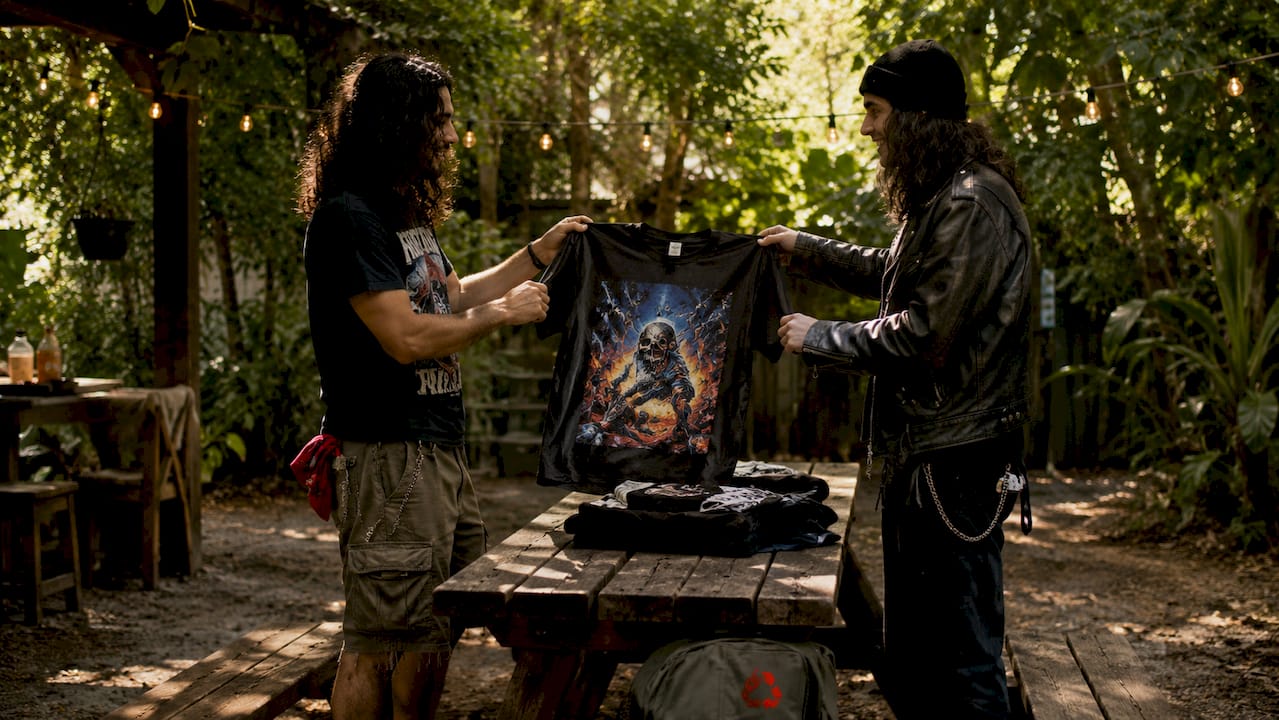
This is the central tension in how merch influences subcultures today. Mass-market fast fashion rock band shirts divide purists and casual consumers, with purists arguing that mass production strips cultural meaning from the imagery, while others see accessible merch as a legitimate entry point into music communities. Both positions have merit, and neither is entirely right.
The authenticity debate breaks down along these lines:
| Position | Argument | Weakness |
|---|---|---|
| Purist | Original tour merch carries irreplaceable cultural capital; reproductions dilute meaning | Can slide into gatekeeping that excludes genuine new fans |
| Accessible | Mass-market merch lowers barriers and grows communities | Removes the friction that gives merch its subcultural currency |
| Collector | Vintage and original pieces hold historical and monetary value regardless of mass-market presence | Collector culture can inflate prices and price out genuine fans |
The role of branded items in subcultures has always involved this tension between exclusivity and growth. Heavy metal is a clear example. The genre grew through word of mouth, tape trading, and the visible signalling of fans wearing tour shirts in public. That visibility recruited new members. But when those same shirts became available at every shopping centre, the signal lost precision.
The most honest position is that both types of merch serve different functions. A vintage Metallica shirt from the 1992 Wherever I May Roam tour is not competing with a fast fashion band tee. They exist in entirely different registers of meaning. One is a historical document. The other is a fashion choice. The problem arises when the two are confused, either by the wearer or by the community judging them.
Pro Tip: When assessing the authenticity of a vintage piece, look for period-correct printing techniques, original tags, and provenance details like the specific tour or venue. These details separate genuine artefacts from later reproductions and matter enormously to serious collectors.
The band tee authenticity question is not about snobbery. It is about preserving the integrity of objects that carry real cultural history. A shirt worn at a specific concert in 1992 is a primary source. Treating it as equivalent to a 2024 fast fashion reproduction is like treating a photocopy as the original document.
Key takeaways
Merch functions as the primary physical language of subcultures, and its power depends entirely on the friction, authenticity, and shared meaning embedded in how it is made and obtained.
| Point | Details |
|---|---|
| Merch as identity signal | Wearing specific merch communicates group membership and subcultural knowledge without words. |
| Friction creates value | Hard-to-obtain merch carries more cultural capital than mass-produced equivalents, as scarcity signals genuine participation. |
| Modern merch is experiential | Since 2025, limited drops and pop-up events have made the acquisition process itself a community-building act. |
| Authenticity matters to collectors | Vintage tour shirts are historical artefacts; their value comes from provenance, not just imagery. |
| Gatekeeping risks community health | Using merch knowledge to exclude newcomers damages the long-term vitality of any subculture. |
Why merch still means everything in 2026
I have spent years around vintage metal merch, and the thing that strikes me most is how little the core function has changed despite everything else shifting. The shirt you wore to your first Slayer show in 1988 meant the same thing that a cassette USB from a Worship pop-up means to a rave kid in 2025. It is proof. Proof that you were there, that you cared enough to seek it out, that this music shaped something in you.
What has changed is the noise around it. The fast fashion band tees, the algorithmically timed drops, the resale market inflating prices beyond what any genuine fan can afford. These forces are real, and they do put pressure on the authentic meaning of subcultural merch. But they do not erase it. They just make the genuine articles more valuable by contrast.
My honest view is that artists who treat merch as a community tool rather than a revenue stream will always build stronger, longer-lasting fan relationships. The tour merch culture and economics have always been intertwined, but the artists who get it right are the ones who understand that a fan wearing your shirt in public is doing unpaid cultural work on your behalf. That deserves respect, not exploitation.
For collectors and fans, the advice is simple. Chase the pieces that carry genuine stories. A shirt with provenance, with a specific tour date and venue, with the wear and fading of real use, is worth ten pristine reproductions. The meaning is in the history.
— David
Find authentic vintage metal merch at Vintage Metal Store
If this article has you thinking about the real weight of a genuine tour shirt, you already understand what Vintage Metal Store is about.
Vintage Metal Store carries ex-tour stock, dead stock, and second-hand heavy metal shirts with genuine provenance. These are not reproductions. They are the real thing, pieces that were actually there. The rare Metallica 1992 Don’t Tread on Me USA tour shirt is exactly the kind of artefact this article is about. A specific tour, a specific era, a shirt that carries the full weight of subcultural history. Browse the full vintage Metallica shirts collection and find a piece that means something. Wear the legacy.
FAQ
What is the role of merch in subculture?
Merch serves as a physical signal of group membership, cultural knowledge, and shared values within music subcultures. It functions as identity shorthand, communicating allegiance and subcultural capital before any conversation begins.
Why do vintage tour shirts hold more value than mass-produced band tees?
Vintage tour shirts carry the friction of original acquisition, meaning they were only available at specific concerts or events, which gives them genuine cultural capital and historical provenance that mass-produced items cannot replicate.
How does social identity theory explain merch behaviour in fan communities?
Social identity theory explains that fans use merch for social categorisation, placing themselves within in-groups and differentiating from out-groups. Wearing specific merch signals identification with an artist’s values and elevates status within the community.
Has the meaning of merch changed in 2025 and 2026?
Since late 2025, merch has shifted toward experiential events and limited drops, where the act of acquiring an item is itself a community experience. Artists like GRiZ and Worship use pop-ups and unique collectibles to build emotional connection beyond standard apparel.
What is the risk of using merch scarcity as a marketing tool?
Manipulated scarcity can damage the trust between artists and fans, turning what should be a community tool into a mechanism that feels exploitative. Fans distinguish between genuine exclusivity rooted in real events and artificial scarcity designed purely to drive demand.
Recommended


