


Ventilate first, remove the source, clean every residue, then purify the air. That four-step sequence works whether you’re dealing with a smoke-saturated lounge room, a car that reeks of old tobacco, a pile of thrift-store finds, or a vintage band tee you just scored. The key word is residue: cigarette smoke leaves a sticky, oily film of nicotine and tar on every surface it touches, and until you physically remove that film, no amount of spraying, diffusing, or airing will get rid of the smell permanently. Work through the sequence below in order, repeat the cleaning and purification steps in the worst areas, and you’ll have a clear picture within a few days of whether you need professional help.
Urgent cautions before you start:
- Ozone machines and hydroxyl generators are professional tools. Never run an ozone machine in an occupied space — it is a lung irritant and dangerous to pets, children, and adults.
- TSP (trisodium phosphate) and TSP-substitute degreasers require gloves, eye protection, and good ventilation. Read the label before you open the bottle.
- Do not tumble-dry smoky clothing until the odour is fully gone. Heat sets smoke molecules into fibres and prints, sometimes permanently.
Pro Tip: Write the four-step sequence on a sticky note and put it on your fridge. Skipping straight to air fresheners or purifiers without cleaning residue first is the single most common reason cigarette smell keeps coming back.
Key takeaways
Effective cigarette smell removal requires physically removing the nicotine residue from every surface before purifiers or absorbers can do their job — masking agents alone will not solve the problem.
| Point | Details |
|---|---|
| Ventilate and remove sources first | Open all windows, remove ashtrays and smoky items before any other step. |
| Clean residue before purifying | Degrease walls with a TSP substitute and wash fabrics before running purifiers or placing charcoal sachets. |
| Use HEPA + activated carbon together | A purifier with both stages removes particles and gaseous odour compounds; neither filter works fully without the other. |
| Never heat smoky fabric before it’s clean | Tumble drying or ironing sets smoke molecules into fibres permanently — air-dry and check first. |
| Call a pro when DIY stalls | Persistent smell after thorough cleaning, HVAC saturation, or drywall contamination are signs professional remediation is needed. |
Table of Contents
- How do you get rid of cigarette smell fast?
- How to remove cigarette smell from clothing, bedding and curtains
- Removing cigarette smell from skin, hair and breath
- How do you get cigarette odour out of rooms and walls?
- Step-by-step: removing cigarette smell from a car
- What air purifier actually removes smoke smell?
- When should you call a professional smoke remediation service?
- Safety rules for chemicals, ozone and fragile items
- Specialist care for vintage and second-hand band T-shirts
- Sources
- FAQ
How do you get rid of cigarette smell fast?
The fastest real improvement comes from three things done simultaneously: open every window and door to flush the space, remove the physical source of the smell (ashtrays, cigarette butts, smoky clothing, curtains), and wash or bag anything fabric you can reach. Air fresheners and scented candles are not on this list because, as Healthline explains, simple masking agents often make the smell worse by layering a synthetic scent over a sticky nicotine residue that keeps re-emitting odour.
Here’s a rough timeline for what you can realistically expect:
- Within hours: Ventilation and source removal drop the intensity noticeably in a well-aired room or car.
- Same day: A machine wash of clothing and soft furnishings (where care labels allow) removes a large portion of surface odour.
- Two to five days: Repeated cleaning of hard surfaces, carpet treatment, and running a HEPA + activated carbon purifier continuously will produce a clear, measurable improvement.
- One to three weeks: Heavily saturated rooms, cars with years of smoke, or clothing with deep-set residue may need multiple cleaning cycles and professional extraction before the smell is gone.
Pro Tip: Crack windows on opposite sides of the room to create cross-ventilation rather than just opening one window. Moving air carries odour molecules out; still air just redistributes them.
How to remove cigarette smell from clothing, bedding and curtains
Smoke odour in fabric is a residue problem, not just a scent problem. The nicotine film clings to fibres, which is why a single wash sometimes isn’t enough. Before you do anything else, check the care label: machine-washable items, hand-wash-only items, and dry-clean-only items each need a different approach.
Step-by-step wash sequence for machine-washable items
- Sealed HEPA vacuum first. Run a HEPA vacuum with a soft brush attachment slowly over the garment before wetting it. This lifts loose, smoke-saturated dust particles without pushing them deeper into the weave.
- Pre-treat with baking soda or an enzyme cleaner. Sprinkle baking soda (sodium bicarbonate) generously over the item and leave it for 30–60 minutes, or apply an enzyme-based pre-treatment spray directly to the fabric. Enzyme cleaners break down the organic compounds in smoke residue rather than masking them.
- Wash at the hottest temperature the care label allows. Add half a cup of white vinegar to the rinse cycle as a natural deodoriser. For white or colour-safe items, an oxygen bleach (sodium percarbonate) boosts the result.
- Check before drying. Smell the item while it is still damp. If any smoke odour remains, repeat the wash before drying. Never tumble-dry until the smell is completely gone.
- Air-dry in sunlight where possible. UV light and fresh air both help neutralise residual odour molecules.
For upholstery, curtains and bedding
- Curtains that are machine-washable: follow the sequence above. Dry-clean-only curtains need professional cleaning — do not attempt a home wash.
- Upholstered furniture: sprinkle baking soda liberally, leave for several hours (overnight is better), then vacuum with a HEPA unit. Follow with an enzyme spray and allow to air-dry fully.
- Mattresses: baking soda + HEPA vacuum, then an enzyme spray on the surface. A mattress protector helps prevent re-absorption.
- Activated charcoal sachets placed in wardrobes and drawers adsorb residual odour molecules between washes — they work by chemical adsorption, not masking.
Pro Tip: For thrift-store finds or second-hand items with that classic storage smell or musty smell, seal them in a bag with a cup of baking soda for 24 hours before washing. It pulls a surprising amount of odour out of the fibres before the water even touches them.
Removing cigarette smell from skin, hair and breath
Your body picks up smoke residue the same way fabric does: the oily film settles on skin, hair, and clothing. The good news is that personal removal is straightforward and fast.
- Shower and shampoo: A full shower with soap and shampoo removes the majority of smoke residue from skin and hair. Pay attention to your hands, face, and neck, where residue concentrates.
- Targeted hand and face wash: If a full shower isn’t possible, washing your hands and face with soap removes a large portion of the smell quickly.
- Dry shampoo: For hair between washes, a dry shampoo (brands like Batiste are widely available in Australian supermarkets and chemists) absorbs oily residue and reduces odour noticeably.
- Oral care: Brush your teeth, clean your tongue with a tongue scraper, and use an alcohol-based mouthwash. The tongue holds a significant amount of residue, so skipping it means the smell returns within minutes.
- Body wipes: Alcohol-based or antibacterial body wipes are a practical out-of-house option for skin when a shower isn’t available.
- Breath mints: A short-term fix only. They mask rather than remove the source, so combine them with proper oral care as soon as you can.
- Change your clothing: Even after showering, putting smoky clothes back on immediately re-deposits residue on your skin and hair. A fresh change is part of the removal process, not optional.
How do you get cigarette odour out of rooms and walls?
The sequence that works is: remove residue first, then neutralise, then purify the air. Only after those steps should you consider repainting or replacing materials. The Home Depot’s guide stresses a top-to-bottom approach: ventilate, clean surfaces with appropriate degreasers, treat carpets and upholstery, and address your HVAC system — in that order.
Walls, ceilings and hard surfaces
Nicotine and tar form a yellowish, sticky film on walls and ceilings. You can often see it as yellow collar-like staining around vents and light switches. A standard household cleaner won’t cut through it. Wear gloves and eye protection, and keep windows open while you work.
Wash walls from top to bottom, rinse, and allow to dry fully. If the smell persists after cleaning, apply a shellac-based or oil-based odour-blocking primer (such as Zinsser BIN or Zinsser Bulls Eye 1-2-3) before repainting. Standard water-based primer will not seal nicotine residue — the smell bleeds straight through. In severe cases where smoke saturation has reached the drywall core, Savvy Dwelling notes that replacement of the drywall may be the only reliable long-term fix.
Carpets and upholstery
- Sprinkle baking soda across the entire carpet, work it in gently with a brush, leave overnight, then vacuum with a HEPA unit.
- For deep-set residue, steam extraction (hot water extraction) penetrates fibres and lifts oily smoke residue far more effectively than dry methods. Hire a professional carpet cleaner or a machine from a hire centre.
- If the carpet underlay has absorbed years of smoke, cleaning the carpet surface alone won’t solve the problem. The underlay may need replacement.
- Enzyme cleaners applied to upholstery break down organic residue; allow full drying time before using the furniture again.
HVAC and ducts
A contaminated HVAC system is one of the most overlooked sources of odour recirculation. Replace your air-conditioning filters immediately, and if the ducting has been exposed to years of smoke, have the ducts professionally cleaned. Running a dirty system after cleaning your surfaces will re-deposit smoke particles throughout the room within days.
| Surface | Best approach | Key product | When to call a pro |
|---|---|---|---|
| Walls and ceilings | Degrease, then seal | TSP substitute + shellac primer | Drywall saturation, persistent bleed-through |
| Carpets | Baking soda + steam extraction | HEPA vacuum + enzyme cleaner | Underlay replacement needed |
| Upholstery | Enzyme spray + air-dry | Enzyme cleaner + activated charcoal | Deep saturation, delicate fabric |
| HVAC ducts | Filter replacement + duct clean | High-MERV filter | Years of contamination |
Step-by-step: removing cigarette smell from a car
Cars are small, enclosed spaces with a lot of porous surfaces — seat foam, carpet, headliner, and door trim all absorb smoke. Work through these steps in order.
- Remove all debris. Empty ashtrays, remove cigarette butts, and bag any rubbish. Leave doors and windows open for at least 30 minutes.
- HEPA vacuum every surface. Use a HEPA vacuum with a crevice tool to reach seat seams, under seats, and around the centre console. Go slowly — you’re lifting smoke-saturated dust, not just surface dirt.
- Wipe hard surfaces with a degreaser. Dashboard, door panels, centre console, and steering wheel all carry nicotine film. Use an automotive interior cleaner or a diluted TSP-substitute solution on a microfibre cloth.
- Shampoo seats and carpet. Fabric seats and carpet need a wet extraction clean. Hire a portable carpet extractor or use a foam upholstery shampoo worked in with a brush and extracted with a wet-dry vacuum. Leather seats need a dedicated leather cleaner followed by a conditioner.
- Replace the cabin air filter. The cabin filter sits in the HVAC system and traps smoke particles. A saturated filter re-circulates odour every time you run the air conditioning. Replacement filters are readily available at most Australian auto parts stores and can be swapped out quickly.
- Clean HVAC vents. Spray an HVAC vent cleaner or a diluted enzyme solution into the intake vents with the fan running on recirculate, then switch to fresh air to flush the system.
- Place activated charcoal sachets. Once the interior is clean and dry, place activated charcoal sachets under the seats. They adsorb residual odour molecules continuously and are reusable — recharge them by placing them in direct sunlight for a few hours.
Ongoing maintenance options:
- A small HEPA + activated carbon in-car purifier (brands like Philips and Winix make compact units) helps maintain air quality between deep cleans.
- Baking soda sprinkled on carpet overnight and vacuumed out the next morning is a low-cost passive treatment between washes.
Safety note: Never use an ozone machine in a car without professional supervision. Ozone at the concentrations needed to treat smoke residue is harmful to breathe and can damage rubber seals and plastics inside the vehicle.
What air purifier actually removes smoke smell?
The answer is a unit with both true HEPA filtration and a substantial activated carbon stage. Savvy Dwelling’s guide is clear on this: HEPA alone captures fine particles but does nothing to gaseous odour compounds. Activated carbon adsorbs those volatile molecules. You need both working together.
What to look for when buying in Australia:
- True HEPA rating: Captures particles down to 0.3 microns at 99.97% efficiency. “HEPA-type” or “HEPA-style” filters do not meet this standard.
- Activated carbon bed weight: A thin carbon layer (under 100g) provides minimal adsorption. Look for units with at least 1–2kg of granular activated carbon for meaningful smoke odour removal.
- CADR (Clean Air Delivery Rate): Match the unit’s CADR to your room volume. A unit rated for 20 square metres won’t meaningfully clean a 50-square-metre open-plan living area.
- Continuous runtime: Run the purifier continuously in the worst-affected rooms during remediation, not just for a few hours a day.
- Placement: Position the unit in the centre of the room or near the primary odour source, not tucked in a corner.
Passive adsorbents: where they help and where they don’t:
Activated charcoal sachets and open bowls of baking soda work well in small, enclosed spaces: wardrobes, drawers, car interiors, and storage boxes. They adsorb odour molecules rather than masking them. Their limitation is capacity — in a large room with active smoke residue on surfaces, they are a supplement to cleaning and purification, not a replacement.
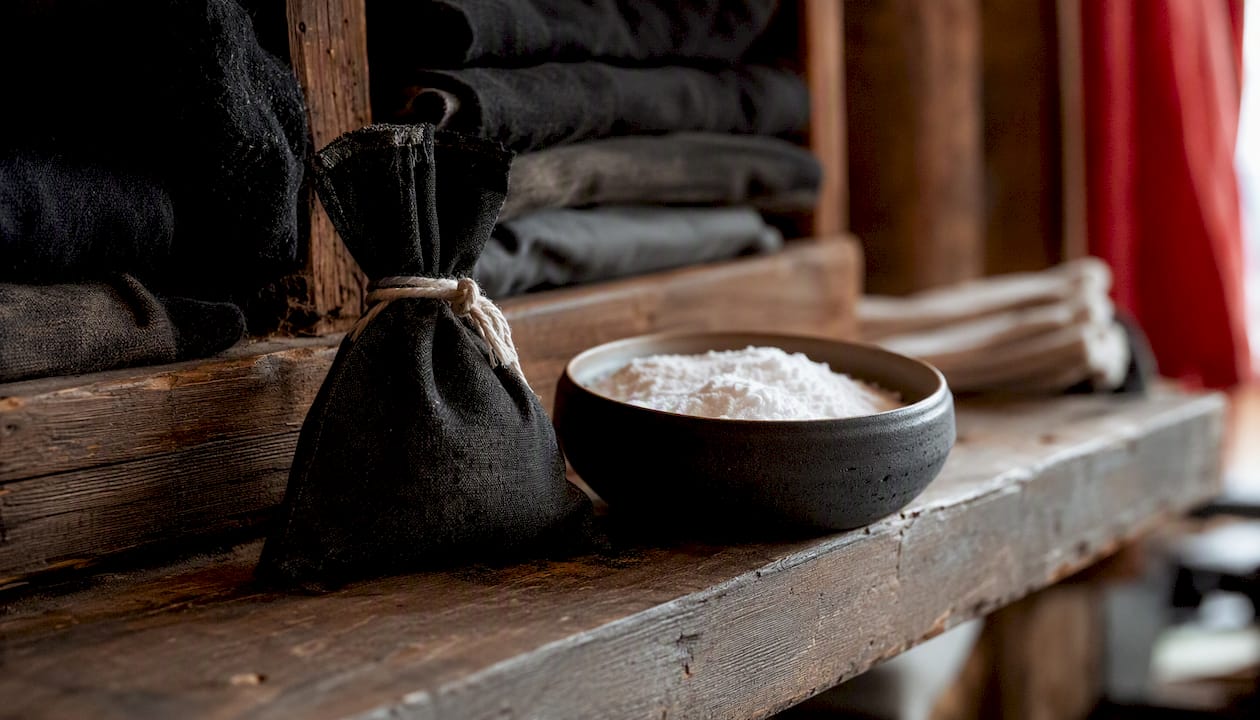
Pro Tip: After completing your surface cleaning, upgrade your HVAC filter to a high-MERV rating (MERV 11 or higher) and run your air purifier continuously for at least 72 hours. The combination of clean surfaces, a fresh filter, and continuous air purification is what produces a lasting result.
| Method | What it removes | Best for | Limitations |
|---|---|---|---|
| True HEPA purifier | Fine smoke particles | Rooms during and after remediation | Does not remove gaseous odour compounds alone |
| Activated carbon stage | Gaseous odour molecules | Paired with HEPA for full smoke removal | Carbon bed saturates over time — replace regularly |
| Activated charcoal sachets | Residual odour in enclosed spaces | Wardrobes, drawers, car interiors | Limited capacity; not suitable for large rooms |
| Baking soda (passive) | Surface and airborne odour absorption | Carpets, drawers, small spaces | Slow-acting; needs regular replacement |
| Air fresheners / sprays | Nothing — masking only | Temporary cover between cleaning steps | Re-emits with residue; often worsens the problem |
When should you call a professional smoke remediation service?
Call a professional when DIY cleaning hasn’t shifted the smell after two or three thorough cycles, when the property has had years of heavy indoor smoking, or when you suspect the HVAC ducting, insulation, or drywall is saturated. SERVPRO outlines a staged professional process that most reputable Australian remediation companies follow.
Typical professional remediation steps
- Assessment: The technician identifies the extent of contamination — surfaces, HVAC, subfloor, and insulation — and documents what needs treatment.
- Containment: Affected areas may be isolated to prevent cross-contamination during cleaning.
- Air purification: Industrial air scrubbers with HEPA and carbon filtration run continuously throughout the job.
- Deep cleaning and deodorisation: Surfaces are cleaned with professional-grade degreasers. Ozone or hydroxyl generators may be used in vacated spaces for severe odour. Professionals reserve ozone for unoccupied structures; for occupied homes they prefer hydroxyl or air-scrubber approaches because of safety and material compatibility.
- Restoration: Sealing, priming, repainting, or replacing materials as needed.
What to ask a remediation provider in Australia
- Are your technicians IICRC-certified? The IICRC is the recognised international standards body for cleaning and restoration professionals.
- Do you provide a written scope of work and a post-remediation assessment?
- What safety procedures do you follow for ozone use — and will the property be vacated and ventilated before re-entry?
Cost guidance (Australia)
DIY products (degreasers, enzyme cleaners, baking soda, activated charcoal, a quality air purifier) typically cost $150–$400 for a thorough home treatment. Professional smoke remediation for a single room in Australia generally starts around $500–$800, with whole-house remediation for heavily saturated properties running into several thousand dollars depending on the extent of damage and the materials involved. These are indicative ranges — get at least two written quotes.
Signs you need a professional, not another DIY cycle:
- The smell returns within days of thorough cleaning.
- Yellow staining on walls or ceilings that won’t wash off.
- The HVAC system smells of smoke even after filter replacement.
- Visible nicotine staining on insulation or subfloor materials.
Safety rules for chemicals, ozone and fragile items
The single most important rule: never run an ozone machine in an occupied space. Ozone at remediation concentrations is a lung irritant that poses real health risks to adults, children, and pets. The space must be vacated, sealed, treated, and then thoroughly ventilated before anyone re-enters.
Do and don’t list:
- Do wear nitrile gloves and safety glasses when working with TSP, TSP substitutes, or enzyme cleaners at high concentrations.
- Do ventilate the work area continuously — open windows and use a fan to move air out, not just around.
- Do keep pets and children out of rooms being treated with any chemical cleaner until surfaces are dry and the space is ventilated.
- Don’t mix cleaning products. Bleach and ammonia-based cleaners produce toxic chloramine gas.
- Don’t use ozone or harsh chemical sprays on vintage textiles, printed garments, or delicate plastics. Ozone degrades rubber, certain dyes, and printed designs.
- Don’t store treated items in sealed plastic bags until they are fully dry and odour-free. Trapped moisture creates mildew, which adds a second odour problem on top of the first.
- Don’t use steam cleaners on vintage screen-printed tees — the heat and pressure can crack or lift prints.
Pro Tip: If you’re treating a room with a TSP substitute, work in 30-minute sessions with breaks outside. Prolonged exposure to degreaser fumes in a confined space causes headaches and eye irritation even with windows open.
Specialist care for vintage and second-hand band T-shirts
Vintage band tees are not ordinary laundry. The screen-printed graphics on a 1990s tour shirt, a piece of ex-tour deadstock, or a rare second-hand metal tee are fragile. Ozone, high heat, and aggressive chemical treatments can crack prints, fade colours, and stretch fibres permanently. The goal is to remove the smoke odour without touching the legacy of the shirt.
The gentle method, step by step:
- Sealed HEPA vacuum. Before any moisture touches the shirt, run a HEPA vacuum with a soft brush attachment slowly across both sides. This removes loose, smoke-saturated dust and reduces the load on the wash cycle.
- Spot test. Apply a small amount of your chosen enzyme cleaner or gentle detergent to an inconspicuous area (inside hem or seam). Wait 10 minutes and check for colour bleed or print lifting before proceeding.
- Long enzyme soak. Fill a basin with cold water and add an enzyme-based laundry soaker (Preen or Sard Wonder are available at most Australian supermarkets). Submerge the shirt and soak for 2–4 hours. Enzyme cleaners break down organic smoke residue without the agitation that damages prints.
- Cold gentle wash. Machine wash on a delicate or gentle cycle in cold water with a mild detergent. Turn the shirt inside out to protect the print. Skip the spin cycle if the machine allows, or use the lowest spin setting.
- Air-dry flat or on a hanger, away from direct sunlight. Never tumble-dry until the odour is completely gone. Heat sets residual smoke molecules into fibres and can permanently bond them to the print.
- Check and repeat if needed. Smell the shirt while still damp. If any smoke odour remains, repeat the enzyme soak before the next wash. Do not dry until it’s clean.
Preservation tips for collectors:
- Store clean vintage tees with activated charcoal sachets inside the storage box or bag. Charcoal adsorbs any residual odour and prevents re-accumulation during storage.
- Avoid sealed plastic bags for long-term storage, especially if there is any residual dampness — this creates the conditions for mildew stain formation on cotton.
- Breathable cotton storage bags or acid-free tissue wrapping are the preferred options for collectible shirts.
- For further guidance on restoring vintage metal band tees without damaging prints, and advice on how to store vintage metal T-shirts for lasting quality, Vintage Metal Store’s care pages go deep on both topics.
If you’re picking up second-hand tees and want to know which fabrics tolerate cleaning best, the top fabrics for vintage shirts guide on the Vintage Metal Store blog breaks down collector value by fabric type.
The smell on a shirt tells you something worth knowing
There’s a particular kind of smoke smell that comes with genuinely old tour merch — the kind that’s been in a box since 1992, passed through a few hands, maybe sat in a venue storage room for a decade. It’s not pleasant, but it’s a signal. It tells you the shirt is real.
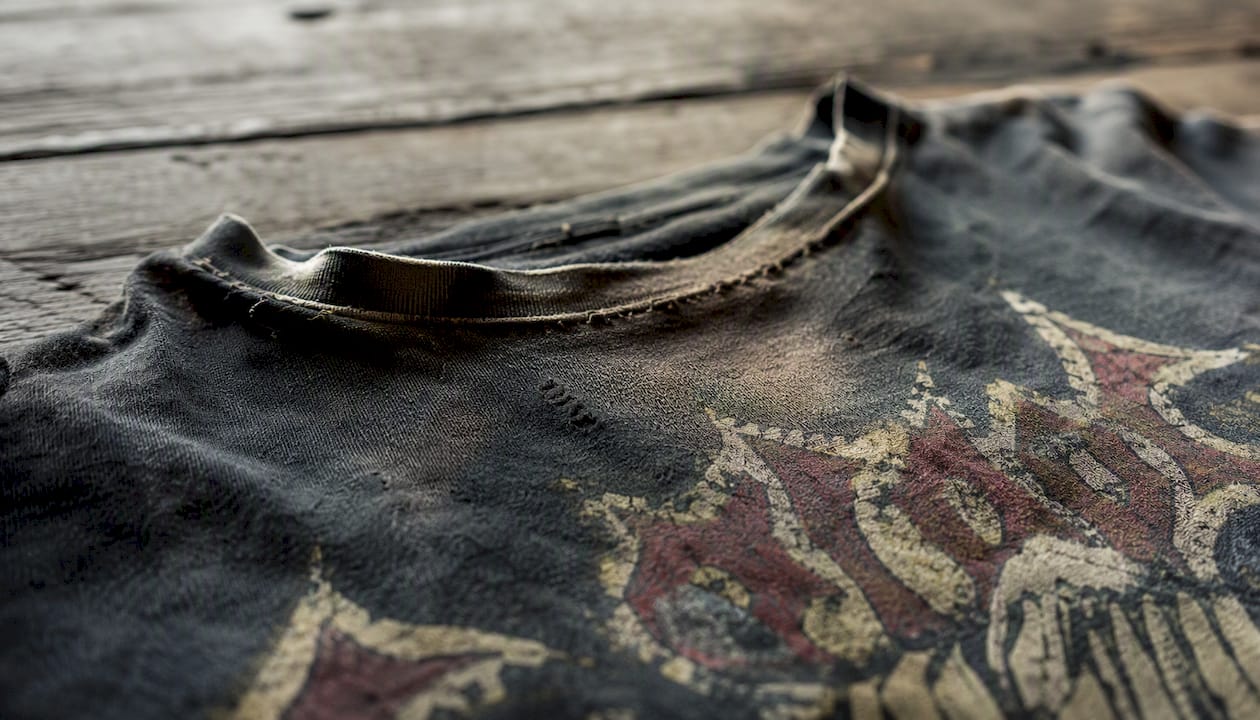
The problem is that smell doesn’t belong on the shirt forever. Smoke residue degrades fibres over time, and the nicotine film that gives that distinctive odour is the same film that yellows collar stains and weakens cotton. Getting it out gently is an act of preservation, not just hygiene.
What I’ve seen repeatedly is collectors reaching for the wrong tools: ozone machines borrowed from a mate, hot washes, tumble drying to “bake out” the smell. Every one of those approaches risks the print. The enzyme soak and cold gentle wash method described above is slower, but it’s the approach that keeps a shirt wearable and collectible for another thirty years.
If you want to wear the legacy, you have to protect it first.
Sources
- How to Get Rid of Cigarette Smell in Your House, Car, Hair, and Home – Healthline
- How to get the smoke smell out of a house – The Home Depot
- Iicrc
This article is general information, not a substitute for advice from a qualified doctor. Consult a qualified healthcare professional about your own circumstances before acting on anything here.
FAQ
How do you remove cigarette smell as quickly as possible?
Open every window and door immediately, remove the odour source (ashtrays, smoky clothing, soft furnishings), and machine-wash anything fabric that the care label allows. Ventilation combined with source removal gives the fastest noticeable improvement, usually within a few hours.
What absorbs cigarette smoke in a room?
Activated charcoal sachets and open bowls of baking soda adsorb odour molecules in enclosed spaces, but they work best as a supplement to cleaning, not a replacement. A HEPA + activated carbon air purifier running continuously is the most effective passive treatment for a room after surfaces have been cleaned.
How do professionals remove smoke odour?
Professional remediation follows a staged process: assessment, containment, continuous air purification with industrial scrubbers, deep cleaning and deodorisation (which may include ozone or hydroxyl generators used only in vacated spaces), and restoration. IICRC-certified technicians follow recognised industry standards for this process.
What absorbs tobacco smell from fabric?
Baking soda (sodium bicarbonate) sprinkled on fabric and left for several hours absorbs a significant amount of surface odour before washing. Enzyme-based soakers break down the organic compounds in smoke residue during a soak or wash cycle. Activated charcoal sachets work well for ongoing odour control in storage between washes.
Recommended


