



TL;DR:
- Proper restoration prioritizes gentle handling, cooling, and storage to preserve vintage heavy metal shirts’ historical value. Using pH-neutral detergents, flat drying, and acid-free wrapping protects prints and fabric, while patience and minimal intervention prolong their life. Storing shirts correctly and only cleaning when necessary ensures these artifacts remain intact for future generations.
You pull out a Slayer tour shirt from 1988 and the print is cracking across the chest. Sound familiar? Step by step restoring heavy metal shirts the right way is the difference between saving a piece of music history and watching it flake apart in your hands. These shirts are not just cotton. They are artefacts. A faded Metallica tee from a 1992 tour carries weight that no reprint can replicate, and treating it with the wrong detergent or a hot dryer cycle can destroy that in minutes.
Table of Contents
- Key takeaways
- Step by step restoring heavy metal shirts: what you need first
- Cleaning and stain removal: the safe process
- Repairing prints and fabric damage
- Long-term storage and maintenance
- My honest take on restoring vintage metal shirts
- Find authentic vintage metal shirts at Com
- FAQ
Key takeaways
| Point | Details |
|---|---|
| Cold water only | Always wash in water below 30°C to protect plastisol print binders and cotton fibres. |
| Avoid dry cleaning | Dry-cleaning solvents dissolve screen prints irreversibly after just one or two sessions. |
| Store flat, not hung | Hanging causes gravity-stretch on shoulders and necklines, damaging print alignment permanently. |
| Use acid-free tissue | Wrap stored shirts in acid-free unbuffered tissue to prevent yellowing and dye reaction. |
| Clean only when needed | Archivists recommend cleaning only when visibly soiled, as over-cleaning degrades garments prematurely. |
Step by step restoring heavy metal shirts: what you need first
Getting the process right starts well before you touch water or soap. Restoration is about preparation as much as execution, and walking in underprepared is how vintage shirts get ruined.
Supplies and materials
Here is what you need to gather before starting:
- Detergent: pH-neutral, enzyme-free liquid detergent. Protease enzymes in standard detergents digest protein fibres in vintage cotton, weakening the fabric with every wash. Avoid anything labelled “biological.”
- Soft brushes: A clean, soft-bristled toothbrush or natural-hair artist’s brush for spot cleaning.
- White distilled vinegar: Diluted to a 1:4 ratio with cold water for spot stain treatment.
- Parchment paper and a cool iron: For re-adhering plastisol flakes on cracked prints.
- Acid-free unbuffered tissue paper: For wrapping shirts during storage.
- Breathable cotton garment bags: Never plastic, never vacuum sealing.
- Flat drying rack: To dry shirts horizontally, avoiding stretch.
Environmental conditions
The space where you work and store matters enormously. Museum-standard textile conservation requires a stable environment of 18–22°C with relative humidity between 45 and 55 per cent. Rapid fluctuations in either temperature or humidity cause mechanical stress to seams and can accelerate delamination of print layers. Work in a cool, shaded room and keep restored shirts away from direct sunlight and fluorescent lights.
Pro Tip: If you do not own a hygrometer, grab a cheap digital one from a hardware store. Keeping humidity in the right range is one of the most overlooked steps in the entire heavy metal shirt care guide.
| Supply | Safe option | What to avoid |
|---|---|---|
| Detergent | pH-neutral, enzyme-free | Biological, bleach, fabric softener |
| Storage wrap | Acid-free unbuffered tissue | Buffered tissue, newspaper, plastic bags |
| Garment bag | Breathable cotton | Plastic zip bags, vacuum seal bags |
| Drying method | Flat drying rack | Hanging, tumble dryer, direct sun |
| Storage container | Archival cardboard box | Cedar chests, plastic bins |
Cleaning and stain removal: the safe process
This is where most people go wrong. The cleaning tips for metal shirts that actually work are often counterintuitive. Less agitation. Less heat. Less product. More patience.
Step-by-step washing method
- Turn the shirt inside out. This is non-negotiable. Cold hand-washing inside out shows no cracking after 12 or more washes, while gentle machine cycles at 600 RPM or above cause cracking within three to four washes.
- Fill a clean basin with cold water. Keep it below 30°C. Heat softens plastisol binders and agitation stresses cotton fibres, causing print cracking even on prints that look stable.
- Add a small amount of enzyme-free detergent. A teaspoon is usually sufficient for one shirt. Less is genuinely better here.
- Submerge the shirt and gently agitate by hand. Press the fabric softly. Do not wring, twist, or scrub. Think of it as squeezing water through the fibres rather than scrubbing them.
- Soak for no more than 10 to 15 minutes. Prolonged soaking weakens fibres and can lift screen print ink from the base layer.
- Rinse thoroughly with fresh cold water. Repeat until no detergent residue remains. Residual detergent breaks down fibres with every rinse cycle you skip.
- Spot treat stains separately. Before or after the main wash, apply a diluted vinegar solution (1 part vinegar to 4 parts cold water) to stained areas using a soft brush. Blot gently. Never scrub in circles.
Pro Tip: If your shirt has a particularly fragile or cracked print, skip submerging it entirely. Lay it flat, spot clean only the soiled areas, and skip the full wash. Archivists recommend cleaning only when necessary, and minor dust is better handled with gentle air-drying or soft vacuuming through a mesh screen.
Drying correctly
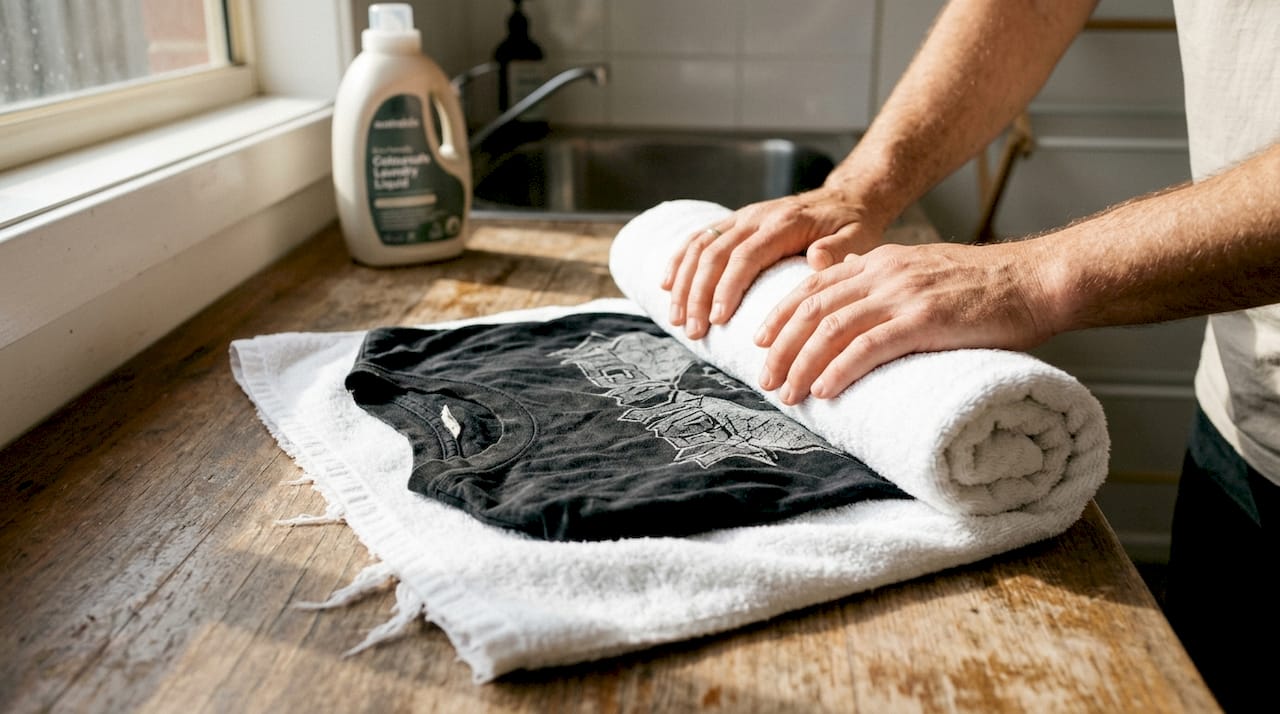
Lay the shirt flat on a clean dry towel. Roll the towel and shirt together gently to absorb excess moisture, then unroll and transfer the shirt to a flat drying rack. Never hang a wet vintage shirt. Never put it in a dryer. Let it air dry away from direct light and heat sources.
Repairing prints and fabric damage
Once a shirt is clean and dry, you can assess what needs repair. This stage is the heart of repairing vintage band tees and requires steady hands and genuine patience.
What to look for
- Cracking and flaking plastisol: Common on shirts printed in the 1980s and 1990s. The ink becomes brittle with age and incorrect washing.
- Loose or lifted ink edges: The outer edges of large print designs often lift first.
- Unravelled seams: Side seams and collar seams are the most vulnerable on aged cotton.
- Pilling or fabric thinning: Particularly on frequently worn areas like the collar and underarms.
Re-adhering cracked prints
Applying a cool iron over parchment paper for approximately 10 seconds can re-adhere plastisol flakes without damaging the surrounding fabric, provided you use the lowest heat setting and never allow the iron to contact the print directly. Lay the parchment paper flat over the cracked area, press briefly, and allow to cool before checking progress. Repeat if necessary, but do not exceed three passes without checking.
Stabilising seams
For unravelled seams, use a fine hand-sewing needle and matching thread to carefully re-stitch the opened area. Keep tension loose. Tight stitches on aged cotton can cause the surrounding fabric to pucker or tear. This is not a task to rush. For shirts with severe damage or significant cultural value, consider contacting a textile conservator rather than attempting repair yourself. The investment is worth it for an irreplaceable piece.
Limiting handling during restoration
The more you handle a fragile vintage shirt, the more stress you place on fibres and prints. Work in short sessions. Lay the shirt on a clean flat surface rather than holding it up. If you need to check the print, slide a piece of clean foam board underneath for support.
Long-term storage and maintenance
Restoring a shirt is only half the job. How you store it afterwards determines how long the restoration holds. This is where the step by step shirt restoration process pays off or falls apart.
Correct storage technique
Flat folding with acid-free tissue is the gold standard. Acid-free unbuffered tissue protects vintage prints during storage without causing dye damage. Place a layer of tissue between each fold to pad the print and reduce crease pressure. The retail fold technique maintains print flatness and reduces stress on graphics during long-term storage.
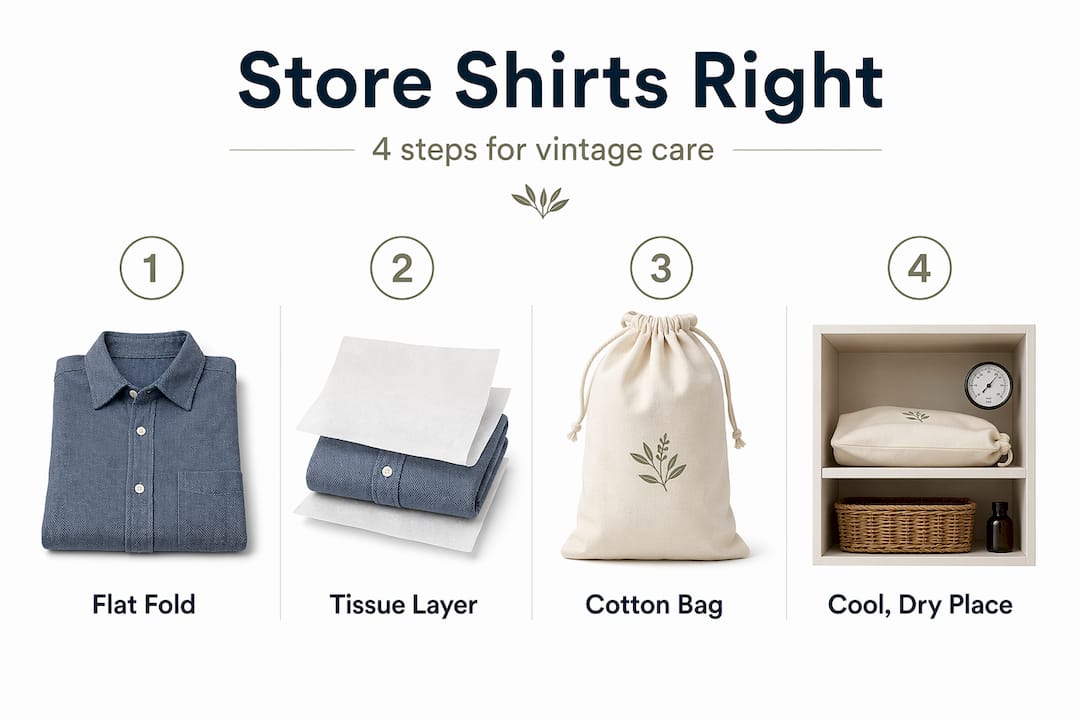
Pro Tip: Refolding shirts every three to four months prevents creases from becoming permanent and allows fibres to relax. Set a calendar reminder. It takes two minutes and it genuinely extends the life of your collection.
What to avoid in storage
Cedar chests emit acidic terpenes that yellow cotton and degrade ink binders. Plastic bins trap moisture and off-gas chemicals that accelerate print breakdown. Plastic bags and vacuum sealing create micro-condensation ideal for mould growth. Even scented sachets and mothballs introduce chemicals that react with aged dye layers and cotton fibres.
| Storage method | Effect on vintage shirts |
|---|---|
| Flat folded with acid-free tissue | Preserves print and shape long term |
| Hung on hanger | Gravity stretches shoulders, distorts prints |
| Stored in plastic bin | Moisture trapping, chemical off-gassing |
| Cedar chest | Yellowing from acidic terpenes |
| Cotton garment bag | Breathable, safe for medium-term storage |
Keep stored shirts in a stable 18–22°C environment with consistent humidity. Inspect your collection every few months for early signs of mould, insect activity, or print deterioration. Early detection is far easier to address than advanced damage.
My honest take on restoring vintage metal shirts
I have handled hundreds of vintage metal shirts over the years, and the single biggest mistake I see collectors make is treating restoration like a cleaning task rather than a conservation project. There is a difference, and it matters.
The shirts people bring in the worst condition are almost never the ones that were worn to death. They are the ones that got washed too often, stored in plastic, or hit with fabric softener “just once.” The damage accumulates silently and then one day the print just falls off in sheets.
What I have learned is that patience is the skill. Not technique, not equipment. When you slow down, handle less, wash only when truly necessary, and store thoughtfully, these shirts genuinely last. I have seen 1980s Maiden and Priest shirts in extraordinary condition because their owners did almost nothing to them except store them correctly.
The emotional connection collectors have with these shirts is real and worth honouring. A concert shirt from a show you attended, or a rare tour piece you hunted for years, deserves the same respect as any museum artefact. Treat it accordingly.
The patina, the fading, the slight softness of aged cotton. These are not flaws. They are the shirt’s history. Restoration should preserve that character, not erase it.
— David
Find authentic vintage metal shirts at Com
Whether you are restoring a shirt you already own or looking to add a properly preserved piece to your collection, Com is where serious collectors come.

At Com, every shirt is authentic ex-tour stock or deadstock sourced directly from bands and tours. You will find pieces that have been stored correctly from the start, meaning less restoration work and more enjoying the shirt. If you have been searching for something specific, the vintage Metallica collection includes genuine 80s and 90s tour pieces, including the rare 1992 Don’t Tread on Me tour tee that belongs in any serious collection. Explore the full range at Vintage Metal Store and find pieces worth restoring and preserving for decades to come.
FAQ
How do I wash a vintage heavy metal shirt safely?
Wash inside out in cold water below 30°C using a pH-neutral, enzyme-free detergent. Hand washing is strongly preferred over machine washing to avoid agitation that cracks plastisol prints.
Can I use a dryer on my vintage band tee?
No. Heat softens plastisol binders and tumble drying causes rapid fabric stress. Always air dry flat on a rack away from direct sunlight and heat sources.
How do I fix a cracking print on a vintage shirt?
Place parchment paper over the cracked area and apply a cool iron for around 10 seconds on the lowest heat setting. This can re-adhere loose plastisol flakes without direct heat contact damaging the print.
How should I store my restored heavy metal shirts long term?
Store flat folded with acid-free unbuffered tissue paper between folds, inside a breathable cotton garment bag. Keep the storage area at 18–22°C with 45 to 55 per cent relative humidity. Refold every three to four months to relax fibres.
Is dry cleaning safe for vintage metal shirts?
No. Dry-cleaning solvents such as perchloroethylene dissolve plastisol ink, and approximately 80 per cent of commercial dry cleaners use this chemical. Prints can flake irreversibly after just one or two sessions.
Recommended
- Heavy metal t shirt maintenance tips for vintage collectors – Vintage Metal Store
- Preserve your vintage metal shirts with proper care – Vintage Metal Store
- Identifying Dead Stock Heavy Metal Shirts Step-by-Step – Vintage Metal Store
- How to restore heavy metal tee prints: Expert care – Vintage Metal Store


