



Tracking down authentic heavy metal tour shirts from the 1990s can feel like both a hunt and a high-stakes test for collectors across the globe. Every rare find brings not only excitement but also the pressure to separate true dead stock from expertly crafted replicas. Building your collection’s credibility starts with one non-negotiable principle: gathering robust reference materials is the foundation of accurate vintage shirt authentication.
Table of Contents
- Step 1: Prepare By Gathering Reference Materials
- Step 2: Inspect Shirt Tags And Manufacturer Details
- Step 3: Check Fabric, Prints And Stitching Quality
- Step 4: Verify With Provenance And Historical Listings
- Step 5: Confirm Authenticity With Expert Resources
Quick Summary
| Key Point | Explanation |
|---|---|
| 1. Gather solid reference materials | Build a comprehensive library of visual references to accurately authenticate vintage heavy metal shirts and avoid counterfeits. |
| 2. Inspect shirt tags carefully | Examine manufacturer tags for key details like name, origin, and production date to confirm authenticity. |
| 3. Evaluate fabric and print quality | Assess fabric characteristics and print integrity, as genuine vintage shirts show unique details that counterfeits lack. |
| 4. Research historical provenance | Investigate band tours and original documentation to understand a shirt’s historical context and verify authenticity. |
| 5. Consult authentication experts | Network with professionals to gain detailed insights and reduce the risk of acquiring counterfeit merchandise. |
Step 1: Prepare by gathering reference materials
Authentic heavy metal tour shirt collectors understand the critical importance of gathering solid reference materials before attempting to identify dead stock items. Your research foundation will determine how accurately you can validate vintage merchandise and protect yourself from potential counterfeits.
Start by collecting comprehensive visual references. This means gathering standard reference materials from multiple sources like official band archives, professional collector networks, and reputable vintage clothing documentation. Your goal is to build a robust comparison library that allows precise authentication. Key materials should include:
- High-resolution photographs of original tour shirts
- Original tour merchandise catalogues
- Band-approved documentation of shirt designs
- Professional authentication guides
- Historical tour documentation showing shirt details
The verification process requires patience and systematic comparison. Worldwide measurement standards recommend creating a comprehensive database of visual and technical references before making definitive assessments. Each reference point adds another layer of credibility to your authentication process.
Serious collectors invest time in building their reference library before making purchasing decisions.
Pro tip: Digital archiving tools can help you organise and quickly search through your reference materials, making future identification processes much faster.
Step 2: Inspect shirt tags and manufacturer details
Identifying authentic vintage heavy metal shirts requires a detailed examination of manufacturer tags and labelling information. Collectors need to develop a keen eye for vintage label authentication techniques that reveal critical insights about a shirt’s origins and legitimacy.
Start your inspection by carefully examining the shirt’s interior tags. Look for these essential details:
- Manufacturer name and location
- Production date or year code
- Country of origin
- Fabric composition details
- Size and manufacturing batch information
Understand that legal textile identification requirements mandate specific information on apparel tags. Authentic tour shirts will have clear, professionally printed labels that match the era of the band’s original tour. Beware of tags that look fuzzy, misaligned, or use modern printing techniques inconsistent with the shirt’s claimed vintage period.
Genuine vintage heavy metal shirts reveal their authenticity through precise manufacturing details.
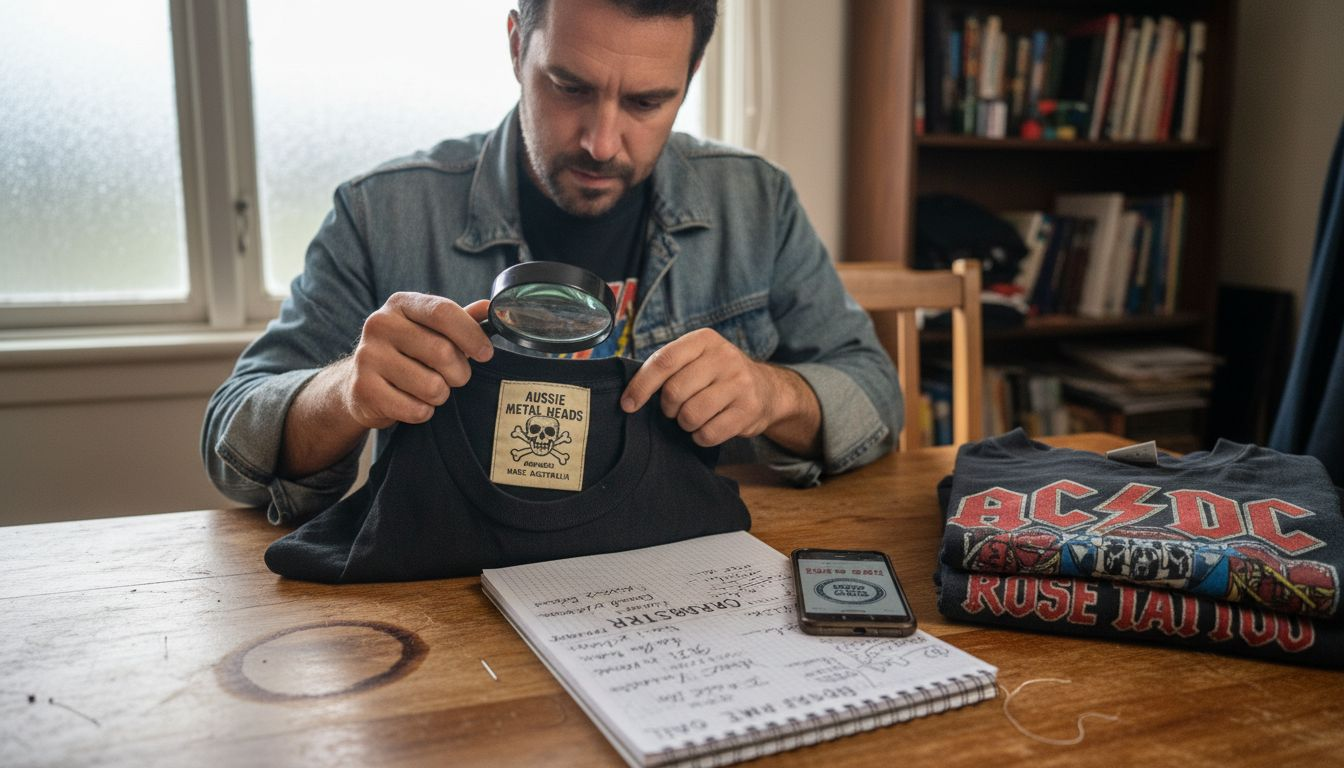
Pro tip: Invest in a good magnifying glass to examine tag microdetails that might indicate a shirt’s true origin.
Step 3: Check fabric, prints and stitching quality
Authentic heavy metal tour shirts reveal their legitimacy through subtle details of fabric composition, print integrity, and manufacturing craftsmanship. Collectors must develop a nuanced approach to textile quality assessment that goes beyond superficial examination.
Begin by carefully evaluating the fabric’s key characteristics:
- Fabric weight and thickness
- Weave consistency and texture
- Original fabric elasticity
- Colour depth and print saturation
- Thread count and stitch uniformity
Vintage collectors understand that true authenticity emerges from fabric identification techniques that require both visual and tactile investigation. Examine the shirt under good lighting, feeling the fabric’s texture and inspecting print details with a critical eye. Original tour shirts from the 1980s and 1990s typically feature distinct manufacturing characteristics that modern reproductions struggle to replicate.
Genuine vintage shirts tell a story through their unique fabric and printing nuances.
Pro tip: Invest in a high-quality magnifying glass with at least 10x magnification to reveal microscopic details of fabric weave and print quality.
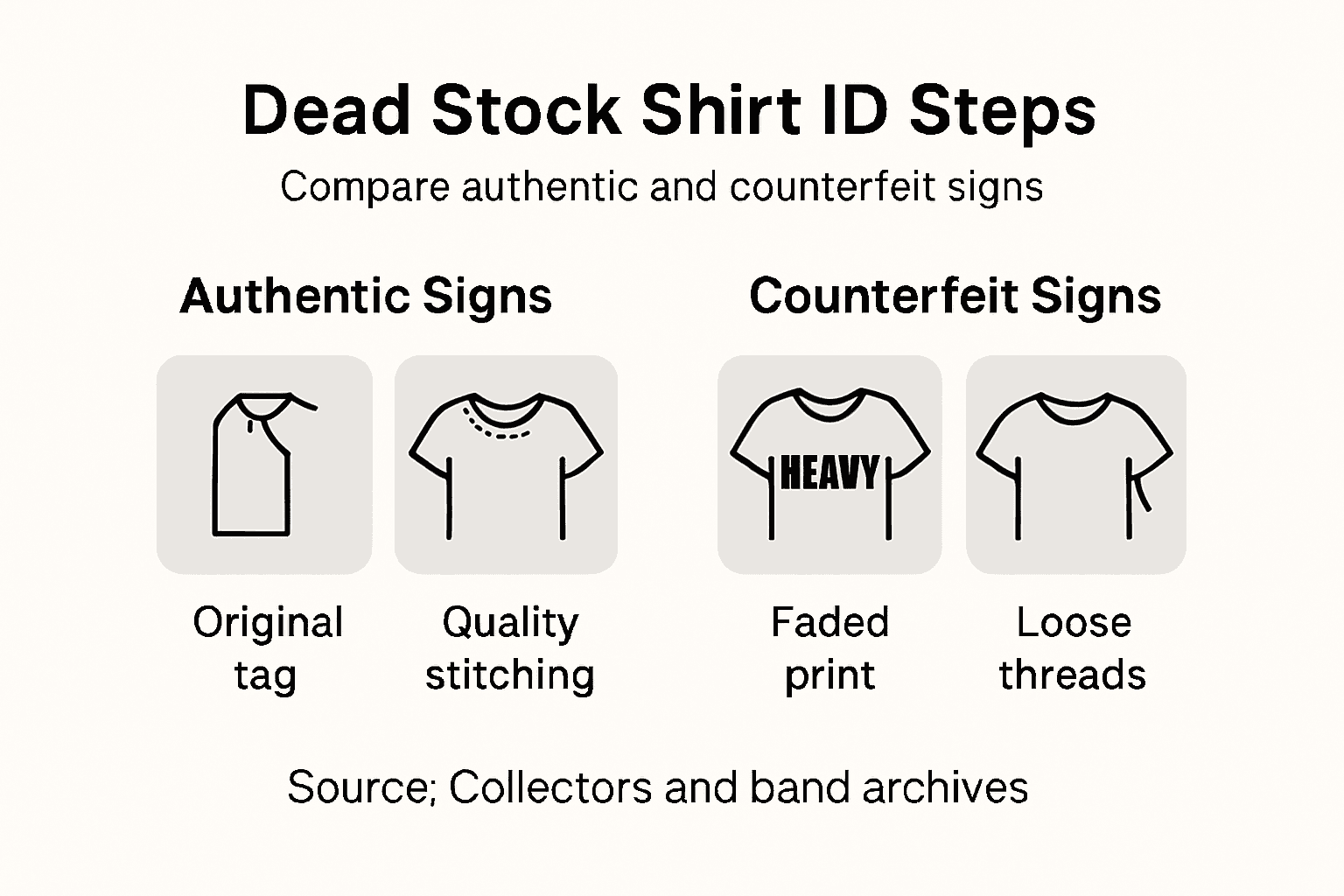
This table summarises common counterfeit indicators versus authentic details for heavy metal tour shirts:
| Area Examined | Authentic Feature | Counterfeit Warning Sign |
|---|---|---|
| Shirt tag | Clean, era-accurate printing | Fuzzy or misaligned text |
| Fabric weave | Consistent, period-correct texture | Odd elasticity or new-feeling |
| Print quality | Rich colours, deep ink saturation | Dull, faded, or flaky ink |
| Manufacturer info | Matches known historical producers | Unknown or modern company name |
| Stitching | Even, tight seams typical of era | Uneven or loose modern stitching |
Step 4: Verify with provenance and historical listings
Authentic heavy metal tour shirt collectors understand that true verification extends beyond physical examination into the realm of historical documentation. Metal band documentation archives provide critical resources for establishing a shirt’s genuine origins and historical context.
Your verification process should include researching:
- Band tour dates and merchandise history
- Original tour documentation
- Archived concert promotional materials
- Band merchandise catalogues
- Independent collector community records
Deep research using specialised resources like heavy metal merchandise archives can reveal nuanced details about specific tour shirt productions. Cross-referencing multiple sources helps build a comprehensive understanding of a shirt’s authenticity, tracking its lineage through historical documentation and collector networks.
Provenance isn’t just about age - it’s about telling the complete story of a vintage piece.
Pro tip: Join specialised online collector forums to access rare archival information that might not be publicly available.
Step 5: Confirm authenticity with expert resources
Reaching the final stage of verification requires connecting with specialised experts and leveraging comprehensive authentication resources. Vintage clothing authentication guides provide nuanced insights that can definitively confirm a shirt’s legitimacy.
Authenticity confirmation involves strategic consultation with:
- Professional vintage clothing appraisers
- Heavy metal memorabilia collectors
- Band merchandise historians
- Specialised online authentication forums
- Reputable vintage textile experts
Serious collectors understand that expert verification goes beyond simple visual inspection. Each expert brings unique perspective and historical knowledge that can uncover subtle details missed by amateur collectors. By developing a network of trusted professionals, you create multiple layers of authentication that significantly reduce the risk of acquiring counterfeit merchandise.
Here’s a concise overview of expert authentication resources and their roles in vintage heavy metal shirt verification:
| Resource Type | Expertise Provided | Value for Collectors |
|---|---|---|
| Professional appraiser | Detailed vintage shirt evaluation | Ensures accurate market value |
| Memorabilia collector | Knowledge of rare band merchandise | Confirms authenticity & rarity |
| Band historian | Verifies historical shirt details | Establishes period accuracy |
| Textile expert | Assesses fabric and production era | Detects modern replicas |
| Online authentication forum | Community-based peer review | Offers crowd-sourced verification |
True authentication is a collaborative process involving deep expertise and collective knowledge.
Pro tip: Cultivate relationships with multiple experts across different specialisations to build a comprehensive verification network.
Master the Art of Genuine Vintage Heavy Metal Shirts with Confidence
Identifying authentic dead stock heavy metal shirts can be challenging when faced with counterfeit warnings like fuzzy tags or inconsistent stitching. By understanding key verification steps such as fabric quality, provenance, and expert authentication detailed in our guide, you are already ahead in protecting your collection from fakes and misrepresentations. If you want to experience firsthand the quality and history behind truly rare finds explore our Rare Vintage Heavy Metal Concert Shirts – Vintage Metal Store.

Take the next step towards building a verified collection by browsing our exclusive selection where every piece embodies authenticity and rich metal heritage. Whether you seek iconic band apparel or hard to find ex tour stock, our collection offers genuine options supported by deep expertise and rigorous sourcing. Start your journey at Vintage Metal Store and explore All Shirts – Vintage Metal Store to connect with your perfect vintage heavy metal shirt now.
Frequently Asked Questions
What are the key reference materials needed to identify dead stock heavy metal shirts?
Gather comprehensive visual references, such as high-resolution photographs of original tour shirts, original merchandise catalogues, and band-approved documentation. Start by building a reliable comparison library to validate vintage merchandise accurately.
How can I inspect the tags to determine if my heavy metal shirt is authentic?
Carefully examine the shirt’s interior tags for critical details like the manufacturer name, production date, and country of origin. Look for professionally printed labels that match the shirt’s era, as fuzzy or misaligned text can indicate a counterfeit.
What fabric qualities should I look for in authentic heavy metal shirts?
Evaluate important characteristics, such as fabric weight, texture, and print saturation. Use your observations to differentiate genuine vintage shirts from modern reproductions, noting that authentic shirts typically exhibit distinct manufacturing traits from the 1980s and 1990s.
How can I verify the provenance of a heavy metal shirt?
Research historical documents, such as concert promotional materials and band merchandise catalogues, that provide context about the shirt’s origin. Cross-reference multiple sources to build a complete understanding of its authenticity and track its lineage.
What expert resources can help confirm the authenticity of my heavy metal shirt?
Connect with professionals like vintage clothing appraisers or band historians who can provide detailed evaluations and insights. Cultivating relationships with various experts allows you to create a robust verification network for your collection.
What should I do if I find signs of a counterfeit heavy metal shirt?
If you suspect a shirt is counterfeit, document the issues you’ve identified and seek advice from experts in vintage clothing authentication. Act quickly to either adjust your purchase decision or seek an appraisal to confirm its authenticity.
Recommended


