



Most vintage band tees sell for $30 to $200, with genuinely rare pieces from the 1970s and 80s pushing past $500 and record-setting auction lots clearing $17,000-plus. Where your shirt lands depends almost entirely on era, scarcity, condition and provenance, in that order. The rest of this guide breaks down the bands, the drivers, and how to authenticate what you’re holding before you buy or sell it.
TL;DR:
- Genuine vintage band tees from the 1970s and 80s can sell for $200 to $2,000, with museum-grade rarities exceeding $17,000.
- The shirt’s era, scarcity, provenance, and condition are critical factors influencing its value, with original period tags and single-stitch construction confirming authenticity.
- Provenance, such as a photo of the band wearing the shirt or a tour receipt, significantly increases resale value over appearance alone.
- Most vintage tees in decent condition trade between $30 and $200, while auction records for rare items are not indicative of typical sale prices.
- Buying or selling should focus on platforms specialized in authenticated stock; avoid relying on auction benchmarks or generic marketplaces to maximize value.
Table of Contents
- Vintage band tee prices: the ranges you’ll actually see
- What actually moves the price on a vintage tee
- How to authenticate a vintage band tee before you buy or sell
- Where to buy and sell vintage band tees
- Real sale figures and what “normal” merch costs
- Pricing your own vintage tee: a simple formula
- Regional price differences and collector interest
- Caring for a vintage tee so it keeps its value
- What collectors actually pay for, and where sellers go wrong
- How Vintage Metal Store helps you buy or sell with confidence
- Sources
- FAQ
Vintage band tee prices: the ranges you’ll actually see
Four bands cover almost everything on the market. Faded, holey Gildan reprints from the 2010s sit at the bottom, often changing hands for $5 to $20 because they’re mass-produced blanks with no scarcity story behind them. Genuine vintage tees in decent condition from a mid-tier or classic act typically sell in a moderate price range, and this is where most collector transactions actually happen.
Above that sits the serious tier: rare tour shirts, limited print runs, and pieces tied to a specific era of a beloved band, which can run $200 to $2,000, particularly for 1970s and 80s Grateful Dead tees. Then there’s the outlier tier, where a documented, museum-grade rarity sells for five figures.
| Band | Typical range | Example |
|---|---|---|
| Modern reprint (any band) | $5–$20 | Gildan tag, double stitch, crisp print |
| Standard vintage, decent condition | $30–$200 | 90s tour tee, single stitch, minor fade |
| Rare vintage, high demand era | $200–$2,000 | 70s–80s Grateful Dead, limited tour run |
| Museum-grade outlier | $2,000–$20,000+ | 1967 Grateful Dead tee, $17,640 at Sotheby’s |
That Sotheby’s sale, which cleared roughly $19,300 with fees, is the number every collector cites, but it’s a poor benchmark for your own tee. It sold because of an ironclad backstory tying it to a specific tour and owner, and one record sale doesn’t lift the price of every similar-looking shirt in the wild.
What actually moves the price on a vintage tee
Era matters more than most sellers expect. A genuine 1980s original will usually outperform a 2000s tee of the same band, purely because fewer originals survived and demand for that decade hasn’t cooled. That said, 90s oversized fits are climbing fast as fashion trends favour the boxy, worn-in silhouette over anything printed after 2005.
Scarcity and provenance do the heaviest lifting once you’re past era, much like how vintage guitar reissues captivate UK musicians through original parts and provenance driving collector premiums. A shirt tied to a specific tour, a limited print run, or a documented owner will consistently beat a generic reissue with identical graphics.
- Condition grading: holes, stains, odours and repairs each shave value, sometimes brutally.
- Construction and tags: single-stitch hems and period-correct tags like Screen Stars, Brockum or Giant signal authenticity; double-stitch and Gildan tags usually mean a modern blank.
- Print style: full-print or wraparound designs from the original run tend to command more than a simple front-only reprint of the same tour.
- Market moments: a reunion tour, an anniversary, or the death of a band member can spike short-term demand for that act’s merch.
Pro Tip: A shirt with a clear backstory, like a photo of the artist wearing an identical piece or an original tour receipt, will often outsell a cosmetically nicer shirt with no story at all.
How to authenticate a vintage band tee before you buy or sell
Run through this checklist before you commit to a price either way, because the tag and the stitching tell you more than the graphic ever will.
- Check the tag. Look for period brands such as Screen Stars, Brockum, Giant, or Hanes with era-correct fonts. A Gildan tag on a “vintage” 90s shirt is an immediate red flag.
- Check the stitching. Single-stitch construction along the sleeve and bottom hem is typical of pre-mid-90s shirts; double parallel rows point to a modern blank or reprint.
- Check the print and fabric ageing. Genuine age shows as soft cotton, cracked or slightly faded ink, and uneven wear consistent with how the shirt was actually worn, not printed-in “distressing”.
- Check the paperwork. Receipts, tour photos, or a seller’s documented history add real weight to a price, especially above the $200 mark.
Buying remotely? Request close-up photos of the tag, both hems, and the print texture before you pay.
- Ask for a photo of the collar tag under natural light.
- Ask for a close-up of the hem stitching, not just the front graphic.
- Be wary of sellers who only post filtered or low-resolution photos of a “rare” claim.
For a deeper walkthrough of these checks, Vintage Metal Store’s authentication guide covers the same five checks in more detail.
Where to buy and sell vintage band tees
Your channel choice changes both your price and your fees, so match it to what you’re actually holding.
- General marketplaces offer the widest reach and fastest sales but carry higher fee stacks and weaker buyer verification, which suits mid-range $30 to $200 pieces.
- Specialist vintage dealers bring built-in trust and an audience that already understands provenance, which usually means a better realised price on rarer pieces.
- Auction houses are the right call for museum-grade rarities where a bidding war can genuinely add hundreds or thousands of dollars.
- Consignment suits sellers who want a specialist to authenticate and market a high-value shirt without doing the legwork themselves.
Before listing anywhere, photograph the tag, both hems, and any flaws, take accurate flat-lay measurements, and write an honest condition note. Buying second-hand band shirts works the same way in reverse: the more detail a listing gives you upfront, the less risk you’re taking on.
Real sale figures and what “normal” merch costs
The record-setting Grateful Dead sale sits at one extreme, but it’s worth putting alongside what a shirt costs brand new off a merch table, because the gap tells its own story. A standard T-shirt at an independent show typically sells for $30 to $40, with premium designs pushing $40 to $55. That’s your baseline for a new print with zero age or scarcity attached.
| Category | Typical price | Notes |
|---|---|---|
| New merch, standard design | $30–$40 | Fresh print, no collector value yet |
| New merch, premium design | $40–$55 | Better blank, more complex print |
| Vintage Nirvana/Grateful Dead, decent condition | Hundreds to low thousands | Genre and band strongly affect averages |
| Auction record (Grateful Dead) | roughly $19,300 with fees | Sotheby’s sale, context matters enormously |
Classic rock and heavy metal acts with enduring fanbases, think Grateful Dead, Nirvana or Metallica, tend to hold higher averages than shorter-lived acts because demand never really dips. If you’re trying to translate an auction result into a realistic marketplace price, discount heavily: auction houses attract dedicated bidders willing to pay a premium for provenance and drama, while a standard listing on a general marketplace rarely reaches that ceiling for a comparable piece.
Pricing your own vintage tee: a simple formula
Start with your target net (what you actually want in your pocket), then work backwards through fees and shipping to land on a listing price.
- Set your target net. Decide what you need to walk away with after all costs.
- Add platform fees. Most marketplaces take 10 to 15%, so divide your target net by (1 minus the fee percentage) to find your break-even listing price.
- Add a shipping buffer. Add a few dollars to cover packaging, especially for anything you’re mailing internationally.
- Apply a condition multiplier. A tee in excellent condition with tags intact can justify the top of its price band; visible holes, stains or repairs should knock it toward the bottom.
- Choose your listing strategy. Fixed price suits common mid-range shirts; a reserve auction or “best offer” setting suits rarer pieces where you’re not sure what the ceiling is.
Pro Tip: List at the top of your realistic price band with best offer enabled. It gives buyers room to negotiate while still protecting your margin after fees.
Before you publish, run through a final checklist: honest photos of every flaw, accurate measurements, a clear note on tag and stitching type, and a price that matches the band you’ve mapped it into.
Regional price differences and collector interest
Prices for the same shirt can swing noticeably depending on where the buyer is looking and which scene they’re plugged into. Heavy metal and classic rock tees tend to command stronger prices in markets with dense, long-running fan communities, where local collectors already understand which tour years and print runs matter. A shirt tied to a band’s home region, or to a tour that actually passed through a particular country, often carries a premium there that it wouldn’t fetch elsewhere.

Shipping costs and import considerations also shape what buyers are willing to pay once a shirt has to travel internationally, which nudges some collectors toward buying locally even at a slightly higher price. Specialist dealers who understand a specific scene, whether that’s thrash, death metal or a particular era of arena rock, often achieve better prices than general marketplaces because their audience already knows what they’re looking at and doesn’t need convincing on provenance.
Genre matters here too. Heavy metal collectors as a group tend to prize tour-specific shirts and limited print runs over generic reissues, which keeps demand tight for authenticated ex-tour stock even when a band’s mainstream popularity has cooled. That’s part of why deadstock and ex-tour merch from prominent metal acts holds value differently to more casually collected genres: the buyer base is smaller, but it’s far more informed about what separates a real tour shirt from a later reprint.
Caring for a vintage tee so it keeps its value
Storage and handling decide whether your tee’s value climbs or crumbles over the next decade, and most damage is preventable.
Wash cold, inside out, and skip the dryer entirely. Heat is the single fastest way to crack a print or shrink already-fragile cotton, and every cycle through a hot dryer accelerates the fading that eventually drags a shirt out of the “excellent” grading tier.
Store it flat or on a padded hanger, away from direct sunlight, which fades prints unevenly and leaves a shirt looking patchier than genuine age would. Avoid folding along the print itself for long periods, since repeated creases can crack ink that’s already decades old. A breathable garment bag beats a sealed plastic tub, because trapped moisture invites mildew and the musty smell that tanks resale value almost as fast as a hole does.
If you’re planning to sell down the track, keep any receipts, tour photos, or provenance notes in a labelled folder rather than loose. That documentation is often the difference between a shirt selling at the bottom or the top of its price band, and it costs nothing to preserve. Handle a genuinely rare piece with clean, dry hands, and resist the urge to “freshen up” an old print with any kind of touch-up. Buyers who know what they’re looking at can spot restoration work, and it usually costs more in trust than it adds in appearance.
What collectors actually pay for, and where sellers go wrong
Collectors are buying a story more than they’re buying a graphic. A shirt with a photo of the band member wearing it, or a receipt tying it to a specific tour stop, will usually beat a cosmetically cleaner shirt with no history behind it. That’s the opposite of what most first-time sellers assume, and it’s why provenance deserves more attention in a listing than a steam and a good fold.
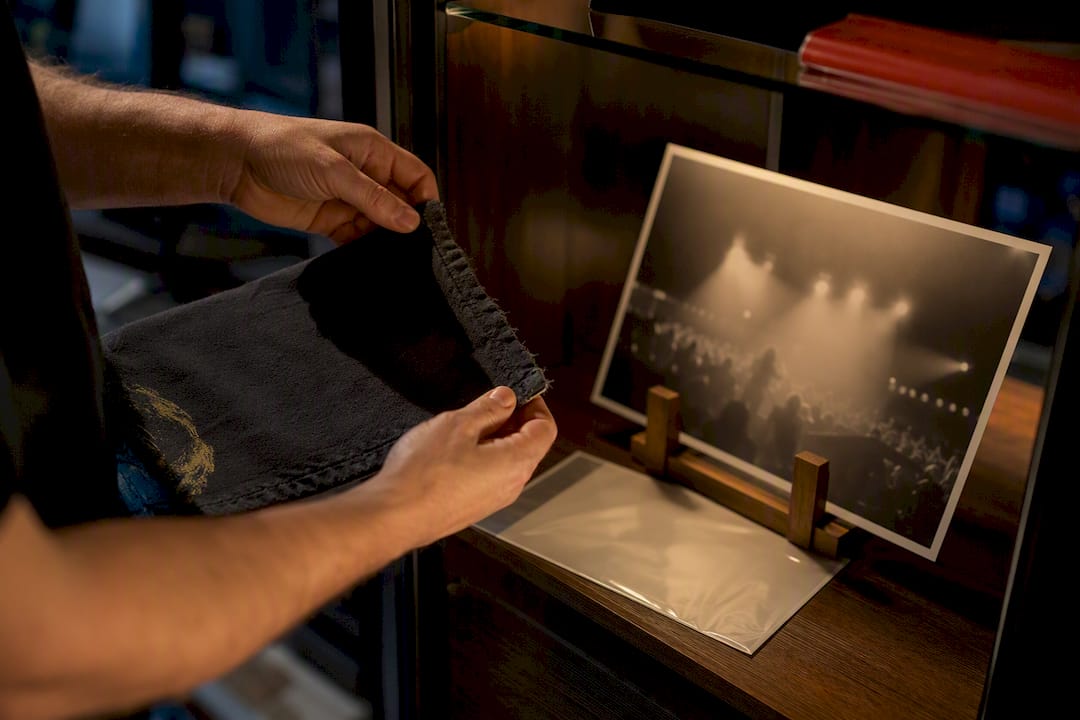
The mistakes that quietly cost sellers money are almost always the same: photos taken in bad light that hide the actual tag, a shirt described as “vintage” when the stitching and tag say otherwise, or a price pulled straight from an auction record that has nothing to do with the shirt actually being sold. Each of those erodes buyer trust before a single message is exchanged.
If you’re holding something you suspect is genuinely rare, get a second opinion before you list it at a bargain price out of impatience. Everything else in the $30 to $200 band, list it now. That range moves fast, and holding a common tee for a hypothetical future spike rarely pays off the way holding a documented rarity does.
— David
How Vintage Metal Store helps you buy or sell with confidence
Knowing the price bands is one thing, finding a shirt that’s actually been authenticated is another. Vintage Metal Store curates ex-tour stock and deadstock heavy metal tees, checking tags, stitching and print ageing on every piece before it goes up for sale, so you’re not left guessing whether that “vintage” listing is genuine.
Every shirt in the catalogue, from a rare Metallica 1992 tour tee to deep cuts from acts like DevilDriver and Cannibal Corpse, comes with an honest condition grade instead of vague marketing language. If you’re building out a specific band’s collection, browse the vintage Metallica shirt range for club tees and tour shirts spanning the 80s through Y2K. Got a piece you think is worth consigning? Head to the Vintage Metal Store homepage and get in touch about consignment. It’s a straight, specialist route for heavy metal collectors who want a fair price without the guesswork of a general marketplace.
Sources
FAQ
Are vintage concert t-shirts worth anything?
Yes. Most genuine vintage band tees sell for $30 to $200, and rare tour-specific pieces from the 1970s and 80s can reach $200 to $2,000 or more, depending on era, scarcity and condition.
How do you tell if a band tee is vintage?
Check the tag for period brands like Screen Stars, Brockum or Giant, and check the hems for single-stitch construction, which was standard before the mid-1990s. Faded ink, softened cotton and consistent wear also point to genuine age.
How much do vintage t-shirts sell for?
Standard vintage tees in decent condition typically sell for $30 to $200, rare pieces reach $200 to $2,000, and museum-grade outliers have sold for over $17,000 at auction.
How much does a band t-shirt typically cost new?
A standard new tee at an independent show usually costs $30 to $40, with premium designs priced $40 to $55, well below what an authenticated vintage piece from the same band could fetch decades later.
Where’s the best place to buy authenticated vintage metal tees?
Specialist dealers who authenticate stock before listing, such as Vintage Metal Store, reduce the risk of paying vintage prices for a modern reprint, particularly for higher-value ex-tour and deadstock pieces.
Recommended


