



TL;DR:
- Authentic vintage shirts feature era-specific tags like Screen Stars or Brockum with worn-in feel.
- Single-stitch hems and heavier fabrics distinguish genuine 1990s shirts from modern reproductions.
- Design details like era-appropriate fonts, raised screen prints, and organic fading help identify authentic vintage tees.
Authenticating a 1990s heavy metal tour shirt sounds straightforward until you hold a convincing fake in your hands. Even seasoned collectors with years of experience get caught out by sophisticated reproductions that nail the look but miss the details that truly matter. The difference between a genuine Brockum-tagged Metallica tour shirt and a modern knockoff can come down to a single thread, a font choice, or the feel of aged cotton under your fingers. This guide walks you through the five most reliable authentication checks, so you can buy and sell vintage heavy metal shirts with real confidence.
Table of Contents
- Spotting authentic vintage tags and brands
- Single-stitch and fabric construction details
- Era-specific fonts, colours and graphic design features
- Counterfeit pitfalls: Edge cases and advanced fakes
- What collectors learn after years of chasing authentic vintage tees
- Find rare authentic vintage band tees with confidence
- Frequently asked questions
Key Takeaways
| Point | Details |
|---|---|
| Tag and brand checks | Always start with the tags—authentic vintage brands from 90s Metal tees are a collector’s gold standard. |
| Single-stitch confirmation | Single-stitch hems separate genuine 1990s shirts from modern reproductions at a glance. |
| Graphic and font scrutiny | Era-correct fonts, colours and cracking on prints signal an authentic item. |
| Beware advanced fakes | Some fakes use genuine old blanks, making multi-factor authentication essential. |
| Expert and community help | Experience and collector community support help identify the rarest shirts with confidence. |
Spotting authentic vintage tags and brands
The tag is the first thing any serious collector checks, and for good reason. It is the single fastest way to rule out a fake before you even look at the print. Era-specific brands like Screen Stars, Brockum, and Giant are the hallmarks of genuine 1990s merchandise, while modern blanks from Gildan or Anvil are immediate red flags.
Knowing which brands were active in which era is essential. Screen Stars and Fruit of the Loom were common through the late 1980s and into the early 1990s. Brockum was a major licensed concert merchandise manufacturer through the early 90s. Giant shirts appeared prominently from the late 1980s through to around 1995. If you see any of these on a shirt claimed to be from that period, you are off to a solid start.
Common authentic tag brands for 1990s heavy metal shirts:
- Screen Stars (Fruit of the Loom)
- Brockum
- Giant
- Spring Ford
- Hanes Beefy-T (pre-2000 versions)
Modern tags that signal a reproduction or fake:
- Gildan
- Anvil
- Next Level
- Bella+Canvas
- Any tag with a QR code or website URL
| Feature | Authentic 90s tag | Modern repro tag |
|---|---|---|
| Brand | Screen Stars, Brockum, Giant | Gildan, Anvil, Bella+Canvas |
| Material label | Cotton/poly blend listed simply | Detailed fibre percentages |
| Print style | Single-colour ink stamp | Full-colour digital print |
| Tag condition | Faded, worn, sometimes cracked | Crisp, bright, new-looking |
| Country of origin | USA, Mexico, Honduras | Bangladesh, China, Vietnam |
Understanding vintage vs second hand shirts also helps here because not every old shirt is a genuine tour piece. Deadstock shirts may have pristine tags but still be authentic, so condition alone does not determine legitimacy.
Pro Tip: Rub the tag gently between your fingers. Authentic vintage tags feel slightly rough and often have faded ink from decades of washing. A tag that looks brand new on a shirt claiming to be 30 years old should raise immediate suspicion.
For collectors still learning the basics of sizing vintage shirts, note that 90s cuts ran noticeably larger and boxier than modern slim-fit blanks, which is another useful cross-check alongside the tag.
With tags and labels as your first line of defence, next comes another area you cannot afford to overlook.
Single-stitch and fabric construction details
Once you have checked the tag, flip the shirt inside out and look at the hem. Single-stitch hems and seams on the sleeves and shoulders are one of the clearest physical markers separating genuine vintage shirts from modern reproductions. It sounds like a small detail, but it is one of the most reliable tells in the entire authentication process.
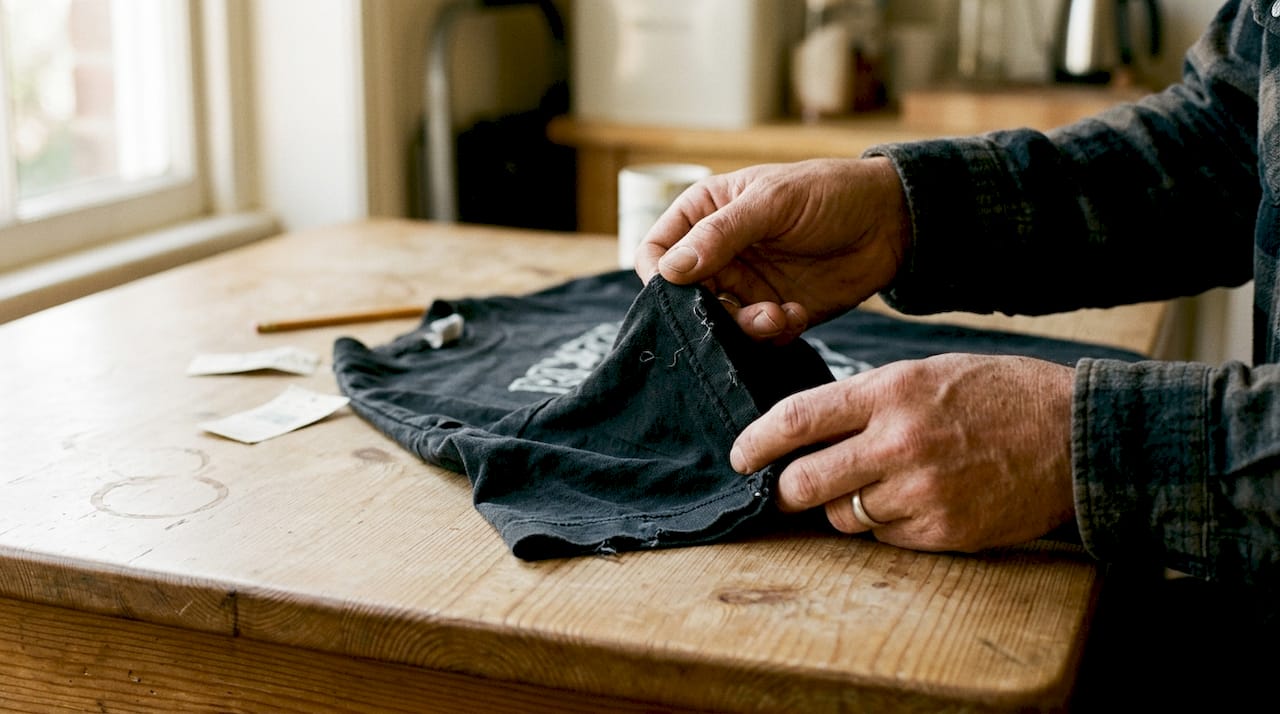
Manufacturers shifted to double-stitching in the mid to late 1990s as production scaled up and cost-cutting became standard. Shirts made before roughly 1996 to 1997 will almost universally feature single-stitch construction. If a shirt is claimed to be from a 1992 tour and has double-stitched hems, something does not add up.
Signs of authentic vintage fabric construction:
- Single-stitch hem at the bottom of the shirt
- Single-stitch on sleeve cuffs
- Slightly looser, heavier cotton weave compared to modern shirts
- Subtle pilling or softening of the fabric from repeated washing
- Seams that show minor thread pull or gentle distortion over time
| Construction feature | Pre-1996 authentic shirts | Post-2000 reproductions |
|---|---|---|
| Hem stitching | Single-stitch | Double-stitch |
| Sleeve cuff | Single-stitch | Double-stitch |
| Shoulder seam | Single-stitch, sometimes chain-stitched | Double-stitch, reinforced |
| Fabric weight | Heavier, looser weave | Lighter, tighter modern weave |
| Overall feel | Soft from age, slightly worn | Stiff or uniformly soft |
Fabric composition also tells a story. Understanding top fabrics in vintage shirts reveals that many 90s shirts used a 50/50 cotton-polyester blend or a heavier 100% cotton that ages differently from modern ring-spun cotton. The hand-feel of a genuine 30-year-old shirt is genuinely distinct once you have handled enough of them.
Knowing what makes a shirt vintage goes beyond age alone. Construction methods, material sourcing, and manufacturing origin all feed into the picture.
Pro Tip: Examine seams under a bright light or torch. Authentic vintage shirts often show subtle thread wear, slight fraying, or minor colour variation along the seam line from years of washing. Reproductions tend to have uniformly neat, tight seams with no character.
Having checked the label and stitching, it is now crucial to examine the print, where design tells its own story.
Era-specific fonts, colours and graphic design features
Print authentication is where collectors with a trained eye really pull ahead. Fonts, colours, and design elements must match the era the shirt claims to be from, and modern digital fonts appearing on supposedly vintage tees are one of the clearest red flags you will encounter.
Screen printing was the dominant method for band merchandise through the 1980s and 1990s. The process left ink sitting on top of the fabric with a slightly raised texture you can feel with your fingertip. Digital printing, which became common after 2000, soaks into the fabric and produces a fundamentally different texture. Run your finger across the graphic. If it feels completely flat and smooth, be cautious.
Authentic design cues by period:
- Early 90s: Bold, hand-assembled artwork with slight registration imperfections between colours
- Mid 90s: Cracked or crazed ink on darker shirts from repeated washing
- Colour fading that is uneven and organic, not uniform
- Lettering that shows slight ink bleed at the edges
- Artwork sourced from original band-approved designs, not digitally redrawn
“Matching era-specific fonts and graphic style is non-negotiable. A shirt with a clean, modern sans-serif font claiming to be from 1991 is almost certainly not genuine. Look for the slightly imperfect, hand-crafted quality of real screen-printed 90s artwork.”
Fonts are particularly telling. Helvetica and other clean digital typefaces were not standard in heavy metal merchandise of the early 1990s. Authentic shirts from that era used custom lettering, hand-drawn fonts, or typefaces set by analogue methods that carry visible imperfections. Learning to recognise these details is part of understanding what is a band tee at a deeper level.
Colour fading is another clue. Genuine vintage prints fade in organic, uneven patterns. Artificial distressing on fakes tends to look uniform or follows an obvious pattern. If you want to preserve old tees in your collection, understanding how authentic fading looks also helps you protect genuine pieces from further degradation.
But even with these checks, collectors face a new wave of sophisticated counterfeits. Let us see what happens when fakes evolve.
Counterfeit pitfalls: Edge cases and advanced fakes
Here is where authentication gets genuinely difficult. Sophisticated fakes use deadstock blanks with old printing presses, which means a shirt can pass the tag check, the stitching check, and even the fabric feel check while still being a counterfeit. These are the fakes that catch experienced collectors off guard.
Counterfeiters sourcing genuine new-old-stock Screen Stars or Giant blanks from the 1990s and printing on them with period-accurate presses produce shirts that are technically authentic in every physical sense except one: they were never official band merchandise. The print design, the provenance, and the sales history are where the deception lives.
Multi-factor authentication checklist:
- Check the tag brand and condition
- Examine stitching type on hems and sleeves
- Analyse the print texture, font, and colour fading
- Research the specific tour or album the shirt references
- Request provenance, purchase history, or original sales receipts where possible
- Cross-reference the design against known authentic examples in collector databases
- Consult community forums or trusted collector networks for second opinions
Provenance is increasingly important as the market matures. Understanding the advantages of sourcing second hand shirts from reputable sellers includes the paper trail that comes with a genuine piece. A shirt with a clear ownership history from a known collector or estate sale carries far more weight than one appearing suddenly with no background.
Using a structured heavy metal shirts buying checklist helps you stay systematic even when a seller is applying pressure or a deal looks too good to pass up.
Pro Tip: Ask every seller for provenance or purchase history. A legitimate seller of genuine vintage merchandise will almost always have some story behind a shirt. Vague answers or reluctance to share background details are warning signs worth taking seriously.
After reviewing both overt and subtle signs, let us explore how experience and an expert’s eye make the final difference.
What collectors learn after years of chasing authentic vintage tees
No checklist is foolproof. That is the uncomfortable truth that only becomes clear after you have handled hundreds of shirts and made a few costly mistakes along the way. The technical checks in this guide are essential, but they are a starting point, not a finish line.
The collectors who consistently authenticate correctly are not just following rules. They have built up a tactile and visual memory from years of handling genuine pieces. They know what a real 1992 Metallica tour shirt feels like before they even read the tag. That kind of knowledge only comes from time, exposure, and community.
Collector networks and forums are genuinely undervalued resources. Sharing finds, comparing notes, and getting second opinions from peers who specialise in specific bands or eras adds a layer of authentication that no solo checklist can replicate. Why vintage t-shirts matter goes beyond financial value. It is about preserving cultural history, and that shared purpose drives collectors to help each other get it right.
Trust your instincts, but always double-check. If something feels off about a shirt, it usually is.
Find rare authentic vintage band tees with confidence
Knowing the checks is one thing. Finding shirts that have already been vetted is another entirely.
At Vintage Metal, every shirt goes through the same authentication process outlined above, covering tags, stitching, print quality, and provenance before it reaches the shop. If you are after something specific, the vintage Metallica shirts collection is a strong starting point for serious collectors. For a standout individual piece, the rare Metallica 1992 tee is a genuine tour shirt with documented provenance. Every piece in the catalogue is sourced from ex-tour stock and deadstock, not reproductions.
Frequently asked questions
How can I tell if a vintage band tee tag is genuine?
Genuine tags feature era-specific brands like Screen Stars, Brockum, or Giant and usually show some wear from age and washing. Modern tags from brands like Gildan or Anvil on a shirt claimed to be from the 1990s are a clear indicator of a reproduction.
Does stitching really matter for authenticity?
Single-stitch hems and seams are a hallmark of true vintage shirts made before the mid to late 1990s, while double-stitched construction is typical of modern reproductions and post-2000 blanks.
What are some design features that help spot fake vintage tees?
Fakes often use modern digital fonts like Helvetica and flat digital print methods. Authentic shirts match era-specific hand-drawn or analogue fonts, feature screen printing with a raised texture, and show organic, uneven fading.
Are there advanced fakes that use genuine deadstock blanks?
Yes. Some sophisticated fakes use old-stock blanks and vintage printing presses, meaning multiple checks are needed including provenance, design research, and cross-referencing against known authentic examples.
Where can collectors find authentic vintage band tees in Australia?
Collectors can find vetted, era-specific shirts at Vintage Metal and similar trusted retailers who specialise in heavy metal tour merchandise and deadstock from original band tours.
Recommended
- 7 Types of Vintage Band Tees Every Collector Should Know – Vintage Metal Store
- Why preserve old band tees? Value, culture and know-how – Vintage Metal Store
- What Is a Band Tee and Why It Matters for Collectors – Vintage Metal Store
- 7 Steps to the Ultimate Heavy Metal Shirts Buying Checklist – Vintage Metal Store
- How to Choose Vintage Guitars: A Collector’s Step-by-Step Guide – MusicStreet
- Top 7 Art-Inspired Tees Roundup 2026 – ELEDOasis


