



Limited run shirts are valuable because scarcity, cultural resonance, and quality combine to create something mass production simply cannot replicate. When a shirt exists in a fixed number, demand pushes its worth upward over time. Add a genuine emotional connection to a band, a tour, or a cultural moment, and you have a collectible that carries meaning far beyond the fabric itself.
The core value drivers at a glance:
- Scarcity: Fixed supply against sustained or growing demand drives appreciation
- Emotional connection: Memories, community, and identity tied to the piece
- Quality and craftsmanship: Small runs allow better materials and print quality
- Provenance and authenticity: Documented origin and verified scarcity protect resale value
- Investment potential: Iconic pieces from significant cultural moments can appreciate considerably
What scarcity actually means in limited edition shirts
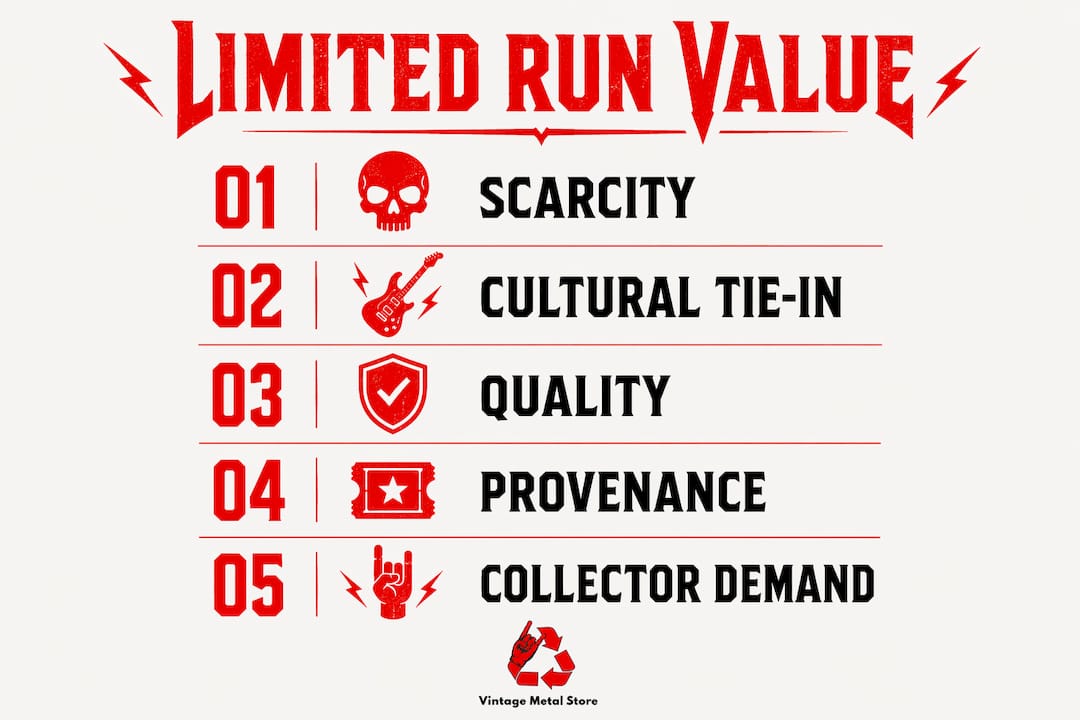
Not every shirt labelled “limited” is genuinely scarce. Real scarcity means a fixed, final production run with no restocks, and that distinction separates a true collectible from a marketing exercise.
The most credible scarcity mechanisms include:
- Numbered runs: Each shirt carries a unique number (e.g. 47 of 100), giving collectors proof of position within the edition
- One-time print runs: The design is retired permanently once stock sells out
- Capped pre-orders: Orders close after a set window, with no additional production
- Event-specific releases: Tour shirts, festival exclusives, and anniversary prints tied to a single occasion
How a brand communicates scarcity matters as much as the scarcity itself. Countdown timers, announced edition sizes, and clear “never restocking” commitments all build credibility. Vague language like “while stocks last” on a shirt that quietly reappears months later destroys that credibility fast. Brands that misuse scarcity through rapid sellouts without transparency risk long-term loyalty, because collectors talk and they remember. Genuine scarcity, clearly communicated, is what separates a shirt worth hunting from one worth ignoring.
Why emotional and cultural connection drives collectible t-shirt value
Scarcity explains the economics. Psychology explains why collectors actually care.
Psychologist Jack Brehm’s reactance theory, developed in 1966, shows that restricting access to something increases desire for it specifically because of that restriction. This is not a marketing trick. It is a genuine motivational response, and it runs deep in collector culture. When a tour shirt is announced as a one-night-only print, the urgency you feel is real.
Limited shirts also function as social identity markers, signalling insider knowledge and cultural alignment. In the metal community especially, wearing a shirt from a specific tour or era tells other fans exactly where you stand. It says you were there, or you cared enough to track it down. That signal carries weight no mass-produced shirt can replicate.
Pro Tip: The story behind how you acquired a limited shirt adds to its personal value. Keep a note of the date, the event, or the drop details. That provenance enriches the piece for you and for any future buyer.
There is also a sustainability dimension worth considering. Small-batch limited production encourages collectors to care for their shirts rather than treat them as disposable. Buying one genuinely limited piece and preserving it properly is a more considered approach than cycling through fast fashion alternatives. For collectors who want to understand why caring for old t-shirts matters beyond nostalgia, the cultural and environmental case is compelling.
Limited drops also create events, and events create memories. The story of where you were when a shirt dropped, how you found out about it, and why you had to have it becomes part of the shirt’s value. That kind of attachment is what expressive clothing builds over time, and it is genuinely irreplaceable.
How quality, design, and pop culture tie-ins shape collectibility
The physical shirt has to earn its place too. Limited runs allow for a level of quality control that mass production simply cannot sustain.
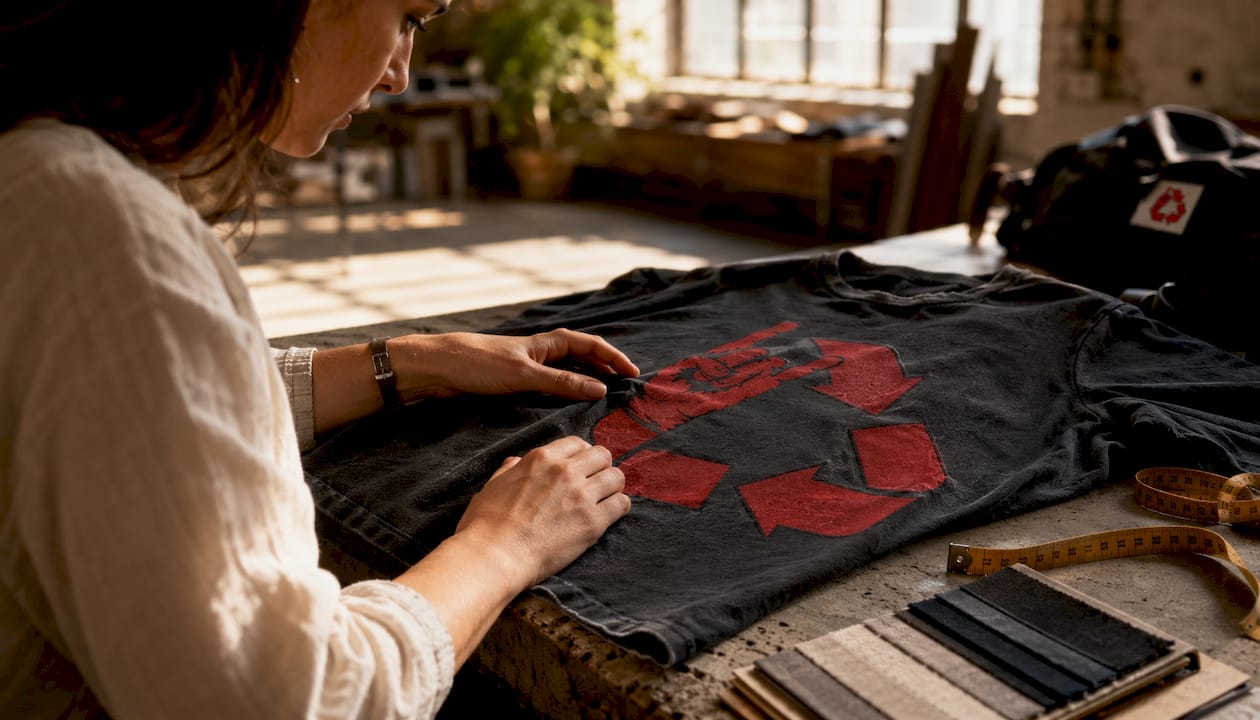
Small-batch manufacturing means every unit carries the brand’s full reputation. There is no margin to hide a quality failure behind volume. Premium fabric weights, careful screen printing, and precise construction are achievable at fifty or a hundred units in a way they are not at fifty thousand. Collectors who handle genuine limited run shirts from independent or boutique producers notice the difference immediately.
Key quality and design factors that lift collectible value:
- Premium materials: Heavier cotton weights, reactive dyeing, and quality pre-treatment produce shirts that age well rather than fading into nothing
- Artist collaborations: When a respected artist contributes an exclusive design, the shirt becomes a cultural artefact tied to that creator’s legacy
- Event-specific artwork: Designs connected to a specific concert, tour leg, or cultural moment carry context that generic prints never will
- Print quality: Artist collaborations and event-specific designs attract collectors seeking meaningful, one-of-a-kind pieces, and the print has to hold up to scrutiny
The Metallica 1992 Tour Tee is a perfect example. That shirt is not just cotton and ink. It represents a specific moment in one of metal’s most significant touring eras, and its design is inseparable from that context. Similarly, the Pentagram 2024 Limited Edition Tour Shirt connects directly to a living band’s current legacy, making it relevant to both long-time devotees and newer collectors entering the scene.
Pop culture relevance accelerates value. A shirt tied to a band at the peak of their cultural moment, or to a tour that later becomes legendary, appreciates in ways that a generic band tee never will.
How to identify genuine limited editions and care for your collection
Knowing why limited run shirts are valuable is one thing. Knowing how to verify you actually have one is another.
Authenticity and scarcity checks:
- Look for verifiable edition numbers printed on the tag, label, or shirt itself
- Seek documented proof of the original run size from official sources, not just marketing copy
- Check whether the brand has a history of restocking “limited” items. A pattern of restocks signals weak scarcity
- Retain original packaging, hang tags, and purchase receipts. These provenance documents directly influence resale value
- Be sceptical of open-ended pre-orders. Time-limited does not always mean quantity-limited
Preservation and care:
- Condition is everything. Even minor wear reduces collectible value considerably, so many serious collectors keep their rarest shirts unworn
- Store shirts flat or folded in acid-free tissue, away from direct light and humidity
- Avoid wire hangers for long-term storage as they distort shoulder seams over time
- For shirts you do wear, wash inside-out in cold water and air dry to protect print integrity
The difference between a grail item and a common limited run often comes down to condition and documentation. Two shirts from the same run can trade at very different prices if one has original tags and purchase proof and the other does not. For a deeper look at what makes a shirt valuable beyond the label, the factors stack up in specific, measurable ways.
Investment potential and realistic expectations for limited edition shirts
Limited edition shirts can appreciate, but the honest collector’s approach is to buy for passion first and treat any financial upside as a bonus.
The economic logic is straightforward. Fixed supply plus sustained or growing demand raises price over time. Once a genuine limited run sells out and the brand commits to no restock, supply is permanently capped. If the cultural relevance of the band, artist, or moment grows, demand increases against that fixed ceiling.
What actually drives long-term appreciation:
- Cultural staying power: A shirt tied to a band with enduring legacy holds value far longer than one connected to a moment that fades
- Creator relevance: Resale value depends on ongoing demand durability, creator relevance, and unique item features beyond initial hype
- Condition: Deadstock or near-mint shirts command the strongest premiums
- Documented scarcity: Verified, final runs without restocks hold the highest collector premium
- Timing: Buying early in a band’s trajectory, before mainstream recognition, mirrors the early adopter advantage that has driven value in every significant collector market
The risks are real too. Overhyped drops can see initial resale prices collapse once launch excitement fades. Demand that was driven by FOMO rather than genuine cultural connection rarely sustains. The metal shirt market is more stable than many hype-driven categories precisely because the community’s passion runs deep and long, not just hot and brief.
Historical examples of iconic limited run shirts and their market trajectories
The vintage metal shirt market offers some of the clearest examples of how limited run shirts appreciate over decades.
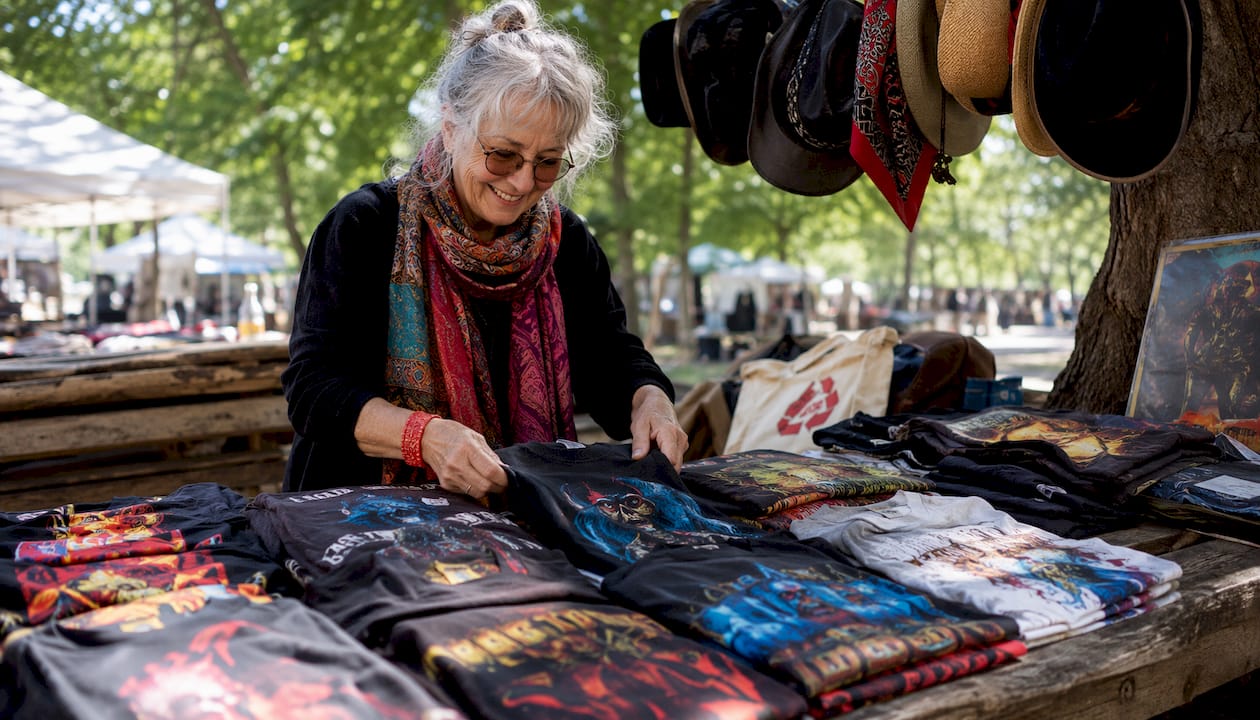
The Metallica 1992 “Don’t Tread on Me” USA Tour Tee is one of the most sought-after pieces in Australian collector circles. Produced for a specific leg of a landmark tour, it was never reprinted. Surviving examples in good condition now trade at multiples of their original price, driven by Metallica’s enduring global legacy and the shirt’s direct connection to a defining era of the band’s career. You can see a genuine example at Vintage Metal Store.
Led Zeppelin tour merchandise from the 1970s follows a similar trajectory. The band’s refusal to license their image broadly during their active years meant genuine tour shirts were always scarce. Decades later, Led Zeppelin memorabilia commands serious prices at auction precisely because the original runs were small and the cultural legacy is immense.
Screen printing technology, which underpins most vintage tour merch, has its own history worth understanding. Screen printing as a garment technique became widespread in the 1960s and 1970s, meaning shirts from that era carry both cultural and material rarity. Early prints used inks and processes that are now difficult to replicate authentically, adding another layer of collectibility.
The pattern across all these examples is consistent: genuine scarcity, cultural significance, and condition determine which shirts become legends and which remain curiosities. For collectors exploring limited tour merch as a category, understanding this trajectory is the foundation of smart buying.
How limited runs build brand reputation and collector loyalty
Brands that commit to genuine limited runs build something that mass-market labels cannot buy: trust.
When a brand announces a fixed edition and holds the line on restocks, collectors learn they can rely on that commitment. The scarcity is credible. The purchase decision carries weight. Over time, that reliability becomes part of the brand’s identity, and collectors return precisely because they know the rules of engagement are honest.
The inverse is equally instructive. Brands that abuse “limited” language by quietly restocking or running endless “final” editions erode collector confidence fast. The short-term revenue from a restock rarely compensates for the long-term damage to perceived exclusivity. Transparency about edition limits and restock decisions is not just ethical; it is commercially smart for any brand building a collector audience.
For bands and their merchandise operations, limited tour shirts serve a dual purpose. They generate revenue and they deepen fan loyalty by giving the most dedicated supporters something the casual listener cannot access. Understanding why bands sell tour shirts reveals how deeply the economics and the culture are intertwined. The shirt is both a product and a membership signal, and the most devoted fans treat it accordingly.
Vintage Metal Store operates within this tradition, curating genuine ex-tour stock and deadstock from heavy metal tours. The shirts in that catalogue were not reprinted. They exist in the numbers they exist in, full stop.
Shop genuine limited run metal shirts at Vintage Metal Store
If you are serious about collecting limited run metal shirts, the place to start is with pieces that carry verifiable provenance and genuine scarcity. Vintage Metal Store stocks authentic ex-tour stock and deadstock from heavy metal tours across decades, including the Rare Metallica 1992 Tour Tee and the Pentagram 2024 Limited Edition Tour Shirt. These are not reprints. These are the real thing. Shop Now and wear the legacy.
Key takeaways
Limited run shirts hold lasting value when genuine scarcity, cultural significance, and documented provenance combine with strong condition and sustained collector demand.
| Point | Details |
|---|---|
| Scarcity drives appreciation | Fixed supply against growing demand raises price over time, especially when restocks are permanently ruled out. |
| Condition is paramount | Even minor wear reduces collectible value considerably; deadstock shirts command the strongest resale premiums. |
| Provenance matters | Receipts, original tags, and documented run details directly influence what a shirt fetches on the secondary market. |
| Buy passion first | Investment upside is real but not guaranteed; cultural staying power and creator relevance determine which shirts appreciate. |
| Authenticity signals count | Numbered editions, verified run sizes, and a brand’s restock history separate genuine limited runs from marketing claims. |
FAQ
What makes a limited run shirt genuinely scarce?
Genuine scarcity means a fixed, final production run with no restocks, ideally with verifiable edition numbers and documented proof of the original release. Vague “limited” claims without run-size transparency are a weak scarcity signal.
Why are graphic tees from tours and limited drops so expensive?
Tour and limited drop tees command higher prices because they combine fixed supply, cultural significance, and collector demand. A shirt tied to a specific band era or tour leg cannot be reproduced authentically, so surviving examples in good condition trade at premiums that reflect their rarity and the legacy they represent.
Do limited run shirts always increase in value?
Not always. Appreciation depends on sustained collector demand, the cultural staying power of the band or artist, and the condition of the shirt. Pieces driven purely by launch hype without lasting cultural relevance often see resale prices fall once initial excitement fades.
How do I verify a shirt is a genuine limited edition?
Check for edition numbering on the tag or label, retain original packaging and purchase receipts, and research whether the brand has a history of restocking similar items. Documented provenance, including order confirmations and original hang tags, directly supports resale value.
Are 3D emblem and embroidered shirts more expensive because of production costs?
Yes. Embroidered and emblem-style shirts involve more complex, labour-intensive production than standard screen printing, which raises the cost per unit. Combined with limited run quantities, that production complexity adds to both the retail price and the collectible appeal.
Recommended
- What makes a shirt valuable: a collector’s guide – Vintage Metal Store
- Why fans collect old shirts: Cultural power of vintage metal tees – Vintage Metal Store
- How to display collector shirts: the complete guide – Vintage Metal Store
- Defining grail shirt: the collector’s complete guide – Vintage Metal Store


