



TL;DR:
- Limited tour merchandise is exclusive, small-quantity items tied to specific concerts or tours that disappear after the event. These pieces are highly valuable to collectors because of their scarcity, event-specific designs, and official authenticity. Authenticity and timely purchase are crucial to acquiring and maintaining their long-term collectible value.
Limited tour merch is officially produced merchandise tied to a specific concert tour, city, or venue, made in restricted quantities and sold exclusively during that tour cycle. Unlike standard artist merchandise available year-round, limited edition tour merchandise disappears when the tour ends. That scarcity is the point. For fans and collectors, these pieces carry genuine historical weight. Bands like Metallica, Iron Maiden, and Pentagram have all released event-exclusive items that became prized collectibles long after the final encore. If you want to understand what separates a truly rare piece from a generic band tee, this guide covers everything you need.
What is limited tour merch and why does it matter?
Limited tour merch is officially sanctioned merchandise produced in small runs, tied to specific tour dates, cities, or venues. The industry term is “event-exclusive merchandise,” though fans and collectors widely use “limited tour merch” to describe the same thing. Both terms refer to the same category: short-run, tour-specific items that are not available through standard retail channels.
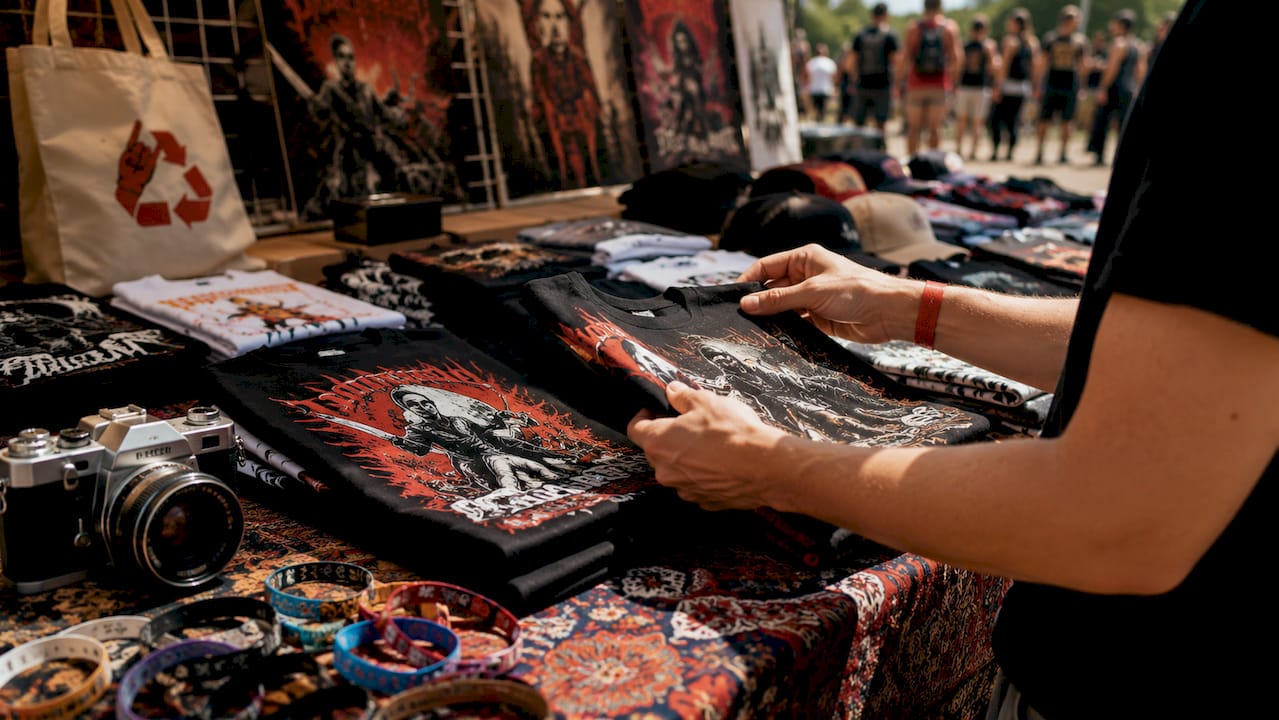
The defining characteristic is restricted production. Exclusive items typically run at just 50–75 units per venue, compared to much larger runs for standard stock. That means a city-specific tee from a Metallica show in Melbourne may have fewer than 75 copies in existence. Scarcity at that level turns a cotton shirt into a genuine artefact.
Artists tie designs to specific dates, cities, or tour legs deliberately. Manufactured scarcity creates urgency and encourages fans to buy immediately at the merch table rather than waiting. The psychology is straightforward: if you leave without it, it is gone. That urgency also protects the long-term value of the piece for collectors.
What makes limited merch valuable to fans and collectors?
Several characteristics separate genuine limited edition tour merchandise from the broader merch catalogue:
- Event-specific design. City names, venue references, and tour-leg dates printed directly on the item confirm its origin. A shirt reading “Sydney, March 2024” cannot be reprinted and sold elsewhere.
- Restricted production volume. Production of 50–75 units per venue means sizing sells out fast. Preferred sizes disappear within the first hour of doors opening.
- Official artist authorisation. Only items sold through artist-approved channels carry the provenance that collectors and resale markets recognise.
- Numbered prints or certificates of authenticity. Numbered prints and certificates signal genuine scarcity and significantly enhance collector value compared to mass-produced items.
- One-time availability. Once the tour leg ends, the item is gone from official channels permanently.
The emotional dimension matters too. Wearing a shirt from a specific show connects you to a moment in time. That connection is what separates collectible concert merchandise from a generic band logo tee you can buy at any time online.
Pro Tip: Check the official artist website or social media before the show to confirm which items are genuinely tour-exclusive versus which are standard catalogue pieces also available online. This saves you from overpaying at the venue for something you could order later at a lower price.
How to recognise authentic limited tour merch
Authentic limited tour merch is sold only via artist-authorised stores or official venue tables. Counterfeit and third-party “tour-style” items rarely hold lasting value. Knowing the difference protects your collection and your wallet.
Key markers of authentic limited merch include:
- Official licensing tags. Genuine items carry licensed band or artist branding, often with a copyright notice and the name of the official merchandise company.
- Venue-specific print details. Authentic event-exclusive pieces reference the specific city, venue, or date. Generic bootlegs use vague tour imagery without location specifics.
- Quality of print and fabric. Official limited runs use quality screen printing or discharge printing. Bootlegs often show cracked ink, misaligned prints, or thin fabric that does not match the price point.
- Purchase source. Buying directly from the venue merch table or the official artist web store is the safest approach. Third-party sellers on general marketplaces carry higher counterfeit risk.
The risk of buying knock-offs is real, particularly for high-demand acts. Counterfeit tour-style goods lack the historical and resale significance of official pieces. A fake Metallica shirt from a 1992 tour has no collector value regardless of how convincing it looks.
Pro Tip: When buying vintage or secondhand limited tour merch, look for original price stickers, original folding creases, and period-accurate tag styles. These details confirm the item is genuine deadstock or ex-tour stock rather than a later reproduction.
Where and when to buy limited edition tour merch
Timing and source are the two variables that determine whether you secure the piece you want. Follow these steps to maximise your chances:
- Arrive as doors open. Merch lines are shorter before the concert starts, and limited stock sells out fast. Arriving at door-open time gives you first access to exclusive band tour items before preferred sizes disappear.
- Check the official artist website before the show. Knowing what is available online prevents you from overspending at the venue on items that are not actually exclusive. Fans often overspend in the post-show emotional high on non-exclusive items available later for less.
- Pre-order online where available. Some artists offer pre-orders for limited tour drops. This guarantees your item without the venue queue, though it introduces shipping risk.
- Allow 7–10 days for standard shipping. Standard ground shipping requires at least 7–10 days lead time before an event. Ordering closer to the date makes locker pickup or expedited shipping the safer choice.
- Use locker pickup for last-minute online orders. Locker pickup reduces last-mile delivery risk when ordering close to event dates. It is the most reliable option when standard shipping windows are too tight.
- Follow the artist on social media. Limited drops are often announced 24–48 hours before the show. Early notification gives you time to plan your arrival or place an online order before stock runs out.
How does limited tour merch impact the memorabilia market?
Limited tour merch drives a significant portion of the collectible concert merchandise market. Scarcity, event-specific design, and official status combine to create pieces that appreciate in value over time.
| Merch type | Production volume | Resale potential | Collector significance |
|---|---|---|---|
| City-exclusive tour tee | 50–75 units per venue | High | Very high |
| Standard tour tee | Large run, tour-wide | Low to moderate | Moderate |
| Numbered limited print | Fixed edition size | High | High |
| Retail band tee | Mass production | Low | Low |
| Vintage deadstock tour shirt | Original run, no reprint | Very high | Very high |
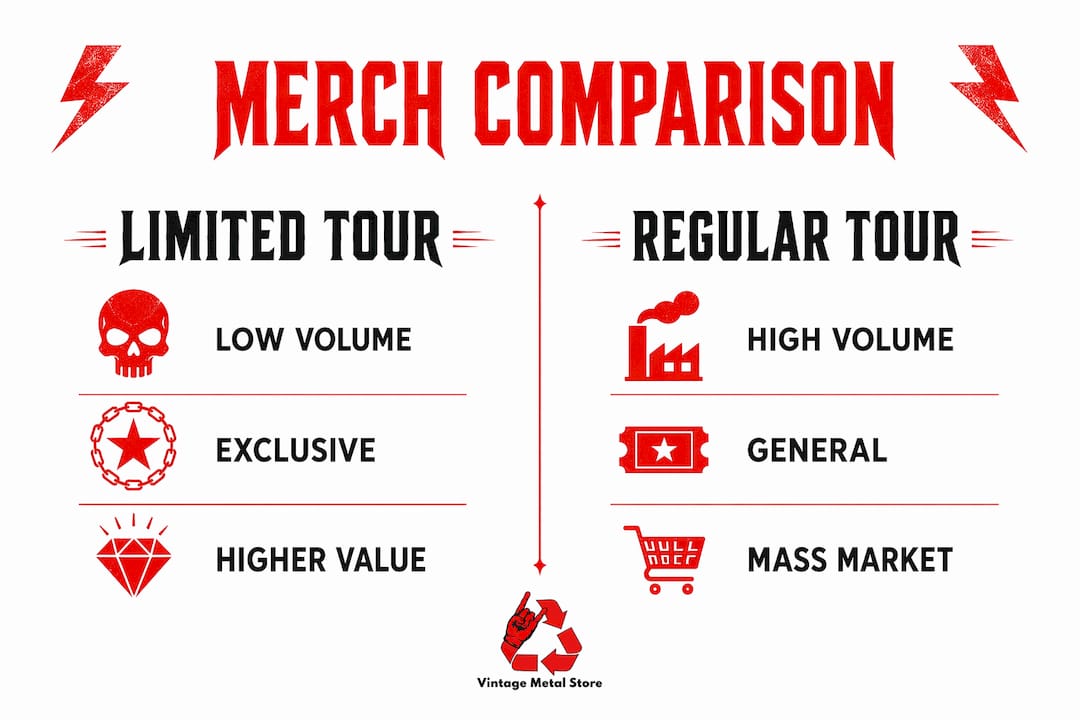
Limited runs, special collaborations, and event exclusivity turn regular merch into collectibles that appreciate over time. A Metallica shirt from the 1992 “Don’t Tread on Me” USA tour is not just a shirt. It is a document of a specific moment in heavy metal history.
The distinction between recurring merchandise brands and one-time tour drops matters enormously to serious collectors. Recurring catalogue items can be reprinted. Tour-exclusive pieces cannot. That irreversibility is what drives resale prices upward over years and decades. The memorabilia value of heavy metal tour merch has grown steadily as original pieces from the 1980s and 1990s become genuinely rare.
Limited tour merch vs regular tour and retail merchandise
Understanding the difference between these three categories helps you make smarter buying decisions.
| Feature | Limited tour merch | Regular tour merch | Retail merchandise |
|---|---|---|---|
| Production volume | 50–75 units per venue | Large tour-wide run | Mass production |
| Availability | Venue only, tour dates only | Tour venues and online | Ongoing retail channels |
| Design exclusivity | City, venue, or date specific | Generic tour artwork | Evergreen brand designs |
| Collector value | High, appreciates over time | Moderate | Low |
| Buying experience | In-person urgency, fast sell-out | Venue and web store | Any time, any channel |
| Value retention | Strong long-term | Diminishes after tour | Minimal |
Tour merch generates one-time revenue per cycle, while retail merchandise builds ongoing brand recognition. That structural difference explains why limited tour pieces hold value while retail tees do not. The scarcity is built into the production model, not manufactured after the fact.
Fans often confuse generic tour merch with true limited edition event-exclusive merch. Only the latter consistently holds or appreciates in value over time. Knowing which category you are buying protects your investment and keeps your collection meaningful.
Key takeaways
Limited tour merch is event-exclusive, officially produced merchandise made in small quantities that holds genuine collector value because it cannot be reprinted or restocked after the tour ends.
| Point | Details |
|---|---|
| Production is genuinely scarce | Exclusive items run at just 50–75 units per venue, making preferred sizes sell out within hours. |
| Authenticity determines value | Only items from artist-authorised sources carry the provenance that collectors and resale markets recognise. |
| Timing is critical at venues | Arriving at door-open time gives you the best access to limited stock before it sells out. |
| Online orders need lead time | Standard shipping requires 7–10 days; use locker pickup or expedited shipping for late orders. |
| Event-specific design drives collectibility | City, venue, or date references confirm a piece’s origin and protect its long-term resale value. |
Why limited tour merch is about more than merchandise
I have spent years handling vintage and ex-tour heavy metal shirts, and the thing that strikes me most is how poorly understood the value hierarchy is among newer collectors. Most fans treat all tour merch as equivalent. It is not.
The pieces that matter are the ones tied to a specific night in a specific city. A shirt from Iron Maiden’s 1984 World Slavery Tour with a Sydney date print is a completely different object from a standard tour tee of the same era. One is a document. The other is a product. Both are worth owning, but only one will hold its value in twenty years.
The collector community has also shifted. Younger metal fans are entering the market with real knowledge and real budgets. That is pushing prices up on authentic deadstock and ex-tour stock faster than most people expected. If you are sitting on genuine limited pieces from the 1990s, their value is rising. If you are buying now, focus on authenticity above everything else. A genuine piece at a fair price beats a cheap fake every time.
My honest advice: learn the scarcity strategy behind tour drops before you spend serious money. Understanding why artists produce limited runs helps you identify which pieces are genuinely rare and which are just marketed as exclusive. That knowledge is the difference between a collection and a pile of shirts.
— David
Rare and authentic limited metal tour merch at Vintage Metal Store
Vintage Metal Store specialises in genuine ex-tour stock, deadstock, and vintage heavy metal shirts that represent exactly what this article describes: officially produced, historically significant pieces that cannot be reprinted.
The rare Metallica 1992 tour tee in the collection is a prime example of authentic limited tour merch from one of metal’s most iconic cycles. For collectors focused on recent exclusive drops, the Pentagram 2024 limited edition tour shirt represents the kind of event-specific piece that holds value over time. Vintage Metal Store sources directly from tours and original stock, so every piece carries genuine provenance. Browse the full collection and wear the legacy.
FAQ
What is limited tour merch exactly?
Limited tour merch is officially produced merchandise tied to a specific concert tour, city, or venue, made in small quantities and sold only during that tour cycle. It differs from standard band merchandise because it cannot be restocked or reprinted after the tour ends.
How many units are produced for exclusive tour items?
Exclusive tour items are typically produced in runs of just 50–75 units per venue. That restricted volume is what creates genuine scarcity and drives collector demand.
How do I know if tour merch is authentic?
Authentic limited tour merch is sold through artist-authorised stores or official venue merch tables. Look for licensed tags, venue-specific print details, and quality screen printing. Items with numbered prints or certificates of authenticity carry the strongest collector value.
When is the best time to buy limited merch at a show?
Arrive as doors open. Merch lines are shorter before the concert starts and limited stock, particularly preferred sizes, sells out quickly once the crowd arrives.
Does limited tour merch hold its value over time?
Yes. Event-specific designs, restricted production, and official status combine to make genuine limited tour merch appreciate in value over time. Generic tour tees and retail merchandise do not share the same value retention.
Recommended


