


TL;DR:
- Second hand heavy metal apparel offers higher quality and durability than modern fast fashion. Buying vintage shirts reduces environmental impact by lowering carbon emissions and water use while preserving music history and authenticity. Thrifting metal gear saves money and supports sustainable, cultural expression in the metal community.
Second hand heavy metal apparel is defined as pre-owned band shirts, tour merch, and metal gear sourced from past concerts, ex-tour stock, and deadstock collections. The benefits of second hand heavy metal apparel span four clear areas: superior build quality, genuine environmental savings, irreplaceable cultural authenticity, and serious cost advantages. A vintage Metallica tour tee from 1992 is not just clothing. It is a piece of music history that no algorithm or fast fashion factory can reproduce. This guide breaks down exactly why thrifted metal clothing beats buying new, with research-backed data and practical tips for every metal fan.
1. How does second hand heavy metal apparel offer superior quality?
Vintage metal apparel is built better than most clothing sold today. Pre-2000s band shirts were typically made from heavyweight 100% cotton, with double-stitched seams, quality screen printing, and fabric weights that modern fast fashion simply does not match. Vintage and older secondhand metal clothing features heavier fabrics, natural fibres, and quality stitching that modern fast fashion cannot replicate. That construction difference is why a 30-year-old Slayer shirt can still hold its shape and colour while a new polyester tee fades after ten washes.
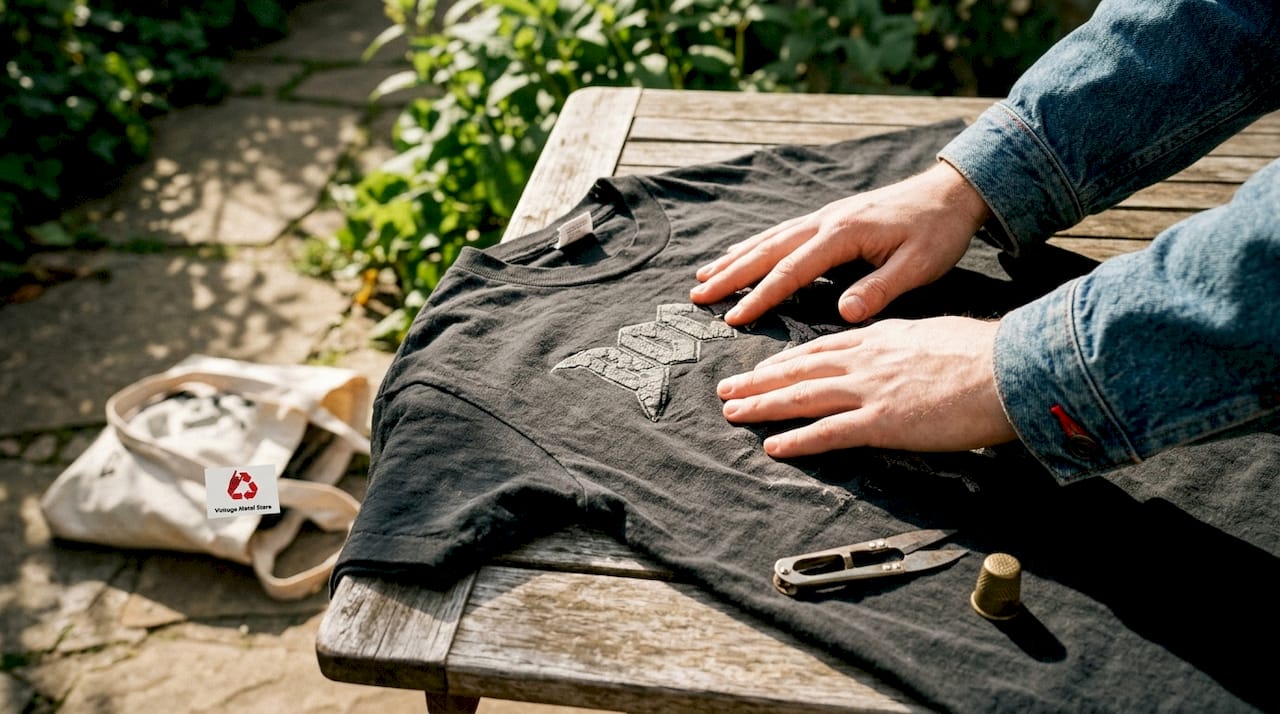
Approximately 65% of consumers report frustration with declining quality in modern fast fashion, citing thin fabrics and poor stitching as the primary complaints. That frustration is driving a clear shift back toward pre-2000s vintage apparel. When you pick up a genuine Iron Maiden or Black Sabbath tour shirt from the 1980s or 1990s, you are holding a garment made when quality control actually mattered.
Key quality indicators to check when finding vintage heavy metal wear:
- Fabric weight: Heavier cotton feels substantial in your hand. Thin, flimsy fabric is a red flag.
- Stitching: Look for double-stitched seams at the collar, sleeves, and hem.
- Print quality: Original screen prints have texture and slight cracking with age. Flat, plasticky prints signal a replica.
- Label: Vintage labels from brands like Fruit of the Loom, Hanes Beefy-T, or Screen Stars indicate genuine pre-2000s production.
- Fabric composition: 100% cotton or cotton-polyester blends with higher cotton content outlast pure polyester every time.
Pro Tip: Run your thumb across the print. Authentic vintage screen prints feel slightly raised and show natural age cracking. A perfectly smooth, uniform print on an “aged” shirt almost always means it is a reproduction.
2. What are the environmental benefits of buying second hand metal clothing?
Buying second hand is one of the most direct ways to reduce your personal environmental footprint. Purchasing secondhand clothing can reduce greenhouse gas emissions by up to 44% compared to new manufacturing. That figure represents the combined savings from avoided dyeing, weaving, transport, and packaging processes. For eco-friendly music apparel, the maths is compelling.
The individual item impact is equally striking. Buying one secondhand item instead of new prevents roughly 15kg of CO2 emissions and saves approximately 2,700 litres of water otherwise used in production. To put that in perspective, 2,700 litres is roughly what an average person drinks over seven years. One shirt purchase makes that difference.
The broader textile waste problem makes the case even stronger. Fast fashion contributes to 92 million tonnes of annual textile waste globally. Choosing sustainable fashion for metal fans means actively diverting garments from that waste stream and extending the useful life of clothing that already exists.
| Environmental metric | New clothing | Second hand clothing |
|---|---|---|
| CO2 emissions per item | Baseline production level | Up to 44% lower |
| Water use per item | ~2,700 litres | Near zero additional use |
| Textile waste contribution | Adds to 92M tonne annual total | Diverts from waste stream |
| Chemical use | Dyes, treatments, finishes | No new chemicals required |
This purposeful approach to clothing is not just a trend. It is a measurable reduction in harm, and every vintage metal shirt you buy instead of a new one counts toward it.
3. How does second hand metal apparel preserve authenticity and cultural heritage?
The cultural value of genuine vintage band shirts is the benefit that no sustainability report can fully quantify. Secondhand shopping provides access to unique, discontinued designs that foster authenticity and individuality in ways mass-produced merchandise cannot replicate. A shirt from the Metallica “Don’t Tread on Me” 1992 USA tour is not available in any retail store. You cannot order it from a band’s official website. It exists only in the hands of collectors and specialist retailers like Vintage Metal Store.
Mass-produced replicas are everywhere, but they miss the point entirely. A reproduction shirt might carry the same logo, but it lacks the provenance, the fabric, and the story. Metal culture has always been about authenticity. Wearing a genuine vintage piece connects you directly to a specific moment in music history, whether that is a Cannibal Corpse tour from the early 1990s or an Iced Earth shirt from a mid-2000s run.
“Beyond environment and cost, the main value of secondhand metal apparel is its authenticity and individuality, connecting wearers to music history in ways replicas can’t match.” Sartorial Thrifts
The collector community around vintage metal apparel is serious and growing. Shirts from bands like DevilDriver, Unearth, and Living Sacrifice carry real cultural weight among fans who lived through those eras. Owning one is a statement of genuine connection to the music, not just the aesthetic. You can explore the deeper story behind these pieces through vintage metal band apparel culture and understand why authenticity matters so much to this community.
4. How much money can you save by choosing second hand heavy metal apparel?
The financial case for thrifted metal clothing is straightforward. Thrifting and buying secondhand can reduce clothing costs by 60–80% compared to retail prices. A new official band shirt retails for $50–$80 in Australia. A genuine vintage equivalent from a specialist retailer typically costs a fraction of that, and it carries more cultural value.
Strategic shoppers can save $800–$1,500 annually on clothing through secondhand purchasing. That is money that stays in your pocket or gets redirected toward concert tickets, vinyl, or other parts of your metal lifestyle. The cost-per-wear calculation also favours vintage. A $40 vintage shirt worn 200 times costs $0.20 per wear. A $70 fast fashion shirt that falls apart after 30 washes costs $2.33 per wear.
Resale value is another financial advantage that most buyers overlook. Quality thrift items retain 40–60% of their thrift price when resold, while retail items typically lose 70–80% of their value immediately after purchase. A rare vintage metal shirt can actually appreciate in value over time, particularly for sought-after tours and limited runs.
Key financial advantages of why you should choose used heavy metal gear:
- Lower entry price: Pay 60–80% less than retail for comparable or superior quality.
- Better resale value: Vintage pieces hold and sometimes grow in value, unlike new retail merch.
- Cost-per-wear advantage: Durable vintage construction means more wears per dollar spent.
- No depreciation on purchase: Unlike new clothing, vintage pieces do not lose value the moment you buy them.
Pro Tip: When buying from specialist retailers, ask about ex-tour stock and deadstock. These pieces have never been worn and often carry a price premium, but their condition and rarity make them the strongest long-term value holds in any vintage metal collection.
5. Second hand vs new metal apparel: a direct comparison
This table summarises the key differences across the factors that matter most to metal fans and eco-conscious buyers.
| Factor | Second hand vintage | New retail |
|---|---|---|
| Fabric quality | Heavyweight cotton, natural fibres | Thin polyester blends common |
| Price | 60–80% below retail | Full retail price |
| Carbon footprint | Up to 44% lower emissions | Full manufacturing footprint |
| Uniqueness | Discontinued, one-of-a-kind designs | Mass-produced, widely available |
| Resale value | Retains 40–60% of purchase price | Loses 70–80% of value immediately |
| Cultural authenticity | Direct connection to music history | Replica or generic merchandise |
The comparison makes the advantages of thrifted metal clothing clear across every dimension. There is no category where new retail wins outright for a metal fan who values quality, culture, and sustainability.
Key takeaways
Second hand heavy metal apparel delivers superior quality, genuine environmental savings, irreplaceable cultural authenticity, and strong financial value compared to buying new retail merchandise.
| Point | Details |
|---|---|
| Quality advantage | Vintage metal shirts use heavyweight cotton and double-stitched construction that modern fast fashion cannot match. |
| Environmental savings | Buying one secondhand item prevents roughly 15kg of CO2 and saves approximately 2,700 litres of water. |
| Cultural authenticity | Genuine vintage band shirts connect you to specific moments in metal history that no replica can reproduce. |
| Cost savings | Thrifted metal clothing costs 60–80% less than retail, with better resale value retention over time. |
| Circular fashion value | Every second hand purchase diverts clothing from the 92 million tonne annual global textile waste stream. |
Why I think thrifting metal gear is the only honest choice
I have been buying vintage metal shirts for years, and the shift I have seen in the community is real. Metal fans used to treat thrifting as a budget necessity. Now it is a deliberate cultural statement, and rightly so.
The thing that strikes me most is how the vintage pieces carry weight that new merch simply does not. When you pull on a genuine tour shirt from a band’s defining era, you are wearing something that was actually there. That connection to music history is not sentimental nonsense. It is the whole point of metal culture, which has always been about authenticity over image.
The environmental argument has also shifted from background noise to genuine motivation for a lot of fans I speak with. Knowing that your purchase avoids 15kg of CO2 and 2,700 litres of water is not abstract. It is a concrete reason to choose second hand every time you can. The community attitude has changed. Thrifting is not compromise. It is the smarter, more principled choice.
— David
Find authentic second hand metal shirts at Vintage Metal Store
Vintage Metal Store curates genuine ex-tour stock, deadstock, and rare vintage heavy metal shirts that you will not find anywhere else. Every piece is authentic, sourced directly from metal tours and bands, and selected for its cultural and collector value.
If you are after something truly rare, the Metallica 1992 “Don’t Tread on Me” tour shirt is one of the most sought-after pieces in the collection. Vintage Metal Store also carries vintage Cannibal Corpse shirts and vintage Iced Earth shirts for fans who want to wear the legacy of metal’s most iconic acts. Browse the full collection and find your piece of history today.
FAQ
What makes second hand heavy metal apparel better quality than new?
Vintage metal shirts were made with heavyweight cotton, double-stitched seams, and quality screen printing. Older secondhand metal clothing consistently outperforms modern fast fashion in durability and fabric quality.
Where can I buy second hand band shirts in Australia?
Vintage Metal Store specialises in authentic ex-tour stock and deadstock heavy metal shirts. You can browse their curated range at vintagemetal.com.au for genuine vintage pieces from iconic metal bands.
How much can I save by buying thrifted metal clothing?
Secondhand clothing costs 60–80% less than retail equivalents, with strategic shoppers saving $800–$1,500 annually on their wardrobe.
Are vintage band shirts better for the environment?
Yes. Buying one secondhand item prevents roughly 15kg of CO2 emissions and saves approximately 2,700 litres of water compared to purchasing new. Secondhand purchases also divert clothing from the global textile waste stream.
How do I spot a genuine vintage metal shirt versus a replica?
Check the label for vintage brands like Fruit of the Loom or Screen Stars, feel for a raised screen print with natural age cracking, and confirm the fabric is heavyweight cotton. Replicas typically use flat, smooth prints on thin polyester fabric. Explore the heavy metal t-shirt brand guide for more detail on identifying authentic pieces.
Recommended


