



TL;DR:
- Authentic vintage metal shirts from the 1980s and 1990s are identified by single stitch construction, manufacturer tags like Brockum and Anvil, and aged plastisol prints. Finding genuine shirts requires careful physical inspection, sourcing from specialized stores, and community verification. Proper preservation and knowledge of era-specific markers protect collectors from reproductions and enhance their collections’ authenticity.
Authentic shirts from the metal radio era are defined as original tour and band tees produced during the 1980s and 1990s, when heavy metal dominated radio stations like KNAC 105.5 FM in Los Angeles and shaped an entire generation of fans. Finding shirts from metal radio era collections is achievable when you know exactly what to look for. Manufacturers like Brockum, Anvil, and M&O produced the genuine article, and their tags are your first line of authentication. This guide gives you the knowledge to identify, source, and verify original vintage metal band shirts with confidence.
How to find authentic shirts from the metal radio era
The physical construction of a shirt tells you more than any seller description ever will. Single stitch construction on sleeves and hems is the single most reliable marker of a genuine vintage metal tee from the 80s and 90s. Modern reproductions almost universally use double stitch, so a single stitch hem is a strong signal you are holding the real thing.
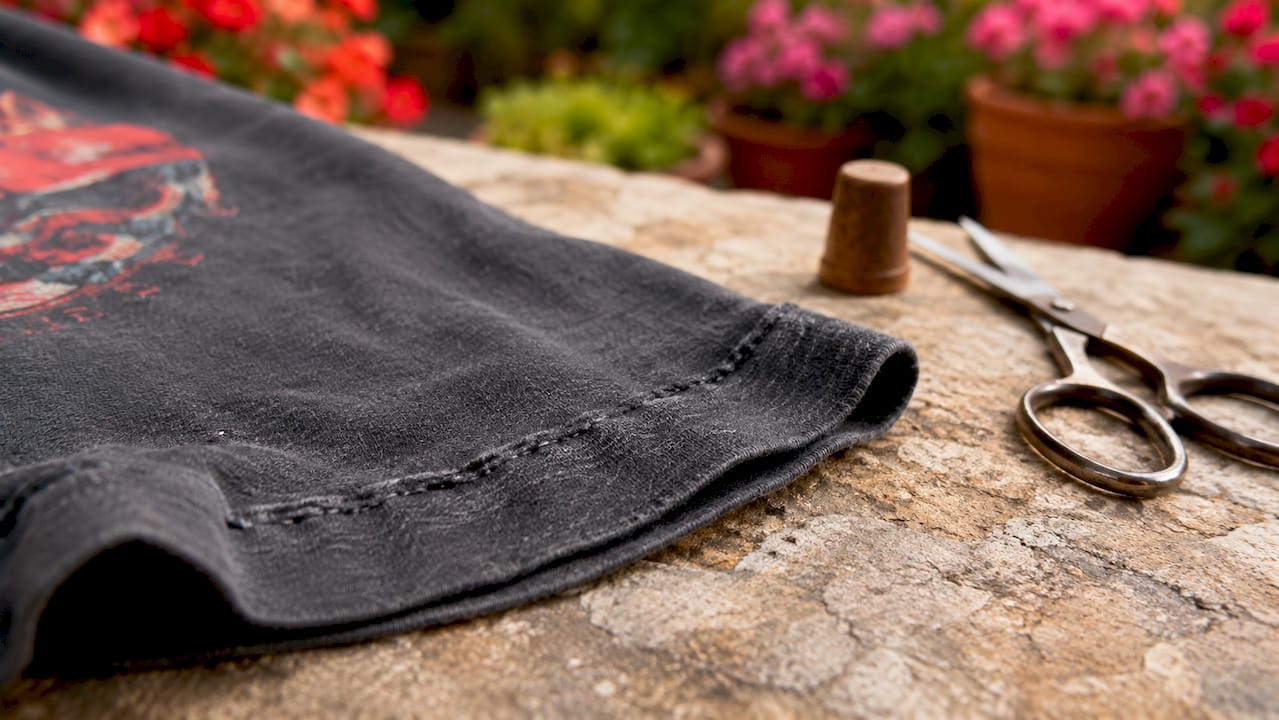
Fabric weight and feel matter just as much. Original shirts from this era used lighter, thinner cotton that softened with age and washing. Reproductions tend to use heavier, stiffer fabric that feels noticeably different in your hands. Run your fingers across the print and the body of the shirt before you commit to any purchase.
Print quality is where originals truly separate from fakes. Plastisol ink prints from the era develop a distinctive cracking and softening over decades, unlike newer reproductions where thicker inks crack in a harsher, more uniform pattern. Genuine vintage prints feel almost part of the fabric. Reproduction prints sit on top of it.
Tags and labels to look for
- Brockum: The gold standard for 80s and 90s metal tour shirts. Original Brockum tagged shirts were manufactured in the USA and carried a distinctive licensing mark. Metallica’s 1991–1992 Black Album tour shirts are a prime example.
- Anvil: A widely used blank for tour merch of the era. Anvil tags with “Made in USA” or “Made in Canada” confirm period production.
- M&O Knit: Another legitimate blank manufacturer from the era, often found on smaller band and club night shirts.
- Screen Stars and Fruit of the Loom (vintage tags): Both appeared on genuine 80s metal shirts. The tag style itself changed across decades, so learn the era-specific tag designs.
Look for tour dates, licensing marks, and copyright notices printed inside or on the tag. A shirt listing specific tour dates that match known band itineraries is a strong authenticity signal. The Metallica 1991–1992 world tour shirt, for instance, features a double-sided print with full tour dates on the back and a licensed Brockum tag on the inside.
Pro Tip: Hold the shirt up to natural light and examine the stitching at the sleeve hem. A single row of stitching visible from the outside confirms single stitch construction. Double stitch shows two parallel rows. This takes five seconds and eliminates most fakes immediately.
Where to source vintage metal radio era shirts
The best sources for genuine vintage metal shirts each carry different trade-offs in terms of cost, reliability, and access.
| Source | Accessibility | Cost | Reliability |
|---|---|---|---|
| eBay | Very high | Variable | Low to medium |
| Specialised vintage metal stores | Medium | Higher | High |
| Facebook collector groups | Medium | Negotiable | Medium |
| Collector forums (Reddit, Metal-Archives) | Medium | Low to medium | Medium to high |
| Estate sales and op shops | Low | Very low | Low |
| Auction houses | Low | High | High |
eBay is the most accessible platform but carries the highest risk of reproductions and misrepresented condition. Quality and authenticity vary widely on eBay, and experienced collectors treat it as a starting point rather than a reliable source. Use eBay to benchmark prices and spot listings, then verify hard before buying.
Specialised vintage metal stores are the most reliable option for authenticated shirts. Vintage Metal Store, for example, stocks ex-tour stock and dead stock from genuine 80s and 90s metal tours, with detailed item descriptions that confirm construction, tags, and provenance. You pay more, but you get what you pay for.
Facebook groups dedicated to vintage band tees and metal memorabilia are underrated. Sellers in these communities are often collectors themselves, which means they understand what authenticity means and are more likely to provide honest descriptions and photos. Search for groups focused on vintage tour merch, 90s metal, or specific bands.
KNAC 105.5 FM branded merchandise carries special provenance for collectors. KNAC connected the US metal scene before the internet existed, and shirts, stickers, and promotional items tied to the station represent a specific slice of metal radio history. These appear occasionally on eBay and in US-based collector groups.
Pro Tip: Set up saved searches on eBay for specific terms like “Brockum single stitch” or “1992 metal tour shirt” and check them weekly. When you find a promising listing, message the seller directly and ask for photos of the tag, the sleeve hem stitching, and the print up close. Sellers who respond quickly with clear photos are almost always more trustworthy.
How to verify authenticity before you buy
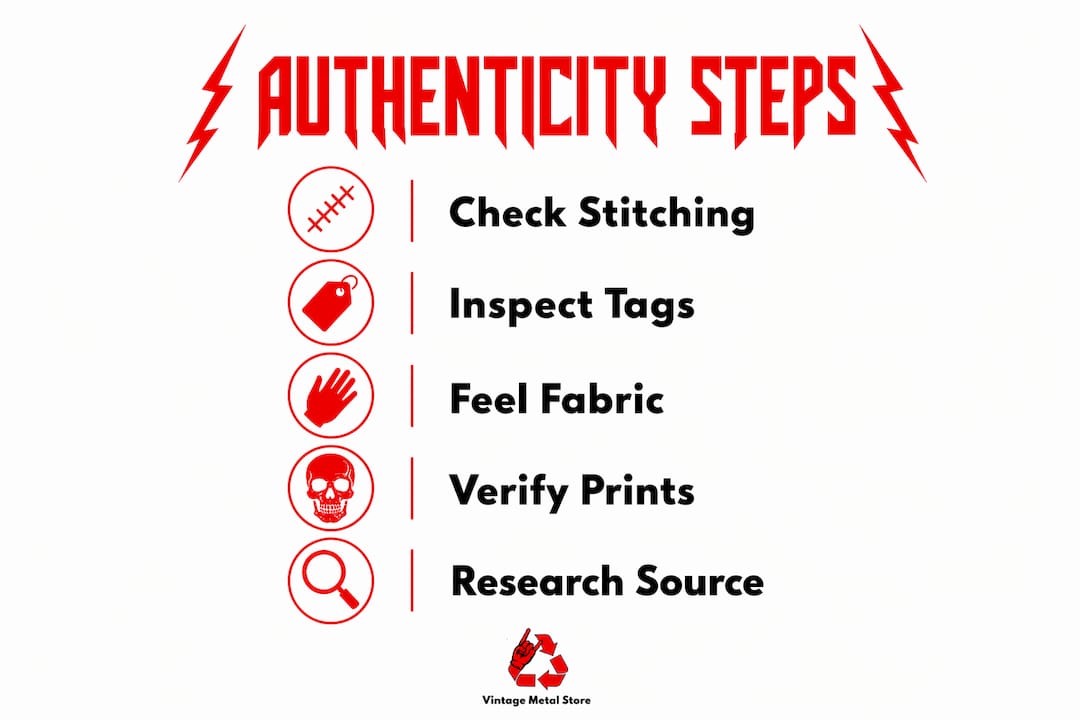
A structured approach to verification protects you from expensive mistakes. Work through these steps before committing to any purchase.
- Check the tag first. Identify the manufacturer. Brockum, Anvil, M&O, Screen Stars, and vintage Fruit of the Loom tags all confirm era-appropriate production. A modern Gildan or Bella+Canvas tag on a supposed 80s shirt is an immediate red flag.
- Examine the stitching. Request close-up photos of the sleeve hem and collar. Single stitch construction confirms vintage production. Double stitch is a reproduction signal.
- Assess the print condition. Genuine plastisol prints from the era show natural cracking and fading consistent with decades of wear and washing. Prints that look too sharp, too thick, or too uniform are likely modern reproductions.
- Cross-reference tour dates. If the shirt lists tour dates, verify them against known band itineraries. Metallica’s Black Album tour, for example, ran from 1991 through 1993. A shirt listing dates outside that window is fabricated.
- Research the graphic. Many original tour shirts used licensed artwork specific to a single tour cycle. Search the graphic online and compare it to known originals. Collector forums and sites like Metal-Archives often have reference photos.
- Request provenance from the seller. Ask where the shirt came from. Original owner, estate sale, and ex-tour stock are all credible answers. “I bought it at a market” is not a red flag on its own, but it warrants extra scrutiny on the physical details.
- Use community expertise. Post photos to dedicated Facebook groups or Reddit communities like r/vintage or r/metal before purchasing. Experienced collectors can often spot a reproduction in seconds from a good photo.
Pro Tip: The vintage tour shirt checklist at Vintage Metal Store walks through every physical marker in detail. Bookmark it and run through it for every shirt you consider buying.
Common mistakes collectors make when sourcing metal shirts
Avoiding these errors saves you money and frustration.
- Mistaking reprints for originals. Modern bands and licensing companies reprint classic designs constantly. A reprint is not worthless, but it is not a vintage shirt. Always check the tag and construction before assuming age.
- Overpaying due to hype. Certain bands, particularly Metallica, Iron Maiden, and Black Sabbath, attract inflated prices because of name recognition. A shirt is worth what its physical condition and authenticity justify, not what the listing claims.
- Ignoring condition issues. Holes, heavy staining, and severe print cracking all reduce value significantly. A shirt described as “well worn” may be unwearable. Always ask for photos of the full front, back, armpits, and collar before buying.
- Skipping the tag check on local finds. Op shops and estate sales occasionally yield genuine finds, but reproductions end up there too. Never skip the tag and stitching check just because the source feels trustworthy.
- Neglecting preservation after purchase. Genuine vintage shirts require careful washing. Turn them inside out, use cold water, and avoid the dryer. Heat and agitation are the two biggest enemies of plastisol prints that have already aged for 30 years.
Authenticity and subcultural knowledge are what separate a meaningful collection from a pile of shirts. Collectors who understand the culture behind the garment make better purchasing decisions and build collections that hold both personal and monetary value.
Key takeaways
Authentic metal radio era shirts are identifiable through single stitch construction, Brockum or Anvil tags, and aged plastisol prints, and sourcing them requires combining specialised stores, community knowledge, and structured verification.
| Point | Details |
|---|---|
| Single stitch is the key marker | Check sleeve and hem stitching first. Single stitch confirms vintage production from the 80s and 90s. |
| Brockum, Anvil, and M&O tags confirm era | These manufacturer tags are the most reliable physical proof of authentic metal radio era production. |
| Specialised stores beat eBay for reliability | Curated vintage metal stores offer authenticated stock. eBay requires heavy scrutiny and verification. |
| Cross-reference tour dates and graphics | Verify shirt details against known band itineraries and licensed artwork to confirm authenticity. |
| Preservation protects your investment | Wash inside out in cold water and air dry to protect aged plastisol prints on genuine vintage shirts. |
What 30 years of hunting vintage metal shirts taught me
I found my first genuine Metallica tour shirt at a Salvos in regional Victoria in 2003. It was a 1992 Black Album tour tee with a Brockum tag and single stitch hems, priced at two dollars. I did not know what I had at the time. I just knew it felt different from every other shirt on the rack. That feeling, the weight of the fabric, the softness of the print, the faint smell of old cotton, is something you cannot fake.
What I have learned since then is that the metal radio era produced shirts with a physical honesty that modern reproductions cannot replicate. The Metallica 1992 tour shirt is not just a piece of clothing. It is a document. It tells you where the band was, when they were there, and who made the merch. That specificity is what collectors are actually chasing.
My honest advice is to slow down. The best shirts rarely announce themselves. They turn up in unexpected places, and they reward the collector who knows what to look for rather than the one who pays the most. Learn the tags. Learn the stitching. Learn the feel of aged plastisol. Once those things are in your hands and your memory, you will never overpay for a reproduction again.
The community matters too. The collectors in Facebook groups and on Reddit who share their knowledge freely are the real backbone of this hobby. Ask questions. Post photos. The expertise in those communities is extraordinary, and most people are genuinely happy to help.
— David
Find authentic metal radio era shirts at Vintage Metal Store
Vintage Metal Store stocks genuine ex-tour stock and dead stock from the 80s and 90s metal scene, including some of the most sought-after shirts in the collector market. Every listing includes detailed descriptions of tags, construction, and condition so you know exactly what you are getting before you buy.
The Rare Metallica 1992 tour tee is one of the standout pieces in the current collection. It carries all the markers of a genuine metal radio era shirt: Brockum tag, single stitch construction, and the kind of print ageing that only three decades of real life can produce. Browse the full range of vintage Metallica shirts and wear the legacy of the era that defined heavy metal.
FAQ
What makes a shirt from the metal radio era authentic?
Authentic metal radio era shirts feature single stitch construction, manufacturer tags from Brockum, Anvil, or M&O, and plastisol prints that show natural cracking and fading consistent with 30 or more years of age. These physical markers are the most reliable indicators of genuine vintage production.
How do I tell a reproduction from an original vintage metal shirt?
Reproductions typically use double stitch construction, heavier modern fabric, and thicker ink prints that crack differently from aged originals. Check the tag for modern manufacturers like Gildan, which confirm post-era production regardless of how the shirt is described.
Where is the best place to buy genuine vintage metal band shirts?
Specialised vintage metal stores that stock authenticated ex-tour and dead stock are the most reliable source. eBay is accessible but requires careful scrutiny, as reproductions and misrepresented condition are common on the platform.
What is a Brockum tag and why does it matter?
Brockum was the primary licensed merchandise manufacturer for major metal tours in the late 80s and early 90s. A Brockum tag confirms the shirt was produced under official band licensing during the era, making it one of the strongest authenticity markers for collectors.
Are KNAC radio station shirts worth collecting?
KNAC 105.5 FM Los Angeles was a defining heavy metal radio station of the era, and merchandise tied to the station carries genuine historical provenance. KNAC branded shirts and memorabilia are sought by collectors who value the cultural context of the metal radio scene beyond individual band shirts.
Recommended
- Metal subgenres and vintage shirt designs guide 2026 – Vintage Metal Store
- Collector’s guide to vintage heavy metal t-shirts: spot, value, collec – Vintage Metal Store
- Collectible heavy metal shirts: Rare picks, values, tips – Vintage Metal Store
- Iconic 1990s heavy metal shirts: collector picks – Vintage Metal Store


