



Navigating the world of vintage heavy metal shirts can feel overwhelming when you’re faced with dozens of subgenres, each with distinct design aesthetics and collector appeal. Many enthusiasts struggle to identify authentic 1990s pieces or understand why a black metal shirt looks drastically different from a thrash classic. This guide clarifies how metal subgenres shaped shirt designs during the pivotal 1990s era, helping you recognise authentic vintage pieces and appreciate the artistic and cultural significance behind each style.
Table of Contents
- Key takeaways
- Overview of metal subgenres in the 1990s
- Distinctive shirt design traits by subgenre
- Collector insights on authenticating vintage metal shirts
- Appreciating and collecting metal shirts today
- Explore vintage metal shirts and collector treasures
- Frequently asked questions about metal subgenres and shirt designs
Key Takeaways
| Point | Details |
|---|---|
| Subgenre design traits | Each 1990s metal subgenre developed its own shirt visuals, making designs recognisable by genre. |
| Authenticity markers | Authenticity markers include band tags, ink crack patterns, and cotton weight to verify genuine vintage pieces. |
| Glam to extreme shift | The decade moved from glam aesthetics to heavier and more extreme styles, including groove metal. |
| Condition versus character | Collectors weigh pristine condition against the unique patina gained from wear and ageing. |
| Bootleg value | Rare black metal bootlegs can be highly prized by collectors. |
Overview of metal subgenres in the 1990s
The 1990s represented a transformative decade for heavy metal, with explosive growth of extreme styles reshaping the genre’s landscape and cultural identity. Understanding these subgenres helps collectors appreciate why shirt designs vary so dramatically and what makes certain pieces particularly valuable.
Thrash metal continued its aggressive trajectory from the 1980s with bands like Metallica, Slayer, and Megadeth dominating arenas. Death metal exploded through underground scenes with acts like Death, Morbid Angel, and Cannibal Corpse pushing sonic brutality to new extremes. Black metal emerged from Scandinavian forests with Mayhem, Darkthrone, and Emperor creating atmospheric darkness paired with controversial imagery. Groove metal carved its niche through Pantera and Sepultura, blending thrash aggression with Southern rock swagger. Industrial metal merged electronic elements with metal heaviness via Ministry and Fear Factory. Nu metal arrived late in the decade through Korn and Limp Bizkit, incorporating hip hop influences that appealed to younger audiences but often lack the vintage collector appeal of earlier styles.
Each subgenre cultivated distinct aesthetics that directly influenced shirt designs, from print techniques to colour palettes to graphic themes. Collectors seeking rare 1990s heavy metal shirt examples must understand these cultural contexts to properly evaluate authenticity and value.
| Subgenre | Representative bands | Musical traits | Cultural aesthetic |
|---|---|---|---|
| Thrash metal | Metallica, Slayer, Megadeth | Fast tempos, aggressive riffs, political themes | Bold logos, stark imagery, concert tour documentation |
| Death metal | Death, Morbid Angel, Cannibal Corpse | Guttural vocals, complex structures, dark themes | Grotesque artwork, gore imagery, dense layered prints |
| Black metal | Mayhem, Darkthrone, Emperor | Raw production, tremolo picking, atmospheric | Monochrome designs, occult symbols, deliberately crude aesthetics |
| Groove metal | Pantera, Sepultura | Mid-tempo heaviness, syncopated riffs | Southern iconography, urban grit, rebellious messaging |
| Industrial metal | Ministry, Fear Factory | Electronic elements, mechanical sounds | Dystopian imagery, geometric patterns, cold colour schemes |
| Nu metal | Korn, Limp Bizkit | Hip hop influences, downtuned guitars | Urban streetwear aesthetics, graffiti styles, baggy fit |
Pro Tip: When examining vintage shirts, research the band’s peak activity period and match it against tag styles and print techniques common to that era for authentication confidence.
Distinctive shirt design traits by subgenre
Metal subgenres didn’t just sound different; they looked different on fabric. The shift from 80s glam flashy designs to heavier, more authentic expressions reflected broader cultural movements including grunge’s anti-commercialism and extreme metal’s underground ethos.
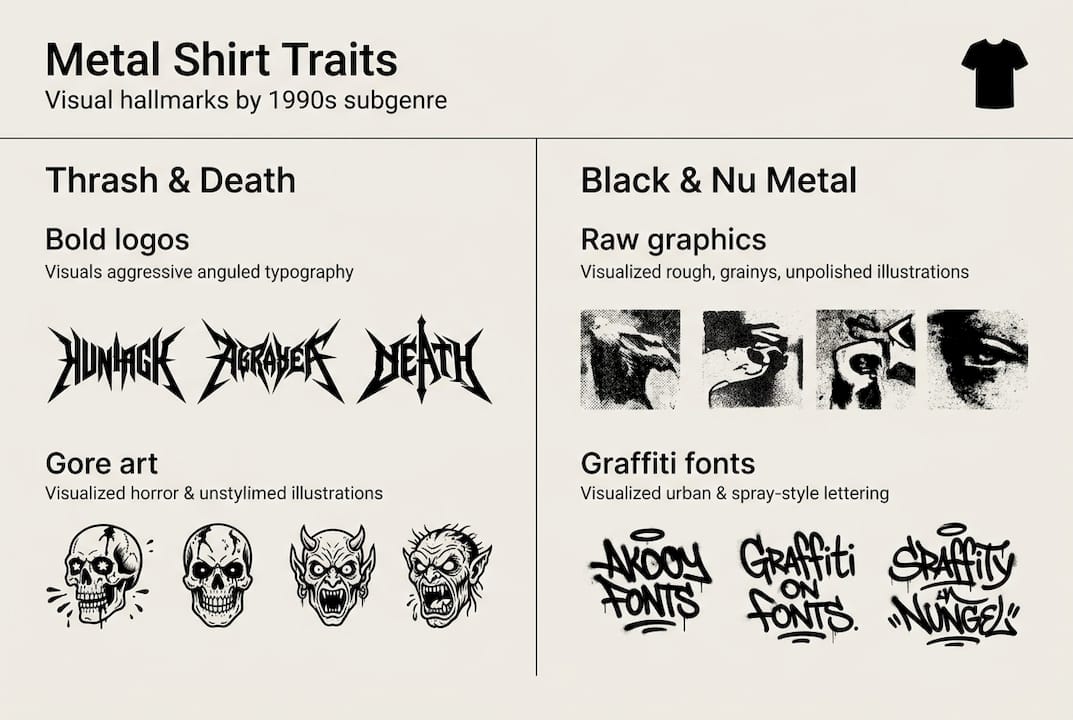
Thrash metal shirts from the 1990s typically featured bold band logos in aggressive fonts, often accompanied by tour dates and venue lists on the back. Print techniques used heavy ink laydown creating thick, tactile designs that developed characteristic cracking patterns over time. Fabric choices leaned toward heavyweight cotton, usually 6 to 6.5 ounces, providing durability for the mosh pit. Colour palettes stayed relatively straightforward with black, white, red, and occasionally yellow dominating designs. Thrash metal shirt traits emphasised readability and impact, ensuring logos remained visible even in dimly lit venues.
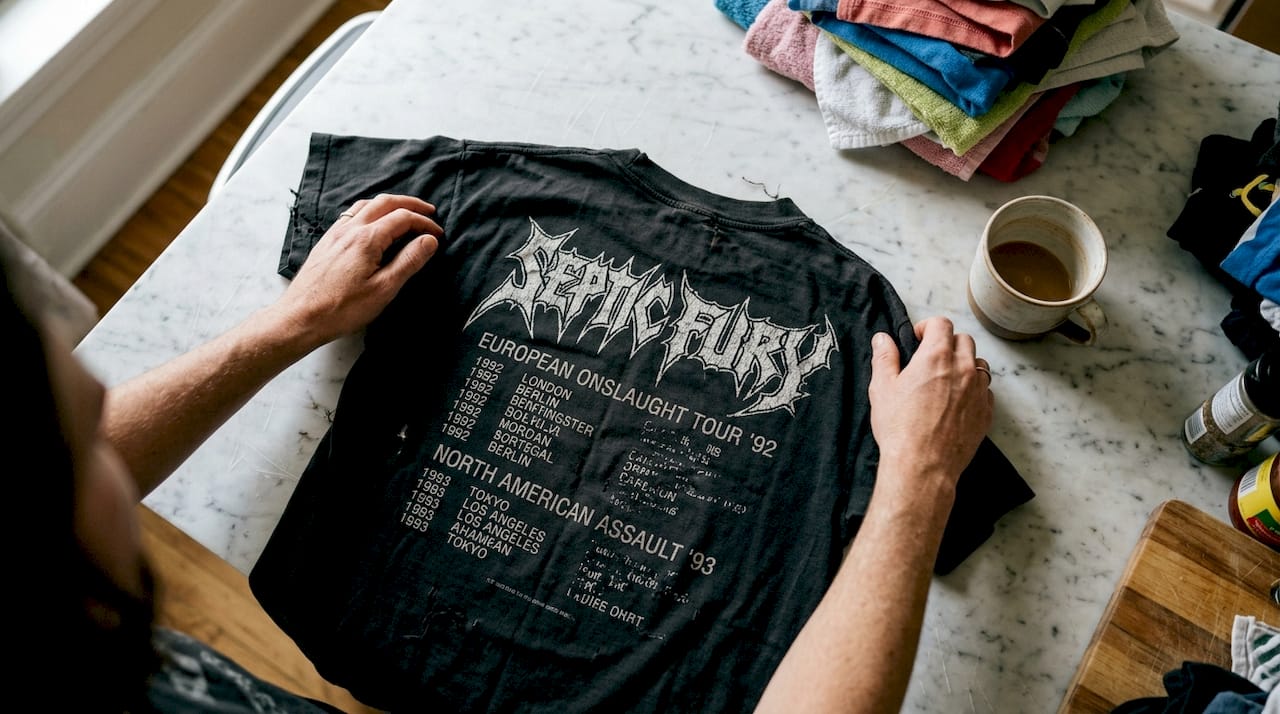
Death metal aesthetics embraced grotesque and macabre imagery, with intricate artwork depicting gore, monsters, and apocalyptic scenes. Print quality varied dramatically between official merchandise and underground bootlegs, with some featuring remarkably detailed multi-colour prints while others used simple one or two colour designs. The subgenre favoured darker colour schemes, predominantly black shirts with white, red, or green ink. Fabric weight matched thrash standards, though some European pressings used slightly lighter cotton.
Black metal shirts deliberately cultivated raw, unpolished aesthetics reflecting the subgenre’s anti-commercial stance. Designs often featured stark black and white contrasts, occult symbols, band logos in deliberately illegible fonts, and nature imagery like forests or mountains. Print quality intentionally appeared crude, with many official releases mimicking the photocopied aesthetic of underground fanzines. Bootlegs proliferated in this subgenre, and certain rare unofficial prints now command premium prices due to their historical significance in the scene’s development.
Groove metal reflected working class and Southern cultural influences through designs incorporating industrial imagery, American iconography like flags or eagles, and bold typography with attitude. Pantera shirts epitomised this style with their aggressive messaging and no-nonsense graphics. Print techniques remained heavy and durable, matching the music’s uncompromising heaviness.
Nu metal introduced urban and streetwear influences with graffiti-style fonts, baggy fits, and designs incorporating tribal patterns or abstract graphics. While these shirts represent an important era in metal’s evolution, they generally attract less collector interest compared to earlier extreme metal styles, partly due to their mainstream commercial production and departure from traditional metal aesthetics.
| Subgenre | Typical colours | Print style | Fabric weight | Design themes |
|---|---|---|---|---|
| Thrash | Black, white, red | Heavy ink, bold | 6-6.5 oz | Logos, tour dates, aggressive typography |
| Death | Black, dark colours | Detailed or raw | 6-6.5 oz | Gore, monsters, apocalyptic scenes |
| Black | Black and white | Deliberately crude | 5.5-6 oz | Occult symbols, forests, illegible logos |
| Groove | Black, grey | Heavy, industrial | 6-6.5 oz | American iconography, bold statements |
| Nu metal | Various, bright | Graffiti style | 5.5-6 oz | Tribal patterns, urban graphics |
Pro Tip: Feel the fabric and examine print texture closely. Authentic 1990s shirts have a distinctively softer hand feel from decades of wear and washing, while reproductions feel stiffer and prints lack natural ageing patterns.
Collector insights on authenticating vintage metal shirts
Authentication separates valuable vintage pieces from modern reproductions or less desirable newer prints. Collectors prioritise 90s authenticity through specific markers that require trained observation and knowledge of era-specific manufacturing details.
- Examine the tag carefully for brand names common in 1990s production including Winterland, Fruit of the Loom, Hanes Beefy-T, Anvil, and Screen Stars. Tag construction should show single-stitch sides rather than double-stitching common in modern production.
- Inspect the neck tag’s print quality and information, looking for tour dates, copyright years, and licensing details that match the band’s actual touring history from the 1990s era.
- Assess the cotton weight and texture by feeling the fabric’s thickness and softness, noting that authentic vintage pieces develop a distinctive broken-in hand feel impossible to replicate artificially.
- Study ink cracking patterns in the print, which should appear naturally distributed across stress points and high-wear areas rather than artificially distressed in uniform patterns.
- Check sizing against 1990s standards, remembering that vintage sizes typically run smaller than modern equivalents, with a vintage XL often matching a contemporary large.
- Look for colour fading that appears natural and uneven, particularly around the collar, underarms, and areas exposed to sunlight during storage or display.
Ink cracking patterns provide crucial authentication clues. Genuine vintage shirts develop cracks through decades of wearing and washing, creating organic patterns concentrated at flex points like shoulders and across the chest where fabric stretches. Artificially distressed reproductions show uniform cracking that appears too regular or extends into areas that wouldn’t naturally experience stress. Some collectors specifically seek pieces with moderate cracking as it proves authenticity while maintaining design visibility.
Condition preferences vary among collectors. Some pursue pristine unworn deadstock pieces, valuing them as time capsules preserving original print vibrancy and fabric integrity. Others appreciate worn pieces with visible patina, viewing them as authentic artefacts that participated in metal history rather than remaining sealed away. Both philosophies hold merit, and value depends on rarity, desirability, and individual collector priorities.
Black metal and death metal bootlegs present unique authentication challenges and opportunities. While official merchandise typically commands premium prices, certain rare bootleg designs from limited underground releases, particularly Scandinavian black metal shirts from the early 1990s, achieve exceptional values due to their historical significance and extreme scarcity. Distinguishing these valuable bootlegs from worthless modern counterfeits requires deep subgenre knowledge and familiarity with specific design details and printing techniques from that era.
“The craftsmanship indicators in vintage metal shirts extend beyond obvious markers like tags and stitching. Understanding print migration methods, where ink slightly bleeds into fabric fibres creating a softer edge compared to modern plastisol’s sharp definition, separates knowledgeable collectors from casual buyers. This technical knowledge transforms shirt collecting from mere nostalgia into genuine material culture appreciation.”
Pro Tip: Cross-reference tour dates printed on shirts with documented band touring schedules using online archives and metal history resources. Discrepancies often reveal reproductions or fantasy pieces that never existed as original merchandise.
Appreciating and collecting metal shirts today
Building a meaningful vintage metal shirt collection requires balancing passion with practical knowledge. Collectors balance pristine condition with worn patina, recognising that 90s designs now carry iconic status with significant historical value, especially for thrash, death, and black metal pieces.
Collector motivations vary widely across the community. Nostalgia drives many who attended concerts during the 1990s and seek to recapture those experiences through authentic merchandise. Investment-minded collectors recognise vintage metal shirts as appreciating assets, with rare pieces from significant tours or limited releases increasing in value annually. Cultural connection motivates enthusiasts who view shirts as wearable art documenting metal’s evolution and preserving subgenre histories. Understanding your primary motivation helps focus collection building and purchasing decisions.
Choosing shirts strategically enhances collection coherence and value. Consider focusing on specific subgenres that resonate personally, whether thrash’s aggressive energy, death metal’s artistic extremity, or black metal’s atmospheric darkness. Evaluate condition honestly, deciding whether pristine pieces or characterful worn examples better suit your collection philosophy. Assess rarity through research, identifying which tours, pressings, or designs appear infrequently in the marketplace. Appreciate design appeal independently from band popularity, as visually striking pieces from lesser-known acts sometimes offer better value than common designs from major bands.
Preservation extends vintage shirts’ lifespan and maintains their value. Store pieces in cool, dark environments away from direct sunlight that causes fabric degradation and colour fading. Wash sparingly using cold water and gentle cycles, turning shirts inside out to protect prints from abrasion. Avoid machine drying when possible, instead laying shirts flat or hanging to air dry, preventing heat damage to both fabric and ink. Display carefully if showcasing pieces, using UV-protective frames or rotating displayed items to minimise light exposure. Handle with clean hands to prevent oil transfer that can degrade fabric over time.
The 1990s represented a pivotal era when metal fragmented into diverse subgenres, each developing distinct visual languages that shirt designs reflected and reinforced. These pieces document not just bands and tours but entire cultural movements and aesthetic revolutions within heavy metal. Collecting vintage shirts preserves this material culture, ensuring future generations can study and appreciate how metal’s visual identity evolved alongside its sonic innovations.
Networking within collector communities provides authentication assistance, market insights, and access to pieces before they reach public marketplaces. Online forums, social media groups, and vintage clothing communities offer spaces to share knowledge, verify authenticity, and discuss valuations. Building relationships with reputable dealers and fellow collectors creates opportunities for fair trades and purchases while reducing exposure to counterfeit merchandise.
Examples of vintage band tees collectors prize demonstrate the breadth of possibilities, from common tour shirts that remain affordable entry points to ultra-rare pieces commanding thousands of dollars. Starting with accessible pieces builds knowledge and confidence before investing in premium items.
Pro Tip: Document your collection with detailed photographs and notes about provenance, purchase details, and condition observations. This creates valuable records for insurance purposes and helps track collection growth and investment performance over time.
Explore vintage metal shirts and collector treasures
Whether you’re building a serious collection or seeking that one perfect piece from your favourite 1990s era band, authentic vintage metal shirts connect you directly to metal history. Our curated selection includes rare Metallica 1992 tour tees that exemplify the heavyweight construction and bold graphics thrash collectors prize.
Explore vintage Metallica shirts spanning multiple tours and design eras, or browse our complete vintage metal collection featuring authenticated pieces across thrash, death, black, and groove metal subgenres. Each shirt carries verification of authenticity markers discussed throughout this guide, from period-correct tags to natural ageing patterns that prove genuine vintage status.
Pro Tip: Consult with experienced dealers when building serious collections, as their expertise helps avoid costly authentication mistakes and identifies undervalued pieces before market recognition drives prices upward.
Frequently asked questions about metal subgenres and shirt designs
How can I distinguish thrash metal shirts from black metal designs visually?
Thrash metal shirts feature bold, readable logos with aggressive typography and often include tour dates or venue lists, using heavy ink application on predominantly black fabric. Black metal designs deliberately cultivate crude, raw aesthetics with illegible logos, stark black and white contrasts, and occult or nature imagery reflecting the subgenre’s anti-commercial underground ethos.
What are the clearest signs of authentic 1990s vintage shirts versus modern reproductions?
Authentic vintage pieces show period-correct tags from brands like Winterland or Screen Stars, single-stitch construction, heavyweight cotton with soft broken-in hand feel, and natural ink cracking concentrated at stress points. Reproductions typically feature modern tag brands, double-stitching, stiffer fabric, and artificially uniform distressing patterns that lack organic wear characteristics.
What are the best practices for storing and preserving vintage metal shirts?
Store shirts in cool, dark environments away from direct sunlight to prevent fading and fabric degradation. Wash infrequently using cold water with shirts turned inside out, air drying flat rather than using machine heat. For valuable pieces, consider archival storage methods using acid-free tissue paper and breathable garment bags that protect against dust while allowing air circulation.
How can I identify rare bootleg shirts compared to official merchandise?
Bootlegs often lack official licensing information on tags, may feature design variations or colour combinations never released officially, and sometimes show lower print quality or different fabric weights than contemporary official merchandise. However, certain rare black metal and death metal bootlegs from early 1990s underground scenes are highly valued despite unofficial status due to historical significance and extreme scarcity.
Do 1990s metal shirts fit differently than modern band merchandise?
Vintage sizing typically runs smaller than contemporary standards, with 1990s extra-large often matching modern large dimensions. Vintage shirts also feature shorter body lengths and narrower cuts reflecting era-specific fashion preferences. Always check specific measurements rather than relying solely on size labels when purchasing vintage pieces online.
Why do some collectors prefer worn vintage shirts over pristine condition pieces?
Worn shirts with visible patina represent authentic participation in metal culture rather than preserved museum pieces, carrying stories and character that pristine examples lack. Natural fading, ink cracking, and fabric softening prove genuine vintage status while creating unique aesthetic qualities impossible to replicate artificially, appealing to collectors who value authenticity and history over mint condition.
Recommended


