



Collectors face unprecedented difficulty distinguishing authentic 1990s heavy metal shirts from counterfeits as demand surges in 2026. This guide delivers expert authentication criteria, condition grading insights, and market intelligence to help you confidently identify valuable vintage shirts. You’ll master the selection process, understand current pricing dynamics, and recognise the most collectible pieces driving today’s market.
Table of Contents
- Selection Criteria For Vintage Heavy Metal Shirts In 2026
- How To Identify Authentic Vintage Heavy Metal Shirts
- Profiles Of Trending Vintage Metal Shirts In 2026
- Comparison Of Vintage Shirt Fabrics And Condition
- Market Pricing And Availability In 2026
- Styling And Collector Use-Cases For Vintage Heavy Metal Shirts
- Summary Comparison And Situational Recommendations
- Find Your Perfect Vintage Heavy Metal Shirt Today
- Frequently Asked Questions
Key takeaways
| Point | Details |
|---|---|
| Authentication matters | Provenance and original tags directly impact collector trust and market value |
| Condition drives pricing | Mint condition shirts command prices four times higher than poor condition pieces |
| Fabric determines longevity | 100% cotton shirts dominate collectible markets for durability and authentic feel |
| Rarity fuels demand | Limited edition tour and festival shirts from iconic 1990s bands lead current trends |
| Market access varies | Auction houses, vintage stores, and curated online shops offer different pricing and authenticity guarantees |
Selection criteria for vintage heavy metal shirts in 2026
Choosing vintage heavy metal shirts requires evaluating multiple factors that determine both current value and long-term investment potential. Condition grading and provenance significantly influence vintage shirt value, making authentication your first priority when examining any piece.
Authenticity verification separates genuine collectors’ items from reproductions flooding markets. Original band licensing, documented provenance, and era-appropriate tags provide crucial evidence. Many enthusiasts discover that shirts lacking proper authentication lose 60% of their potential value regardless of visual appeal.
Condition grading follows a standardised hierarchy: mint, excellent, good, fair, and poor. Mint condition pieces show no visible wear, maintain vibrant colours, and preserve original tags. Excellent shirts display minimal fading with intact graphics. Fair and poor categories include visible damage, significant fading, or structural issues like holes and seam separation.
Fabric composition directly affects both durability and collector desirability. Authentic 1990s shirts predominantly use 100% cotton for superior breathability and print retention. Synthetic blends typically indicate later reproductions or lower-tier merchandise not issued during original tours.
Rarity calculations consider band popularity, tour size, and surviving pieces. A heavy metal shirts buying checklist 7 steps approach helps systematically evaluate scarcity. Limited regional releases, cancelled tour dates, and festival-exclusive designs command premium pricing due to restricted original distribution.
Market availability shapes acquisition strategy and pricing expectations:
- Auction platforms offer authenticated pieces with bidding competition driving final prices
- Established vintage retailers provide curated selections with fixed pricing and return policies
- Online marketplaces present varied authenticity levels requiring careful verification
- Direct collector sales sometimes yield undiscovered gems at negotiable prices
- Estate sales occasionally surface rare pieces without proper market valuation
Pro Tip: Cross-reference multiple authentication markers simultaneously rather than relying on single indicators, as sophisticated counterfeits increasingly replicate individual characteristics whilst failing comprehensive multi-point verification. Understanding why vintage shirts collectible helps frame your evaluation criteria around factors that genuinely drive long-term value. Vintage Metallica shirts Australia collections exemplify how geographic market demand influences local availability and pricing structures.
How to identify authentic vintage heavy metal shirts
Authentication demands systematic verification across multiple physical characteristics that counterfeiters struggle to replicate simultaneously. Start by examining original band licensing marks, typically appearing on tags as copyright symbols, tour dates, and official merchandise designations. Genuine 1990s pieces display specific tag styles and printing methods characteristic of era manufacturing standards.
Fabric analysis reveals manufacturing period through weave density, hand feel, and fibre composition. Authentic period cotton exhibits distinct texture compared to modern reproductions using different spinning and weaving technologies. Thread count and fabric weight provide quantifiable measurements that align with documented 1990s production specifications.
Aging patterns separate naturally worn vintage pieces from artificially distressed reproductions. Genuine wear appears in high-stress areas: collar bands, underarm seams, and lower hem edges. Colour fading follows predictable patterns based on washing frequency and sun exposure, creating subtle gradients rather than uniform bleaching.
Provenance documentation transforms authentication from subjective assessment to verified fact. Purchase receipts, concert tickets, tour programmes, and photographic evidence establish ownership history. Collectors increasingly demand this supporting material for high-value transactions, with documented pieces fetching 30-45% premiums over undocumented equivalents.
Graphic detail comparison requires reference materials showing authentic print characteristics:
- Compare font styles against verified tour posters and official merchandise catalogues
- Examine print method: screen printing versus modern digital transfers
- Check colour separation quality and registration accuracy
- Verify graphic placement consistency with documented original positioning
- Assess print adhesion and cracking patterns consistent with age
- Inspect tag attachment methods and stitching patterns
- Cross-reference multiple authentication databases and collector resources
Pro Tip: Photograph suspect shirts under strong directional lighting to reveal print layer depth and screen printing texture that digital reproductions cannot replicate, then compare these macro details against verified authentic examples from established collections. Learning to find rare 1990s metal shirts expert tips accelerates your authentication skills through exposure to documented genuine pieces. The comprehensive heavy metal shirts buying checklist 7 steps provides structured authentication workflow preventing costly authentication mistakes.
Profiles of trending vintage metal shirts in 2026
Specific shirts dominate collector interest and market activity in 2026, driven by nostalgia, rarity, and cultural significance. Metallica tour shirts from the 1991-1993 Black Album era lead demand across all markets. These pieces captured the band’s commercial peak whilst maintaining underground credibility, creating broad collector appeal spanning demographics.
Iron Maiden tour shirts from the 1988 Seventh Son and 1990 No Prayer tours represent another collecting pinnacle. Limited production runs and Eddie artwork variations make authenticated pieces increasingly scarce. Geographic distribution patterns mean certain tour dates produced only hundreds of shirts now sought by thousands of collectors.
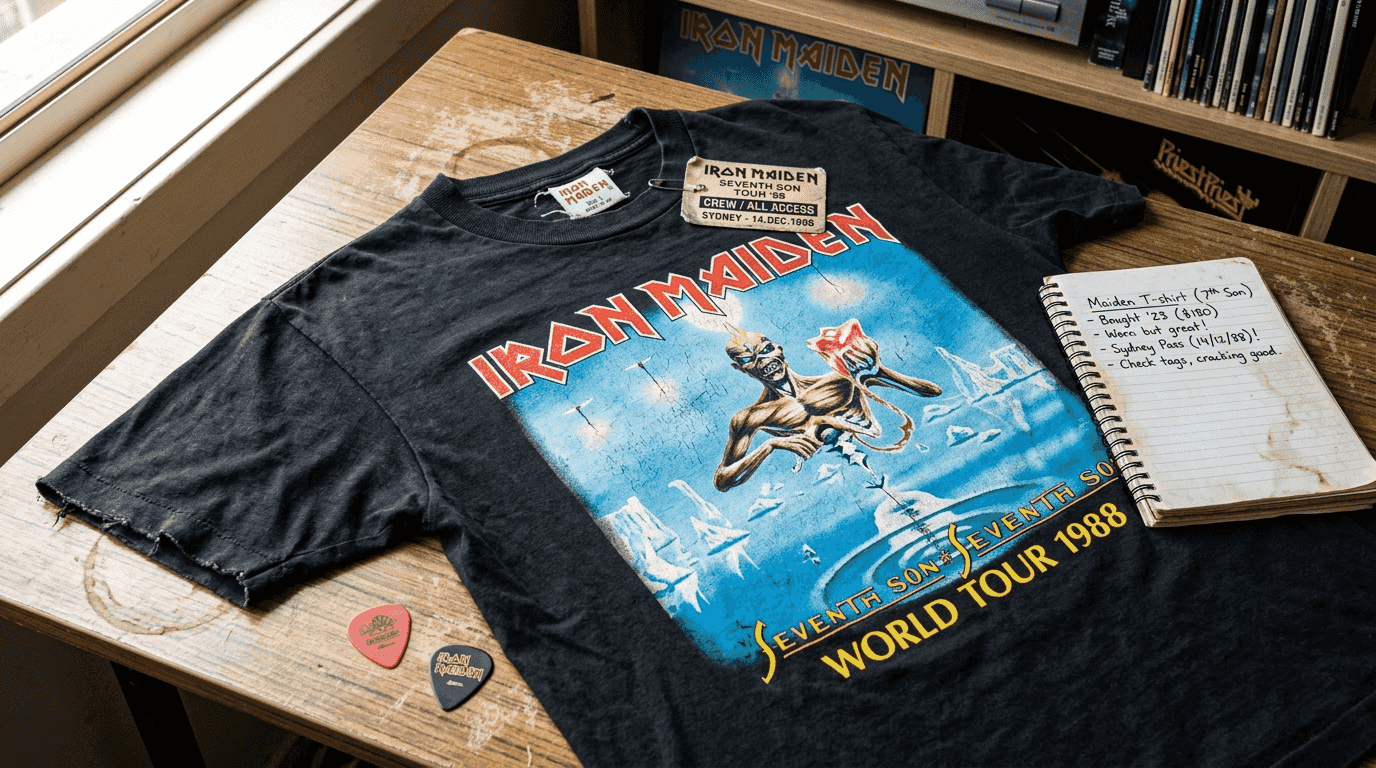
Deadstock ex-tour stock commands extraordinary premiums due to pristine condition and verified authenticity. These unworn pieces, stored since original tour dates, preserve graphics, colours, and tags in museum-quality condition. Collectors view deadstock as investment-grade assets appreciating 12-18% annually over the past decade.
Limited edition festival shirts document cultural moments impossible to replicate:
- Monsters of Rock 1991 Donington featuring Metallica, Motley Crue, and Queensryche
- Ozzfest inaugural 1996 tour launching modern festival format
- Regional festivals like Australia’s Big Day Out metal stages creating localised scarcity
- Cancelled or rescheduled tour dates producing extremely limited merchandise runs
- Band-specific festival appearances marking lineup or era transitions
Geographic demand patterns show Australian collectors particularly active pursuing domestic tour shirts and regional festival pieces with local cultural resonance. North American collectors dominate stadium tour memorabilia markets. European collectors specialise in obscure Eastern European tour dates producing minimal surviving merchandise.
Younger collectors entering markets drive contemporary streetwear crossover trends. These buyers value vintage shirts as fashion statements beyond pure memorabilia, creating demand for visually striking designs regardless of personal musical connection. This demographic shift expands market depth whilst introducing new valuation criteria emphasising aesthetic appeal over strict historical significance. Collect rare 1990s heavy metal tees guide explores investment strategies matching different collector motivations. Discovering rare 1990s heavy metal shirt examples provides reference points for evaluating potential acquisitions.
Comparison of vintage shirt fabrics and condition
Fabric composition fundamentally determines shirt longevity, collector appeal, and market value. 85% of top-priced vintage metal shirts are 100% cotton for durability and authenticity, reflecting period manufacturing standards and superior ageing characteristics. Cotton’s breathability, print retention, and natural wear patterns make it the gold standard for serious collectors.
Synthetic blend shirts from the 1990s typically contained polyester cotton mixes introduced for cost reduction and wrinkle resistance. These fabrics age poorly, displaying accelerated fading, pilling, and print degradation. Collectors discount synthetic blends by 40-50% compared to pure cotton equivalents in similar condition.
Condition grading creates dramatic value differentials within identical shirt models. Condition grading impacts vintage shirt values by up to 70%, with mint condition shirts fetching quadruple prices of poor condition pieces. Understanding these gradations helps buyers target appropriate condition tiers matching budget and intended use.
| Condition Grade | Characteristics | Typical Price Multiple | Collector Appeal |
|---|---|---|---|
| Mint | No wear, original tags, perfect graphics | 4.0x base | Investment grade, display quality |
| Excellent | Minimal wear, intact graphics, slight fading | 2.5x base | Strong collector demand, wearable |
| Good | Moderate wear, visible fading, graphics intact | 1.5x base | Affordable collector pieces |
| Fair | Heavy wear, significant fading, minor damage | 1.0x base | Budget options, restoration candidates |
| Poor | Major damage, holes, severe fading | 0.4x base | Parts donors, extreme budget only |
Printed design styles affect longevity through production method and ink chemistry. Screen-printed designs using plastisol inks demonstrate superior durability compared to water-based alternatives. Multi-colour designs requiring precise registration show quality differences between professional tour merchandise and bootleg reproductions.
Maintenance and storage practices dramatically extend vintage shirt lifespan. Proper care includes cold water washing, air drying away from direct sunlight, and acid-free storage materials. Collectors serious about preservation use archival boxes with pH-neutral tissue paper, maintaining stable temperature and humidity conditions.
Pro Tip: Purchase condition-appropriate pieces matching your intentions: invest in mint or excellent grades for appreciation potential, but consider good or fair grades for regular wear where minor imperfections won’t compromise your enjoyment or fashion statement. Understanding why vintage shirts collectible helps contextualise how condition and fabric interact to create market value beyond simple age or band popularity.
Market pricing and availability in 2026
Current auction results establish pricing benchmarks reflecting authentication confidence, condition grading, and market demand intensity. Mint condition authenticated shirts from major 1990s Metallica or Iron Maiden tours command $600 to $1200 at established auction houses. Regional variations, specific tour dates, and graphic designs create pricing spreads within this range.
Deadstock ex-tour stock achieves approximately 35% premium over excellent condition worn pieces. Buyers pay this premium for guaranteed authenticity, pristine condition, and investment-grade quality. Institutional collectors and museums increasingly compete for deadstock pieces, supporting sustained price appreciation.
Limited edition festival shirts demonstrate remarkable long-term appreciation, often gaining 50% or more over 25-year holding periods. Monsters of Rock 1991 Donington shirts purchased for $25 in period now trade between $800 and $1400 depending on condition and band lineup featured. This appreciation outpaces general vintage clothing markets, reflecting heavy metal culture’s sustained popularity and expanding collector base.
Sales channel selection significantly impacts pricing, authenticity assurance, and buyer experience:
- Established auction houses provide authentication services, buyer protections, and competitive bidding environments driving market-rate pricing
- Specialist vintage retailers offer curated selections, fixed pricing, and return policies but typically charge 20-30% premiums over auction equivalents
- Online marketplaces present widest selection and potential bargains but require buyer authentication expertise and carry higher counterfeit risk
- Direct collector sales through forums and groups offer negotiation opportunities and relationship building but lack institutional buyer protections
- Estate sales occasionally yield undervalued pieces from non-specialist sellers unfamiliar with current market conditions
| Sales Channel | Typical Pricing | Authentication | Buyer Protection | Selection Depth |
|---|---|---|---|---|
| Auction Houses | Market rate | Professional | Strong | Curated |
| Vintage Retailers | Premium +25% | Merchant verified | Moderate | Selective |
| Online Marketplaces | Variable | Buyer responsibility | Minimal | Extensive |
| Collector Direct | Negotiable | Community reputation | None | Specialised |
| Estate Sales | Below market | None | None | Random |
Emerging markets in Australia and Asia show accelerating demand growth outpacing North American and European markets. Australian collectors particularly pursue domestic tour memorabilia and regional festival shirts with local cultural significance. This geographic demand variation creates arbitrage opportunities for informed buyers monitoring multiple markets. Vintage Metallica shirts Australia demonstrates localised market dynamics within global collecting trends. Exploring heavymetalmerchant com alternatives helps identify reliable purchasing channels matching your authentication confidence and budget parameters. Browse all vintage heavy metal shirts to understand current market inventory and pricing across condition grades and band selections.
Styling and collector use-cases for vintage heavy metal shirts
Vintage heavy metal shirts transcend pure memorabilia, functioning as fashion statements bridging subcultural authenticity and contemporary streetwear trends. Younger demographics particularly embrace vintage metal aesthetics, valuing graphic boldness and countercultural associations over direct musical connections. This crossover appeal expands market demand whilst introducing styling considerations beyond traditional collector frameworks.
Collectors face ongoing tension between wearing shirts for personal enjoyment and preserving condition for value retention. Mint and excellent condition pieces worn regularly inevitably degrade to good or fair grades through normal use. Strategic collectors maintain separate wearing and investment collections, enjoying less pristine pieces whilst preserving top-tier items.
Display strategies allow collectors to showcase prized pieces without wear-related degradation:
- Professional framing with UV-protective glass prevents fading whilst enabling wall display
- Rotating display cases protect shirts whilst allowing periodic exhibition rotation
- Archival storage boxes with acid-free materials preserve long-term condition for non-displayed pieces
- Climate-controlled storage maintains stable temperature and humidity preventing fabric degradation
- Digital documentation through high-resolution photography creates shareable records without physical handling
Long-term investment considerations guide care decisions and acquisition strategies. Shirts maintained in mint or excellent condition appreciate more reliably than worn pieces. However, fair and good condition shirts from exceptionally rare tours or cancelled dates may appreciate despite imperfections due to underlying scarcity. Investment-focused collectors prioritise authentication documentation, proper storage, and market timing over immediate personal enjoyment.
Contemporary fashion integration blends vintage shirts into modern wardrobes through layering, accessorising, and style mixing. Pairing vintage metal shirts with tailored trousers creates high-low contrast. Layering under blazers or leather jackets adds edge to professional casual looks. Distressed denim and boots complement vintage aesthetics whilst grounding outfits in approachable rather than costume territory.
Pro Tip: Photograph your vintage shirts professionally before first wear, documenting pristine condition for future authentication or resale purposes, then enjoy wearing them without anxiety knowing you’ve preserved condition evidence supporting residual value regardless of subsequent wear patterns. Learning to collect rare 1990s heavy metal tees guide provides frameworks for balancing personal enjoyment against investment considerations based on your primary collecting motivations.
Summary comparison and situational recommendations
Synthesising selection criteria, authentication methods, and market intelligence enables targeted recommendations matching diverse collector profiles and intended uses. Different shirt categories serve distinct purposes within collecting strategies, demanding tailored evaluation frameworks and acquisition approaches.
| Shirt Type | Condition Range | Price Range | Best For | Key Consideration |
|---|---|---|---|---|
| Mint Cotton Tour Shirts | Mint to Excellent | $800-$1200 | Long-term investment, museum display | Highest appreciation potential, requires careful preservation |
| Deadstock Ex-Tour Stock | Mint | $900-$1400 | Premium collectors, institutional buyers | Ultimate authenticity, 35% premium justified by condition guarantee |
| Limited Festival Editions | Excellent to Good | $700-$1100 | Rarity-focused collectors, cultural historians | Scarcity drives value, provenance documentation critical |
| Worn Provenance Pieces | Good to Fair | $300-$600 | Fashion wearers, budget collectors | Affordable entry, stories and history add intangible value |
| Synthetic Blend Shirts | Any | $150-$350 | Casual wearers, non-investment buyers | Significantly lower collector value, acceptable for personal use |
Investment-focused collectors should prioritise mint condition 100% cotton shirts from iconic 1990s tours with comprehensive authentication documentation. Target deadstock ex-tour stock when available, accepting premium pricing for guaranteed condition and provenance. Focus acquisition efforts on Metallica, Iron Maiden, and limited festival editions demonstrating consistent appreciation. Plan for 5-10 year holding periods maximising compound appreciation whilst monitoring market trends for optimal exit timing.
Fashion-oriented wearers benefit from good to fair condition vintage shirts with provenance, balancing authenticity and affordability whilst accepting condition compromises inevitable with regular use. These pieces offer genuine vintage aesthetics and cultural cachet at accessible price points. Prioritise visually striking graphics and fits complementing contemporary wardrobes over strict investment-grade specifications.
Festival memorabilia specialists should target limited edition shirts from specific events documenting cultural moments beyond individual band significance. Monsters of Rock, Ozzfest, and regional festival shirts from discontinued events offer scarcity and historical significance. Accept varied condition grades when event rarity justifies premium pricing despite imperfections. Build collections documenting festival history chronologically or geographically for coherent thematic narratives.
Budget-conscious collectors can build meaningful collections through strategic patience, targeting undervalued pieces from estate sales and non-specialist sellers. Develop authentication expertise enabling confident purchases where others lack verification capability. Focus on overlooked bands or tours with cult followings rather than competing for mainstream pieces. Consider restoration candidates in poor condition offering improvement potential through professional conservation services. Exploring how to collect rare 1990s metal tees guide provides strategic frameworks applicable across budget levels and collecting motivations.
Find your perfect vintage heavy metal shirt today
Ready to add authenticated vintage heavy metal shirts to your collection? Vintage Metal Store curates rare 1990s pieces meeting the authentication standards and condition criteria detailed throughout this guide. Every shirt undergoes rigorous verification ensuring you receive genuine vintage merchandise worthy of your investment and passion.
Explore our carefully selected inventory featuring iconic bands and tours driving 2026 collector demand. From pristine deadstock ex-tour pieces to characterful worn shirts with documented provenance, we offer options matching diverse collecting strategies and budgets. Our curation process applies the expert insights you’ve learned, saving you authentication time and counterfeit risk.
Discover exceptional pieces like this rare Metallica 1992 tour tee documenting a pivotal touring era. Browse our complete vintage Metallica shirts Australia collection or explore vintage Iron Maiden shirts Australia selections. Each piece represents authenticated vintage quality aligned with current market trends and collector preferences. Start building your curated collection with confidence today.
Frequently asked questions
Are all vintage heavy metal shirts valuable collectors’ items?
Value depends heavily on authenticity, condition, rarity, and documented provenance rather than age alone. Common shirts without verification may hold more sentimental than financial worth. Shirts from obscure bands or unlimited production runs typically achieve modest pricing regardless of condition, whilst rare tour pieces or limited festival editions command premium valuations.
How can I avoid counterfeit vintage heavy metal shirts?
Examine original tags, fabric composition, and print quality against documented authentic examples. Seek provenance documentation whenever possible and consider professional authentication services for high-value purchases. Cross-reference multiple physical characteristics simultaneously, as sophisticated counterfeits may replicate individual markers whilst failing comprehensive verification. Purchase from established vintage retailers or auction houses offering authentication guarantees when buying premium pieces.
Where are the best places to buy authentic vintage heavy metal shirts?
Reputable auction houses, established vintage clothing retailers, and curated online specialist shops provide the most reliable authentication and buyer protections. Avoid marketplace sellers lacking verifiable track records, authentication expertise, or return policies. Direct collector sales through vetted forums offer opportunities but require personal authentication skills. Estate sales occasionally yield discoveries but carry higher authentication risk requiring buyer expertise.
What fabric types are preferred for vintage heavy metal shirts?
Collectors strongly prefer 100% cotton shirts for superior durability, authentic period feel, and better ageing characteristics. Cotton pieces demonstrate superior colour retention and natural wear patterns compared to synthetic blends. Polyester-cotton blends age poorly with accelerated fading and pilling, typically discounted 40-50% versus pure cotton equivalents. Original 1990s tour merchandise predominantly used 100% cotton, making fabric composition a key authentication marker.
Recommended


