



Not every vintage heavy metal tee from the 1990s is a goldmine. Many collectors mistakenly believe any old band shirt will appreciate in value, but fewer than 30% actually do. This guide equips you with expert knowledge to identify genuinely rare 1990s heavy metal tour tees, verify their authenticity, understand their market value, and preserve them properly so you can build a collection worth showcasing.
Table of Contents
- Key Authenticity Markers For 1990s Heavy Metal Tees
- Valuation Criteria And Market Trends
- Band And Tour-Specific Rarity Factors
- Common Misconceptions About Collecting Vintage Heavy Metal Tees
- Preservation Methods To Maintain Collector Value
- Practical Buying Advice And Trusted Sources
- Discover Rare Vintage Metal Tees At Vintage Metal Store
Key takeaways
| Point | Details |
|---|---|
| Authentication markers | Genuine 1990s tees feature single-stitch seams, vintage fabric tags, and naturally aged prints with characteristic cracking. |
| Value drivers | Rarity, pristine condition, documented provenance, and strong collector demand determine market price and appreciation potential. |
| Common pitfalls | Over 70% of vintage band tees never appreciate significantly, and restoration typically reduces rather than increases value. |
| Preservation essentials | Store folded with acid-free tissue away from sunlight and limit washing to extend longevity by over 50%. |
| Buying safely | Purchase from specialised vintage stores with provenance documentation rather than generic marketplaces prone to counterfeits. |
Introduction to rare 1990s heavy metal tour tees
Rare 1990s heavy metal tour tees represent a specific category of collectible garments produced during official concert tours by iconic bands throughout that decade. These shirts hold cultural significance because they capture a pivotal era when heavy metal reached mainstream audiences whilst maintaining underground credibility. Collectors value them for nostalgia, their connection to legendary live performances, and their tangible link to music history.
Authentic 1990s production typically involved single-stitch construction and vintage fabric tags, distinguishing them from modern reproductions. Screen-printed graphics dominated, often featuring bold tour dates, band logos, and artwork specific to album cycles. The fabrics were heavier cotton blends that have aged distinctively over three decades.
Key design characteristics from that period include:
- Full tour date listings printed on the back
- Oversized graphics covering much of the front
- Brighter ink colours that have faded uniquely over time
- Thicker fabric construction compared to contemporary tees
- Tour-specific artwork commissioned for individual legs
These production traits create a blueprint for identifying genuine pieces. The cultural nostalgia surrounding 1990s metal fuels sustained collector interest, as fans who attended those tours now have purchasing power to acquire memorabilia from their youth. Browse rare vintage heavy metal concert shirts to see authenticated examples that showcase these defining characteristics.
Key authenticity markers for 1990s heavy metal tees
Distinguishing genuine vintage 1990s heavy metal tees from reproductions requires examining specific physical markers that reveal age and production methods.
Vintage fabric tags provide another critical authentication tool. Pre-1995 tags often display different fonts, sizing information formats, and care instruction symbols compared to modern labels. Many authentic tees feature tags from defunct manufacturers or show natural yellowing and fraying consistent with three decades of age.
Print characteristics reveal authenticity through natural ageing patterns. Genuine vintage screen prints develop distinctive cracking in the ink, particularly in high-flex areas like the chest. This cracking occurs as plastisol ink hardens and loses flexibility over decades, creating a web-like pattern that counterfeiters struggle to replicate convincingly.
Examine these specific markers:
- Sleeve and hem stitching type and thread colour
- Tag manufacturer, font style, and paper quality
- Print ink texture, thickness, and cracking patterns
- Fabric weight, texture, and natural wear consistency
- Sizing proportions matching 1990s cutting standards
Pro tip: Always compare seller photos to verified authentic examples from trusted collections before purchasing, focusing on stitching close-ups and tag details that are hardest to fake.
Consult the heavy metal shirts buying checklist 7 steps for a comprehensive verification process. Understanding what makes a shirt vintage provides broader context, whilst identifying dead stock heavy metal shirts guide helps differentiate unworn vintage from used pieces.
Valuation criteria and market trends
Collector value for 1990s heavy metal tees stems from multiple intersecting factors that determine market price and appreciation potential. Condition represents the primary valuation driver, with collectors using grading scales from mint to poor based on fabric integrity, print clarity, and overall wearability. Minor fading or slight cracking may be acceptable, but holes, severe staining, or print loss dramatically reduce value.
Rarity amplifies desirability and price. Limited production runs, tees from shorter tour legs, or shirts featuring full tour dates command premiums over mass-produced merchandise. Regional variations, such as European tour-specific designs, often prove rarer in Australian markets, increasing their local collectability.
The value appreciation of vintage heavy metal tees from the 1990s has seen an average annual increase of 15-20% over the last decade, driven by nostalgia and rarity. This consistent appreciation outpaces many traditional collectibles, though individual pieces vary widely based on band popularity and supply.
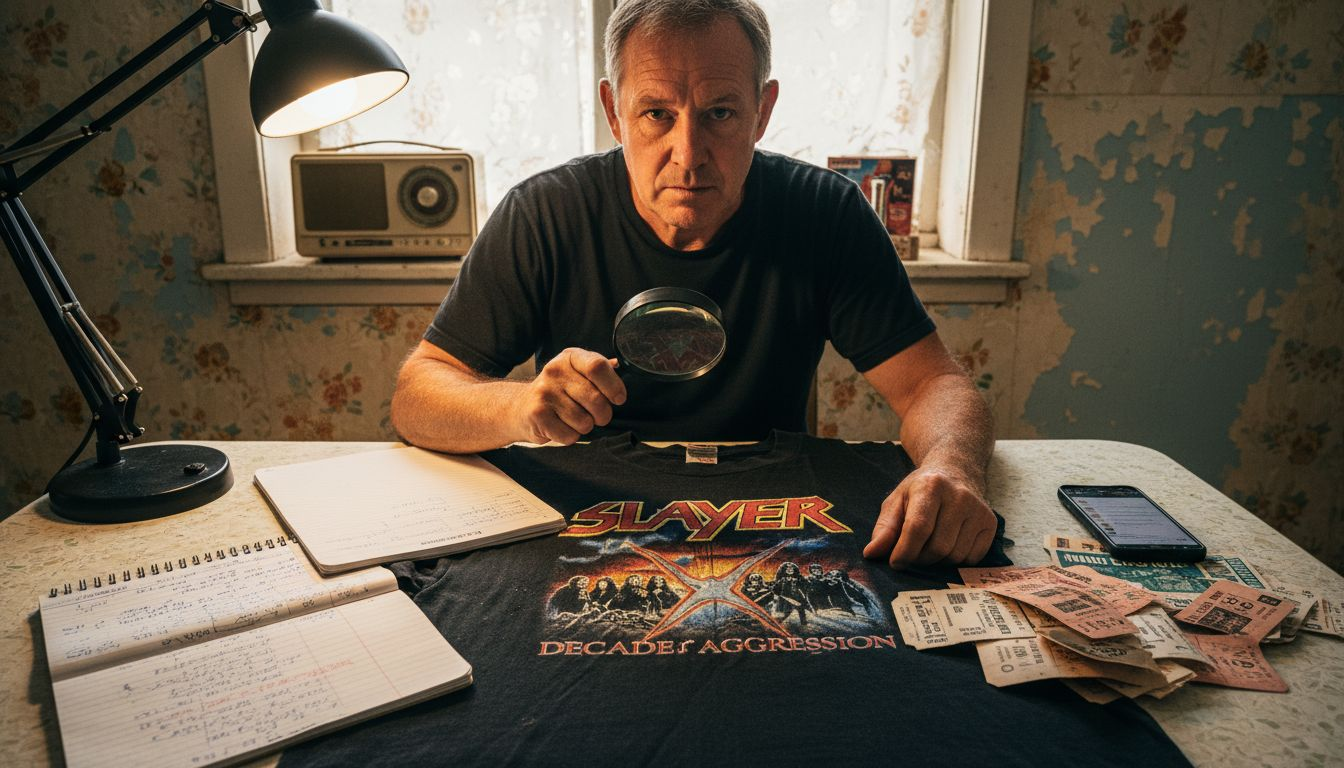
Provenance and documentation significantly influence value by providing authenticity assurance and historical context. Tees with concert tickets, tour programmes, or photographs documenting their original purchase fetch higher prices. Tees with worn but original graphics are generally more valuable than those that have been restored or excessively cleaned, preserving original artefact qualities.
Key valuation considerations include:
- Fabric condition and structural integrity without repairs
- Print clarity, colour retention, and acceptable ageing patterns
- Tag presence, readability, and originality
- Rarity factors including tour leg, production numbers, and regional distribution
- Band significance and sustained collector demand
- Documented provenance and historical context
Collectors increasingly favour pieces with character and authentic wear over pristine examples that may be reproductions, valuing the tangible connection to actual tour attendance.
Review find rare 1990s heavy metal shirt examples expert tips for targeted collecting strategies. Understanding why collect graphic shirts provides broader investment context beyond pure nostalgia.
Band and tour-specific rarity factors
Certain bands and their 1990s tours produce significantly more collectible heavy metal tees based on cultural impact, production scarcity, and sustained fan demand. Metallica’s early 1990s tours, particularly the Black Album cycle, generated highly sought tees that now command premium prices. Iron Maiden’s extensive touring produced numerous designs, but specific legs like their South American runs remain exceptionally rare in Australian markets.
Slayer’s 1990s output appeals to collectors seeking aggressive artwork and limited production runs from smaller venue tours. Pantera tees from their peak popularity years combine rarity with iconic imagery that resonates with collectors. Less mainstream bands like Death, Morbid Angel, or Emperor produced fewer official tour tees, making authenticated examples extraordinarily valuable despite smaller collector bases.
Full tour date prints significantly increase value compared to generic band logo tees. Shirts listing every city and venue provide historical documentation and were typically sold only during specific tour segments, limiting their production numbers. These detailed prints also prove harder to counterfeit convincingly due to the research required to replicate accurate date sequences.
| Band | Rarity factors | Typical characteristics | Collector demand |
|---|---|---|---|
| Metallica | High production but specific tours rare | Bold graphics, full tour dates, varied artwork | Extremely high |
| Iron Maiden | Extensive tours, regional variations | Eddie mascot artwork, colourful designs | Very high |
| Slayer | Smaller runs, aggressive imagery | Dark themes, limited colour palettes | High |
| Pantera | Peak era scarcity, iconic logos | Bold fonts, Southern imagery | High |
| Death/Emperor | Very limited official merchandise | Underground aesthetic, rare prints | Moderate but premium prices |
Regional tour variations create additional rarity layers. European or Japanese exclusive designs rarely surface in Australian collections, commanding premiums when they do. Festival-specific tees from events like Monsters of Rock or Dynamo Open Air also represent limited production opportunities that increase collectability.
Common misconceptions about collecting vintage heavy metal tees
Many collectors enter the vintage heavy metal tee market with unrealistic expectations that lead to poor purchasing decisions and financial disappointment. The most pervasive misconception assumes all vintage band tees automatically appreciate in value over time. Not all vintage band tees increase in value; over 70% do not appreciate significantly in market price, with only the rarest pieces from the most influential bands showing consistent returns.
Print cracking often confuses new collectors who mistake it for damage requiring restoration. Print cracking often signals authentic ageing rather than damage, as 77% of genuine vintage screen-printed tees show this naturally. This characteristic cracking actually verifies age and authenticity, making it desirable rather than problematic.
Another misconception involves assuming any tee featuring tour dates is authentic and valuable. Counterfeiters routinely reproduce popular designs with fake tour information, sometimes inventing dates or combining elements from multiple tours. Authentication requires examining construction details, not just printed content.
Restoration misconceptions prove particularly costly. Many collectors believe professionally cleaning, repairing, or re-printing faded tees will increase value. The opposite typically occurs, as collectors prize original condition even with flaws over restored pieces that lose historical integrity and authenticity markers.
Key misconceptions to avoid:
- Assuming age alone determines value without considering rarity and demand
- Believing all tees from famous bands will appreciate substantially
- Thinking modern reissues or reproductions will gain collector value
- Expecting pristine condition in genuinely old tees without suspicion
- Assuming online marketplace listings accurately represent authenticity
Explore rare vintage metal shirts from verified dealers to calibrate expectations with actual market offerings. Understanding these misconceptions prevents overpaying for common pieces or damaging valuable tees through misguided restoration attempts.
Preservation methods to maintain collector value
Proper preservation directly impacts the long-term value and wearability of rare 1990s heavy metal tees. Proper preservation techniques such as storing tees folded in acid-free tissue and avoiding sunlight can extend fabric and print longevity by over 50%, protecting your investment whilst maintaining display quality.
Sunlight exposure causes irreversible colour fading and fabric weakening. Store tees in dark, climate-controlled environments away from windows and direct lighting. Temperature fluctuations and humidity accelerate deterioration, so maintain consistent conditions between 15-20°C with relative humidity around 40-50%.
Washing frequency should be minimised to prevent print degradation and fabric stress. When washing becomes necessary, turn tees inside out and use cold water with gentle, pH-neutral detergents. Avoid fabric softeners that can break down vintage inks. Air dry flat rather than using machines that stress seams and prints.
Storage method matters significantly:
- Fold tees with acid-free tissue paper between layers to prevent print transfer
- Store flat in archival boxes rather than hanging, which stretches fabric
- Avoid plastic bags or containers that trap moisture and promote mildew
- Keep away from wooden drawers containing acids that migrate to fabric
- Rotate stored positions periodically to prevent permanent creasing
Pro tip: Keep original labels intact when possible, as removing or replacing tags diminishes authenticity verification and reduces collector value substantially.
Minor damage requires careful consideration before repair. Small holes can be stabilised with fabric adhesive from behind, but avoid visible patching. Loose threads should be secured rather than cut. Never attempt to re-print faded graphics or restore colour, as these alterations permanently harm collector value even when professionally executed.
Consult how to store vintage metal t shirts for detailed archival techniques. Learning how to style art shirts helps balance occasional wear with preservation priorities.
Practical buying advice and trusted sources
Navigating the vintage heavy metal tee market requires strategic sourcing to avoid counterfeits whilst identifying genuine value opportunities. Specialised vintage stores offer the safest purchasing environment because they stake their reputation on authentication and typically provide return policies for misrepresented items. These dealers understand specific authentication markers and price items according to actual rarity rather than speculation.
Request detailed photographs showing all authentication points before purchasing. Quality sellers provide close-ups of tags, stitching, print texture, and any flaws without prompting. Be wary of listings with only distant photos or stock images that might disguise reproduction details or condition issues.
Generic online marketplaces present significant counterfeit risks despite lower prices. Without specialist knowledge, sellers often misidentify reproductions as authentic vintage or fail to disclose critical condition problems. The absence of return protections on person-to-person platforms amplifies financial risk.
Trusted sourcing strategies include:
- Buying from specialised vintage stores with authentication expertise and clear return policies
- Requesting provenance documentation like concert tickets or purchase receipts when available
- Examining seller history, reviews, and authentication knowledge through communication
- Comparing prices across multiple sources to identify suspiciously low offerings
- Using secure payment methods offering buyer protection for high-value purchases
Browse vintage Metallica shirts Australia from authenticated collections to understand proper pricing and condition standards. Research heavymetalmerchant.com alternatives 2026 to identify multiple reputable dealers for comparison shopping.
Building relationships with trusted dealers provides early access to new acquisitions and expert consultation on collection development. Many specialists offer authentication services for pieces you’re considering from other sources, providing valuable second opinions before significant investments.
Discover rare vintage metal tees at Vintage Metal Store
Your search for authenticated rare 1990s heavy metal tees ends at Vintage Metal Store, where expert curation meets collector passion. We specialise in ex-tour stock and deadstock from legendary heavy metal tours and bands, ensuring every piece meets strict authenticity standards. Our collection includes verified rarities you won’t find through generic marketplaces, backed by our reputation for quality and provenance.
Explore exceptional pieces like our rare Metallica 1992 tour tee featuring the iconic Don’t Tread On Me design, or browse our comprehensive vintage Metallica shirts Australia collection. Our Vintage Heavy Metal Shirts category showcases authenticated pieces from the bands and tours that defined an era. Each listing includes detailed condition descriptions and close-up photography, so you can purchase with confidence knowing exactly what you’re adding to your collection.
FAQ
What are key signs a 1990s metal tee is authentic?
Authentic 1990s metal tees display single-stitch construction along sleeves and hems, vintage fabric tags with period-appropriate fonts, and naturally aged screen prints showing characteristic cracking patterns. The fabric weight feels heavier than modern tees, and sizing proportions match 1990s standards rather than contemporary cuts.
How can I spot common reproductions or fakes?
Reproductions typically feature double-stitching, modern tag styles, and artificially distressed prints lacking genuine age characteristics. The fabric feels thinner and softer than authentic vintage cotton blends. Tour date information may contain inaccuracies or combinations from multiple tours that never occurred together.
What preservation steps best maintain tee value?
Store tees folded with acid-free tissue in dark, climate-controlled environments away from sunlight and humidity. Minimise washing frequency, and when necessary, use cold water with gentle detergents whilst turning tees inside out. Never hang vintage tees, as this stretches fabric and distorts shape over time.
Are all 1990s band tees valuable investments?
No, over 70% of vintage band tees never appreciate significantly in value. Only rare pieces from influential bands with documented provenance, excellent condition, and strong collector demand show consistent returns. Common designs from mass-produced merchandise rarely increase beyond inflation-adjusted original retail prices.
Where should I buy rare metal tees safely?
Purchase from specialised vintage stores with authentication expertise, clear return policies, and documented provenance rather than generic online marketplaces. Request detailed photographs showing tags, stitching, and print characteristics before buying. Research seller reputation thoroughly and use secure payment methods offering buyer protection for valuable purchases.
Recommended
- Find rare 1990s heavy metal shirt examples with expert tips – Vintage Metal Store
- All Shirts – Vintage Metal Store
- What Makes A Shirt Vintage: Keys For Collectors – Vintage Metal Store
- Rare Vintage Heavy Metal Concert Shirts – Vintage Metal Store
- Why Collect Graphic Shirts: Style, Storytelling, Value – 3 Wizard Clothing
- Top 5 Teepublic.com Alternatives in 2026 for Unique Apparel Lovers – Art-O-Rama Shop


