



Every collector knows the emotional rush that comes from holding an original 1990s tour metal t-shirt, but preserving that iconic fabric is a challenge. Over time, temperature, humidity, light, and pollutants can threaten the longevity of your memorabilia. This guide shares actionable, research-backed strategies for maintaining a stable environment and choosing the best storage materials, helping you protect the value and legacy of your vintage heavy metal t-shirt collection.
Table of Contents
- Step 1: Prepare Your Storage Area For Optimal Conditions
- Step 2: Clean And Inspect Each Vintage Metal T-Shirt
- Step 3: Select Suitable Storage Materials And Containers
- Step 4: Arrange Shirts To Prevent Creasing And Fading
- Step 5: Verify Preservation Regularly For Ongoing Protection
Quick Summary
| Key Point | Explanation |
|---|---|
| 1. Create an optimal storage environment | Choose a dark, cool location with stable temperature between 18-21°C and maintain low humidity to protect t-shirts from damage. |
| 2. Clean and inspect carefully | Examine shirts under good lighting using gloves to identify signs of damage before any cleaning process to avoid irreversible harm. |
| 3. Use archival-quality storage materials | Select acid-free tissue paper and archival-grade boxes to prevent chemical reactions that can degrade fabric over time. |
| 4. Properly arrange shirts | Roll t-shirts with support tubes and acid-free tissue to prevent creasing and maintain the integrity of graphics and fabric. |
| 5. Regularly verify storage conditions | Establish a routine inspection schedule for temperature and humidity, and check shirts for any signs of deterioration or pests. |
Step 1: Prepare your storage area for optimal conditions
Preserving your vintage metal t-shirts starts with creating the perfect storage environment. Your goal is to protect these precious memorabilia from environmental factors that could cause irreparable damage.
To create an optimal storage area, you’ll want to focus on three key elements: temperature, humidity, and light exposure. Controlling environmental conditions is critical for textile preservation. Here are the essential steps to prepare your storage space:
- Choose a cool, dark location away from direct sunlight
- Maintain a consistent temperature between 18-21°C
- Ensure low humidity levels (around 50-55% relative humidity)
- Use archival-grade storage containers that protect against dust and pollutants
Avoiding rapid temperature fluctuations is crucial. Areas like basements or climate-controlled closets work best for storing vintage t-shirts. Textile conservation experts recommend minimising exposure to light, chemicals, and environmental pollutants that can accelerate fabric deterioration.
Consistent environmental conditions are the secret to preserving your vintage metal t-shirt collection for decades to come.
Pro tip: Invest in a small hygrometer to monitor temperature and humidity levels in your storage area, ensuring optimal preservation conditions for your cherished metal tour shirts.
Step 2: Clean and inspect each vintage metal t shirt
Preserving the integrity of your vintage metal t-shirts requires careful and meticulous cleaning and inspection. Your mission is to gently assess each shirt’s condition without causing additional damage.
Textile conservation experts recommend handling vintage garments with extreme care and precision. Before starting any cleaning process, you’ll want to follow these critical guidelines:
- Examine the shirt under good lighting with clean hands
- Look for subtle signs of damage like loose threads, small holes, or discolouration
- Check print and fabric integrity carefully
- Use white cotton gloves to minimise direct skin contact
Avoid washing or aggressive cleaning techniques. Historic textile preservation guidelines suggest that improper cleaning can cause irreversible damage to delicate fabrics. Instead, focus on gentle surface examination and minimal intervention.
Careful inspection is your first line of defence in preserving vintage metal t-shirt collectibles.
Pro tip: Consider photographing each shirt before cleaning to document its original condition and track any potential future changes in fabric quality.
Step 3: Select suitable storage materials and containers
Protecting your vintage metal t-shirts requires choosing the right storage materials that prevent degradation and preserve their original condition. Your selection of containers and protective materials can make a significant difference in long-term preservation.
Archival preservation experts recommend using specialised materials designed to protect delicate textiles. Here are the key considerations for selecting storage materials:
- Choose acid-free tissue paper for wrapping
- Use archival-grade polypropylene boxes
- Avoid PVC plastics that emit harmful chemicals
- Select chemically inert storage solutions
Textile storage guidelines emphasise the importance of creating a stable environment that buffers against environmental changes. Corrugated polypropylene boxes with buffered interiors offer excellent protection against moisture and chemical breakdown.
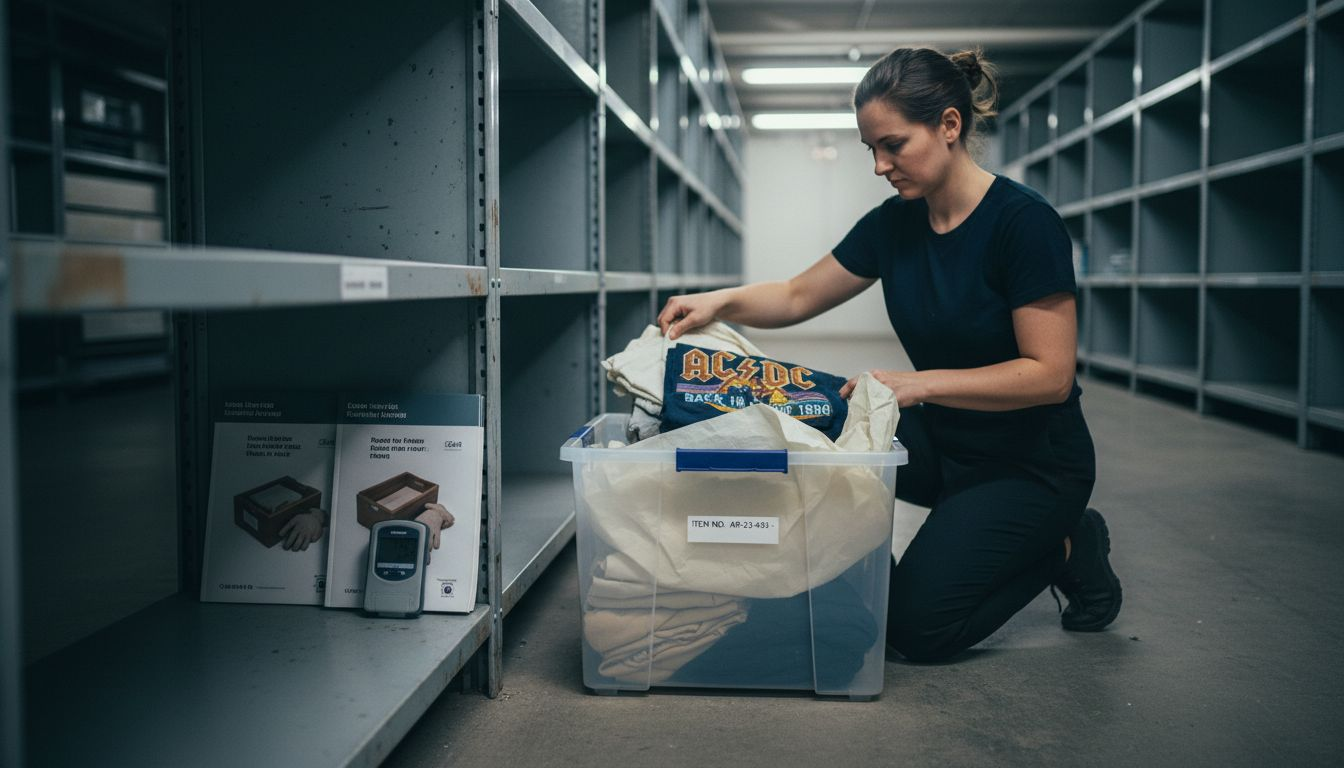
Here’s a comparison of suitable and unsuitable storage materials for vintage metal t-shirts:
| Storage Material Type | Suitable For Preservation | Reason for Suitability or Unsuitability |
|---|---|---|
| Acid-free tissue paper | Yes | Prevents acid damage and keeps fabric stable |
| Polypropylene archival boxes | Yes | Non-reactive and moisture-resistant |
| PVC plastics | No | Releases harmful chemicals that degrade fabric |
| Standard cardboard boxes | No | Contains acids and attracts moisture |
The right storage materials are your vintage t-shirt’s first defence against deterioration.
Pro tip: Invest in archival-quality materials from conservation supply stores rather than using standard household storage containers to ensure maximum protection.
Step 4: Arrange shirts to prevent creasing and fading
Preserving the pristine condition of your vintage metal t-shirts requires strategic arrangement that minimises damage from folding, light exposure, and physical stress. Your goal is to maintain the shirt’s original shape and vibrant graphics while preventing permanent creasing.
Textile preservation techniques recommend avoiding traditional folding methods that can create permanent stress lines. Instead, consider these alternative storage strategies:
- Roll shirts around archival support tubes
- Use acid-free tissue paper as padding between folds
- Keep shirts away from direct sunlight
- Rotate storage positions periodically to prevent permanent creasing
Museum conservation experts emphasise minimising light exposure to prevent colour degradation. If you must display shirts, use UV-filtered lighting and limit exposure time. When storing, create a dark, stable environment that protects the fabric’s integrity.
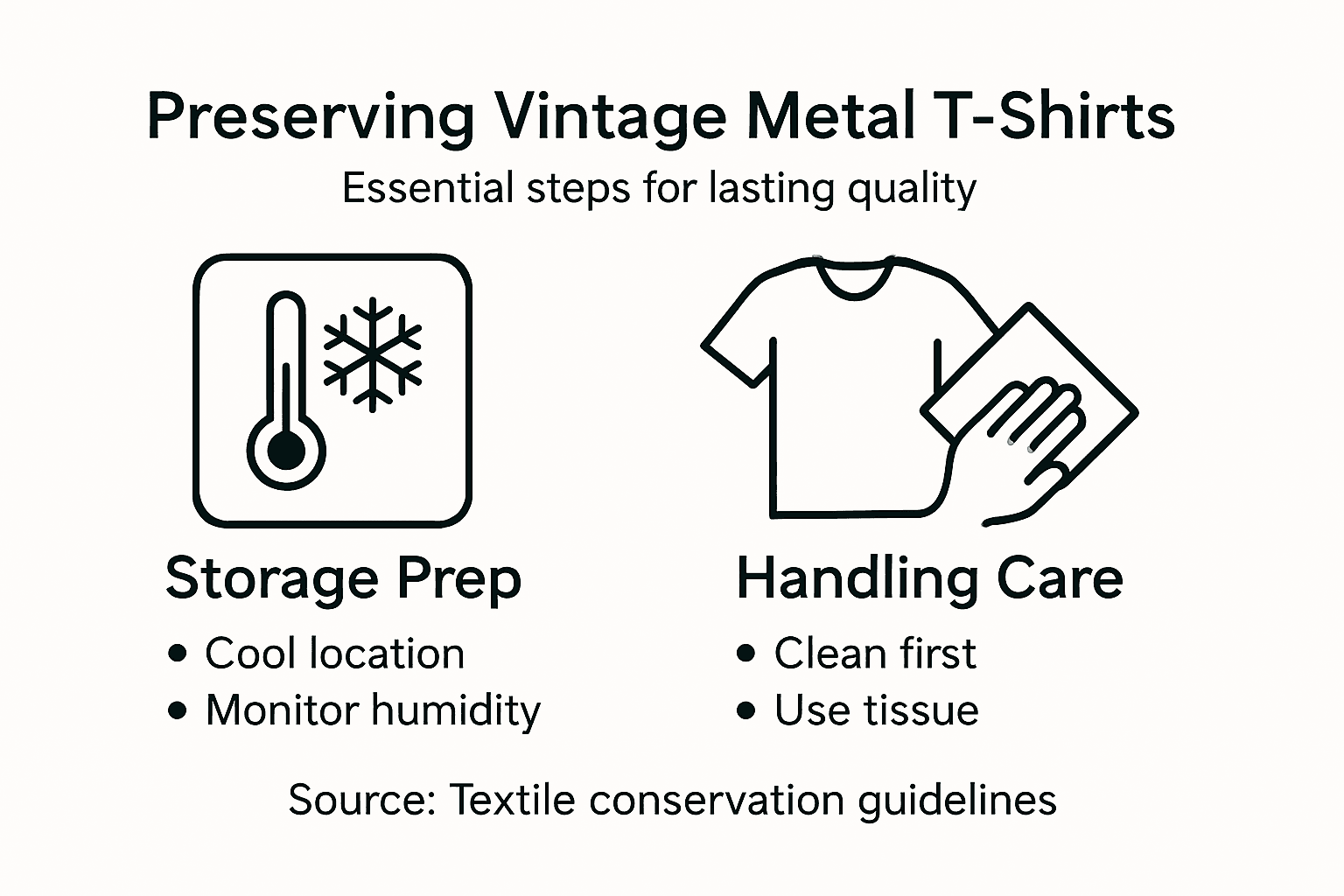
For quick reference, here’s how regular shirt arrangement methods compare with museum-grade practices:
| Arrangement Method | Risk of Damage | Preservation Benefit |
|---|---|---|
| Traditional folding | High: permanent creases | Easy to store but harmful to fabric |
| Rolling with support | Low: minimal creasing | Maintains shape and prevents stress |
| Stacking flat | Medium: pressure spots | Convenient, but risks uneven fading |
| Hanging on hangers | High: shoulder stretching | Can cause shape distortion over time |
Careful arrangement today ensures your vintage metal t-shirts remain collectible treasures for years to come.
Pro tip: Create a gentle padding system inside storage tubes or boxes using acid-free tissue to provide extra protection and prevent unwanted creasing.
Step 5: Verify preservation regularly for ongoing protection
Maintaining the condition of your vintage metal t-shirts requires consistent monitoring and proactive preservation strategies. Your goal is to catch potential issues early and prevent irreversible damage to your cherished collectibles.
Environmental monitoring techniques suggest establishing a routine inspection schedule to assess your storage conditions. Here are key elements to check regularly:
- Inspect storage environment for temperature stability
- Check humidity levels with a digital hygrometer
- Examine shirts for signs of fabric deterioration
- Look for early indicators of pest activity
- Rotate shirt positions to prevent permanent creasing
Preservation planning experts recommend documenting each inspection to track changes over time. Create a simple log that records the date, condition of each shirt, and any environmental observations. This approach allows you to detect subtle changes before they become significant preservation challenges.
Consistent monitoring is the key to preserving your vintage metal t-shirt collection for future generations.
Pro tip: Set a quarterly reminder in your calendar to conduct a thorough inspection, treating your vintage shirt collection like the valuable historical artifacts they truly are.
Protect Your Vintage Metal T-Shirts with Expert Care and Premium Finds
Preserving your vintage metal t-shirts for lasting quality takes dedication and the right approach to storage and handling. Whether you are battling creases, fading, or the threat of fabric deterioration, the key pain points include maintaining ideal temperature, humidity, and choosing proper storage materials as described in our guide. If you want to complement your preservation efforts with authentic collectibles, explore our exclusive range of Rare Vintage Heavy Metal Concert Shirts designed to satisfy collectors who value both history and quality.

Take advantage of expert-approved preservation advice paired with our vast collection of genuine vintage metal shirts from classic tours and bands. Start your journey at Vintage Metal and browse our selection of Vintage Metallica Shirts Australia to find rare finds that deserve the utmost care. Act now to secure authentic pieces with confidence and apply best storage practices to keep your collection vibrant for decades.
Frequently Asked Questions
How can I create the ideal storage environment for my vintage metal t-shirts?
To create the ideal storage environment, choose a cool, dark location away from direct sunlight. Maintain a consistent temperature between 18-21°C and keep humidity levels around 50-55% by using archival-grade storage containers to protect against dust and pollutants.
What is the best way to clean vintage metal t-shirts without causing damage?
The best way to clean vintage metal t-shirts is to gently inspect them under good lighting with clean hands. Avoid washing them; instead, use minimal intervention techniques such as surface examination and handling with white cotton gloves to prevent fabric damage.
What materials should I use for storing my vintage metal t-shirts?
Use acid-free tissue paper for wrapping your t-shirts and archival-grade polypropylene boxes for storage. Avoid PVC plastics, as they emit harmful chemicals, and opt for chemically inert storage solutions to ensure long-lasting protection.
How should I arrange my vintage metal t-shirts to prevent creasing and fading?
To prevent creasing and fading, roll your t-shirts around archival support tubes instead of folding them. Use acid-free tissue paper as padding between folds and ensure they are stored away from direct sunlight to maintain their original shape.
How often should I inspect my vintage metal t-shirts for preservation?
Inspect your vintage metal t-shirts at least every three months to monitor their condition. Check for temperature stability, humidity levels, and any signs of fabric deterioration or pest activity to catch issues early and take action as needed.
What should I document during my inspections of vintage metal t-shirts?
During your inspections, document the date, condition of each t-shirt, and any environmental observations. This log will help you track changes over time, allowing you to detect subtle issues before they escalate into significant preservation challenges.
Recommended


