



Searching for the perfect vintage heavy metal T-shirt often feels like chasing a piece of musical history. Every collector knows the thrill of finding an original tour shirt from iconic bands or rare prints that mark pivotal moments in metal culture. These garments are more than memorabilia, they are powerful cultural artifacts that tell visual stories and signal identity within passionate metal communities. This guide reveals how eras, authenticity, and rarity shape true collector value, helping you spot genuine wearables from the legendary 1990s and beyond.
Table of Contents
- Defining Heavy Metal T-Shirt Eras
- Band, Tour And Collector Variations Explained
- Iconic Styles From The 1970s To 1990s
- Identifying Authentic Stock And Deadstock
- Why Rarity Drives Collector Value
- Common Pitfalls And Preservation Tips
Key Takeaways
| Point | Details |
|---|---|
| Cultural Significance | Heavy metal T-shirts are not just clothing; they serve as important historical documents that reflect the evolution of music subcultures. |
| Types and Values | Variations such as band, tour, bootleg, and reissue shirts each have unique provenance and collector significance that impacts their market value. |
| Design Evolution | T-shirt designs have evolved dramatically from simple graphics in the 1970s to complex and vibrant styles in the 1980s and darker themes in the 1990s, indicative of the changing music landscape. |
| Preservation Techniques | Careful storage and handling are crucial to maintaining the condition of vintage metal T-shirts, ensuring they remain valuable collectibles. |
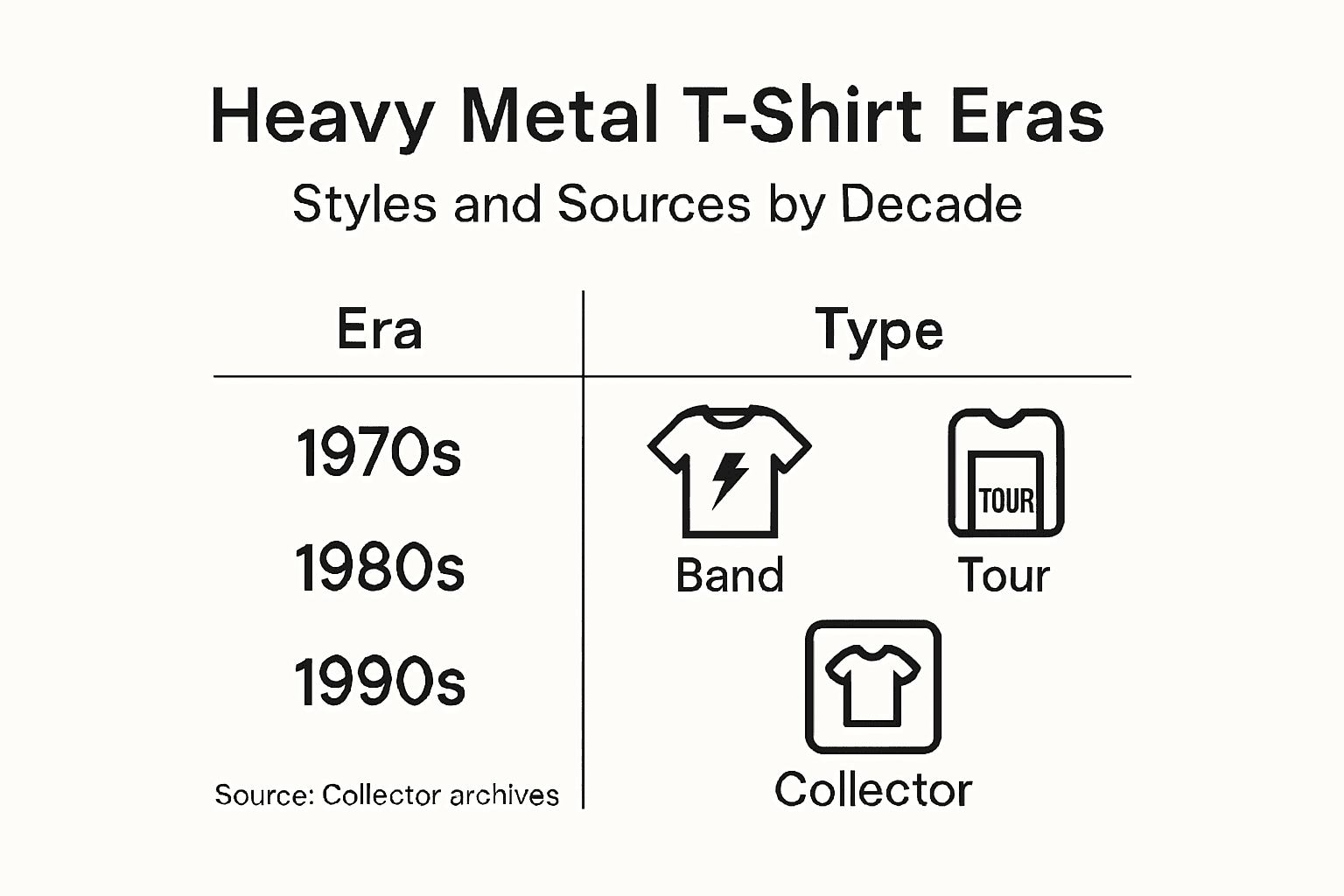
Defining Heavy Metal T-Shirt Eras
Heavy metal T-shirts represent far more than simple fashion statements - they are complex cultural artifacts that chronicle the evolution of music subcultures. These garments serve as powerful visual narratives, communicating intricate stories about bands, musical movements, and personal identities across different eras.
According to scholarly research on metal music cultural artifacts, heavy metal T-shirts emerged as significant transmedia storytelling objects that capture the spirit of specific musical periods. They function as more than mere clothing - they are walking historical documents that reflect the aesthetic and ideological shifts within metal communities.
The primary characteristics defining different heavy metal T-shirt eras include:
- Design Complexity: Early era shirts featured simpler, hand-drawn band logos and limited colour palettes
- Print Techniques: Evolving from basic screen printing to sophisticated multi-colour graphic designs
- Material Quality: Transitioning from thin cotton to more robust, collector-grade fabrics
- Cultural Symbolism: Reflecting changing musical subgenres like thrash, death metal, and black metal
These visual markers help collectors and enthusiasts trace the genealogy of metal music through wearable art. Each shirt represents a snapshot of a specific moment in musical history, capturing the raw energy and rebellious spirit of its respective era.
Pro tip: Carefully document the provenance and condition of vintage metal T-shirts to preserve their historical and collectible value.
Band, Tour and Collector Variations Explained
Heavy metal T-shirts represent a nuanced ecosystem of collectibility, with each variation telling a unique story about musical history and cultural identity. Metal T-shirt transmedia storytelling reveals how these garments transcend simple merchandise, becoming powerful symbols of musical allegiance and personal expression.
These variations can be categorised into several distinct types that hold significant value for collectors:
- Band Shirts: Original prints directly commissioned by musical groups
- Tour Shirts: Limited edition shirts sold during specific concert tours
- Bootleg Shirts: Unofficial merchandise produced without band approval
- Reissue Shirts: Modern reproductions of classic designs
Each shirt type carries its own unique provenance and collector significance. Original tour shirts, particularly from legendary concerts or limited runs, can command extraordinary prices in the vintage market. Bootleg shirts, while technically unauthorised, often represent underground cultural moments that capture the raw spirit of specific music scenes.
To help collectors distinguish between T-shirt types, here is a concise comparison of band, tour, bootleg, and reissue shirts:
| T-Shirt Type | Origin | Collector Appeal | Typical Market Value |
|---|---|---|---|
| Band Shirt | Officially made by the band | Authentic, sought after | High, varies widely |
| Tour Shirt | Sold during concert tours | Limited, tour-specific | Often highest |
| Bootleg Shirt | Unauthorised, underground | Unique cultural moments | Unpredictable |
| Reissue Shirt | Modern reproduction | Accessible, less rare | Moderate to low |
Collectors typically evaluate these shirts based on several critical factors:
- Original print date
- Manufacturing location
- Material quality
- Condition of graphic print
- Historical significance of the band or tour
Pro tip: Always verify authenticity through multiple indicators like original tour dates, printing techniques, and band-specific design elements before investing in rare metal T-shirts.
Iconic Styles from the 1970s to 1990s
The evolution of heavy metal T-shirt design reflects the dramatic transformation of heavy metal music history across three pivotal decades. From the nascent sounds of Black Sabbath and Led Zeppelin to the explosive diversity of thrash and glam metal, each era produced distinctive visual aesthetics that captured the spirit of its musical moment.
The decade-by-decade progression of metal T-shirt styles reveals fascinating cultural shifts:
- 1970s: Simple band logos, monochromatic designs, often featuring psychedelic or occult imagery
- 1980s: Elaborate graphic designs, vibrant colours, increased complexity in artwork
- 1990s: Darker, more aggressive graphics reflecting emerging extreme metal subgenres
Each period introduced unique graphic elements that became hallmarks of their respective musical movements. The 1970s shirts typically featured minimalist band portraits and basic logo designs, while 1980s shirts exploded with intricate illustrations that became increasingly elaborate and provocative.
Key stylistic characteristics of these iconic T-shirt eras included:
- Graphic complexity
- Colour palette
- Print quality
- Thematic imagery
- Cultural symbolism
Pro tip: Preserve the historical context of your vintage metal T-shirts by storing them in acid-free archival materials and avoiding direct sunlight exposure.
Identifying Authentic Stock and Deadstock
Authentic heavy metal T-shirts represent more than mere clothing - they are historical artifacts that capture the essence of musical moments. Vintage metal T-shirt authenticity requires a sophisticated understanding of multiple identification markers that distinguish genuine collectibles from reproductions.
Key indicators of authentic stock and deadstock T-shirts include:
- Print Quality: Original screen-printing techniques with distinct, crisp graphic details
- Fabric Composition: Original era-specific material blends and weave patterns
- Tag Characteristics: Vintage manufacturer tags with specific historical formatting
- Age Indicators: Natural fabric degradation and specific manufacturing markers
- Print Location: Original placement of graphics unique to specific production runs
Collectors distinguish between different stock types through meticulous examination of several critical elements. Stock typically refers to commercially available shirts during a band’s active touring period, while deadstock represents unused, unworn shirts from original production runs - often the most prized among serious collectors.
The authentication process requires careful investigation of multiple physical characteristics:
- Precise tag manufacturing details
- Original printing techniques
- Fabric weave and material composition
- Graphic placement and design integrity
- Historical production context
Pro tip: Invest in ultraviolet light and magnification tools to detect subtle differences between authentic vintage shirts and modern reproductions.

Why Rarity Drives Collector Value
Understanding the dynamics of collector value requires deep insight into the complex psychological mechanisms that transform ordinary objects into prized possessions. Economic theories of collector rarity reveal that scarcity is not just a market phenomenon, but a profound emotional driver that transcends simple supply and demand.
The key factors that elevate a heavy metal T-shirt’s collector value include:
- Limited Production Runs: Shirts produced in minimal quantities
- Historical Significance: Shirts connected to pivotal musical moments
- Condition Preservation: Pristine, unworn shirts with original tags
- Band Relevance: Shirts from critically acclaimed or influential bands
- Tour-Specific Designs: Unique graphics from specific concert tours
Psychologically, rare collectibles tap into deeper human motivations. Collectors are not merely purchasing fabric, but acquiring a tangible connection to musical history. The emotional reward of owning something extraordinarily unique transforms a simple T-shirt into a treasured artifact.
The hierarchy of rarity in metal T-shirt collecting can be ranked by several critical parameters:
- Total production volume
- Surviving original specimens
- Cultural significance of the band
- Design complexity
- Provenance and documentation
Pro tip: Document every rare T-shirt’s authenticity through professional authentication and detailed photographic evidence to maximise its long-term collector value.
Common Pitfalls and Preservation Tips
Collecting vintage metal T-shirts requires more than passion - it demands meticulous care and strategic preservation. Vintage T-shirt preservation techniques are critical for maintaining the integrity and value of these fragile cultural artifacts.
Common preservation pitfalls that collectors must avoid include:
- Improper Washing: Using harsh detergents or hot water
- Direct Sunlight Exposure: Causing irreversible colour fading
- Inappropriate Storage: Folding or compressing shirts incorrectly
- Careless Handling: Touching prints with bare hands
- Inconsistent Environmental Conditions: Fluctuating temperature and humidity
Professional collectors understand that preservation is a delicate science. Vintage metal T-shirts are not just clothing, but historical documents that require specialised handling. Each shirt represents a moment in musical history that can be easily damaged through negligent care.
Here’s a summary of preservation challenges versus best protection practices for vintage heavy metal T-shirts:
| Preservation Challenge | Potential Damage | Collector Solution |
|---|---|---|
| Improper washing | Fabric/print deterioration | Cold water, gentle detergents |
| Sunlight exposure | Colour fading | Store in dark, cool spaces |
| Inappropriate storage | Creasing, loss of shape | Acid-free boxes, padded hangers |
| Careless handling | Staining, print abrasion | Wear cotton gloves when handling |
Key strategies for protecting vintage metal T-shirts include:
- Use acid-free archival storage materials
- Maintain consistent, cool storage temperatures
- Handle shirts only with clean, white cotton gloves
- Avoid direct light exposure
- Use padded hangers for long-term storage
Pro tip: Invest in professional conservation-grade storage solutions and document each shirt’s condition through detailed photographic records to ensure long-term preservation.
Discover the Rarity Behind Genuine Heavy Metal Heritage
Understanding why rarity drives collector value highlights the challenge of finding truly authentic and historically significant heavy metal T-shirts. Many collectors face difficulty distinguishing original tour stock, deadstock, and rare concert shirts that genuinely embody the spirit of their musical era. Preserving the story behind each shirt’s design complexity and limited production can unlock emotional connections and lasting pride in ownership.
Explore our curated selection of Rare Vintage Heavy Metal Concert Shirts where every piece carries proven authenticity and cultural significance.

Secure your place in metal history with exclusive pieces from our collection and step carefully into the world of vintage heavy metal t-shirts that collectors cherish. Shop now at Vintage Metal Store and browse through All Shirts to find your ideal rare treasure before they disappear forever.
Frequently Asked Questions
What defines different eras of heavy metal T-shirts?
Different eras of heavy metal T-shirts are defined by design complexity, print techniques, material quality, and cultural symbolism. These elements reflect changes in musical subgenres and the overall evolution of heavy metal culture.
How can I tell if a heavy metal T-shirt is authentic or a reproduction?
To identify an authentic heavy metal T-shirt, check for quality print techniques, vintage tags, era-specific fabric blends, age indicators from natural wear, and the original print location of graphics. These factors help differentiate genuine collectibles from reproductions.
Why does rarity increase the collector value of heavy metal T-shirts?
Rarity elevates collector value because limited production runs, historical significance, pristine condition, and unique tour-specific designs enhance the desirability of these T-shirts, making them more sought-after among collectors.
What are some common preservation practices for vintage heavy metal T-shirts?
To preserve vintage heavy metal T-shirts, avoid improper washing, protect them from direct sunlight exposure, use appropriate storage methods like acid-free boxes, handle them carefully with gloves, and maintain consistent environmental conditions to prevent deterioration.
Recommended


