



Yes, you can usually negotiate the price of a vintage or second‑hand band tee. Do it with authentication evidence, comparable sales data, and a polite offer, not a lowball guess. Before you message a seller, set a target price range using recent sold listings, then choose an opening offer that leaves room to compromise. Vintage Metal Store is a good benchmark for what an authenticated listing should look like when you’re building that price range.
TL;DR:
- Authenticating the shirt through detailed checks increases negotiation leverage and reduces room for seller deceit.
- Building a realistic price band with a walkaway, ideal, and opening offer prevents overpaying or insulting the seller.
- Online negotiations are more effective when referencing comparable sold listings and when the listing has been sitting unsold for weeks.
- In-person haggling benefits from timing, cash offers, and thorough inspection, especially at markets or flea stalls close to closing time.
- Always verify a shirt’s authenticity and condition before making an offer, as most fair deals stem from well-founded research and honest provenance.
Table of Contents
- How to set a fair target price before you negotiate band tee prices
- Authenticate and value the tee to build real negotiation leverage
- What online tactics actually get you a discount?
- Face-to-face haggling: timing, body language and cash
- Scripts and example offers you can adapt
- When you shouldn’t haggle at all
- What recent sales data tells you about band tee prices
- Reading seller motivation before you make an offer
- Common pricing myths that trip up buyers
- Why authentication always comes before the offer
- Where to find authenticated tees worth negotiating on
- Sources
- FAQ
How to set a fair target price before you negotiate band tee prices
Before you type a single offer, build a price band. Three numbers matter: your walkaway price, your ideal price, and your opening offer. Skip this step and you’ll either overpay or insult a seller with a number that has no logic behind it.
Run through this checklist first:
- Check the tag, stitching and print — single stitch hems, faded screen print with fine cracking, and a tag matching the era all support a higher price.
- Pull three to five comparable sold listings, not just active ones, since asking prices are routinely inflated well beyond what buyers actually pay.
- Factor in size desirability — Large and XL from the 1980s and 1990s command more than Small or XXL because more collectors can actually wear them.
- Add postage and platform fees to your mental total, not just the sticker price, so your comparison to sold listings is apples to apples.
- Note tour-specific details (dated back prints, specific venue lists) that push a shirt above the general price band for that band and era.
Vogue’s vintage fashion panel points out that listed prices on second‑hand platforms are commonly inflated, often by a wide margin, which is exactly why sold data beats asking price every time. Once you’ve got a band, say $80 to $120, your opening offer usually sits near the bottom, with your walkaway price set just above the top.
Authenticate and value the tee to build real negotiation leverage
Every dollar you save in negotiation comes from being more certain about the shirt than the seller assumes you are. Authentication isn’t a formality here. It’s your leverage.
Look at these details in order:
- Tag construction — woven tags with rounded corners and a specific manufacturer name (Screen Stars, Fruit of the Loom, Hanes) help date a shirt to within a few years.
- Stitching — single-stitch hems and sleeves were standard before the mid-1990s; double-stitch construction usually signals a later reprint or a modern reissue.
- Print condition — genuine age shows as fine, even cracking across the whole design, not a plastic-feeling patch that’s cracked in one spot while the rest looks brand new.
- Seam and collar construction — ringer tees, tag placement, and collar style all shift by decade and can confirm or contradict a claimed era.
- Provenance — a shirt with a believable backstory (bought at a specific tour stop, held by the original owner) adds real value and shrinks your room to haggle.
Nylon’s rundown on shopping for vintage band tees stresses that authentication checks across multiple features beat obsessing over just one detail. A shirt that’s missing its tag, has a stiff modern-feeling print, or shows a clumsy repair has lost negotiating power for the seller, not you. Those flaws are your opening line. For a deeper walkthrough of what to check first, Vintage Metal Store’s collector’s guide to authentic vintage band tees covers five checks worth running before you spend a cent, and a broader look at reprint tells sits in the original versus fake band t shirts guide.
What online tactics actually get you a discount?
Online negotiation is a different game to face-to-face haggling. You’re working with platform behaviour, not body language, and that changes what works.
- Open with evidence, not a number pulled from nowhere. Reference a specific sold comparable or point to a flaw (“no tag, and the print’s already cracking on the back”) before naming your figure.
- Watch listing age. A shirt sitting unsold for weeks is far more likely to accept a reduction than one posted yesterday, since sellers who see engagement stall often become more flexible.
- Use ‘likes’ and saves as a signal, not a trigger. Sellers sometimes drop the price after a listing collects interest without selling, which is exactly the moment to send an offer.
- Bundle where you can. Offering to buy two shirts together for a combined price, say $150 instead of $170 for two separately, respects the seller’s margin while still saving you money.
- Ask for extra photos and exact measurements before you commit. Pit-to-pit and length measurements remove guesswork and often surface flaws that support a lower offer.
Collectors trading on peer-to-peer platforms treat waiting and engagement as genuine discount triggers, not just folklore. Patience does real work here.
Pro Tip: Send your offer with a short, specific reason attached. “Happy to pay $90 given the small hole near the hem” gets a better response than a bare number, because it shows the seller you’ve actually inspected the item rather than just haggling on principle.
Face-to-face haggling: timing, body language and cash
In-person deals run on different rules than a marketplace message thread. Markets and flea stalls, in particular, reward patience and presence over clever wording.
- Shop late in the day or near closing, when sellers are packing up and would rather move stock than repack it. Practical guides on flea market negotiation consistently point to timing as one of the strongest levers available.
- Inspect thoroughly and calmly — checking tags and seams signals you’re a serious buyer, not someone fishing for a cheap deal.
- Offer cash upfront. A seller weighing a firm cash offer against the hassle of relisting online often takes the lower number.
- Know when to just pay the asking price. If the seller’s clearly reasonable and the shirt’s genuinely rare, preserving that relationship is worth more than $10 saved.
Scripts and example offers you can adapt
Having the right words ready matters as much as having the right number. Here are templates worth keeping on hand.
- Online offer citing a comparable: “Hi, love this shirt. I’ve seen a similar 1994 tour tee in comparable condition sell for around $85. Would you take $90 with postage included?”
- Online offer citing a flaw: “Really keen on this one, but I noticed the tag’s missing and there’s some print cracking near the collar. Would $70 work?”
- In-person inspection line: “Mind if I check the tag and stitching? Keen if the condition’s right.” This invites scrutiny without sounding like an accusation.
- In-person offer: “I can do $60 cash right now if that works for you.” Immediate payment is often the deciding factor, not the number itself.
- Bundle message: “If I took both the Slayer and the Sepultura tee, would you do $140 for the pair instead of $80 each?” That’s a $20 saving that still leaves the seller ahead of two separate, slower sales.
Keep your numbers realistic.
When you shouldn’t haggle at all
Not every listing is a negotiation opportunity, and pushing on the wrong one costs you more than money.
- Skip it if the price is already below market for a recognised grail shirt. Someone else will happily pay full asking before you finish typing your offer.
- Go easy with reputable dealers and curators. The relationship you build with a trustworthy seller is worth more long-term than the $15 you might squeeze out of one transaction.
- Walk away from anything you can’t authenticate, especially at higher price points where scams cluster. No discount is worth buying a convincing reprint at vintage prices.
- Set your walkaway price before you start talking, and hold it. Once emotion enters a negotiation, you’ve already lost your leverage.
What recent sales data tells you about band tee prices
Band tee prices don’t move in a straight line, and treating one sold listing as gospel is a common mistake. Prices shift with era, band popularity cycles, and even film or documentary releases that suddenly put a band back in the cultural conversation.
Ballpark guides on vintage band tees note that fair pricing ranges vary widely by era and rarity, and caution buyers against paying premium prices for what turns out to be a reprint dressed up as an original. A genuine 1980s thrash shirt in wearable condition sits in a different price tier entirely from a 2000s reissue with vintage-style distressing, even when both look similar in a thumbnail photo.
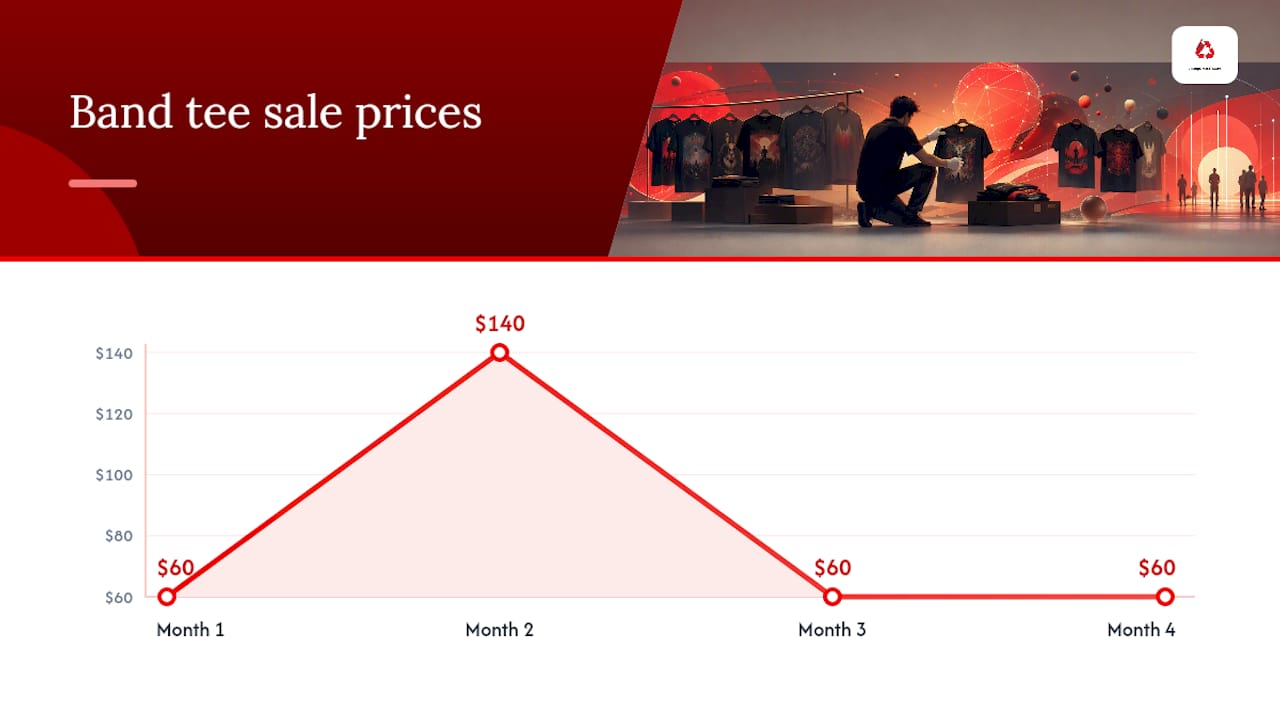
Track more than one data point. Look at how a specific tour shirt has sold across the last several months, not just the most recent listing, since a single outlier sale (a bidding war between two collectors, a rushed sale from someone who needed cash fast) can distort your sense of “normal.” If you see the same shirt selling for $60 three times and once for $140, the $140 sale tells you almost nothing useful about what you should expect to pay.
Rarity compounds faster than condition does. A shirt from a small regional tour leg, or from a band’s early lineup before a lineup change, often holds a premium that a simple “good, fair, poor” condition scale won’t capture. That’s where your own research into tour dates and pressing runs starts to matter more than the fabric itself.
Reading seller motivation before you make an offer
The same shirt at the same price can be negotiable with one seller and firm with another, and the difference almost always comes down to why they’re selling.
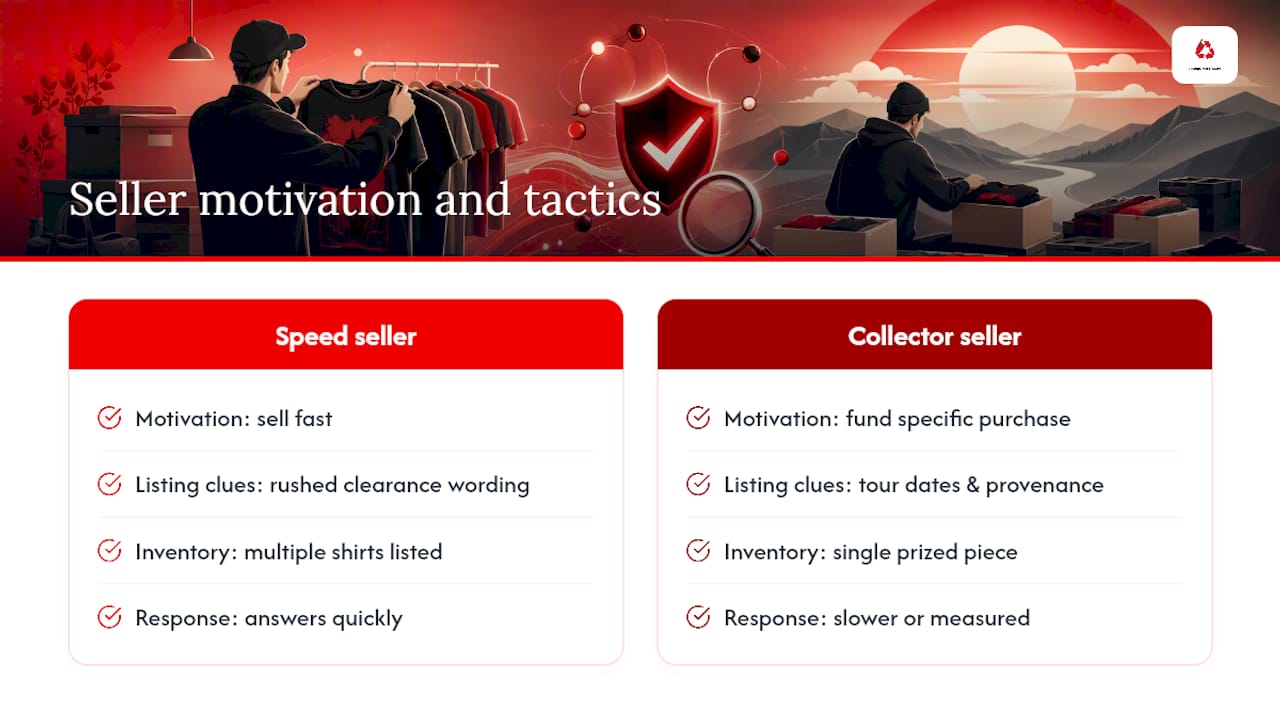
A seller clearing out a relative’s wardrobe, downsizing a collection, or listing dozens of shirts at once is usually motivated by speed, not maximum return. These sellers respond well to bundle offers and quick, clean transactions. A dedicated collector selling one prized piece to fund a specific purchase behaves differently. They know exactly what the shirt is worth and have likely already done the comparable-sales research you’re doing now.
Look for context clues. A listing description that reads like a rushed clearance (“moving house, need this gone”) signals more room to move than one written with tour dates, pressing details, and provenance spelled out in full. Response time matters too. A seller who answers questions quickly and enthusiastically is often more open to negotiation than one who takes days to reply, which can suggest they’re not in a hurry to sell at all.
Experienced collectors treat this as social, not purely transactional: offers that land near the asking price signal respect for the seller’s own research, while bundle offers tend to secure the deepest discounts because they solve two problems for the seller at once, speed and volume, in a single message.
Common pricing myths that trip up buyers
A few beliefs circulate constantly in band tee trading, and most of them cost buyers money in one direction or another.
Myth: single stitching alone proves a shirt is vintage. Reproduction manufacturers have caught on, and some reprints now use single-stitch construction deliberately. Stitching is one data point among several, not standalone proof.
Myth: a higher price always means better condition. Plenty of overpriced listings are simply sellers guessing high, not reflecting genuine rarity or condition. This is exactly why comparable sold data matters more than asking price.
Myth: every offer below asking price is insulting. A well-reasoned offer backed by a comparable sale or a specific flaw is standard practice in vintage trading, not a rude gesture. Forbes’ coverage of vintage shopping frames respectful negotiation as an expected part of the process, not an exception to it.
Myth: bigger discounts always come from harder haggling. Bundling, timing, and immediate payment routinely move price more than aggressive back-and-forth ever does.
Why authentication always comes before the offer
I’ve spent enough time around vintage heavy metal shirts to know that the buyers who negotiate well aren’t the toughest hagglers. They’re the most prepared. At Vintage Metal Store, pricing starts with authentication, provenance where we can establish it, and honest condition notes, and we do accept reasonable offers on higher-value pieces, particularly when a buyer’s clearly done their homework on comparable sales.
If you take one thing from this guide, make it this: authenticate first with proven methods like those in the guide to authenticating vintage guitars for collectors, negotiate second, and never rush a decision on a shirt you can’t fully verify. Build relationships with sellers who deal straight with you. That pays off far more than any single discount ever will.
— David
Where to find authenticated tees worth negotiating on
Everything in this guide only works if the listing itself is trustworthy to begin with. Vintage Metal Store lists detailed photos, real measurements, and provenance notes wherever we can establish them, so you’re negotiating from solid ground rather than guessing at condition from a blurry thumbnail. On larger purchases, we’re open to bundle pricing and reasonable offers, especially across multiple pieces.
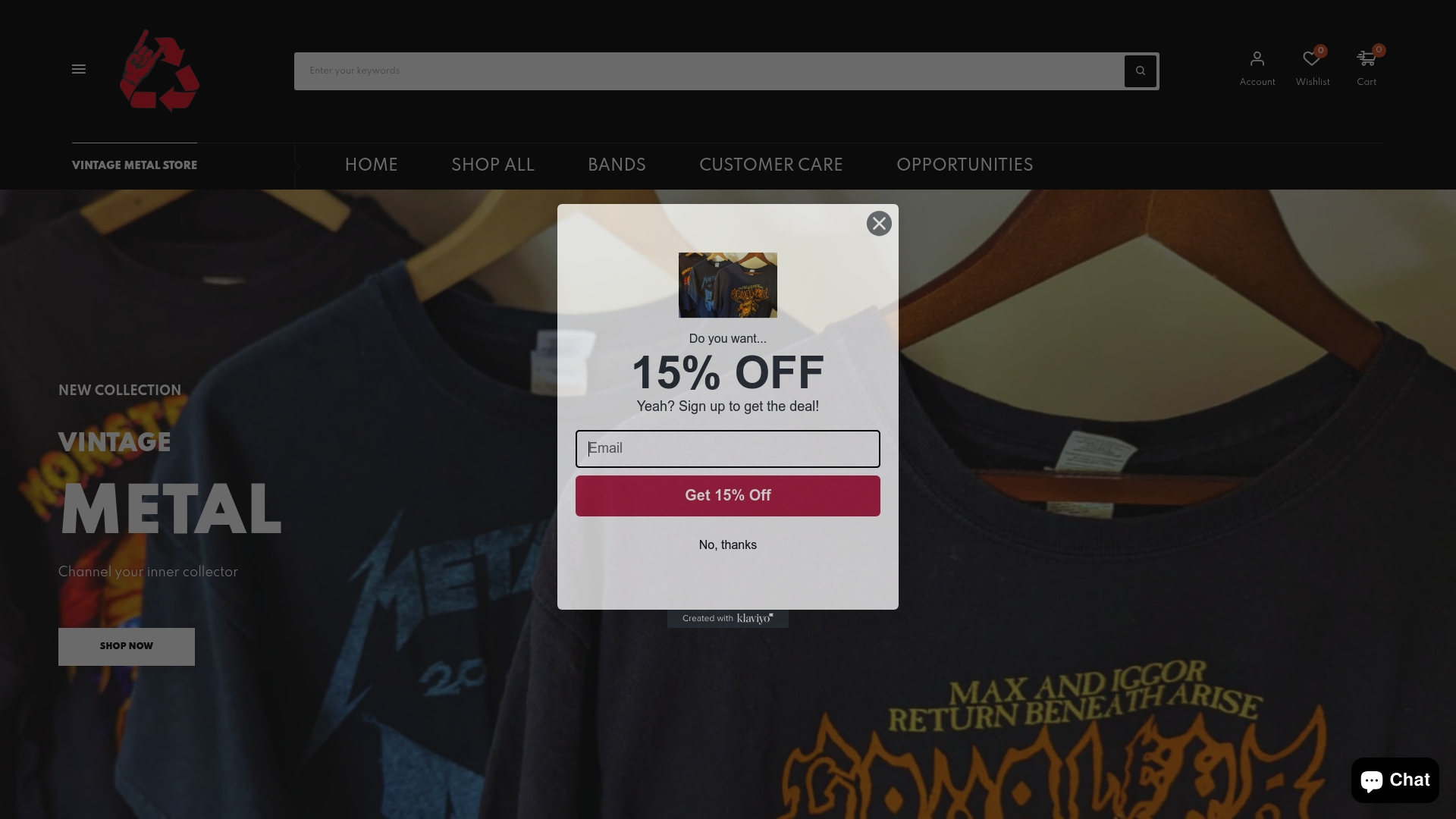
Browse the rare vintage heavy metal concert shirts collection to see how provenance and condition notes get presented on higher-value pieces, or check a specific example like the Rare Metallica 1992 tour tee to see authentication detail in practice. If you’re after a start-to-finish browse, the full shirt collection covers everything currently listed. Got your eye on a few pieces and want a bundle price? Get in touch and ask, that’s exactly the kind of enquiry we’re set up to handle.
Sources
- The ultimate guide to luxury vintage shopping
- 4 vintage fashion experts on fair secondhand prices
- How to shop for vintage band tees, according to experts
- Tips for negotiating prices on vintage clothing at a flea market
- Vintage band tees: a no-bs buying guide for 2026
FAQ
Is it rude to negotiate band tee prices?
No. Polite, evidence-based offers are a normal and expected part of vintage trading, especially when backed by a comparable sale or a specific condition detail.
What’s a reasonable opening offer on a vintage band tee?
Aim 10 to 20% below a fair sold-comparable price, since listed prices are often inflated and there’s usually room to move from there.
Should I negotiate on a rare grail shirt?
Generally no. If the price already sits below market for a recognised rare piece, haggling risks losing it to another buyer, and it’s rarely worth the small saving.
How do I know if a band tee is genuinely vintage before I offer a price?
Check the tag, stitching, print cracking, and seam construction together rather than relying on one feature, since authentication works best across multiple indicators.
Does Vintage Metal Store accept offers on listed shirts?
Yes, particularly on higher-value pieces and bundle purchases, provided the offer reflects genuine comparable sales data rather than an arbitrary lowball figure.
Recommended


