



TL;DR:
- Shirt provenance documents the origin and ownership history, ensuring authenticity and increasing value.
- Verified records, including receipts, editions, and forensic analysis, protect collectors from fakes and enhance collectible worth.
Shirt provenance is the documented history and verified origin of a garment, and for heavy metal memorabilia collectors, it is the single most reliable measure of authenticity and value. A Metallica 1992 tour tee with no paper trail is just a shirt. The same piece with purchase receipts, edition numbers, and a chain of custody back to the original tour is a verified collectible. Understanding the importance of shirt provenance separates serious collectors from casual buyers, and it protects your investment from the growing threat of sophisticated fakes.
What is legitimate provenance for collectible metal shirts?
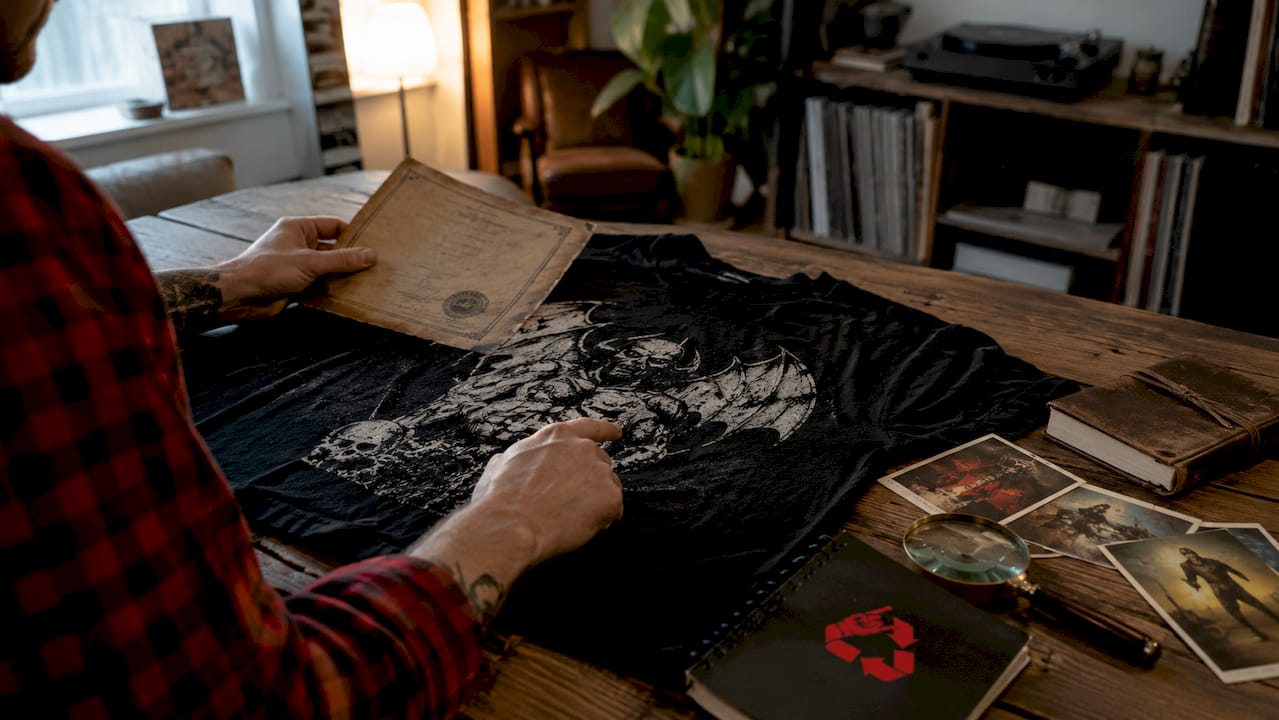
Documented provenance transforms a t-shirt from casual apparel into a verified collectible, commanding a premium price while undocumented pieces struggle to sell. That transformation depends entirely on the quality and completeness of the records attached to the shirt.
Legitimate provenance for a collectible heavy metal shirt includes several specific types of documentation:
- Purchase receipts from authorised sources, such as official tour merchandise stands or licensed distributors
- Artist collaboration paperwork confirming the design was produced with band approval or direct involvement
- Certificates of authenticity that include edition numbers, production dates, and artist signatures
- Chain of custody records connecting the shirt to specific band members, crew, or tour dates
- Photographs or press materials showing the shirt in use at the documented event
The detail matters enormously. Certificates lacking verifiable specifics are effectively worthless to collectors. A certificate that simply states “authentic Metallica merchandise” without a production run number, a specific tour date, or a verifiable issuing body tells you almost nothing useful.
Limited edition runs add another layer of significance. When a shirt was produced in a run of 500 for a single North American leg of a tour, the edition number on the certificate becomes a direct link to that specific moment in metal history. Premium fabric quality from that era, such as the heavier cotton weights common in 1980s and early 1990s tour merch, also supports provenance claims by matching the physical object to its documented origin.
Pro Tip: Cross-reference any certificate details against publicly available tour date logs and setlist archives. Sites like Setlist.fm document concert histories going back decades, and a shirt claiming to be from a specific date should match the tour’s actual itinerary.
How does shirt provenance impact value and authenticity?
The impact of shirt sourcing on collector value is direct and measurable. Shirts with thorough documentation consistently command higher prices on secondary markets, while undocumented pieces face scepticism regardless of their apparent age or condition.
The heavy metal memorabilia market mirrors broader collectibles markets in this respect. Consider these dynamics at play:
- Price premiums for documented pieces. A vintage Iron Maiden “Piece of Mind” tour shirt with original receipt and chain of custody records will fetch significantly more than an identical shirt with no paperwork, even if both are genuinely from the same era.
- Protection against counterfeits. Provenance is a verification framework that protects collectors by cross-referencing certificates with band records and tour-date logs. Without it, you are relying on visual inspection alone.
- Resale confidence. Buyers in secondary markets, including dedicated auction houses and specialist dealers, increasingly require provenance documentation before listing high-value pieces.
- Tour-worn and crew-issued status. Undocumented history related to “tour-worn” or “crew-issued” status is often lost permanently, which is why rigorous tracking from the point of acquisition matters so much.
Modern forgeries have become genuinely difficult to detect with the naked eye. Forgers now use vintage deadstock blanks combined with modern print techniques, requiring expertise to identify inconsistencies in print style, kerning, and wear patterns. This is exactly why shirt origin significance goes beyond aesthetics. A shirt that looks right can still be wrong, and provenance documentation is your first line of defence.
Retail prices have barely increased in real terms for cotton t-shirts over 25 years. That price stagnation means the materials and production methods of genuine vintage shirts are increasingly difficult to replicate authentically, which makes original provenance records more valuable, not less.
Pro Tip: When assessing a vintage metal shirt, look beyond the tag. Authentic 1980s plastisol prints crack and fade in specific patterns that modern reprints cannot replicate convincingly. Learn print technique differences before you spend serious money.
Paperwork provenance vs scientific forensic verification
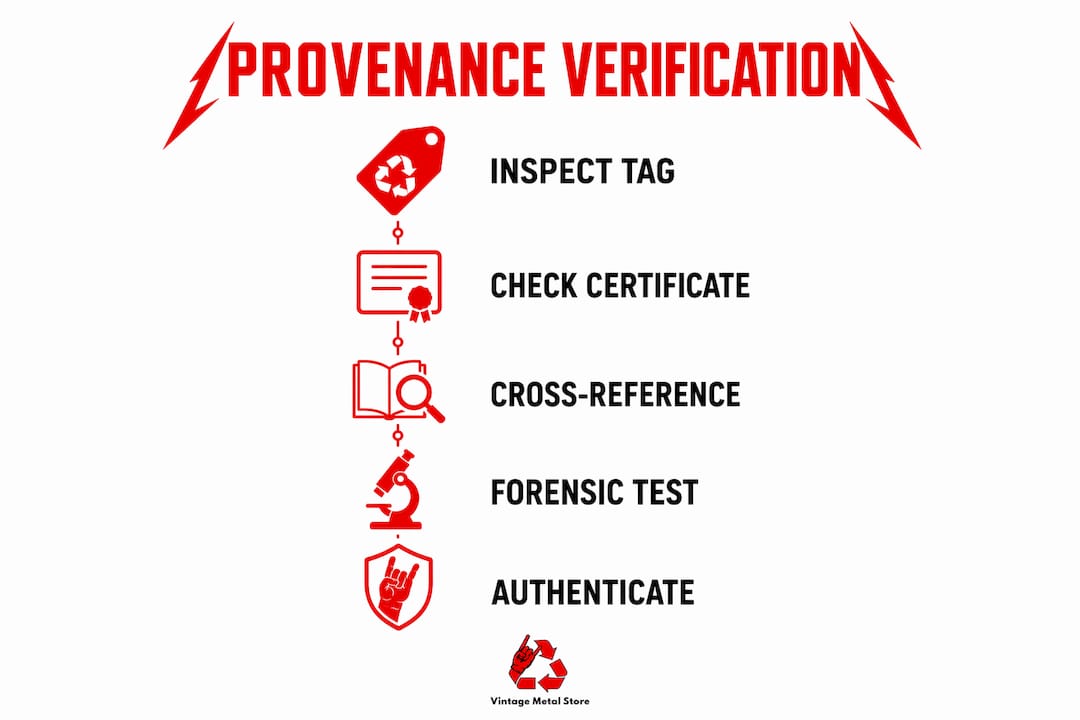
Traditional documentation has always been the backbone of provenance, but paper trails have real limitations. A certificate can be forged. A receipt can be fabricated. Even photographs can be staged. The question of how to choose shirt provenance verification methods has a clear answer in 2026: the most credible approach combines traditional documentation with forensic science.
| Verification Method | Strengths | Limitations |
|---|---|---|
| Certificates and receipts | Accessible, widely understood, easy to present at sale | Can be forged; specificity varies widely |
| Chain of custody records | Traces ownership history directly | Gaps are common; relies on seller honesty |
| Visual and physical inspection | Immediate, no cost | Requires deep expertise; can be fooled by skilled forgeries |
| Isotope analysis (geographic fingerprinting) | Scientifically unforgeable; confirms fibre origin | Specialist equipment required; higher cost |
| Combined documentation and forensic proof | Highest confidence level | Most resource-intensive approach |
Geographic fingerprinting using isotope ratios locked into textile fibres offers an unforgeable scientific basis for confirming shirt origin and authenticity. The technique works on tiny fibre samples and preserves accuracy over centuries of storage or wear. That is a remarkable capability for collectors dealing with shirts that are 30 to 40 years old.
The science behind this is specific. Geochemical fingerprinting using strontium and oxygen isotope ratios embedded in cotton fibres allows forensic auditors to identify the exact growing region of textile raw materials. A shirt claiming to be made from American cotton in 1988 can now be tested against that claim with scientific precision.
Modern supply chains are fragmented with many intermediaries, making paper trails insufficient on their own. Scientific verification like isotope analysis is becoming the standard for high-value collectible items. For a rare piece worth hundreds or thousands of dollars, the cost of forensic verification is a sound investment.
Pro Tip: If you are acquiring a shirt valued above $500, ask the seller whether forensic verification has been conducted. Reputable dealers of high-value metal memorabilia are increasingly familiar with this process. You can also explore forensic textile evidence as part of your own due diligence.
Why ethical sourcing and provenance matter beyond authentication
Tracing shirt history is not only about protecting your investment. Provenance serves a broader purpose that connects directly to how and where a shirt was made, and whether those conditions are worth supporting.
Ethical textile provenance insists on traceability to the soil and water source, verified by isotopic fingerprints that cannot be forged. That standard applies equally to vintage shirts as it does to new production. When you know where a shirt’s cotton was grown, how it was processed, and under what conditions it was printed, you have a complete picture of its origins.
The benefits of ethical shirt production extend into several areas that matter to collectors:
- Historical preservation. A shirt with full provenance preserves a moment in metal history. The Slayer “Reign in Blood” tour, the Pantera “Vulgar Display of Power” cycle, the Metallica “Black Album” era. These are cultural artefacts, and provenance keeps their stories intact.
- Supply chain accountability. Provenance documentation exposes whether a shirt was produced through legitimate, authorised channels or through exploitative manufacturing shortcuts.
- Resistance to fast fashion anonymity. Provenance serves as deliberate resistance against the anonymity and disposability of fast fashion, reconnecting collectors to the true origin and making of their shirts. Fast fashion produces millions of anonymous garments with no traceable history. A documented vintage metal shirt is the opposite of that.
- Community trust. When collectors share provenance records openly, the entire community benefits. It raises the standard for what counts as verified and makes it harder for fakes to circulate undetected.
The contrast with modern fast fashion is stark. A shirt produced in an anonymous offshore facility with no documentation attached is worth exactly what it cost to make. A shirt with a verified connection to a specific band, tour, and moment in metal history carries value that compounds over time.
Key takeaways
Shirt provenance is the most reliable tool a collector has for verifying authenticity, protecting investment value, and preserving the cultural history of heavy metal memorabilia.
| Point | Details |
|---|---|
| Provenance defines collector value | Documented shirts command higher prices; undocumented pieces struggle to sell regardless of apparent age. |
| Certificates must be specific | Edition numbers, production dates, and verifiable issuing bodies are required for a certificate to carry weight. |
| Forensic science raises the bar | Isotope analysis of cotton fibres confirms geographic origin with scientific certainty that paper trails cannot match. |
| Chain of custody matters most | Tour-worn or crew-issued status adds significant value, but only when the full ownership history is documented. |
| Ethical sourcing adds lasting significance | Provenance connects a shirt to its full origin story, making it a cultural artefact rather than just apparel. |
What i have learned after years in metal memorabilia
The most common mistake I see collectors make is treating provenance as an afterthought. They fall in love with a shirt visually, pay a strong price, and only then start asking questions about documentation. By that point, the leverage is gone.
The second mistake is accepting vague certificates at face value. I have seen beautifully printed certificates that say almost nothing verifiable. No edition number, no specific tour leg, no issuing authority that can be contacted. Those certificates are decorative, not functional.
What actually works is building a provenance habit from the start. Every acquisition should come with a record of where you bought it, from whom, what documentation was provided, and what your own physical inspection revealed. That record becomes part of the shirt’s ongoing provenance. You are adding to its history, not just inheriting it.
The forensic verification space is genuinely exciting. The idea that a few fibres from a 1988 Slayer tour shirt can be tested against the isotopic signature of American cotton from that era is the kind of tool that changes what serious collecting looks like. It is not accessible for every purchase, but for high-value acquisitions, it is worth knowing about.
My honest view is that the collectors who will do best over the next decade are those who treat provenance as a discipline, not a checkbox. The market rewards rigour, and the fakes are only getting better.
— David
Build your collection with confidence at vintage metal store
At Vintage Metal Store, we know that wearing the legacy means more than owning a shirt. It means owning a verified piece of metal history.

Our catalogue focuses on ex-tour stock, deadstock, and second-hand heavy metal shirts with documented origins. Every piece we list comes with the sourcing context you need to collect with confidence. If you are after something iconic, the Rare Metallica 1992 Tour Tee is a standout example of provenance done right. For a broader look at authenticated pieces, browse our full range of vintage Metallica shirts and find the piece that speaks to your collection. Shop now and wear the legacy.
FAQ
What does shirt provenance mean for collectors?
Shirt provenance is the documented history of a garment’s origin, ownership, and chain of custody. For collectors, it is the primary evidence used to verify authenticity and establish value.
How do i verify the provenance of a vintage metal shirt?
Check for certificates with specific edition numbers and production dates, cross-reference tour date logs, and inspect print techniques for era-consistent characteristics. For high-value pieces, forensic isotope analysis of cotton fibres provides scientific confirmation of origin.
Why do undocumented shirts sell for less?
Without provenance records, buyers cannot verify authenticity or rule out sophisticated forgeries. Documented shirts command premiums because the risk to the buyer is substantially lower.
What is geographic fingerprinting in textile provenance?
Geographic fingerprinting uses strontium and oxygen isotope ratios embedded in cotton fibres to identify the exact growing region of the raw material. The technique is scientifically unforgeable and works on tiny samples from shirts decades old.
Does provenance matter for ethical reasons as well as financial ones?
Provenance traces a shirt’s full origin, including the conditions under which it was produced. That traceability supports ethical sourcing claims and preserves the cultural and historical significance of the garment beyond its resale value.
Recommended


