



TL;DR:
- Shirt provenance is the verifiable history of a garment’s origin, ownership, and manufacture. It relies on physical evidence like labels, construction details, wear patterns, and supporting documentation to confirm authenticity. Strong provenance increases a shirt’s value, ethical appeal, and collector confidence by providing a trustworthy record of its history.
Shirt provenance is the documented, verifiable history of a shirt’s origin and ownership, covering everything from the textile source and construction details through to every hand the garment has passed through. For collectors of vintage clothing and music memorabilia, provenance is not a nice-to-have. It is the difference between a shirt worth hundreds of dollars and one worth thousands. A 1992 Metallica tour tee with a clear ownership chain, original receipt, and period-correct label is a fundamentally different object from an identical-looking shirt with no history attached. Understanding what provenance means, how it is built, and where it commonly breaks down is the foundation of serious collecting.
What is shirt provenance and what does it include?
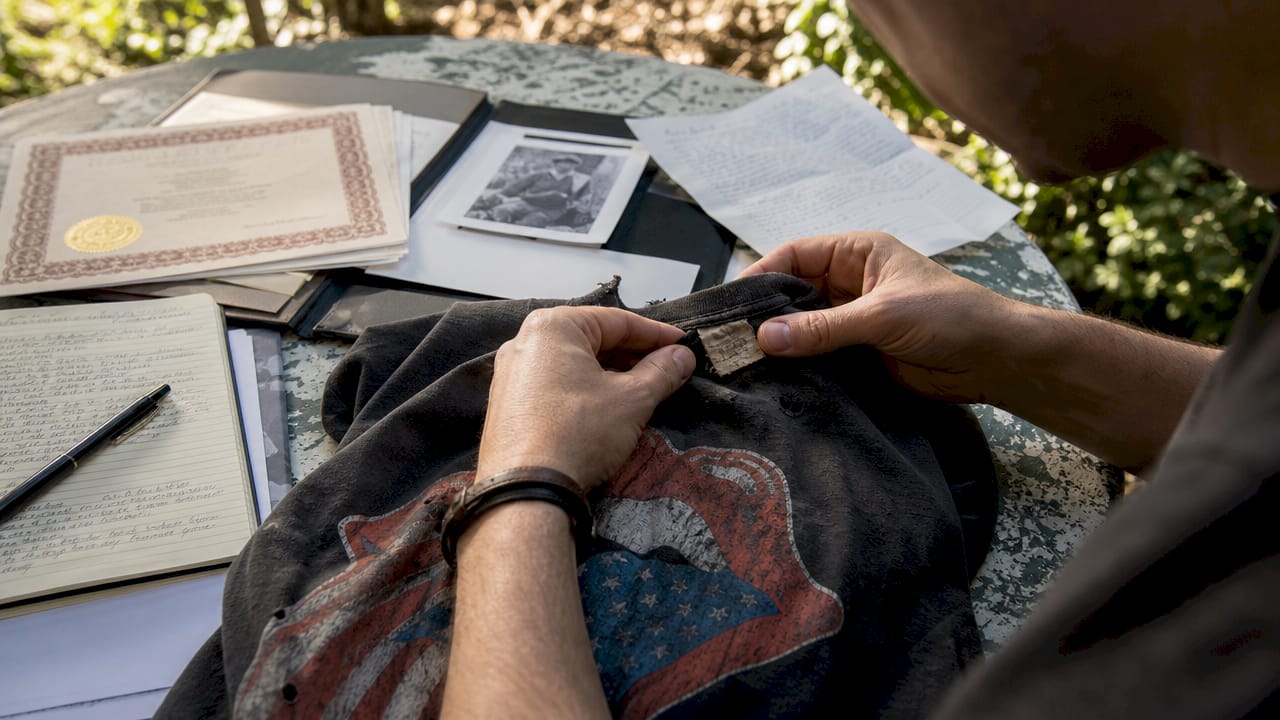
Shirt provenance is the full custody record of a garment, from its raw materials through manufacture, retail, and every subsequent owner. The concept borrows directly from fine art and antiques collecting, where provenance research has been standard practice for decades. Applied to shirts, it means assembling every piece of evidence that confirms where a garment came from and who owned it.
The physical evidence collectors rely on includes:
- Labels and tags. Woven neck labels, care instruction tags, and screen-print copyright dates all carry period-specific information. A Brockum or Giant label on a band tee, for example, immediately places the shirt within a specific production window.
- Construction details. Single-stitched sleeves, the weight of the cotton, and the style of the collar hem are forensic clues that experienced collectors read as fluently as a document.
- Wear patterns and ageing. Authentic vintage shirts show consistent, natural fading and distress. Artificially aged reproductions rarely replicate the specific stress points that decades of real wear create.
- Documentation. Receipts, bills of sale, auction records, and archival photographs all strengthen a provenance claim. A photograph of a fan wearing the shirt at a 1988 Slayer concert is worth more than any verbal assurance.
Incomplete provenance is common and does not automatically disqualify a shirt. What matters is that gaps are acknowledged honestly and that the segments of the chain that are documented are internally consistent. A shirt with a solid record from 1995 to the present, and a plausible explanation for the decade before that, is far more credible than one with a suspiciously perfect but unverifiable story.
How supply chains and traceability affect shirt provenance
Understanding shirt provenance also means understanding where shirts come from before they reach a collector. The garment supply chain runs from raw material extraction through spinning, weaving, dyeing, cutting, sewing, and retail. Traceability generates granular data at each of those stages. Transparency is the act of sharing that data. Both matter for provenance, but they are not the same thing.
For vintage and music memorabilia shirts, the manufacturing provenance is often the hardest segment to verify. A shirt printed for a 1991 Guns N’ Roses tour was likely produced by a licensed merchandise contractor, printed by a specialist screen printer, and distributed through a tour merchandising company. Each of those handoffs is a potential gap in the record. Brands like Asket have demonstrated that full traceability is aspirational even for contemporary garments, let alone shirts produced thirty years ago under far less rigorous documentation standards.
Supply chains also suffer from what the industry calls limits of visibility. Raw input origins are often unknown even to the manufacturer, because multi-tiered supplier networks mean that the factory sewing the shirt may have no direct knowledge of where the cotton was grown. For collectors, this means the manufacturing segment of provenance is often reconstructed from indirect evidence: label research, printer identification, and cross-referencing with known production records from the era.
Pro Tip: When researching a shirt’s manufacturing origin, focus on the label and print style first. Organisations like the Vintage Fashion Guild maintain detailed label dating resources that can place a garment within a two-to-three year production window, which is often enough to confirm or contradict a seller’s claims.
How to authenticate vintage and music memorabilia shirt provenance
Authentication is the process of testing a provenance claim against available evidence. For vintage and music memorabilia shirts, this involves both physical examination and documentary cross-checking. The two approaches work best together, because paper trails alone can be falsified, while physical evidence without documentation leaves too much room for interpretation.
A practical authentication process follows these steps:
- Examine the label. Identify the manufacturer, the label style, and any copyright or licensing information. Cross-reference with known label databases for the claimed era.
- Assess the print. Vintage screen prints have a specific texture and ink depth that modern digital reproductions do not replicate. Look for cracking consistent with the shirt’s claimed age.
- Check the construction. Single-stitching on sleeves and hems is characteristic of shirts produced before the mid-1990s. Double-stitching became standard later and is a red flag on a shirt claimed to be from 1987.
- Review the documentation. Receipts, photographs, and auction records should be internally consistent. Check that dates, prices, and descriptions align with what is known about the shirt’s claimed history.
- Cross-reference ownership segments. Provenance can be reconstructed in segments. Map what is known, identify the gaps, and assess whether the gaps are plausible given the shirt’s claimed history.
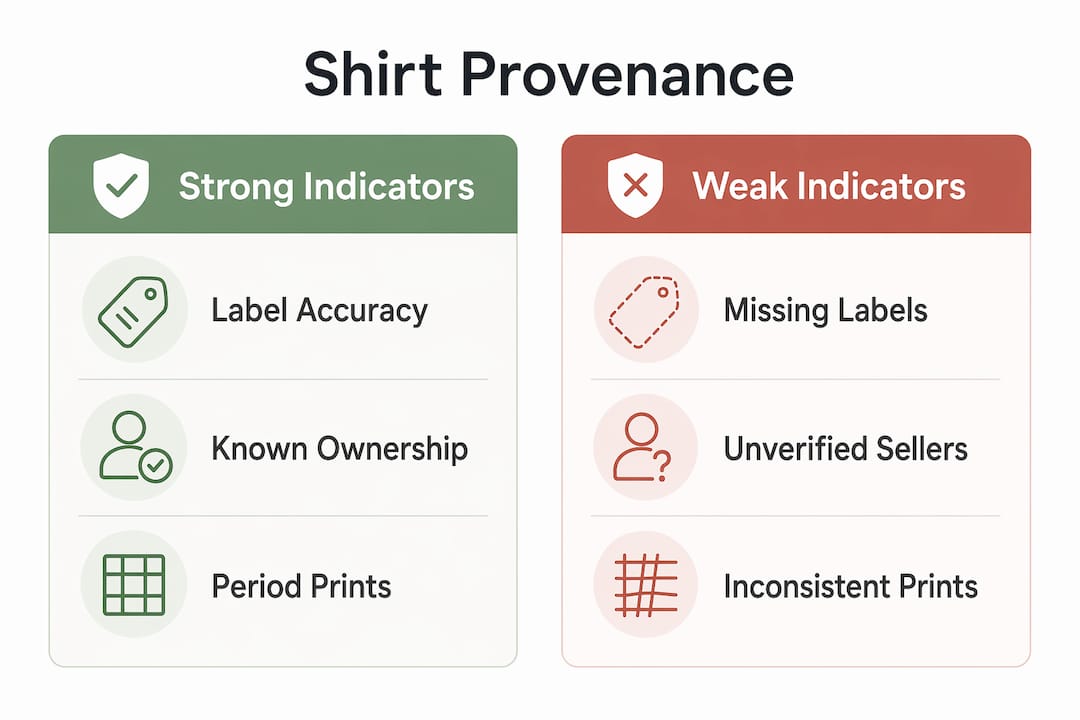
The table below compares strong and weak provenance indicators for vintage band shirts.
| Indicator | Strong provenance | Weak provenance |
|---|---|---|
| Label | Period-correct, matches known production records | Generic or inconsistent with claimed era |
| Documentation | Receipt, auction record, or archival photo | Verbal assurance only |
| Physical condition | Ageing consistent with claimed age and use | Uniform fading, no stress at natural wear points |
| Ownership chain | Named owners with verifiable connections | Vague “private collection” claims |
| Print quality | Cracked, faded ink with period-correct registration | Sharp, even print inconsistent with age |
Recognising falsified provenance is a skill built through exposure. Collectors who study original versus fake band shirts develop an instinct for the details that reproductions consistently get wrong. The most common red flag is a provenance story that is too clean. Genuine vintage shirts accumulate gaps and inconsistencies over decades. A shirt with a perfectly documented thirty-year history and no unexplained periods should prompt closer scrutiny, not confidence.
Why provenance matters: value, ethics, and collector confidence
Provenance directly influences what a shirt is worth and how confidently it can be bought, sold, or insured. Strong provenance enhances market credibility and collector assurance, which translates into higher prices and faster sales. A vintage Iron Maiden shirt with a documented connection to a specific tour, supported by photographs and a clear ownership chain, commands a premium that an identical shirt without that history simply cannot match.
The cultural significance of provenance extends beyond money. A shirt worn by a crew member on the Black Album tour carries a different weight than one sold at a merchandise stand, even if both are period-correct and authentic. Provenance reveals the human story behind the object, and that story is what transforms a garment into memorabilia.
“Provenance is not just about names and dates. It is a detailed custody and acquisition record that supports ethical collecting and confirms that an object is what it is claimed to be.” — V&A Museum provenance research guidelines
Provenance also matters for insurance and resale. Insurers covering high-value collectibles require documentation of authenticity and value. Without provenance, a collector cannot substantiate a claim for a shirt worth several thousand dollars. For resale, buyers at the serious end of the market will not pay premium prices without credible documentation. Incomplete provenance does not make a shirt worthless, but it does set a ceiling on what the market will pay.
The collector community increasingly treats provenance as an ethical matter as well. Shirts with clear, honest documentation of their history support ethical shirt sourcing standards and protect buyers from unknowingly purchasing fakes or misrepresented items. Collectors who document their own acquisitions thoroughly contribute to the integrity of the market for everyone.
Key takeaways
Shirt provenance is the single most important factor in establishing authenticity and value for vintage and music memorabilia shirts, built from physical evidence, documentation, and a traceable ownership chain.
| Point | Details |
|---|---|
| Provenance defined | The documented, verifiable history of a shirt’s origin, manufacture, and ownership chain. |
| Physical evidence counts | Labels, construction details, and wear patterns are as important as paperwork. |
| Gaps are acceptable | Incomplete provenance is normal; honest, consistent gaps are more credible than a suspiciously perfect story. |
| Authentication uses both methods | Cross-check physical inspection with documentary evidence for the strongest result. |
| Provenance drives value | Strong provenance raises price, supports insurance, and builds collector confidence. |
What I’ve learned chasing provenance for thirty years
The hardest lesson I took years to absorb is that provenance is not a binary. A shirt either has it or it does not, in the minds of many new collectors. That thinking costs people money in both directions. I have passed on shirts with thin documentation that turned out to be genuinely significant, and I have seen collectors overpay for shirts with elaborate but ultimately unverifiable stories.
What actually works is treating provenance like a legal case. You build it from multiple independent lines of evidence. A label that dates correctly, a print style that matches the claimed era, a receipt from a known dealer, and a photograph from the period are four separate witnesses. No single one is conclusive. Together, they are compelling. When I authenticate a shirt for my own collection, I use the dead stock identification guide as a starting framework and then layer in whatever documentary evidence I can find.
The other thing I have noticed is that the collector community has become significantly more rigorous over the past decade. Sellers who relied on vague “private collection” claims in the early 2000s find that serious buyers now ask specific questions and expect specific answers. That is a healthy development. It raises the standard for everyone and makes the market more trustworthy. If you are building a collection, document everything you acquire from the moment you buy it. Future buyers will thank you, and so will your insurer.
— David
Explore vintage metal shirts with genuine provenance

Com specialises in vintage heavy metal shirts with documented histories, including ex-tour stock and dead stock from some of the most significant tours in metal history. Every shirt in the collection is assessed for period-correct construction, label authenticity, and provenance consistency before it is listed. If you are looking for a shirt that is more than just old cotton, the rare Metallica 1992 tour tee is a strong example of what genuine provenance looks like in practice. For a broader selection, the full range of vintage Metallica shirts includes pieces with clear manufacturing and ownership histories that serious collectors can verify.
FAQ
What does shirt provenance mean for collectors?
Shirt provenance is the documented history of a shirt’s origin, manufacture, and ownership chain. For collectors, it is the primary evidence used to confirm authenticity and establish value.
Can a shirt have provenance if the full history is unknown?
Yes. Segmental provenance is standard practice in collecting. A shirt with a documented history covering part of its life, and honest acknowledgement of gaps, is considered to have provenance.
How do I trace the origin of a vintage band shirt?
Start with the label and construction details to establish a production window, then cross-reference with known printer and manufacturer records for the era. Use the vintage shirt buying checklist as a structured starting point.
Why does provenance affect a shirt’s price?
Provenance increases buyer confidence and links a shirt to specific cultural or historical events, both of which raise desirability and market value. Shirts with strong provenance consistently command higher prices at auction and in private sales.
Is physical inspection enough to verify shirt provenance?
Physical inspection is necessary but not sufficient on its own. Forensic verification combined with documentary evidence produces the most credible provenance assessment, because paper trails can be falsified and physical evidence alone can be ambiguous.
Recommended
- How to organise your heavy metal shirt collection: 4 steps – Vintage Metal Store
- Why fans collect old shirts: Cultural power of vintage metal tees – Vintage Metal Store
- How to display collector shirts: the complete guide – Vintage Metal Store
- Identifying Dead Stock Heavy Metal Shirts Step-by-Step – Vintage Metal Store


