



TL;DR:
- Proper storage with acid-free materials and climate control preserves vintage heavy metal shirts.
- Flat acid-free storage is best for rare and irreplaceable shirts, while casual wearers can be hung or rolled.
- Regular rotation, careful organisation, and pest prevention ensure long-term preservation and easy access.
Pulling out a faded Black Sabbath bootleg or a mint-condition Metallica tour tee is one of the great thrills of collecting. But that thrill fades fast when you realise your prized shirts are creasing, yellowing, or buried under a pile of lesser finds. Rare and vintage heavy metal shirts represent years of hunting, real money spent, and genuine cultural history. Without a proper system, you risk losing all of that to moisture, heat, and careless storage. This guide walks you through assessing your collection, choosing the right storage method, building an organising system, and maintaining everything for the long haul.
Table of Contents
- Assess and prepare your shirt collection
- Choose the right storage method for each shirt
- Establish your shirt organising system
- Maintain and rotate for long-term preservation
- A collector’s truth: it’s more than storage, it’s legacy
- Upgrade your collection with rare finds and expert resources
- Frequently asked questions
Key Takeaways
| Point | Details |
|---|---|
| Sort and prepare | Take inventory and gather preservation materials before organising your collection. |
| Choose storage wisely | Tailor storage methods to shirt rarity—use acid-free and climate-control essentials for vintage items. |
| Create a system | Label, document, and rotate shirts for easy access, display, and ongoing care. |
| Maintain regularly | Adopt regular routines to prevent damage, pests, and environmental risks. |
| Balance passion and preservation | Find the organisation method that lets you protect shirts and celebrate them at the same time. |
Assess and prepare your shirt collection
Before you touch a single shirt, take stock of what you actually own. Lay everything out in a clean, shaded space away from direct sunlight. You want to see the full picture: what’s rare, what’s a daily wearer, and what’s in fragile condition.
Start by sorting into three broad groups: era and band, rarity and condition, and sentimental value. A 1986 Slayer Reign in Blood tour shirt sits in a very different category to a 2010 festival tee. Knowing this distinction shapes every storage decision you make from here.
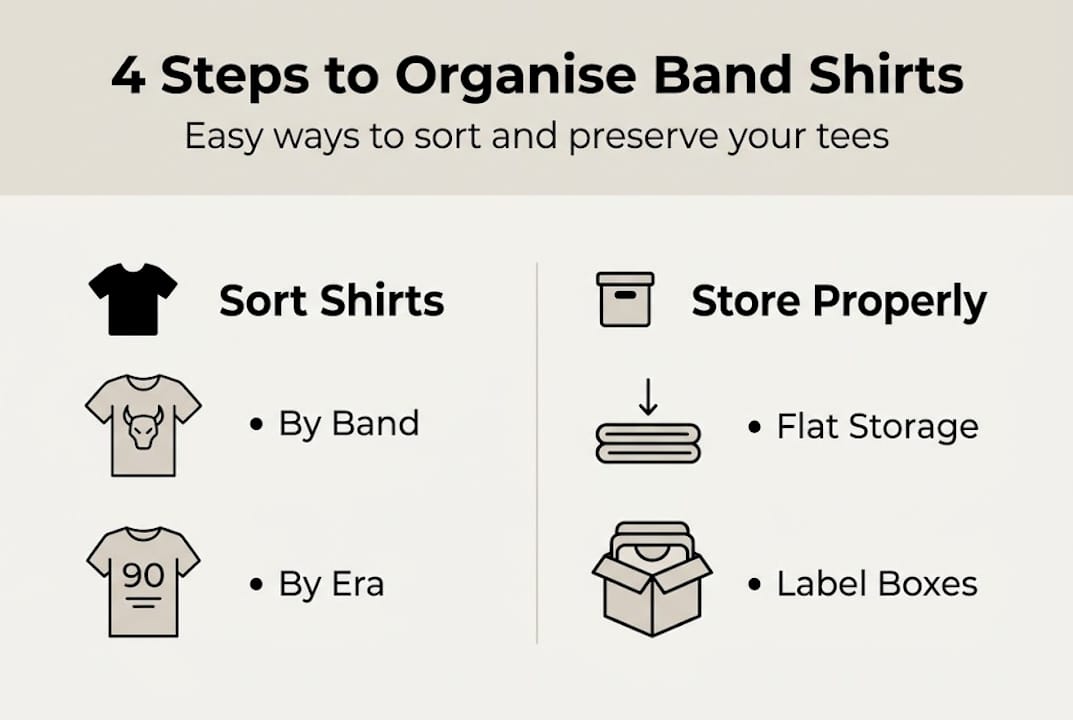
Once sorted, identify the shirts that genuinely need preservation treatment. True vintage pieces, ex-tour stock, and dead stock items are the ones that warrant the most care. These are the shirts where storing vintage metal shirts correctly can mean the difference between a shirt worth hundreds and one worth nothing.
Materials checklist for preparation:
- Acid-free tissue paper and acid-free storage boxes
- Breathable cotton pillowcases (for individual shirt wrapping)
- Cedar blocks or sachets (natural pest deterrent)
- Cotton gloves for handling fragile prints
- A clean, flat surface for folding
- Permanent markers and adhesive labels for identification
Understanding fabrics for vintage shirts also matters here. Older single-stitch tees are often made from thinner, more fragile cotton that reacts badly to synthetic storage materials. Knowing your fabric helps you choose the right wrapping.
| Shirt type | Condition priority | Recommended handling |
|---|---|---|
| Pre-1990 tour shirts | Very high | Cotton gloves, acid-free wrap |
| Dead stock/ex-tour | High | Flat fold, acid-free box |
| Post-2000 band tees | Medium | Standard fold, breathable bag |
| Daily wearers | Low | Regular drawer or hanging |
Acid-free tissue paper and boxes prevent chemical degradation, creasing, and trapped moisture that plastic bins and wire hangers cause. This is non-negotiable for anything irreplaceable.
Pro Tip: Never prepare shirts in a room with an open window on a sunny day. UV light degrades cotton fibres and fades screen-printed graphics even during short exposure. Work in a cool, shaded space.
Common prep mistakes include folding shirts while damp, stacking too many on top of each other, and using newspaper as padding. Newspaper ink transfers and acidic paper accelerates fabric breakdown faster than you’d expect.
Choose the right storage method for each shirt
With your workspace set and shirts sorted, the next step is matching each shirt to the right storage method. Not every shirt needs the same treatment, and over-engineering storage for a casual tee wastes time and resources.
The core decision is flat storage versus hanging or rolling. For rare and irreplaceable pieces, flat acid-free storage is the gold standard. Hanging puts stress on shoulder seams and distorts the shape of older, lighter fabrics over time. Rolling is a reasonable middle ground for access, but it can cause print cracking on aged screen prints if done too tightly.
| Method | Best for | Risk level |
|---|---|---|
| Flat acid-free box | Rare, vintage, dead stock | Very low |
| Rolled in cotton pillowcase | Mid-tier, occasional wear | Low |
| Hanging (padded hanger) | Daily wearers only | Medium |
| Plastic bin or vacuum bag | Nothing in your collection | Very high |
How to pack a rare shirt properly:
- Put on cotton gloves before handling.
- Lay the shirt face-down on a clean flat surface.
- Place a sheet of acid-free tissue over the print area.
- Fold the shirt in thirds lengthways, tissue side in.
- Fold again from the bottom up, keeping folds loose.
- Wrap the folded shirt in a second sheet of tissue.
- Place in an acid-free box with cedar blocks nearby (not touching the fabric).
- Label the box with band, year, and condition notes.
Casual wearers may hang or roll for easy access, but serious collectors insist on flat storage for irreplaceable vintage items to protect their investment value. This contrast matters: your system should reflect your intent, not just convenience.
For shirts you wear regularly, a padded hanger in a breathable garment bag is acceptable. The key is airflow. Moisture trapped against fabric breeds mould, and in Australian summers, humidity is a genuine threat.
“The two silent killers of vintage shirts are moisture and heat. Neither announces itself until the damage is done.”
Pro Tip: When storing metal t-shirts in boxes, never stack more than four or five shirts deep. The weight compresses lower shirts and creates permanent fold lines in the print.
For collectors’ shirt care at the highest level, consider archival flat files (the kind used for storing artwork). These wide, shallow drawers are ideal for keeping shirts completely unfolded.
Establish your shirt organising system
Safe storage is only half the job. A collection you can’t navigate quickly becomes frustrating, and frustration leads to careless handling. Build a system that makes finding any shirt in under two minutes a realistic goal.
Choose your primary sorting method based on what matters most to you:
- By band: Groups all Maiden, all Sabbath, all Pantera together. Best for band-focused collectors.
- By year or era: Keeps the 1980s, 1990s, and 2000s visually distinct. Great for historical context.
- By tour or artwork: Useful if you collect specific tours or graphic styles.
- By condition: Separates display-worthy pieces from storage-only items instantly.
Once sorted, label everything. Use adhesive labels on boxes and folders, and keep a written or digital catalogue. A simple spreadsheet works well: band name, shirt year, tour name, condition rating (1 to 5), and storage location. Apps like Notion or even Google Sheets let you add photos, which is invaluable for insurance purposes and resale.

Physical layout matters too. Keep your most accessed shirts at eye level and arm’s reach. Reserve high shelves for long-term storage boxes. Ensure there’s airflow around shelving units; pressed against a wall with no gap traps humidity.
Cool, dark, climate-controlled storage away from attics and basements, with shirts rotated and refolded every three months, prevents dust build-up and permanent creasing. Schedule this into your calendar like any other maintenance task.
For your best pieces, consider displaying ex-tour shirts in UV-protective frames. This keeps them visible and protected simultaneously. A well-framed Dio shirt is both a conversation piece and a preserved artefact.
- Use shallow, wide shelving where possible
- Keep boxes off the floor to avoid moisture wicking
- Group display items separately from storage items
- Review and update your catalogue every season
- Note any condition changes during each review
If you’re ever considering selling metal tees from your collection, a well-maintained catalogue with condition notes and photos makes the process significantly faster and more credible to buyers.
Maintain and rotate for long-term preservation
Organising isn’t a one-off job. Shirts can suffer quietly over months and years without the right ongoing habits, especially in Australian homes where temperature and humidity fluctuate dramatically between seasons.
The target environment for storing vintage shirts is 18 to 21°C with 40 to 55% humidity, using cedar blocks or lavender sachets to deter pests without chemicals. Most Australian homes drift well outside this range in summer. A small dehumidifier and a thermometer in your storage area are worthwhile investments.
Ongoing maintenance checklist:
- Refold and rotate shirts every three months
- Check for yellowing, foxing (brown spots), or mildew smell
- Replace cedar blocks every six months as the scent fades
- Air shirts briefly in a shaded, ventilated space once or twice a year
- Inspect storage boxes for any signs of moisture or pest activity
- Update your catalogue with any condition changes
Spotting trouble early is critical. A faint musty smell means moisture has entered your storage area. Small brown spots on fabric (foxing) indicate acid damage or early mould. Act immediately: remove affected shirts, air them out, and identify the moisture source before returning them to storage.
For damaged shirts, consult a textile conservator before attempting any cleaning. DIY fixes often cause irreversible damage to aged screen prints. Refer to dedicated shirt care tips for guidance on what’s safe to attempt yourself.
Pests are a real risk in Australian homes. Moths and silverfish target natural fibres, and a single infestation can destroy a collection built over decades. Cedar and lavender deter them naturally. Avoid mothballs entirely; the chemicals off-gas and can damage prints and fabric over time.
Before adding any new shirt to your collection, run through a shirt buying checklist to verify authenticity and condition. Introducing a shirt with hidden mould or pest eggs into a clean collection is a risk no serious collector should take.
A collector’s truth: it’s more than storage, it’s legacy
Here’s something the purely practical guides won’t tell you: storing every shirt flat in an acid-free box and never looking at them isn’t collecting. It’s archiving. There’s a difference, and it matters.
The best collections we’ve seen balance rigorous preservation with genuine pride of ownership. A few key shirts framed on the wall. A rotation of wearable pieces that gets used. A catalogue that tells the story of a life spent loving heavy metal. That’s what makes a collection alive rather than just preserved.
Purist storage advice sometimes treats shirts like museum artefacts that exist only to maintain monetary value. But most of us got into this because of the music, the community, and the memories attached to a specific tour or moment. Those emotional connections are part of the value too.
The practical advice in this guide is real and important. Follow it for your irreplaceable pieces. But don’t let fear of damage stop you from enjoying what you’ve collected. For advanced shirt care insights, the goal is always the same: keep the shirts alive long enough to pass the passion on.
Upgrade your collection with rare finds and expert resources
You’ve done the hard work of sorting, storing, and maintaining your collection. Now it’s time to think about what belongs in it next.

At Vintage Metal, we source genuine ex-tour stock, dead stock, and rare finds that most collectors only dream about. Whether you’re hunting for a rare Metallica 1992 tour tee to anchor your collection or browsing the full range of vintage Metallica shirts, every piece comes with the provenance that makes preservation worthwhile. Explore all heavy metal shirts and find the next shirt that deserves a spot in your carefully organised collection.
Frequently asked questions
What is the safest way to store vintage metal shirts?
Acid-free tissue, boxes, or pillowcases in a cool, dark, climate-controlled space are the safest options. Avoid plastic bins and wire hangers entirely.
How often should I refold or rotate my shirts?
Rotate and refold every 3 months to stop permanent creases and dust from building up in storage.
Can I hang vintage shirts safely?
Hanging is only suitable for casual, replaceable shirts. Flat storage or folding is the right approach for valuable vintage and rare items.
What temperature and humidity is best for storing shirts?
18 to 21°C and 40 to 55% humidity is the ideal range to prevent mould, fabric deterioration, and print cracking.
Recommended
- Collectible heavy metal shirts: Rare picks, values, tips – Vintage Metal Store
- Heavy metal shirt buying workflow 2026: 70% value guide – Vintage Metal Store
- Identifying Dead Stock Heavy Metal Shirts Step-by-Step – Vintage Metal Store
- Vintage Shirt Sizing Guide for Heavy Metal Collectors – Vintage Metal Store


