



That prized Metallica or Iron Maiden tour shirt sitting folded in a drawer deserves far better than darkness. Vintage heavy metal tour shirts carry real history, and when they’re hidden away, that history disappears with them. Whether you’ve got a single-stitch Screen Stars gem from the 1980s or a stack of ex-tour dead stock, displaying them properly lets you honour the legacy and protect the value at the same time. This guide walks you through every major display method, the tools you’ll need, the mistakes to avoid, and how to keep your shirts in collectable condition for years to come.
Table of Contents
- What to consider before displaying your tour shirts
- Framing your tour shirts for maximum protection
- Alternative wall display methods without frames
- Using mannequins, stands, and 3D displays
- Common mistakes and expert troubleshooting tips
- Build your collection wall with vintage metal
- Frequently asked questions
Key Takeaways
| Point | Details |
|---|---|
| Preserve shirt value | Always use safe, non-damaging methods to show off your rare tour shirts. |
| Mix display styles | Combine frames, hangers and mannequins for a stunning and flexible collection. |
| Avoid sunlight exposure | Keep your shirts out of direct sun and use UV-protective materials to prevent fading. |
| Rotate shirts regularly | Switch out displays monthly to reduce fabric stress and keep your collection fresh. |
What to consider before displaying your tour shirts
Before you pull out the hammer and nails, it pays to think carefully about what you’re working with. Vintage tour shirts aren’t just clothing. They’re artefacts, and treating them that way from the start makes a real difference to their long-term condition and resale value.
Here’s what to assess before you begin:
- Shirt age and construction: Single-stitch hems and Screen Stars or Fruit of the Loom tags are markers of genuine vintage pieces. Authentic vintage shirts carry higher collector value, so display methods should minimise handling to protect condition.
- Current condition: Check for fading, cracking graphics, or thin fabric. Fragile shirts need gentler mounting solutions.
- Available space: Wall space, ceiling height, and room lighting all affect which display method suits you best.
- Humidity and light exposure: Heat and moisture accelerate fabric degradation. Avoid bathrooms, kitchens, or walls that receive direct afternoon sun.
- Your goals: Are you displaying for personal enjoyment, to impress visitors, or to maintain resale value? Your answer shapes every decision that follows.
For guidance on storing vintage shirts safely when they’re not on display, it’s worth reading up on proper folding and container choices too.
Here’s a quick toolkit overview for each display method:
| Display method | Key tools needed | Skill level |
|---|---|---|
| Shadow box framing | Acid-free board, pins, UV glass | Intermediate |
| Wall clips or rods | Decorative clips, picture hooks | Beginner |
| Mannequin or stand | Adjustable torso stand, base | Beginner |
| Ladder or rack display | Timber ladder, padded hangers | Beginner |
Pro Tip: Always wear cotton gloves when handling single-stitch or rare shirts. The oils from bare hands can transfer to aged fabric and cause long-term staining that’s nearly impossible to reverse.
A solid band shirt care guide will also help you understand washing and handling limits before you commit to any display setup.
Framing your tour shirts for maximum protection
Framing is the gold standard for serious collectors. Done correctly, it offers museum-quality preservation while turning your shirt into genuine wall art.
Follow these steps to frame safely:
- Wash and press the shirt using a cool iron and a pressing cloth. Never iron directly onto a graphic print.
- Cut your acid-free foam board to fit the interior of your chosen frame. This forms the backing that holds the shirt in shape.
- Position the shirt over the board, smoothing it flat and centring the graphic.
- Secure with pins or hand-stitching at the seams only. Avoid glue entirely as it causes irreversible fabric damage and destroys resale value.
- Choose a deep shadow box with at least 25 to 50mm of depth so the fabric never presses against the glass.
- Fit UV-protective acrylic or glass to shield the print from light-induced fading.
- Hang on a secure wall anchor rated for the frame’s weight.
Here’s how the main framing options compare:
| Frame type | Protection level | Cost range | Best for |
|---|---|---|---|
| Deep shadow box | Excellent | $80 to $250 | High-value vintage shirts |
| Standard T-shirt frame | Good | $40 to $100 | Mid-range pieces |
| DIY foam board mount | Moderate | $15 to $40 | Budget display or testing layouts |
| Open wall mount | Low | $10 to $30 | Casual display, low-value shirts |
For shirts with unusual proportions, oversize framing advice covers how to handle extra-long or wide cuts without distorting the graphic.
“Framing offers museum-quality preservation that casual hanging simply cannot match. Experts prioritise non-damaging mounts for high-value vintage tees to protect both condition and long-term worth.”
If you’re thinking about selling framed shirts down the track, a professionally framed piece often commands a premium over a loose shirt. Buyers respond to presentation. Check out some of the most iconic heavy metal shirts to get a sense of which pieces are worth the investment in quality framing.
Alternative wall display methods without frames
Framing isn’t for everyone. Maybe you want to rotate your collection regularly, or you simply prefer a more relaxed, lived-in look. These alternatives give you flexibility without sacrificing impact.
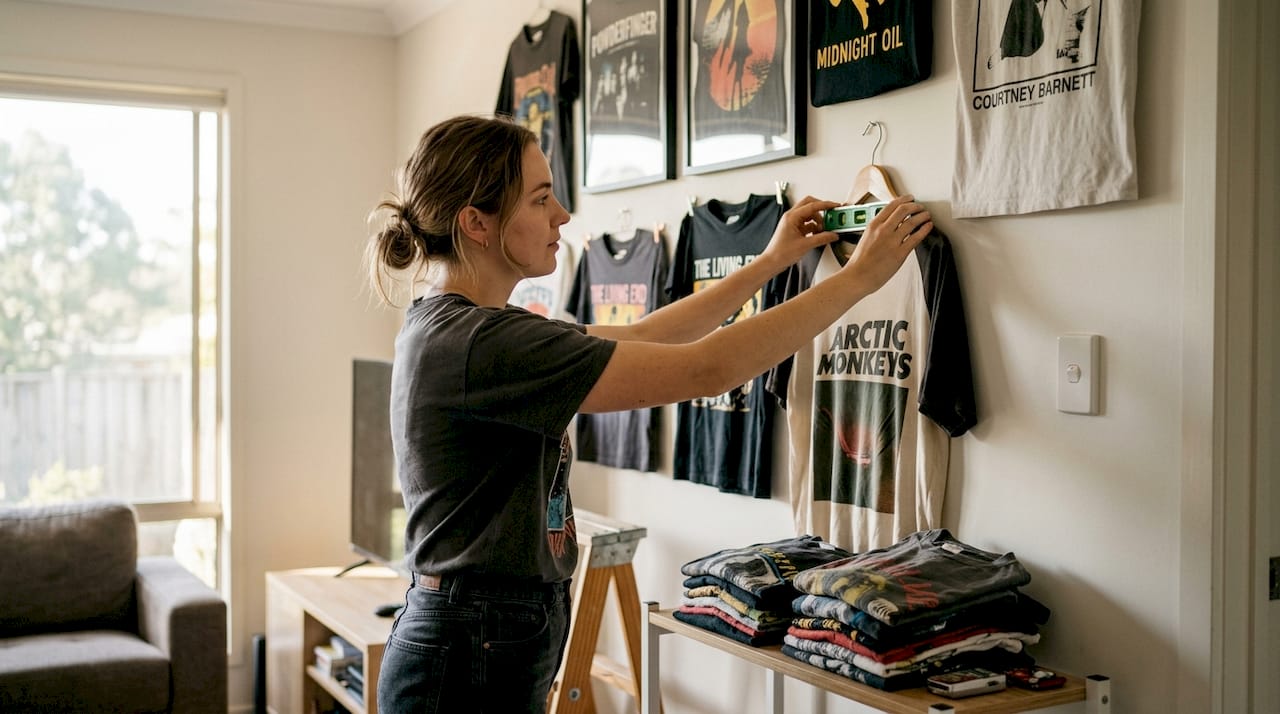
- Decorative clips and rods: Trouser clips or binder clips attached to a timber dowel let you swap shirts in and out in seconds. Great for collectors who like to rotate their display.
- Padded hangers and wall-mounted racks: A padded hanger on a single hook keeps the shirt’s shoulders in shape and avoids the stretch that wire hangers cause.
- Timber ladders: Lean a raw timber ladder against the wall and drape shirts over the rungs. It’s a low-commitment setup that looks intentional and works well in a music room or studio.
- Picture rail hooks: If your home has picture rails, use them. They’re designed for weight-bearing and leave no new holes in the wall.
Before hanging any shirt, iron it on a low setting with a pressing cloth. Hang shirts evenly using a spirit level if you’re mounting multiple pieces side by side. Uneven displays look chaotic rather than curated.
Pro Tip: Rotate your shirt display every four to six weeks. This limits each shirt’s cumulative light exposure and keeps your collection feeling fresh every time someone walks into the room.
If you’re still weighing up whether to display or store, understanding the benefits of second-hand displays and the difference between vintage versus second-hand shirts can help you prioritise which pieces go on the wall first.
Using mannequins, stands, and 3D displays
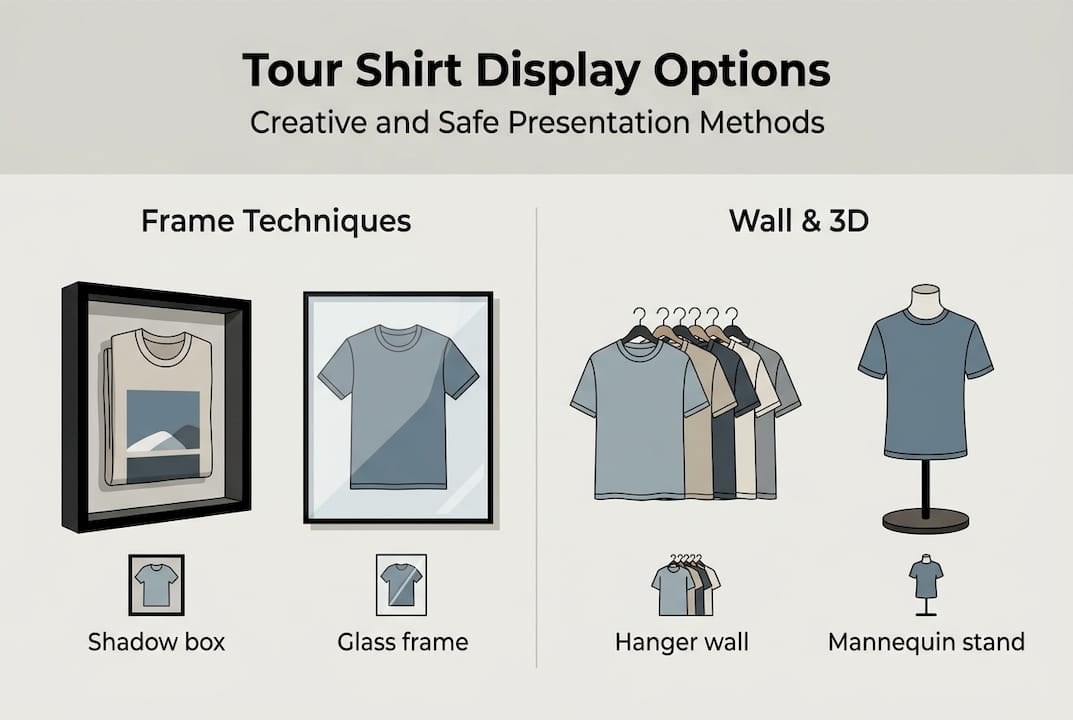
A flat shirt on a wall tells part of the story. A shirt on a mannequin torso tells the whole story. Three-dimensional displays create a presence that framed pieces simply can’t replicate, and they’re surprisingly straightforward to set up.
Here’s how to build a solid 3D display:
- Choose an adjustable torso stand with a height range of roughly 45 to 85 centimetres. Adjustable metal or timber stands work well for both display and market setups.
- Set the stand height so the shirt’s graphic sits at natural eye level for your space.
- Dress the mannequin carefully, pulling the shirt down evenly from the hem to avoid bunching at the shoulders.
- Pair with complementary items if you like. A vintage tour programme, a patch, or a wristband placed nearby adds context without cluttering the display.
- Secure the base on a flat, stable surface away from pets, direct sunlight, and high-traffic areas where it could be knocked.
“Combining frames and mannequins is one of the most effective ways to enhance a large collection. The contrast between flat and three-dimensional displays creates visual rhythm that draws the eye across the whole room.”
For collectors who want to understand why these shirts matter beyond aesthetics, reading about the importance of band tees in heavy metal culture adds real depth to how you curate your space. Strong visual merchandising principles also apply here. Varying heights, textures, and display formats keeps a collection wall engaging rather than repetitive.
Common mistakes and expert troubleshooting tips
Even experienced collectors make avoidable errors. Here’s what to watch for and how to fix problems quickly.
Mistakes to avoid:
- Direct pinning through fabric: Pins pushed straight through the body of a shirt leave permanent holes. Avoid direct pinning on any shirt with collector value. Always pin through seams or use stitching instead.
- Non-UV glass or acrylic: Standard glass offers zero protection against light-induced fading. A shirt displayed behind regular glass in a bright room can show visible colour loss within months.
- Overstuffing racks: Cramming too many shirts onto a single rack stretches the fabric at the shoulders and collar. Leave breathing room between pieces.
- Skipping the iron: A creased shirt on the wall looks neglected, not curated. Always press before displaying, even for casual setups.
- Full sun exposure: Direct sunlight is the fastest way to destroy a vintage graphic. Even UV glass only reduces damage. Keep displays away from windows that receive direct sun for more than an hour a day.
Quick troubleshooting fixes:
- Sagging shirt in a frame: Add an extra pin or stitch point at the lower hem seam to redistribute the weight.
- Slipping hanger: Use a non-slip hanger grip or a small piece of rubber shelf liner over the hook.
- Uneven wall mount: Use a spirit level and two anchor points rather than one central hook for better balance.
For shirts you’re rotating off display, proper long-term shirt storage is just as important as how you display them. Acid-free tissue and breathable garment bags are your best friends.
Build your collection wall with vintage metal
If you’ve made it this far, you’re serious about doing this properly. And that means you need shirts worth displaying in the first place.
At Vintage Metal, we specialise in genuine ex-tour stock, dead stock, and second-hand heavy metal shirts sourced directly from tours and bands. Every piece in our catalogue has the kind of provenance that makes a display wall genuinely impressive, not just decorative. Whether you’re after a specific band, era, or tour, we stock the real thing. Browse our full range at vintagemetal.com.au and find the shirts that deserve a place on your wall. Your collection wall is only as strong as the shirts hanging on it.
Frequently asked questions
Can I frame an oversized or extra-long vintage tour shirt?
Yes. Oversized vintage shirts need a shadow box of at least 45 by 35 centimetres, and you should always avoid direct pinning through the fabric to prevent permanent holes.
What’s the safest way to display a valuable shirt without permanent damage?
Use an acid-free mount inside a deep shadow box, skip the glue entirely, and make sure the fabric never makes contact with the glass surface.
How do I prevent my shirts fading after I hang them?
Keep displays away from direct sunlight and always use UV-protective acrylic or glass to significantly reduce light-induced colour loss.
Can I display more than one tour shirt together creatively?
Absolutely. Combining frames and mannequins with wall-hung pieces creates a dynamic, layered display that showcases multiple shirts in a cohesive themed arrangement.
Recommended
- Ex tour shirts: value and authenticity in metal collecting – Vintage Metal Store
- Why Tour Dates on Shirts Matter for Metal Fans – Vintage Metal Store
- 7 Iconic Types of Heavy Metal T Shirts for Collectors – Vintage Metal Store
- Why bands sell tour shirts: culture and economics explained – Vintage Metal Store


