



Collectors often wonder what sets ex tour shirts apart from standard band merchandise. These exclusive pieces represent authentic moments in heavy metal history, sold only at specific concerts and tours during the 1990s golden era. For enthusiasts seeking genuine vintage metal memorabilia, understanding ex tour shirts unlocks access to rare finds that connect directly to iconic performances. This guide reveals how to identify authentic pieces, where to find them, and why they command premium collector interest among fans of Metallica, Slayer, and other legendary acts.
Table of Contents
- What Are Ex Tour Shirts And Why Do They Matter
- Identifying Authentic Ex Tour Shirts From The 1990s Heavy Metal Scene
- Where And How To Find Authentic Ex Tour Shirts For Your Collection
- Maintaining And Valuing Your Ex Tour Shirt Collection
- Explore Rare Vintage Metal Tour Shirts At Vintage Metal
Key takeaways
| Point | Details |
|---|---|
| Official tour merchandise | Ex tour shirts are official merchandise sold exclusively during band tours, often limited in quantity and unique to those events |
| Authenticity markers | Genuine 90s pieces feature era-specific printing, stitching, and labels that distinguish them from reproductions |
| Collector demand | Nostalgia and rarity drive strong interest, with limited tour prints commanding significant value |
| Specialised sources | Curated vintage shops and collector communities offer the most reliable access to authenticated pieces |
What are ex tour shirts and why do they matter
Ex tour shirts represent official concert merchandise created specifically for individual band tours and sold exclusively at those events. Unlike regular band shirts available in retail stores year-round, these pieces carry tour-specific graphics, venue lists, and date ranges that document a particular moment in heavy metal history. Ex tour shirts are official merchandise sold exclusively during band tours, often limited in quantity and unique to those events.
The appeal extends beyond simple nostalgia. Collectors prize these shirts because they connect directly to concerts that shaped the heavy metal landscape during the genre’s commercial peak. A Metallica Black Album tour shirt from 1992 doesn’t just show band artwork. It lists every Australian venue, every date, creating a wearable archive of that historic tour.
Several characteristics distinguish ex tour shirts from standard merchandise:
- Limited production runs tied to specific tour lengths
- Graphics incorporating tour names, dates, and venue information
- Unique artwork created exclusively for that tour cycle
- Often higher quality materials than later mass-produced versions
- Connection to specific eras of band history and lineup changes
These features create genuine scarcity. Once a tour ends, production stops. No restocks appear in shops. The only way to acquire one becomes the secondary market, where condition and authenticity determine value. For heavy metal fans who attended these concerts, the shirts evoke powerful memories. For younger collectors, they provide tangible connection to an era they experienced through recordings and stories.
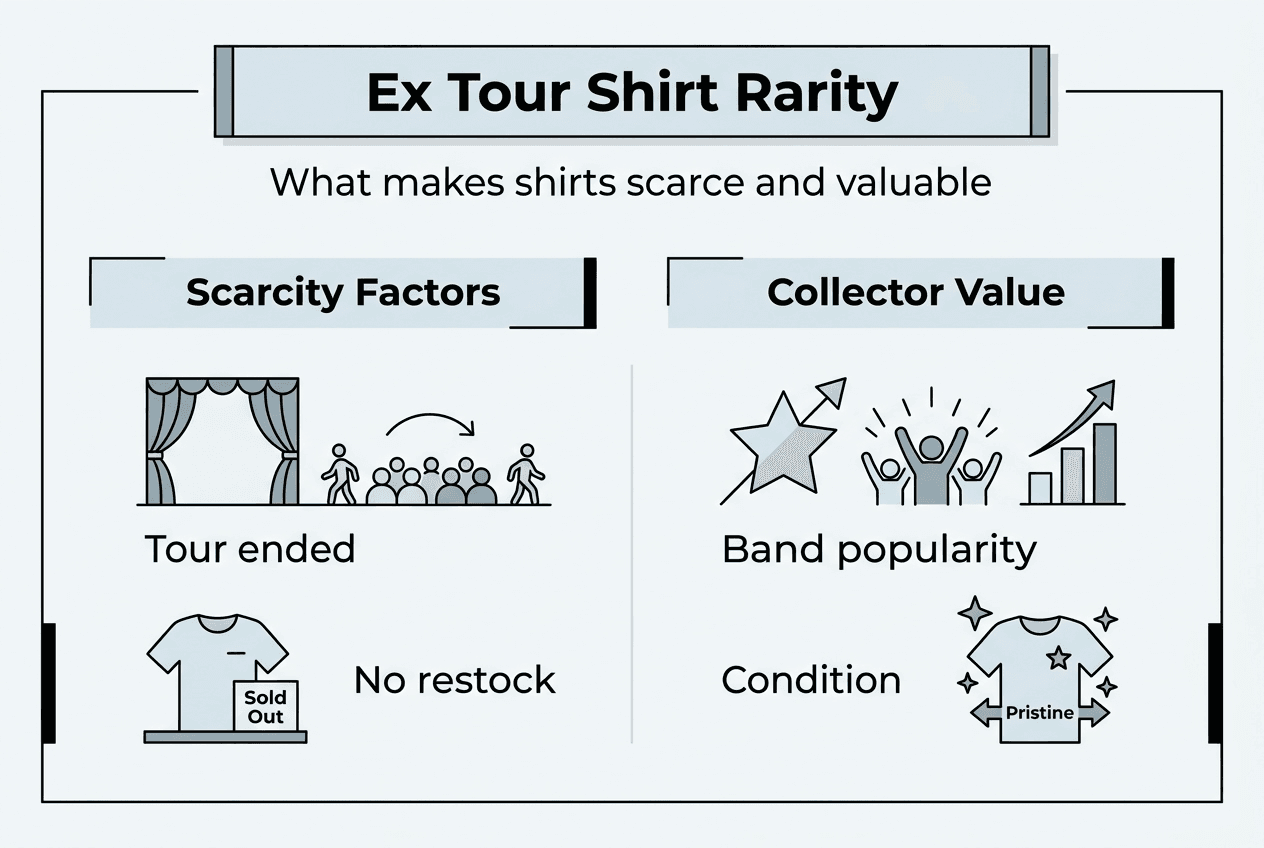
Pro Tip: Tour shirts from short or cancelled tour legs often become the rarest finds, as fewer were produced and distributed before the tour wrapped.
The cultural significance runs deeper than merchandise. Ex tour shirts document the evolution of heavy metal touring, from club circuits to arena domination. They capture artwork styles specific to early 90s design sensibilities. They preserve graphics that bands and management later abandoned or revised. Understanding why tour dates on shirts matter helps collectors appreciate the historical documentation these pieces provide.
Identifying authentic ex tour shirts from the 1990s heavy metal scene
Authenticity verification requires understanding era-specific manufacturing details that counterfeiters often overlook or incorrectly reproduce. Genuine 90s heavy metal tour shirts display consistent characteristics across print methods, fabric composition, and construction techniques that changed significantly in later decades.
Visual inspection reveals the most immediate clues. Authentic 90s prints typically used screen printing with specific ink formulations that aged distinctively. The graphics show slight cracking patterns consistent with decades of wear, not artificially distressed effects added during modern reproduction. Colours fade in predictable ways based on original pigment chemistry. Tour date text appears in fonts and layouts matching period design conventions, not contemporary recreations.
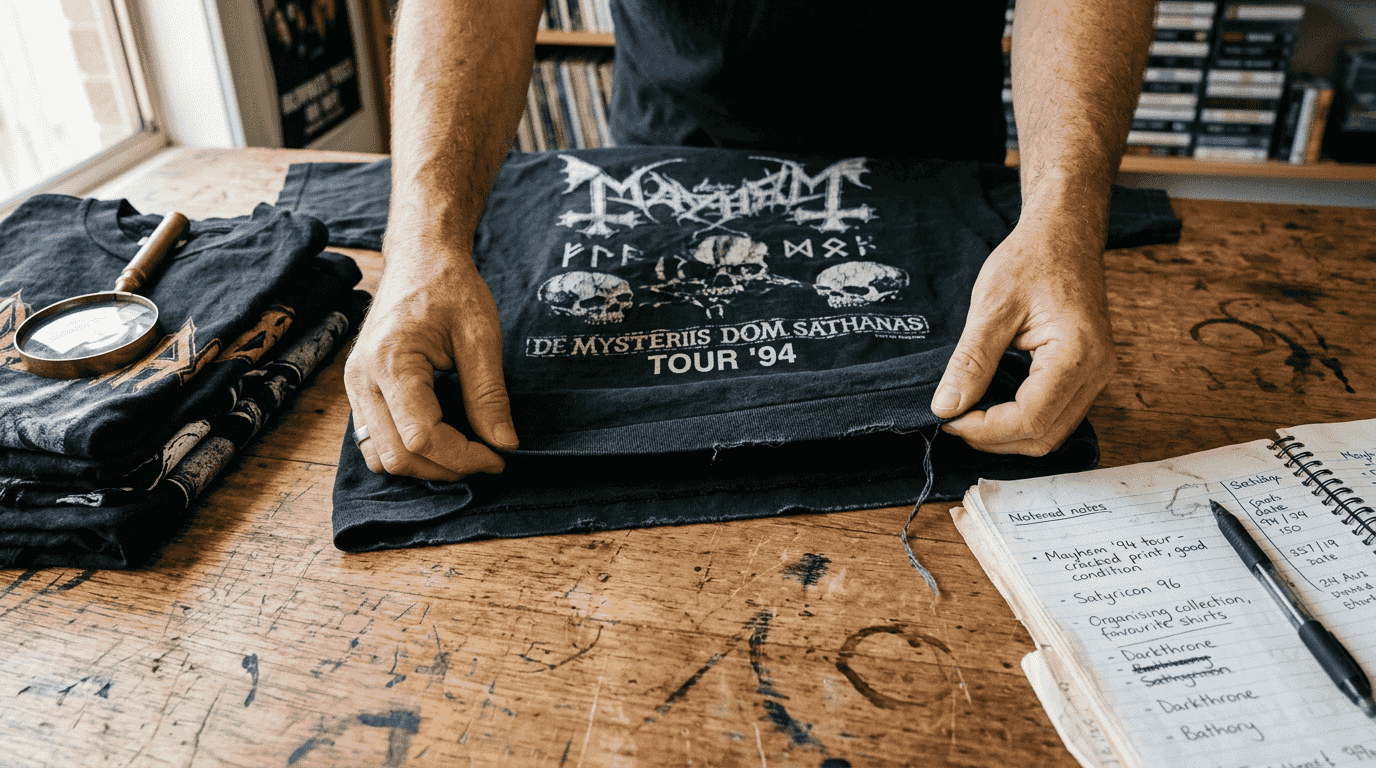
Label examination provides crucial authentication evidence. Some of the most sought-after ex tour shirts are from bands like Metallica’s early 90s tours, which have distinctive printing and labels that collectors look for. Original tags show manufacturers common during that era, with specific label designs and text layouts that changed over subsequent decades. Single stitch construction around collars and sleeves indicates pre-2000s production, as double stitching became standard later.
Follow this verification sequence when examining potential purchases:
- Check print quality for era-appropriate screen printing texture and ink adhesion patterns
- Examine fabric weight and composition, noting that 90s shirts typically used heavier cotton blends
- Inspect collar and sleeve stitching for single stitch construction methods
- Verify label style matches known authentic examples from the same tour and year
- Compare tour dates and venue listings against documented tour schedules
- Assess overall wear patterns for consistency with genuine age versus artificial distressing
Common reproduction tells include overly vibrant colours that haven’t faded appropriately, modern tag designs claiming vintage status, and tour date information that doesn’t match historical records. Counterfeiters often use current manufacturing techniques that create uniform distressing patterns unlike natural aging.
| Authentication Factor | Authentic 90s Feature | Common Reproduction Tell |
|---|---|---|
| Print method | Screen printed with period-appropriate cracking | Digital prints with artificial distressing |
| Fabric weight | Heavier cotton, 180-200 GSM typical | Lighter modern blends, inconsistent weight |
| Collar construction | Single stitch, may show stretching | Double stitch or perfect condition |
| Label style | Era-specific manufacturer tags | Modern tags or incorrect label designs |
| Colour aging | Natural fading with pigment-specific patterns | Uniform fading or overly vibrant colours |
Pro Tip: Research specific tours before purchasing by comparing your shirt’s tour dates against documented concert schedules, as reproduction sellers often include incorrect or fictional venue information.
Understanding why vintage shirts collectible helps contextualise these authentication details within broader collector knowledge. The investment in learning these markers pays dividends by preventing costly mistakes and building confidence in your collection’s authenticity.
Where and how to find authentic ex tour shirts for your collection
Sourcing genuine ex tour shirts requires strategic approaches across multiple channels, each offering distinct advantages and potential pitfalls. Specialised vintage stores like Vintage Metal provide curated collections of authentic ex tour shirts from iconic heavy metal bands, making them ideal for collectors.
Specialised vintage shops offer the highest reliability through professional authentication and curated inventory. These businesses stake their reputation on accuracy, typically providing detailed provenance information and return policies. Staff knowledge helps answer specific questions about tour history and item condition. The trade-off involves potentially higher prices reflecting authentication costs and curation effort.
Online marketplaces expand access but demand greater buyer vigilance. Platforms connecting individual sellers create opportunities for rare finds at competitive prices. However, authentication responsibility shifts entirely to buyers. Detailed photos, seller communication, and careful verification become essential. Request additional images showing labels, print details, and overall condition from multiple angles before committing.
Collector communities and forums provide both sourcing opportunities and knowledge networks. Enthusiasts often sell or trade pieces while offering authentication assistance based on collective expertise. These spaces foster relationships with experienced collectors who share insights about specific tours, bands, and authentication techniques.
| Source Type | Advantages | Considerations |
|---|---|---|
| Specialised vintage shops | Professional authentication, curated inventory, return policies | Higher prices, limited selection |
| Online marketplaces | Broader selection, competitive pricing, direct seller contact | Authentication responsibility on buyer, variable quality |
| Collector communities | Shared expertise, trading opportunities, networking | Requires community participation, variable inventory |
| Estate sales and thrift stores | Potential bargains, unexpected finds | Time intensive, authentication challenges, inconsistent availability |
Verification steps before purchase protect against costly mistakes. Request clear photos of all labels, tags, and print details. Ask sellers about provenance and purchase history when available. Compare listed tour dates against documented concert schedules. Research typical pricing for similar items to identify suspiciously low offers that may indicate reproductions.
Pricing reflects multiple factors beyond simple supply and demand. Tour rarity, band popularity, shirt condition, and size availability all influence value. Short tour legs or cancelled dates create scarcity. Landmark tours from career peaks command premiums. Unworn or minimally worn examples significantly outvalue heavily distressed pieces. Common sizes sell faster but rare sizes attract dedicated collectors.
Pro Tip: Build relationships with reputable sellers by starting with smaller purchases, as established trust often leads to early access to premium pieces before public listing.
Safe transaction practices include using payment methods offering buyer protection, documenting all communications, and clearly establishing return conditions before purchase. When buying remotely, request additional verification photos if initial images don’t show sufficient detail. Understanding vintage metal store collections helps establish baseline expectations for quality and presentation.
Maintaining and valuing your ex tour shirt collection
Preservation techniques directly impact long-term value retention and wearability of vintage ex tour shirts. Proper care extends piece longevity while maintaining the authentic aging characteristics collectors prize.
Washing requires gentle approaches that minimise stress on aged fabrics and prints. Turn shirts inside out before washing to protect graphics. Use cold water exclusively, as heat accelerates colour fading and print deterioration. Select gentle cycles with minimal agitation. Avoid standard detergents containing harsh chemicals that damage vintage inks. Instead, use pH-neutral or specialty vintage fabric cleaners. Never use bleach or fabric softeners. Air dry completely, avoiding direct sunlight that fades colours and avoiding machine dryers that stress fibres and prints.
Storage conditions prevent unnecessary degradation between wears. Fold shirts loosely rather than hanging, as hanging stretches collar and shoulder areas over time. Store in cool, dry locations away from direct sunlight, heat sources, and humidity. Use acid-free tissue paper between folds to prevent creasing and print transfer. Avoid plastic bags that trap moisture, instead using breathable cotton storage bags. Keep shirts away from potential pest access, as insects damage natural fibres.
Display considerations balance visibility with preservation:
- Frame valuable pieces using UV-protective glass and acid-free mounting materials
- Rotate displayed items periodically to distribute light exposure
- Maintain stable temperature and humidity in display areas
- Avoid direct sunlight on framed or displayed shirts
- Use proper mounting techniques that don’t stress fabric or create permanent creases
Pro Tip: Rotate wearing your most valuable pieces sparingly, reserving frequent wear for less rare duplicates, as each wearing cycle adds incremental stress to vintage fabrics.
Valuation factors extend beyond simple rarity. The condition and rarity of ex tour shirts directly affect their value to collectors, with limited tour prints often commanding high prices. Provenance documentation, when available, adds significant value by establishing authentic tour origins. Original purchase receipts, concert tickets from the same tour, or documented ownership history strengthen authentication and increase collector interest.
Condition grading uses consistent terminology across the vintage clothing market. Mint or deadstock describes unworn pieces with original tags. Near mint indicates minimal wear with no visible flaws. Excellent shows light wear but maintains strong graphics and intact construction. Very good displays moderate wear with some fading or minor flaws. Good indicates significant wear while remaining wearable. Understanding these grades helps assess fair pricing and collection value.
Professional appraisal becomes worthwhile for particularly rare or valuable pieces. Specialists provide documented authentication and valuation useful for insurance, sale, or estate planning purposes. This investment makes sense for shirts potentially worth hundreds or thousands of dollars, where expert verification protects against fraud and establishes market value.
Understanding the value of vintage shirts within broader collecting contexts helps position your pieces appropriately. Market values fluctuate based on band popularity cycles, collector demographics, and overall vintage fashion trends. Maintaining awareness of these factors informs buying, selling, and insurance decisions.
Explore rare vintage metal tour shirts at Vintage Metal
Building an authentic ex tour shirt collection requires access to verified pieces from knowledgeable sources. Vintage Metal specialises in curated selections of genuine 90s heavy metal tour merchandise, offering collectors confidence in authenticity and quality.
Our vintage Metallica shirts Australia collection features authenticated pieces from landmark tours, including rare finds from the Black Album era and earlier thrash metal periods. Each piece undergoes careful verification before listing, ensuring you receive genuine tour merchandise.
Discover exceptional pieces like the rare Metallica 1992 tour tee, representing the pinnacle of early 90s metal touring. Browse our complete vintage metal store collections to find authenticated ex tour shirts, deadstock pieces, and second-hand gems from iconic heavy metal bands and tours. Whether you’re seeking specific tour memories or building a comprehensive collection, our curated inventory connects you with genuine pieces that document heavy metal history.
What are ex tour shirts?
What exactly are ex tour shirts?
Ex tour shirts are official band merchandise produced exclusively for specific concert tours and sold only at those tour events. They feature tour-specific graphics, venue lists, and date ranges that document particular moments in band history. Unlike regular retail merchandise available continuously, ex tour production stops when tours end, creating natural scarcity that drives collector interest.
Why do collectors value ex tour shirts from 90s metal bands?
Collectors prize 90s metal tour shirts for their connection to heavy metal’s commercial and cultural peak. These pieces document landmark tours from bands at career highs, using era-specific design and manufacturing that can’t be authentically reproduced. The combination of nostalgia, historical significance, and genuine scarcity creates strong demand, particularly for tours from iconic bands like Metallica, Slayer, and Pantera.
How can I verify a 90s ex tour shirt is authentic?
Authentication requires examining multiple factors including print method, fabric weight, construction techniques, and label styles. Genuine 90s shirts display screen printing with period-appropriate aging, heavier cotton fabrics, single stitch collar construction, and era-specific manufacturer labels. Compare tour dates against documented concert schedules and research typical characteristics for specific bands and tours before purchasing.
What’s the best way to care for vintage metal tour shirts?
Wash vintage shirts inside out using cold water, gentle cycles, and pH-neutral detergents, then air dry away from direct sunlight. Store folded rather than hung, using acid-free tissue between folds in cool, dry locations. Avoid harsh chemicals, heat, and excessive light exposure. Rotate wearing valuable pieces sparingly to minimise stress on aged fabrics and prints.
Where should I look for authentic ex tour shirts?
Specialised vintage stores offer the most reliable access through professional authentication and curated inventory. Online marketplaces provide broader selection but require careful buyer verification. Collector communities offer expertise and trading opportunities. Understanding the importance of tour dates on shirts helps verify authenticity across all sources.
Recommended


