



Why bands sell tour shirts: culture and economics explained
Most fans grab a tour shirt as a memento of a great night, but few realise these garments represent one of the most critical revenue streams keeping bands on the road. While streaming platforms pay artists fractions of a cent per play, a single shirt sale can fund an entire day of touring expenses. For heavy metal bands especially, tour merchandise has evolved from simple souvenirs into sophisticated financial instruments and cultural artefacts that appreciate in value over decades. Understanding why bands prioritise merch sales reveals the economic realities of modern touring and the passionate collector culture that transforms cotton into coveted treasures.
Table of Contents
- The Economics Behind Band Tour Shirts
- How Heavy Metal Bands Use Tour Shirts Strategically
- The Collector Culture Behind Vintage And Second-Hand Tour Shirts
- Challenges And Nuances Of Tour Shirt Sales
- Explore Rare Metal Band Shirts And Exclusive Collections
Key takeaways
| Point | Details |
|---|---|
| High margin revenue | Tour shirts provide 70-200% markup over production costs, making them essential income sources |
| Exceeds ticket profits | Smaller bands often earn more from merchandise than ticket sales, offsetting rising tour expenses |
| Scarcity drives demand | Limited editions and venue exclusives create urgency that boosts immediate sales and long-term collector value |
| Vintage appreciation | Original tour shirts can resell for hundreds or thousands, with condition and rarity determining worth |
| Complex economics | Venue fees of 25-35% and environmental concerns add layers beyond simple profit calculations |
The economics behind band tour shirts
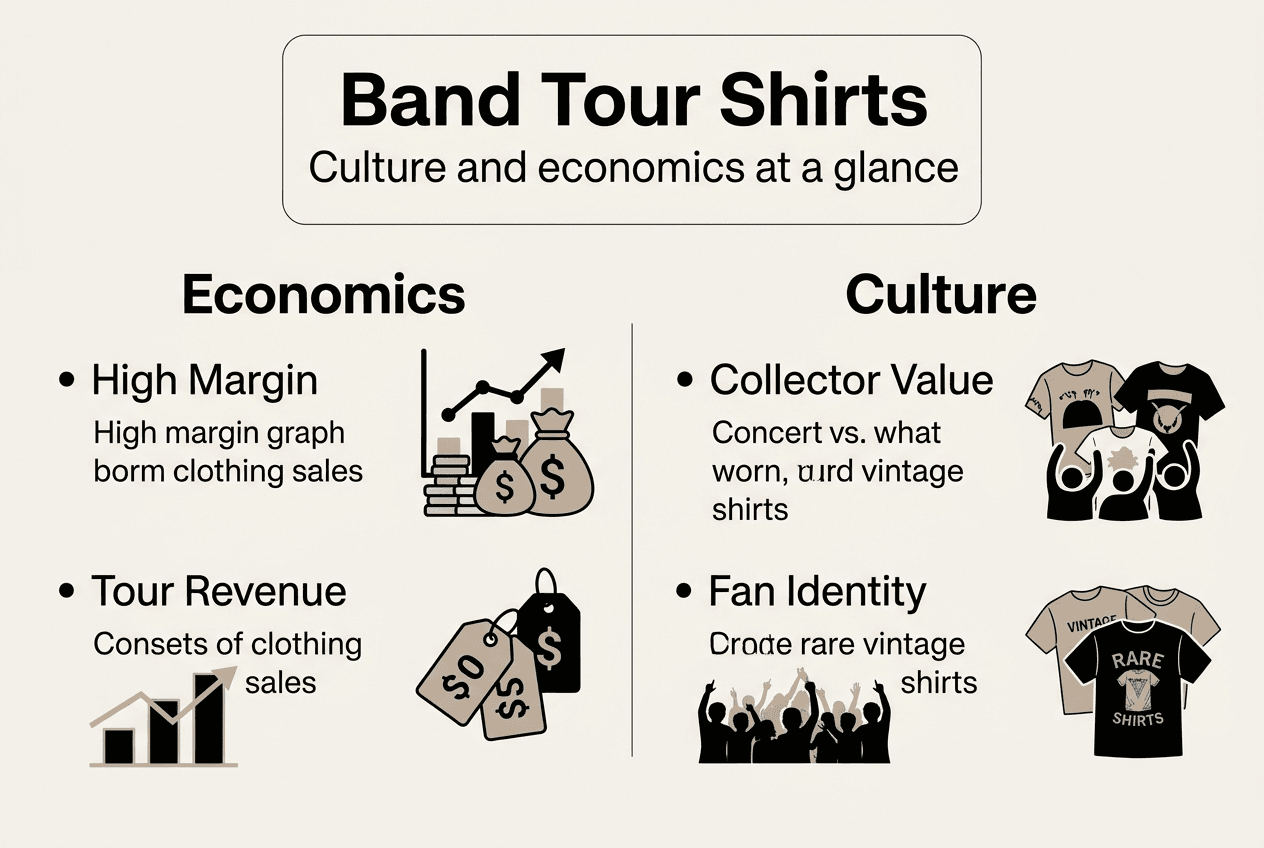
The financial mathematics behind tour merchandise revenue reveals why bands treat their merch tables as seriously as their setlists. Streaming services might generate millions of plays, but the actual payment to artists remains negligible. A band needs roughly 250,000 Spotify streams to earn what a single night of strong merchandise sales delivers. This stark reality explains why merch sales often exceed ticket profits for developing acts and mid-tier touring bands.
Production costs for a standard cotton tour shirt typically range from $8 to $10 per unit when ordered in bulk quantities. Bands then retail these shirts for $30 to $40 at venues, creating profit margins between 70% and 200%. Even accounting for unsold inventory and storage costs, these margins dwarf almost every other revenue stream available to touring musicians. The markup allows bands to absorb various touring expenses whilst maintaining sustainable operations.
Venue agreements introduce complexity into these calculations. Most performance spaces demand hall fees ranging from 10% to 35% of gross merchandise sales. A band selling $2,000 worth of shirts at a venue charging 25% immediately surrenders $500 before accounting for production costs or artist payments. Despite these cuts, merchandise remains the second-largest income source after ticket sales for most touring acts.
Consider the economics for a smaller band playing 30-date tours:
| Revenue source | Per show average | Tour total (30 shows) |
|---|---|---|
| Ticket sales (after venue cut) | $800-1,200 | $24,000-36,000 |
| Merchandise sales (after fees) | $600-1,000 | $18,000-30,000 |
| Streaming (monthly during tour) | $200-400 | $600-1,200 |
| Total tour revenue | $1,600-2,600 | $42,600-67,200 |
These figures demonstrate why bands invest heavily in band tee designs and inventory. For acts without major label backing or radio play, merchandise sales literally determine whether tours break even or generate crippling debt. The shirt you buy doesn’t just commemorate the show; it funds the fuel, accommodation, and equipment maintenance that makes the next show possible.
Pro Tip: Buying merchandise directly from bands at shows ensures they receive maximum profit, as online platforms and third-party retailers take additional percentages that reduce artist income.
How heavy metal bands use tour shirts strategically
Heavy metal acts have refined merchandise strategies into an art form that maximises both immediate revenue and long-term brand value. The genre’s intensely loyal fanbase creates ideal conditions for scarcity-driven sales tactics that other musical genres struggle to replicate. Bands recognise that metal fans don’t just attend concerts; they collect experiences and artefacts that prove their dedication to the culture.
Metallica exemplifies strategic merchandise deployment through their club show exclusives and pop-up shop models. When the band announces intimate venue performances, they simultaneously release limited-run shirts available only at those specific shows. Fans understand these designs will never be reproduced, creating immediate urgency that drives queues at merch tables before the first note sounds. This manufactured scarcity transforms ordinary cotton garments into must-have collectibles.
Venue-exclusive designs represent another powerful tactic. A band might create unique artwork for their Sydney show that differs from their Melbourne performance, encouraging fans to attend multiple dates or trade with collectors in other cities. This approach serves multiple purposes:
- Increases per-fan spending as collectors pursue complete sets
- Creates social media buzz as fans share exclusive designs
- Builds secondary market value that enhances brand prestige
- Encourages attendance at less popular tour dates through exclusive offerings
Limited edition numbering adds another layer of collectibility. When bands print only 100 or 200 units of a design and number each shirt individually, they create artificial scarcity that drives both immediate sales and future resale values. Fans who secure number 001 or other low numbers gain bragging rights within collector communities, whilst those who miss out fuel demand in secondary markets.
The psychology behind these strategies leverages fear of missing out whilst simultaneously rewarding dedicated fans. Someone who travels to multiple tour dates and collects exclusive shirts from each venue demonstrates commitment that resonates deeply within heavy metal culture. These limited edition tour shirts become wearable proof of fandom, signalling insider status to fellow enthusiasts.
Pro Tip: Follow your favourite bands on social media before tours to learn about exclusive merch drops and limited releases, giving you time to plan purchases before items sell out.
The collector culture behind vintage and second-hand tour shirts
The transformation of tour shirts from disposable concert souvenirs into valuable collectibles reflects broader cultural shifts in how we value music memorabilia. Scarcity remains the primary driver of collector interest, but multiple factors determine whether a shirt appreciates from its original $30 purchase price to hundreds or thousands in resale markets. Understanding these valuation mechanics explains why serious collectors treat vintage tour shirts with the same reverence as rare vinyl pressings.
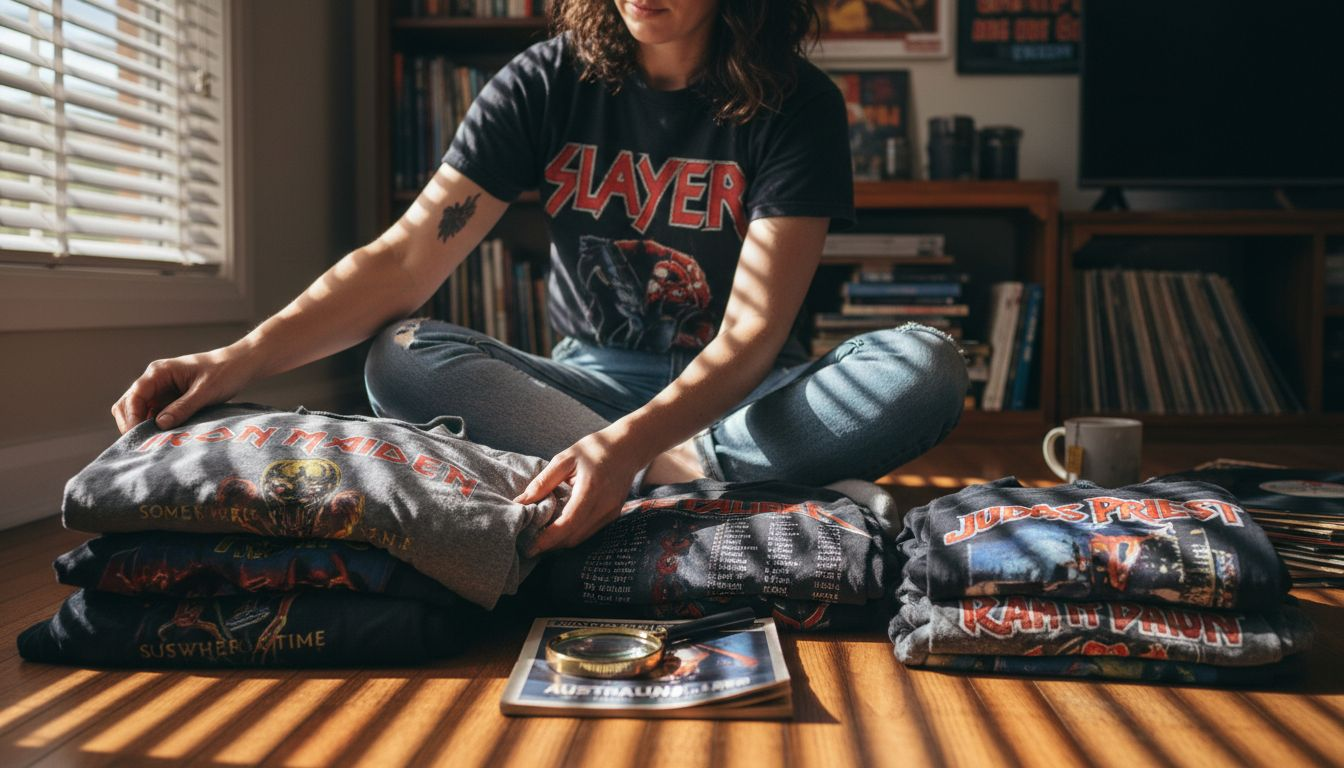
Rarity stems from multiple sources beyond simple limited production runs. Tours that ended abruptly, promotional shirts never sold publicly, or designs pulled due to copyright issues all create scarcity that collectors prize. A shirt from a band’s final tour before a decades-long hiatus carries historical significance that standard merchandise cannot match. The fewer examples surviving in good condition, the higher the potential value.
Condition dramatically impacts collectibility and price. Vintage shirt grading follows similar principles to comic book or trading card authentication:
| Condition grade | Description | Value impact |
|---|---|---|
| Deadstock/mint | Never worn, original tags, no flaws | 100% (highest value) |
| Near mint | Worn once or twice, minimal washing, vibrant print | 70-85% |
| Excellent | Light wear, minor fading, no holes or stains | 50-65% |
| Good | Moderate wear, visible fading, print intact | 30-45% |
| Fair/poor | Heavy wear, significant fading, holes or damage | 10-25% |
Authenticity verification presents ongoing challenges as vintage tour shirt values climb. Counterfeiters reproduce popular designs using artificially aged fabrics and printing techniques that fool casual buyers. Serious collectors examine tag styles, printing methods, fabric composition, and design details that vary between authentic tour merchandise and modern reproductions. Original 1980s and 1990s shirts used screen printing techniques and fabric blends that differ noticeably from contemporary manufacturing.
Resale values demonstrate the investment potential of authentic vintage tour merchandise. Metallica tour shirts from 1992-1996 regularly sell for $102 to $160 depending on condition and specific tour. Rare Nirvana designs command $278 or more, whilst exceptional Grateful Dead concert tees have reached $2,750 at auction. These prices reflect not just scarcity but cultural significance; owning a shirt from a legendary tour connects collectors to music history in tangible ways.
Heavy metal tour shirts have transcended their original purpose to become streetwear staples embraced by luxury fashion brands and style influencers. High-end designers incorporate vintage band tees into runway collections, whilst celebrities pair rare tour shirts with designer jeans and accessories. This crossover appeal expands the collector base beyond traditional metal fans to include fashion enthusiasts who value the aesthetic and cultural cachet these garments provide.
The distinction between vintage and second-hand shirts matters significantly to collectors. Vintage specifically refers to items from past eras (typically 20+ years old) with historical value, whilst second-hand simply means previously owned regardless of age. A 2024 tour shirt sold on the secondary market qualifies as second-hand, but a 1991 Metallica Black Album tour tee represents genuine vintage merchandise with corresponding collector premiums.
Serious collectors approach second-hand metal shirt collecting with research and patience. They study tour histories, memorise tag variations across different eras, and network with other enthusiasts to verify authenticity before making significant purchases. The community aspect enhances the hobby; collectors trade duplicates, share authentication knowledge, and celebrate rare finds together.
Challenges and nuances of tour shirt sales
Beneath the attractive profit margins and collector enthusiasm lies a more complex reality that challenges the perception of merchandise as guaranteed income. Venue agreements represent the most immediate complication, with hall fees consuming 25-35% of gross sales before bands receive payment. Larger venues and festivals typically demand higher percentages, arguing their audiences and infrastructure justify the cuts. These fees directly reduce the per-shirt profit that makes merchandise economically viable.
Poorly attended tours expose the limitations of relying on merchandise revenue. A band playing to half-empty rooms cannot compensate for weak ticket sales through merch alone. If only 100 people attend a show and 30% purchase shirts, that generates perhaps $900 in gross sales. After venue fees of 30% ($270) and production costs of $10 per shirt ($300), the band nets just $330. Split amongst four members plus crew, this barely covers a night’s accommodation. Merchandise amplifies successful tours but cannot rescue failing ones.
Environmental concerns increasingly complicate merchandise production decisions. Industry analysis reveals that 60% of clothing derives from synthetic or fast fashion fabrics with significant environmental footprints. Standard tour shirts typically use cotton-polyester blends that require substantial water and energy to produce, whilst synthetic fabrics contribute to microplastic pollution through washing. Shipping merchandise internationally for global tours adds further carbon emissions that conflict with growing environmental awareness amongst fans.
Some bands respond by exploring sustainable alternatives:
- Organic cotton production that eliminates pesticide use and reduces water consumption
- Recycled polyester fabrics manufactured from post-consumer plastic bottles
- Local printing in each tour region to minimise shipping distances and emissions
- On-demand production models that eliminate unsold inventory waste
- Biodegradable packaging materials replacing plastic polybags
These sustainable options typically increase production costs by 20% to 40%, forcing difficult decisions between environmental responsibility and profit margins. Bands must either absorb the additional costs (reducing their income) or raise retail prices (potentially decreasing sales volume). Neither option offers simple solutions, particularly for developing acts operating on razor-thin budgets.
Inventory management presents ongoing challenges that experienced tour managers navigate carefully. Ordering too few shirts means leaving money on the table when demand exceeds supply. Ordering too many creates storage costs and dead stock that never sells. Size distribution adds another variable; most venues sell more medium and large shirts than small or extra-large, but regional preferences vary. A band touring Europe might need different size ratios than one playing Australian venues.
“Merchandise revenue has become essential for tour sustainability, but it introduces complexities around venue agreements, environmental impact, and inventory risk that require sophisticated management beyond simply printing shirts and hoping they sell.”
The economics of tour merchandise reveal an industry adapting to streaming’s decimation of traditional recording revenue. Bands have transformed simple souvenirs into carefully managed product lines that fund their artistic careers, whilst fans and collectors have elevated these items into cultural artefacts worth preserving and trading. Understanding both perspectives illuminates why that $35 shirt represents far more than cotton and ink.
For bands seeking alternatives to traditional merch platforms, the landscape continues evolving with new services offering better terms, sustainable options, or specialised features for specific genres and fan communities.
Explore rare metal band shirts and exclusive collections
Now that you understand the cultural significance and economic value driving tour shirt collecting, you can explore authentic vintage and rare pieces that connect you directly to heavy metal history. Discovering a rare Metallica 1992 tour tee from the Black Album era or browsing curated vintage Metallica shirts in Australia offers tangible connections to legendary performances and pivotal moments in metal culture.
Whether you’re building a collection focused on specific bands, tours, or eras, or simply want to own a piece of authentic metal heritage, exploring verified vintage and second-hand tour shirts allows you to participate in the collector culture whilst supporting sustainable fashion practices. Browse the complete band shirts collection to find deadstock, ex-tour inventory, and authenticated vintage pieces that represent genuine music history rather than modern reproductions.
Frequently asked questions
Why do bands charge so much for tour shirts?
Bands price tour shirts to cover production costs, venue fees, and touring expenses whilst generating sustainable income. With streaming paying minimal royalties, merchandise provides essential revenue that keeps bands touring and creating music.
How can I tell if a vintage tour shirt is authentic?
Authentic vintage shirts show period-correct tags, printing techniques, and fabric compositions that differ from modern reproductions. Research the specific tour dates, examine the tag style for that era, and verify the design matches documented merchandise from those performances.
Are tour shirts worth collecting or reselling?
Rare tour shirts from significant tours, especially in excellent condition, appreciate substantially over time. Shirts from final tours, limited releases, or culturally important performances offer the strongest investment potential within the collector market.
How do limited edition shirts affect fan experience?
Limited editions create excitement and urgency that enhance the concert experience for collectors, but can frustrate casual fans who miss out. The exclusivity rewards dedicated fans whilst building long-term brand value through scarcity.
What impact does merch production have on the environment?
Standard merchandise production consumes significant water and energy, with most shirts using synthetic blends that contribute to microplastic pollution. Some bands now explore organic cotton, recycled materials, and local printing to reduce environmental impact, though these options increase costs.
Where can I find authentic vintage metal tour shirts?
Specialised vintage retailers, verified online marketplaces, and collector communities offer authenticated vintage tour merchandise. Research sellers carefully, examine condition grades, and verify authenticity through tag styles and printing techniques. Collections like vintage Metallica shirts in Australia provide curated, authenticated options for serious collectors.
Recommended


