



TL;DR:
- The vintage metal t-shirt market has surged in value due to rarity, authenticity, and provenance, making verification essential. Iconic shirts are distinguished by tour-specific details, original artwork, and authentic manufacturing marks, not just age. As fake reproductions grow more sophisticated, collectors increasingly rely on documented provenance and careful scrutiny to preserve genuine history.
If you’ve ever held a genuine 1984 Iron Maiden tour shirt and felt something shift, you already understand why this market is unlike any other. The vintage music-tee category has become big business, and with that growth comes a flood of convincing reproductions that can catch even seasoned collectors off guard. Knowing which metal shirts are truly iconic, and why they command serious money, means going well beyond the artwork and trusting a specific set of hard-earned criteria.
Table of Contents
- Key criteria for identifying iconic metal t-shirts
- Classic vintage metal t-shirts every collector knows
- Tour shirts versus generic band tees: why back prints and date details matter
- Spotting authentic vintage metal tees: risks and verification tricks
- Why authenticity is the new rarity for collectors in 2026
- Explore and source iconic vintage metal shirts
- Frequently asked questions
Key Takeaways
| Point | Details |
|---|---|
| Tour shirts are king | Tees from original band tours with date back prints are the most sought-after by serious collectors. |
| Art and provenance matter | Recognisable artwork plus clear origin—like tags or gig photos—is key for top value. |
| Repro risk is real | Modern reproductions are common—knowing how to verify tags and stitching is essential. |
| Market keeps growing | The demand for vintage metal t-shirts continues to rise, making authenticity checks more crucial than ever. |
Key criteria for identifying iconic metal t-shirts
Not every old band shirt qualifies as iconic in collector terms. The difference between a shirt worth $30 and one worth $3,000 comes down to a tight cluster of factors that serious collectors treat like gospel. Understanding this framework is the entry point into the deeper hobby.
Rarity and band-specific artwork are the first filters. Shirts printed for a single leg of a tour, released only at specific venues, or featuring one-off artwork commissioned for a specific event are automatically more sought after. A shirt that thousands of people could buy online in 2001 has a much lower ceiling than one sold exclusively at a 1987 warehouse gig.
Key criteria collectors use to assess iconic status:
- Tour-specific back prints listing actual venue names, cities, and dates
- Screen-printed graphics using original band-approved artwork, not later licensed reproductions
- Manufacturer tags from known era-appropriate blank suppliers like Screen Stars, Brockum, Giant, or Anvil
- Single-stitched hems and sleeves, which were standard on shirts made before the mid-1990s
- Visible print wear consistent with the claimed age, including cracking, fading, and distress around wash lines
- Provenance documentation such as photographs, gig tickets, old purchase receipts, or letters of origin
The vintage collector’s guide at Vintage Metal goes deep on each of these points with era-specific detail. It’s worth bookmarking if you’re building a serious collection.
“Iconic metal T-shirts with strong collector appeal commonly centre on recognisable band artwork and specific tour or era associations, often including back prints with tour dates and logos rather than generic album-art tees.” GQ
One of the most common collector mistakes is assuming that age alone equals value. A faded generic logo shirt from 1992 is still a generic logo shirt. Context, event specificity, and manufacturing details elevate a shirt from old to iconic.
Pro Tip: If you’re just starting out, read through the tips for buying second hand shirts before spending anything above $100 on a single piece. Knowing the red flags early saves real money.
Classic vintage metal t-shirts every collector knows
With the criteria locked in, it’s worth examining specific shirts that have achieved legendary status and consistently appear at the top of want lists globally. These are the shirts that shaped the collector market as we know it.
Metallica “Metal Up Your Ass” (1983) is arguably the holy grail of metal tees. Originally printed before the band pivoted to the Kill 'Em All rebrand, this shirt features the controversial toilet-bowl artwork and was sold in extremely limited quantities at early shows. Authentic examples appear rarely and command prices well into four figures.
Iron Maiden “World Slavery Tour” (1984 to 1985) shirts are among the most counterfeited in the hobby. The original features the iconic Eddie back print in full colour with a detailed venue list spanning multiple continents. Genuine examples from this tour have specific tag configurations and print registration that reprints consistently fail to replicate perfectly.
Slayer “Reign in Blood” tour tees from 1986 to 1987 are notorious for their aggressive blood-splattered official artwork. These shirts were printed in small batches for North American dates and are now extremely hard to source without provenance. Colour accuracy and ink density on the originals are distinct from modern fan-made runs.
Guns N’ Roses “Appetite for Destruction” original 1987 tour shirt featuring the uncensored Robert Williams artwork is one of the most talked-about finds in the entire vintage tee space. The artwork was pulled from the album cover due to controversy, making shirts from the earliest tour dates carrying that image exceptionally rare collector pieces.
Sepultura “Arise” 1991 tour tee, particularly the South American and European date editions, represents a fascinating subcategory. Regional pressing differences in the font used for city listings, plus the locally sourced shirt blanks, create distinct variations that hardcore Sepultura collectors track obsessively.
Here’s a snapshot of how these shirts perform across the secondary market:
| Shirt | Era | Approx. secondary market value | Key feature |
|---|---|---|---|
| Metallica “Metal Up Your Ass” | 1983 | $2,000 to $6,000+ | Original controversial artwork |
| Iron Maiden “World Slavery Tour” | 1984 to 1985 | $800 to $2,500 | Full venue back print, Eddie artwork |
| Slayer “Reign in Blood” tour | 1986 to 1987 | $600 to $1,800 | Blood-splattered official print |
| Guns N’ Roses “Appetite” original | 1987 | $1,500 to $4,500+ | Uncensored Williams artwork |
| Sepultura “Arise” regional edition | 1991 | $300 to $900 | Regional blank and date variants |
These figures fluctuate based on condition, provenance, and current demand cycles, but the trend across all of them is consistently upward. You can explore more about pieces like these in the classic vintage metal tees archive, which covers specific authentication points for each era. For even rarer finds, the rare heavy metal concert shirts section covers shirts that surface only occasionally at estate sales or through direct collector networks.
Tour shirts versus generic band tees: why back prints and date details matter
To deepen our understanding, here’s how different shirt types compare in collector circles.
This is one of the most debated topics among enthusiasts, but the answer is fairly clear when you look at the data consistently. Tour shirts with specific back prints occupy a different tier entirely from general merchandise, and here’s why.
A tour shirt proves an event. It places a specific object at a specific time and place, linking it to a concert experience that can never be repeated. That narrative gives the shirt a dimension a logo tee simply cannot carry. Even if the artwork on a generic band shirt is beautiful, it was available at every record shop and merch booth for months or years, making it abundant and therefore less desirable.
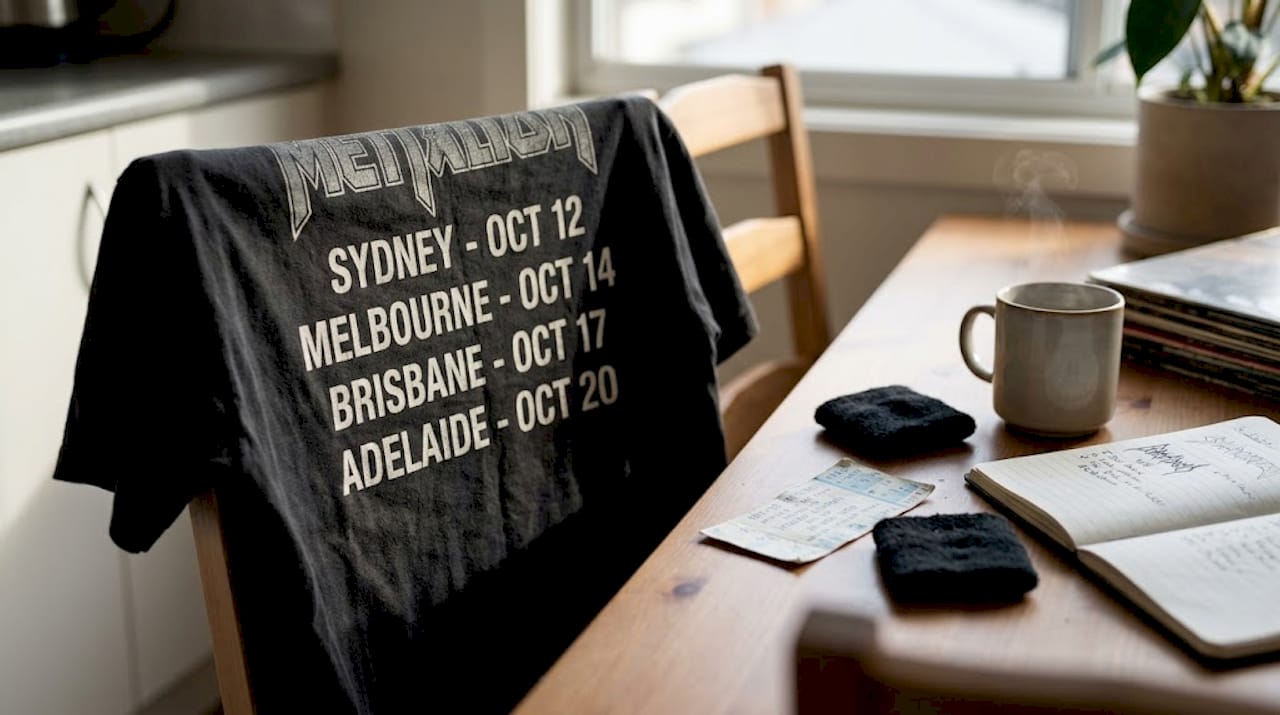
| Shirt type | Typical collector interest | Back print detail | Value ceiling |
|---|---|---|---|
| Tour-specific with dated back print | Very high | City names, venue, dates | $500 to $5,000+ |
| Tour-era but no back print | Moderate to high | Front artwork only | $200 to $1,500 |
| Generic logo or album tee, same era | Low to moderate | None | $50 to $400 |
| Modern reproduction or reissue | Very low | Often mimics vintage | $20 to $80 |
Back print details also serve an authentication function. Fakers who reproduce tour shirts frequently get the venue list wrong, use the wrong font weight, or apply the print to a blank that didn’t exist in the claimed year. Cross-referencing a back print against known setlists, venue histories, and regional tour documents is a technique advanced collectors use regularly.
“Specific tour or era associations, often including back prints with tour dates and logos, are what separate genuinely collectible pieces from generic art tees.” GQ
One important caution: some bands reused the same graphic across multiple tour cycles and years. Black Sabbath and Ozzy Osbourne merchandise in the 1980s, for instance, had overlapping artwork appearing on shirts printed at different times. Always cross-check artwork against the specific tour you believe the shirt represents. The collector’s buying guide covers this overlap issue with practical examples, and browsing detailed band t-shirt examples from other specialist sources can also build your eye for these distinctions.
Pro Tip: When assessing a tour shirt, search for setlist archives and historical tour databases online. If the city listed on the back doesn’t match a real show date from that tour, you have a problem.
Spotting authentic vintage metal tees: risks and verification tricks
Even with the best list of shirts in hand, knowing how to verify their authenticity is crucial for building a true collector’s wardrobe.
Fakes have improved dramatically in the past decade. What once required a trained eye can now fool casual buyers almost completely. The good news is that authentic shirts still carry consistent manufacturing evidence that mass reproduction can’t easily replicate at scale.
Here’s a step-by-step verification approach used by serious collectors:
- Check the tag first. Era-appropriate blanks include Screen Stars by Fruit of the Loom (common 1970s to early 1990s), Brockum (official licensed merch from the late 1980s onward), Giant (popular in the late 1980s to mid-1990s), and Anvil. Each tag has a specific font, stitching pattern, and label material consistent with its era. Mismatched tags are an immediate red flag.
- Examine the stitching. Pre-1995 shirts almost universally used single-needle stitching on the sleeves and hem. Double-stitched hems appeared more consistently after the mid-1990s. Running your thumb along the edge of the sleeve seam tells you a great deal very quickly.
- Study the print itself. Original screen prints from the 1980s and early 1990s have a specific ink texture. Plastisol inks from that era sit slightly raised on the fabric. Modern water-based reprints often look flatter and more even, which paradoxically looks less “vintage” up close.
- Look for natural wear patterns. Legitimate wear follows washing lines, collar stretch, and armpit stress points. Even fading should appear consistent with repeated washing rather than chemically applied distressing. Artificial faking of wear is often uneven or appears in illogical locations.
- Demand provenance from sellers. A legitimate seller with a genuine shirt should be able to tell you where it came from. Old photos, gig tickets, collector forum history, or an estate sale receipt all add weight to the claim.
“Some listings marketed as ‘vintage’ may be modern reproductions or vintage-inspired reprints; research blanks and manufacturing details rather than relying only on dates or size labels.”
The retro shirt shopping guide walks through this entire verification process with images and specific tag comparisons for the most common eras. If you’re about to spend serious money, running through that checklist first is non-negotiable.
Pro Tip: A price that looks too good is almost always a signal. A genuine “World Slavery Tour” Maiden shirt for $120 is not a bargain. It’s either a fake or the seller doesn’t know what they have, which creates its own set of complications around provenance and later resale.
Why authenticity is the new rarity for collectors in 2026
Here’s the opinion you won’t hear from every collector: band name and tour era used to be the primary drivers of a shirt’s prestige. In 2026, that’s shifted. The new currency is documentation and verifiable provenance.
As the vintage tee market continues to grow as big business, the financial incentives for sophisticated faking have scaled in proportion. The shirts being produced to deceive collectors today are not the crude screen-on-Hanes jobs of ten years ago. They’re being made on correctly sourced blanks, with aged ink formulations, and sometimes with fabricated provenance attached.
This means that owning a shirt with a clear, verifiable paper trail now elevates its value above an equivalent shirt without one, even if both are genuinely original. The shirt with a photo of the original owner wearing it at the 1985 Maiden gig is worth more than the identical shirt from the same night without that documentation. Full stop.
The Aussie collector community has been particularly sharp about this shift. Knowledge swapping through forums, direct messaging networks, and in-person meets has built a collective intelligence that makes it much harder to pass fakes through trusted channels. That community knowledge is genuinely protective, and tapping into it is one of the best moves a new collector can make.
The advantages of buying second hand shirts from established, reputable sources are worth understanding in full. Buying through sellers with long track records and verifiable histories reduces your risk considerably compared to open marketplace listings with no context.
Authenticity is not just about protecting your money. It’s about preserving the actual history of the music. Every genuine tour shirt is a physical artefact of a moment that happened. That matters to the culture in a way that no reproduction can replicate.
Explore and source iconic vintage metal shirts
If this guide has clarified what separates a truly iconic metal shirt from a convincing imitation, the natural next step is building your collection with confidence.
At Vintage Metal, we specialise in authentic vintage heavy metal t-shirts sourced directly from ex-tour stock, dead stock, and verified collector networks. Every shirt we carry is assessed against the same criteria covered in this article, from tag verification to provenance documentation. Whether you’re searching for a specific tour piece from the 1980s or building a broader collection across the golden era of heavy metal, our curated range is designed for collectors who take authenticity seriously. Browse the collection and find shirts that carry real history, not just the look of it.
Frequently asked questions
What are the top signs a metal t-shirt is truly vintage?
Era-appropriate tags from brands like Screen Stars, Brockum, or Giant, combined with single-needle stitching, authentic print wear, and consistent fading, confirm a shirt’s vintage status. Matching these details against known manufacturing timelines is more reliable than trusting dates or size labels alone.
Are tour shirts always more valuable than album shirts?
Tour shirts with unique back prints listing specific dates, cities, and venues are generally more prized by collectors than generic album art or logo tees. The event-specific association and back print details are what drive that premium in collector circles.
How do collectors verify a metal tee’s authenticity?
Collectors methodically check tags, stitching style, print method and texture, and provenance documentation, then cross-reference against community guides and known tour records. Consulting research on manufacturing blanks and era-specific details is standard practice for any serious acquisition.
Is the vintage metal t-shirt market still growing in 2026?
Yes, collector demand and secondary market values have continued to rise, with the category now representing big business for legitimate buyers and, unfortunately, a parallel increase in sophisticated reproductions. This makes verification skills more valuable than ever for Australian collectors entering or expanding in the market.
Recommended
- Why metal tees are collectible: value, authenticity, culture – Vintage Metal Store
- Why 1990s Heavy Metal Tees Appreciate Up to 2750% Value – Vintage Metal Store
- Collector’s guide to vintage heavy metal t-shirts: spot, value, collec – Vintage Metal Store
- Why preserve old band tees? Value, culture and know-how – Vintage Metal Store
- What defines a collector’s timepiece? Value guide 2026
- Collectible swords checklist: Essential picks for every collector


