



Finding authentic second hand heavy metal band shirts can feel like navigating a minefield of fakes, dodgy sizing, and questionable sellers. Whether you’re hunting for rare tour tees online or digging through stalls at music festivals, knowing what to look for separates savvy collectors from disappointed buyers. This guide shares practical, battle tested strategies to help you confidently identify genuine vintage metal shirts, evaluate their condition, understand sizing quirks, and make smart purchases that preserve both authenticity and value in 2026.
Table of Contents
- How To Evaluate Authenticity And Condition
- Understanding Sizing And Fit For Vintage Metal Shirts
- Comparing Sourcing Options: Online Marketplaces Vs Events
- Top Tips To Make Smart Purchases And Maintain Your Band Shirts
- Find Authentic Vintage Metal Band Shirts In Australia
- FAQ
Key takeaways
| Point | Details |
|---|---|
| Verify authenticity carefully | Check print quality, tags, and fabric to spot fakes before purchasing |
| Understand vintage sizing | Measurements matter more than labelled sizes due to era variations |
| Compare sourcing channels | Online offers variety while events allow direct inspection |
| Research seller reputation | Reviews and return policies protect against poor quality purchases |
| Maintain shirt value | Proper storage and washing techniques preserve condition long term |
How to evaluate authenticity and condition
Authenticity separates valuable vintage pieces from worthless replicas. When you’re eyeing a second hand band shirt, verifying authenticity is crucial to avoid replicas and ensures shirt value. Start by examining the print quality closely. Original screen prints from the 1980s and 1990s typically show slight imperfections and a tactile, raised feel. Modern bootlegs often use digital printing that looks too perfect or feels plasticky.
Tags tell powerful stories. Genuine vintage shirts feature period correct tags with specific manufacturer details, copyright information, and sometimes union labels. Research what tags were common for your target band and era. A Metallica shirt claiming to be from 1991 with a modern Gildan tag screams fake. Check the heavy metal shirts buying checklist 7 steps for comprehensive authentication guidance.
Fabric integrity reveals age and authenticity. Vintage cotton feels different from modern blends, often softer and thinner from years of wear. Look for these authentication markers:
- Single stitch construction on sleeves and hems (common pre 1990s)
- Faded colours consistent with natural aging patterns
- Slight shrinkage or distortion from decades of washing
- Copyright symbols and tour dates matching historical records
- Stitching quality matching the era’s manufacturing standards
Pro Tip: Always ask sellers specific questions about provenance. Where did they acquire the shirt? Can they provide tour date verification? Legitimate sellers welcome detailed inquiries, while dodgy operators get defensive or vague.
Condition assessment goes beyond obvious holes or stains. Examine armpits for yellowing, collar for stretching, and graphics for cracking. Minor wear adds character to vintage pieces, but structural damage affects wearability. The identifying dead stock heavy metal shirts resource helps distinguish pristine unworn stock from heavily used shirts. Honest sellers photograph flaws transparently, so request additional images of any concerning areas before committing.
Understanding sizing and fit for vintage metal shirts
Vintage sizing creates confusion because vintage shirt sizing differs from modern standards and varies by era and brand. A large from 1985 might fit like a modern medium, or sometimes even smaller. Manufacturers used different sizing charts across decades, and natural cotton shrinkage over 30 plus years compounds the challenge. Never trust the tag size alone when buying second hand shirts.
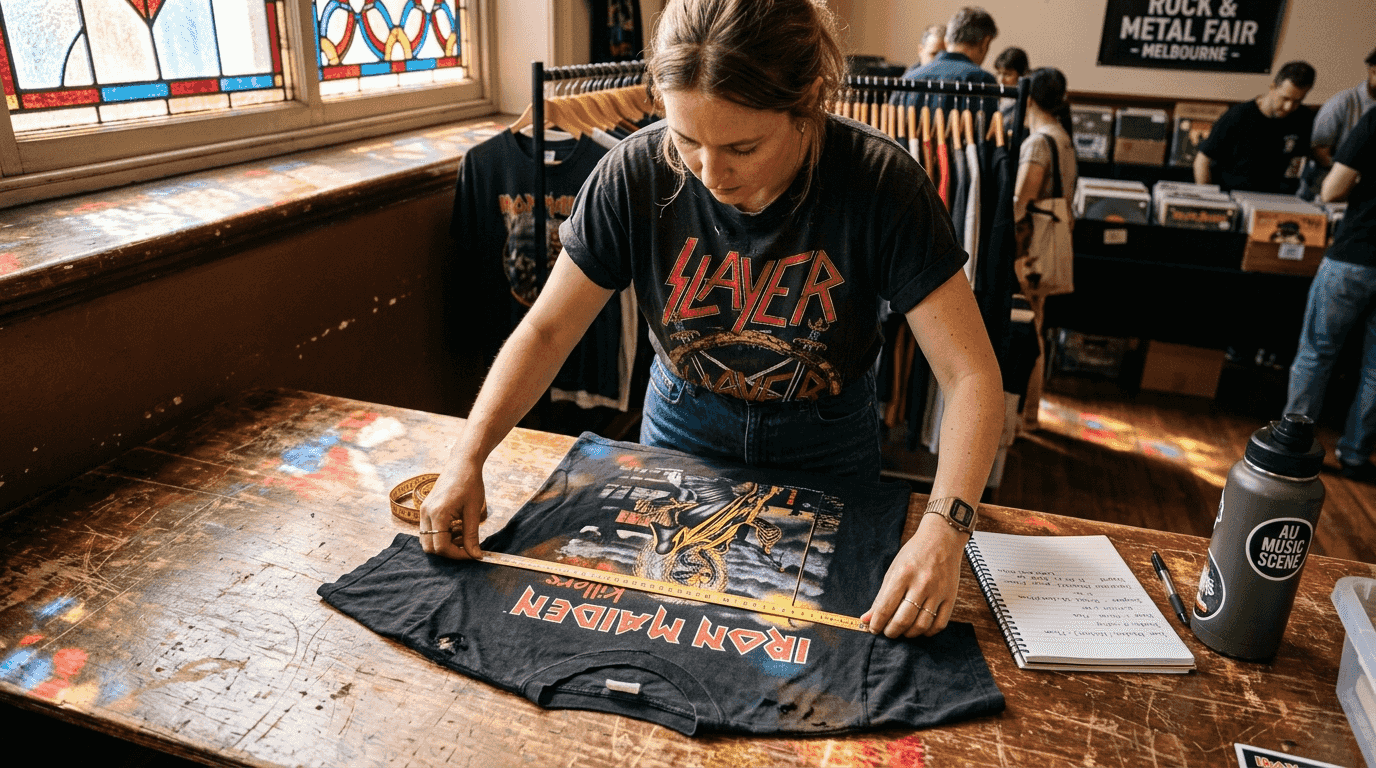
Measurements eliminate guesswork. Request these specific dimensions from sellers: pit to pit width, total length from shoulder to hem, and sleeve length from shoulder seam to cuff. Compare these numbers against your favourite fitting shirts at home. A difference of even two centimetres can mean the distinction between comfortable and uncomfortably tight. Online marketplaces should provide measurement photos with a tape measure visible for verification.
Fabric composition affects fit dramatically. Pure cotton vintage tees have often shrunk substantially from their original size, especially if previous owners used hot water and tumble dryers. Shirts with slight polyester blends hold their shape better but were less common in the 1980s metal scene. Check the how to size vintage band shirts perfect metal fit guide for era specific sizing expectations.
Consider these sizing factors when evaluating fit:
- Era of manufacture (pre 1990 tends smaller, 1990s closer to modern)
- Previous owner’s washing habits (hot vs cold water dramatically affects shrinkage)
- Fabric weight (thicker concert tees hold size better than thin cotton)
- Brand variations (Hanes, Fruit of the Loom, and Screen Stars all sized differently)
- Intended wear style (oversized vintage look vs fitted modern aesthetic)
Pro Tip: If buying at events, bring a flexible tape measure. Sellers usually let you measure garments on the spot, eliminating sizing uncertainty. For online purchases, the vintage shirt sizing guide heavy metal provides brand specific conversion charts.
Shrinkage potential matters for unworn dead stock. Pristine shirts that never saw a washing machine will shrink during first wash, sometimes significantly. Factor this into your size selection, or plan to hand wash in cold water to minimise dimensional changes. Experienced collectors often size up when buying unworn vintage to account for inevitable first wash shrinkage.
Comparing sourcing options: online marketplaces vs events
Each purchasing channel offers distinct advantages and challenges. Online offers convenience and variety but requires more scrutiny on seller and photos. Platforms like eBay, Depop, and Etsy provide access to global inventory, letting you hunt for specific tour shirts or rare band merchandise from your couch. You can compare prices across multiple sellers instantly and often find better deals than physical markets. However, you’re buying blind without touching the fabric or inspecting print quality firsthand.
Events and music festivals create opportunities for hands on evaluation. You can feel fabric weight, check tag authenticity up close, and spot print flaws that photos might hide. Sellers at metal festivals and vintage markets often have deep knowledge about their stock and can share provenance stories. Negotiation feels more natural face to face, and you walk away with your purchase immediately. The downside? Limited selection compared to online, and prices sometimes run higher due to event overheads and captive audiences.
| Factor | Online marketplaces | Events and markets | | — | — | | Selection variety | Massive global inventory | Limited to vendor stock | | Authenticity verification | Relies on photos and seller honesty | Direct physical inspection | | Pricing | Competitive, easy comparison | Variable, negotiation possible | | Convenience | Shop anytime, ships to you | Must attend specific dates/locations | | Return options | Depends on seller policy | Usually final sale |
Online shopping demands extra diligence. Request multiple photos showing tags, print details, and any flaws from different angles. Zoom in on images to check print cracking and fabric pilling. Read seller reviews obsessively, focusing on comments about authenticity and accurate descriptions. Established sellers with hundreds of positive reviews carry less risk than new accounts with minimal history. Check the vintage vs second hand shirts comparison for value assessment frameworks.
At events, inspect systematically:
- Hold shirts up to light to check fabric integrity
- Smell for mustiness indicating poor storage
- Examine stitching for period correct construction
- Compare similar items across vendors for price benchmarking
- Ask about sourcing (estate sales, personal collections, wholesale lots)
Hybrid approaches work brilliantly. Use online research to understand fair market values and authentication details, then apply that knowledge at physical events. Alternatively, build relationships with trusted online sellers who consistently deliver quality, treating them like your personal vintage shirt scouts. Many collectors successfully combine both channels, buying common pieces online while reserving event attendance for hunting true rarities worth hands on evaluation.
Top tips to make smart purchases and maintain your band shirts
Negotiation separates experienced collectors from novices. At events, politely asking “What’s your best price?” often yields 10 to 20 percent discounts, especially late in the day when vendors want to reduce inventory. Point out specific condition issues like small holes or fading to justify lower offers, but remain respectful. Online, make reasonable offers through messaging systems, backing your price with comparable sold listings. Sellers appreciate buyers who’ve done homework over lowball chancers.
Documentation protects your investment. When buying online, screenshot all listing details, photos, and seller descriptions before completing purchase. This evidence proves invaluable if the item arrives misrepresented. For expensive pieces, request additional verification like close up tag photos or measurements before paying. Legitimate sellers accommodate reasonable requests, while scammers often refuse or make excuses.
Return policies provide crucial safety nets. Before buying, confirm whether returns are accepted and under what conditions. PayPal and credit card purchases often include buyer protection, but policies vary. Private sales at events typically offer no returns, so inspect extra carefully. Online marketplaces with structured return windows give you time to authenticate and verify sizing after arrival.
Follow these smart purchasing practices:
- Research recent sold prices for comparable items to establish fair value
- Read seller reviews focusing on authenticity and description accuracy
- Request detailed condition reports including measurements and flaw documentation
- Verify payment methods offer buyer protection against fraud
- Document everything with screenshots and save all communications
- Inspect immediately upon arrival and report issues within return windows
Pro Tip: Join online communities of vintage metal shirt collectors. Members share authentication tips, warn about known counterfeiters, and sometimes offer pieces from personal collections at fair prices. These networks provide invaluable knowledge and buying opportunities.
Preservation starts immediately after purchase. Proper care and storage extends the life and value of vintage metal shirts. Wash vintage tees inside out in cold water using gentle detergent, avoiding harsh chemicals that fade prints. Air dry flat rather than using tumble dryers, which cause shrinkage and crack graphics. Store folded in cool, dry places away from direct sunlight, which degrades fabric and fades colours over time.
Consider archival storage for valuable pieces. Acid free tissue paper between folds prevents creasing damage, while breathable cotton storage bags protect against dust without trapping moisture. Never use plastic bags for long term storage, as they trap humidity and promote mildew. The how to store vintage metal t shirts guide details preservation techniques for serious collectors.
Fabric choice affects care requirements. Pure cotton vintage shirts need gentler handling than modern poly blends. Understanding top fabrics vintage shirts helps you tailor washing and storage approaches. Rare tour shirts deserve extra protection, potentially including professional cleaning for stubborn stains rather than risking home treatment damage.
Find authentic vintage metal band shirts in Australia
After learning authentication and purchasing strategies, you need a trusted source for genuine vintage heavy metal shirts. Vintage Metal Store specialises in authentic second hand band tees, offering Australian collectors access to verified vintage pieces without the authentication headaches. Every shirt undergoes careful evaluation for authenticity, with detailed condition reports and accurate measurements provided upfront.
The collection includes rare finds like vintage Metallica shirts Australia collectors dream about, including hard to find tour merchandise from the band’s legendary 1990s era. Pieces like the rare Metallica 1992 tour tee represent exactly the kind of authenticated vintage stock serious fans seek. Browse the full range of vintage heavy metal shirts to discover your next addition, backed by transparent descriptions and sizing guidance that eliminates guesswork.
FAQ
What should I look for to confirm a band shirt is authentic?
Examine the tag for period correct manufacturers and copyright details matching the shirt’s claimed era. Check print quality for the tactile, slightly imperfect feel of original screen printing rather than smooth digital reproduction. Research specific authentication markers for your target band and tour, including single stitch construction common in pre 1990s shirts and colour palettes matching historical merchandise.
How do I determine the right size when buying second hand shirts online?
Always request exact garment measurements including pit to pit width, total length, and sleeve length rather than relying on tag sizes. Compare these measurements against your best fitting current shirts to ensure compatibility. Remember that vintage sizing runs smaller than modern standards, and decades of washing have often shrunk cotton tees substantially from their original dimensions.
Can I trust online marketplaces for second hand band shirts?
Online platforms can be reliable if you thoroughly vet sellers through reviews and transaction history. Request detailed photos showing tags, print quality, and any condition issues from multiple angles. Verify the seller offers reasonable return policies and uses payment methods with buyer protection. Established sellers with extensive positive feedback present lower risk than new accounts with minimal history.
How much should I expect to pay for authentic vintage metal shirts?
Pricing varies dramatically based on band popularity, tour rarity, condition, and size. Common band shirts in average condition typically range from $50 to $150, while rare tour pieces or pristine dead stock can command $300 to $1000 plus. Research recently sold comparable items on multiple platforms to establish fair market value before making offers or purchases.
What’s the best way to preserve vintage band shirts after purchase?
Wash inside out in cold water with gentle detergent, avoiding bleach and harsh chemicals that damage prints. Air dry flat rather than using tumble dryers, which cause shrinkage and crack graphics. Store folded with acid free tissue paper in cool, dry locations away from direct sunlight. For valuable pieces, consider breathable cotton storage bags that protect against dust while preventing moisture buildup that promotes mildew.
Recommended


