



Sorting through stacks of old band tees, every collector knows there is a real difference between vintage and second-hand. This isn’t just about finding a cool print—it’s about unearthing rare pieces with genuine history and meaning. Understanding what sets a true vintage shirt apart from recent second-hand finds is key to building a collection with lasting value and emotional weight. Explore how age, rarity and identity shape vintage shirts compared to ordinary pre-owned band merchandise.
Table of Contents
- Defining Vintage and Second Hand Shirts
- Identifying Authentic Vintage Band Tees
- Key Differences: Rarity, Age, and Value
- Collectibility and Common Pitfalls for Buyers
- Sourcing and Caring for Old Metal Shirts
Key Takeaways
| Point | Details |
|---|---|
| Distinction Between Vintage and Second-Hand | Vintage shirts are over 20 years old and carry historical significance, while second-hand shirts are simply pre-owned garments without the same cultural weight. |
| Authenticating Vintage Shirts | Look for indicators such as printing texture, label style, and condition to differentiate genuine vintage tees from modern reproductions. |
| Collector Motivation | Collectors are driven by nostalgia and investment potential for vintage shirts, whereas second-hand buyers seek affordability and functionality. |
| Care and Maintenance | Proper storage, washing, and handling practices are essential to ensuring the longevity and value of vintage metal shirts. |
Defining Vintage and Second Hand Shirts
The line between vintage and second-hand shirts matters more than you might think. Understanding the difference shapes how you hunt, value, and organise your collection.
Vintage shirts are defined by their age, rarity, and cultural significance. These aren’t just old—they carry history. A 1987 Metallica tour shirt or a 1992 Slayer concert tee represents a specific moment in heavy metal culture. Vintage pieces carry both economic and symbolic value, tied to the era they come from and the communities that wore them.
Second-hand shirts, by contrast, are simply pre-owned garments. They might be from last year or five years ago. The focus here is reuse and affordability rather than historical weight or rarity. A band tee worn once then sold differs fundamentally from concert merchandise worn at the actual gig decades ago.
Here’s what sets them apart:
- Age: Vintage typically means 20+ years old; second-hand is simply not new
- Rarity: Vintage items often had limited original production; second-hand stock varies widely
- Cultural weight: Vintage carries identity and nostalgia; second-hand focuses on functionality and cost
- Emotional attachment: Collectors bond with vintage pieces; second-hand items are transactional
- Market value: Vintage appreciates; second-hand depreciates like regular clothing
Pro tip: Check the original tour dates and original concert venues printed on the shirt—genuine vintage pieces from actual tours are worth significantly more than reproductions or later reprints, even if both look visually similar.
To clarify collecting priorities, here’s a quick comparison of vintage versus second-hand band shirts:
| Aspect | Vintage Band Shirt | Second-Hand Band Shirt |
|---|---|---|
| Collector Motivation | Investment and identity | Affordability and reuse |
| Typical Age Range | Over 20 years | A few years old |
| Appreciation Potential | High over time | Little to no upside |
| Market Supply | Scarce, limited runs | Abundant, mass produced |
Identifying Authentic Vintage Band Tees
Fake band tees flood the market. Knowing what to look for separates genuine 1980s concert wear from modern reproductions.
Start with the printing technique. Traditional screen printing shows distinctive characteristics that modern methods don’t replicate. Authentic vintage pieces have slightly raised ink, uneven coverage in places, and a certain texture you can feel with your fingers. Digital printing looks too perfect, too flat.
Next, examine the label and tag. Genuine vintage shirts from the 1980s and 1990s have specific label styles. Single-stitch construction is a strong indicator—most vintage concert tees were made this way. Check the label for the brand name, made-in country, and care instructions format. Modern reproductions often use contemporary label styles that didn’t exist in the era.
Here’s what to inspect closely:
- Wear patterns: Natural fading on the chest, shoulders, and collar edges where bodies pressed against fabric
- Ink cracking: Vintage printing develops fine cracks from repeated washing; reproduction inks don’t crack the same way
- Tour dates and venues: Research the band’s actual tour schedule; dates on the shirt must match real tour stops
- Graphics uniqueness: Check if the artwork is still in production or long discontinued
- Tag positioning: Vintage tags appear in specific locations depending on the era and manufacturer
Pro tip: Cross-reference tour dates printed on the shirt against the band’s official tour archives and setlist databases—if the dates don’t match actual tour stops, it’s a reproduction, no matter how authentic the printing looks.
For collectors, identifying genuine pieces is crucial. See how different indicators signal authenticity:
| Indicator | Genuine Vintage Tee | Modern Reproduction |
|---|---|---|
| Printing Texture | Raised, uneven ink | Flat, flawless finish |
| Label Style | Era-specific, single-stitch | Contemporary, multi-stitch |
| Tour Dates & Venues | Match band’s history | Often inaccurate or generic |
| Ink Age Effects | Fine cracking, natural fade | Pristine, minimal wear |
Authentic vintage pieces tell their story through imperfection. Perfect condition often signals modern reproduction.
Key Differences: Rarity, Age, and Value
Vintage and second-hand shirts diverge sharply on three fundamental fronts. Rarity, age, and value create completely different collector experiences.
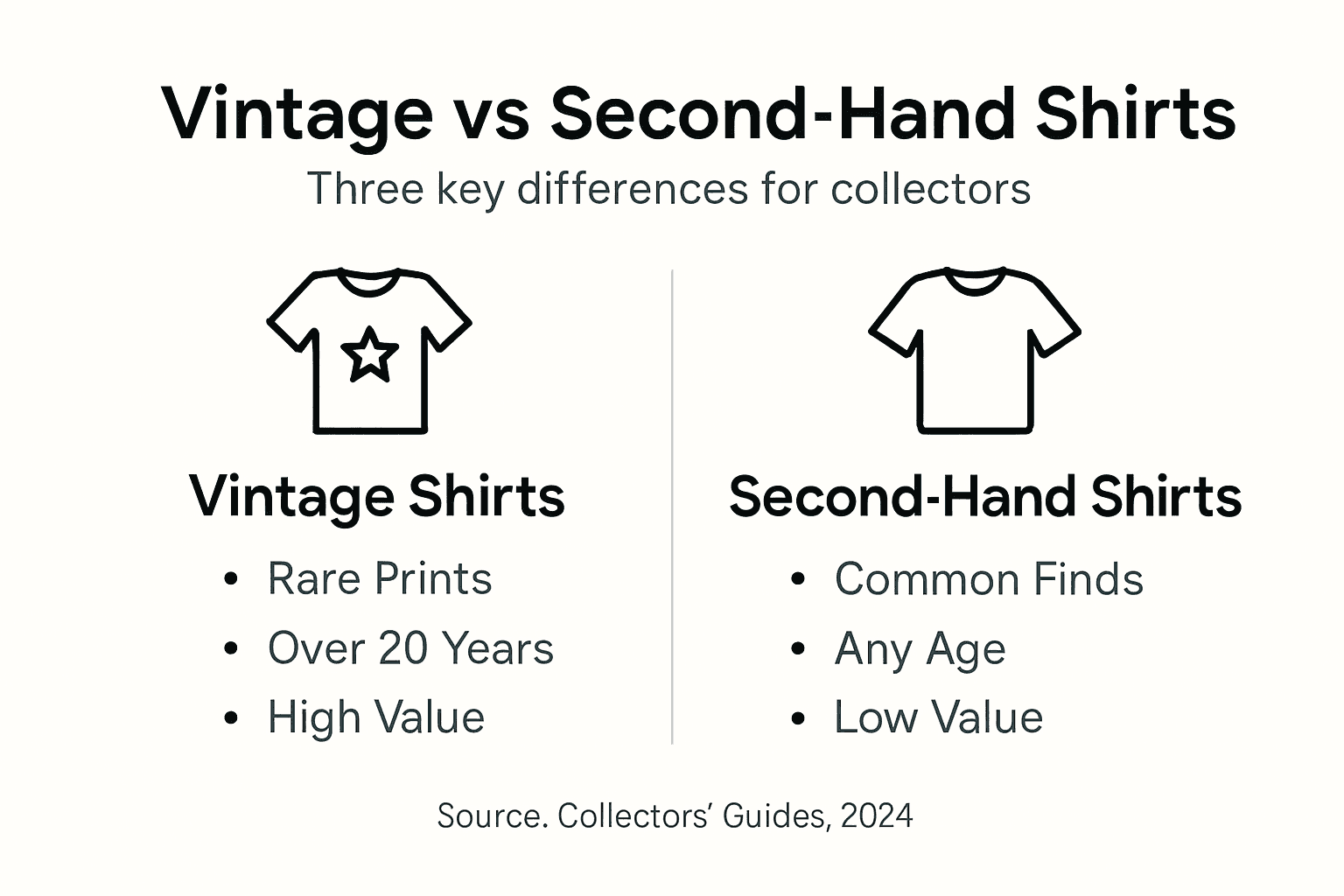
Rarity is where vintage shirts pull ahead dramatically. A 1987 Slayer World Domination tour shirt printed in limited quantities becomes scarcer every year as collectors preserve them. Rarity directly increases desirability and price, especially when paired with excellent condition. Second-hand shirts, by contrast, flood the market in endless supply. Last season’s band merchandise sits in warehouses; vintage originals from defunct tours simply cannot be reprinted.
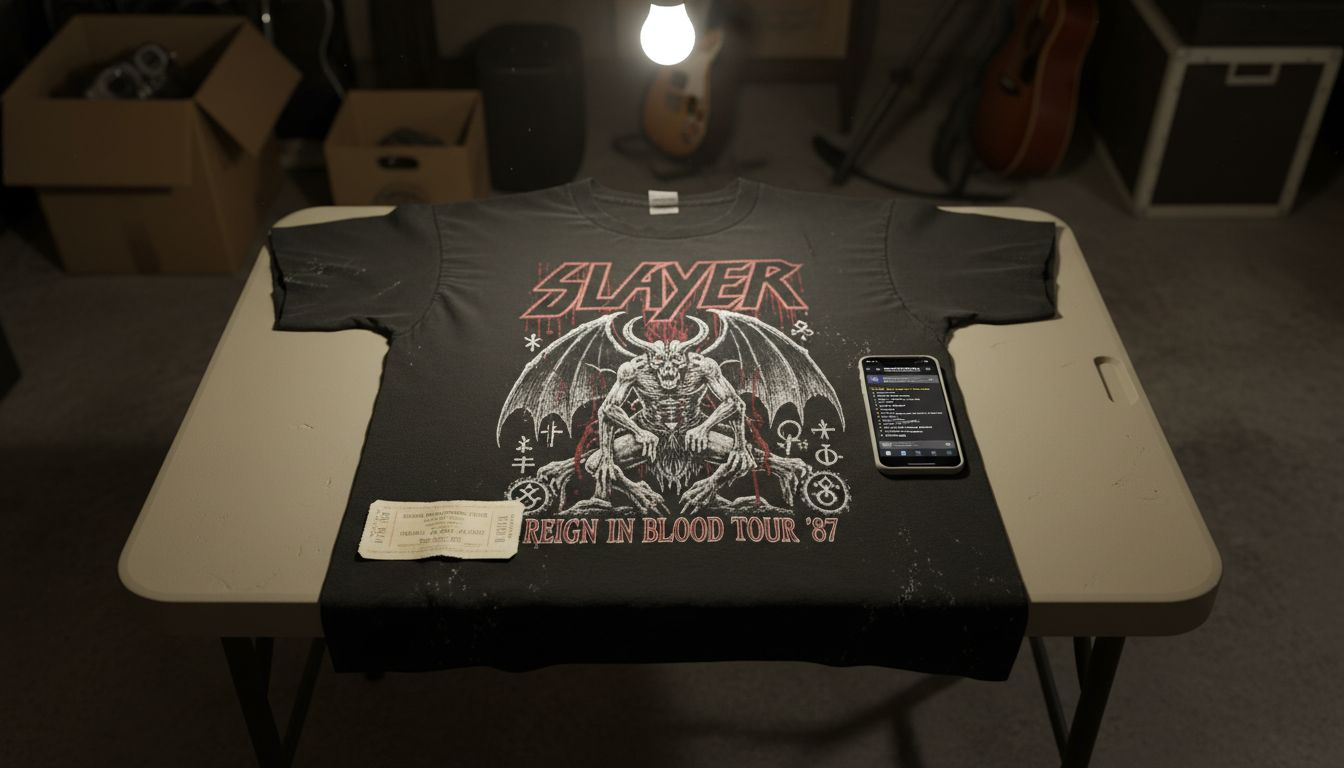
Age transforms how value operates. A shirt from 1991 carries cultural weight that a 2015 reissue never will, even if both feature the same band. Scarcity and age directly elevate pricing, especially with limited availability. Second-hand items depreciate like standard clothing—they lose value over time. Vintage pieces appreciate.
Here’s how they compare:
- Market trajectory: Vintage appreciates; second-hand depreciates steadily
- Supply: Vintage becomes scarcer; second-hand stays abundant
- Cultural significance: Vintage carries era-specific weight; second-hand is transactional
- Collector motivation: Vintage buyers seek investment and identity; second-hand buyers seek affordability
- Long-term returns: Vintage rewards patience; second-hand offers no financial upside
Consider a 1992 Metallica tour shirt versus a 2023 reprint. The original might cost £800 in decent condition and climb higher over time. The reprint costs £35 and will be worth £10 in five years.
Rarity without age means nothing. Age without rarity means little. Together, they create genuine collector value.
Pro tip: Track the original tour dates, venue counts, and shirt pressing quantities before buying—shirts from brief tours or limited runs (under 5,000 pieces) appreciate significantly faster than mass-produced merchandise.
Collectibility and Common Pitfalls for Buyers
Collectors chase nostalgia and identity. Dealers chase profit. Understanding this difference protects your collection from expensive mistakes.
The biggest pitfall is insufficient knowledge. Many buyers jump at perceived bargains without researching the band’s actual tour history, pressing quantities, or label variations. You end up overpaying for common reprints or underpaying for rare originals. Counterfeit vintage items frustrate genuine collectors because they’re nearly indistinguishable from authentic pieces at first glance.
Authentication failures cost real money. Poor inspection practices lead buyers to purchase reproductions thinking they’re genuine. A single authentication mistake on a £500+ shirt stings. Check multiple sources before committing to any purchase.
Common mistakes plague new collectors:
- Trusting seller claims without verification: Dealers inflate rarity; independent research prevents overpaying
- Ignoring condition red flags: Water damage, stains, or excessive fading lower value significantly
- Skipping label research: Different manufacturers used different label styles across decades
- Assuming all “vintage” means 1980s: A 2003 shirt is technically vintage but carries no collector premium
- Buying from unvetted sources: Online marketplaces are flooded with counterfeits
Quality concerns plague second-hand purchases too. Fabric degradation, odours, and hidden damage aren’t always visible in photos. Request detailed images before purchasing anything over £100.
Nostalgia blinds collectors. Verify everything before your wallet opens.
Pro tip: Build relationships with reputable sellers, join heavy metal collector communities, and cross-reference multiple authentication sources before spending serious money—your collection’s value depends on verified provenance, not seller confidence.
Sourcing and Caring for Old Metal Shirts
Finding genuine vintage metal shirts requires patience and strategy. Keeping them pristine demands discipline.
Sourcing starts with targeted hunting. Estate sales, deceased band member collections, and concert venue archives yield authentic pieces. Online platforms work, but verification becomes critical. Band forums and collector communities point you toward reputable dealers who’ve built trust over years. Avoid random online marketplaces flooded with counterfeits.
Condition matters during purchase decisions. A shirt with minor fading costs half the price of pristine originals—and that’s accurate value, not loss. Holes, stains, and odours reduce collector premiums significantly. Ask detailed questions before committing money.
Once acquired, proper care becomes your responsibility. Clothing users extend garment life through careful maintenance, including appropriate washing, drying, and storage methods. Your vintage pieces deserve the same attention.
Essential care practices include:
- Storage conditions: Cool, dry spaces away from direct sunlight; humidity between 30–50 percent
- Washing: Hand wash in cold water only; never machine wash or bleach vintage prints
- Drying: Lay flat or hang loosely; avoid high heat or direct sun exposure
- Handling: Minimal handling preserves fabric and ink; wear clean hands when touching
- Repair: Address small issues immediately before they compound
Metallic inks and adornments require special attention. Humidity and temperature fluctuations cause corrosion and fading. Store these pieces in acid-free tissue, away from moisture and direct heat sources.
Vintage shirts appreciate through neglect only by accident. Intentional care transforms appreciation into certainty.
Pro tip: Invest in acid-free storage boxes and unbleached tissue paper—they cost little but protect your collection from yellowing, foxing, and mineral transfer that can permanently damage prints and fabrics over decades.
Discover Genuine Vintage Metal Shirts That Tell a Story
Are you tired of sorting through endless second-hand shirts that lack the authentic history and value you crave? This article highlights the crucial difference between vintage and second-hand band shirts especially for collectors who value rarity, genuine cultural significance and long-term appreciation. If you want to avoid costly mistakes and invest wisely, exploring authentic pieces is your key.
Explore our exclusive collection of Rare Vintage Heavy Metal Concert Shirts and iconic Vintage Metallica Shirts Australia perfect for serious collectors. Each shirt in our catalogue comes with verifiable provenance so you can confidently build a valuable and meaningful collection. Don’t wait until scarcity drives prices up further. Visit Vintage Metal today and secure legendary pieces that honour the spirit of metal and protect your investment.
Frequently Asked Questions
What is the difference between vintage and second-hand shirts?
Vintage shirts are typically over 20 years old, hold rarity and cultural significance, while second-hand shirts are simply pre-owned garments of various ages without historical value.
How can I identify an authentic vintage band shirt?
Look for traditional screen printing techniques, specific label styles, natural wear patterns, and ensure tour dates match the band’s actual history. Modern reproductions may lack these characteristics.
Why do vintage shirts appreciate in value while second-hand shirts do not?
Vintage shirts are rare and carry cultural weight, leading them to appreciate over time. In contrast, second-hand shirts are abundant and lose value like standard clothing.
What should I consider when caring for vintage shirts?
Store vintage shirts in cool, dry conditions away from sunlight, hand wash in cold water, avoid machine drying, and handle them minimally to preserve fabric and prints.
Recommended
- Why Second Hand Shirts Matter for Metalheads – Vintage Metal Store
- 7 Steps to the Ultimate Heavy Metal Shirts Buying Checklist – Vintage Metal Store
- Top Fabrics for Vintage Shirts: Collector Value Explained – Vintage Metal Store
- Why Vintage Heavy Metal Shirts Matter to Collectors – Vintage Metal Store


