



You’ve tracked down that rare Slayer tour shirt from 1994, but when it arrives, it fits like a modern medium despite the XL tag. Vintage band shirts from the 1990s heavy metal era present unique sizing challenges that trip up even experienced collectors. Manufacturing standards varied wildly between brands like Screen Stars and Anvil, and decades of washing have shrunk many shirts unpredictably. This guide reveals how to measure and assess vintage metal shirts accurately, ensuring you get the perfect fit while preserving the value of your memorabilia.
Table of Contents
- Understanding Vintage Band Shirt Sizes And Fit
- Preparing To Size Your Vintage Band Shirt Accurately
- Step-By-Step Guide To Measuring And Assessing Vintage Shirts
- Verifying Fit And Caring For Your Vintage Band Shirts
- Explore Rare Vintage Heavy Metal Shirts At Vintage Metal Store
- Frequently Asked Questions
Key takeaways
| Point | Details |
|---|---|
| Vintage sizing differs | 1990s band shirts often run 1-2 sizes smaller than modern equivalents due to manufacturing standards and shrinkage |
| Measure, don’t trust tags | Chest width, length, and sleeve measurements provide accurate fit data where size labels fail |
| Single-stitch indicates authenticity | Pre-mid-1990s shirts feature single-stitch seams on sleeves and hems, confirming vintage status |
| Fabric affects fit | 100% cotton shrinks more than cotton-poly blends, impacting how shirts fit after washing |
| Proper care preserves size | Wash inside out on cold and hang dry to prevent further shrinkage and protect graphics |
Understanding vintage band shirt sizes and fit
The 1990s heavy metal scene produced some of the most coveted tour merchandise in collector history, but these shirts present unique fitting challenges. Manufacturing differences mean size tags from this era rarely reflect modern standards. An XL from Screen Stars might wear like a contemporary medium, while a Hanes Beefy-T runs closer to modern sizing.
Shrinkage compounds the problem. Cotton naturally contracts with washing, and vintage shirts may shrink 2 inches in chest width and length over their lifetime. Previous owners’ care habits directly impact current dimensions. A shirt washed hot and tumble dried repeatedly will fit dramatically smaller than one carefully maintained.
Authentic vintage shirts from before the mid-1990s feature single-stitch construction on sleeve hems and bottom bands. This manufacturing detail distinguishes genuine tour merchandise from modern reprints. Fabric composition matters equally. Pure cotton shirts age differently than cotton-poly blends, affecting both durability and fit over decades.
Metallica’s dominance during this period influenced broader trends in metal merchandise. Their tour shirts set standards for graphics and sizing that other bands followed. Understanding what makes a shirt vintage helps collectors recognise authentic pieces and anticipate sizing quirks.
The intentional styling of 1990s heavy metal shirts also affects fit expectations. Some bands favoured oversized silhouettes for a relaxed look, while others produced fitted styles. Knowing the era’s fashion context prevents disappointment when a shirt fits differently than anticipated.
Pro Tip: Compare multiple measurements from the same brand and year to identify patterns. Screen Stars consistently runs small, while Anvil tends towards generous sizing.
Preparing to size your vintage band shirt accurately
Successful vintage shirt sizing requires proper tools and systematic approach. Gather a flexible tape measure, flat surface, and a modern shirt that fits you well for comparison. These basics enable accurate measurements without distorting the vintage fabric.
You need to capture three critical dimensions. Chest width measures pit to pit across the shirt’s widest point. Total length runs from the shoulder seam where the collar attaches down to the bottom hem. Sleeve length follows the seam from shoulder to cuff. Recording these measurements creates a reliable sizing profile.
Create a measurement checklist before you start:
- Lay the shirt completely flat on a hard surface, smoothing wrinkles
- Measure chest width from armpit seam to armpit seam
- Record total length from top of shoulder to bottom hem
- Measure sleeve length along the seam from shoulder to cuff
- Note fabric composition from the tag
- Document any visible shrinkage indicators like puckered seams
Fabric type predicts future behaviour. Pure cotton shirts will shrink further if washed improperly, while cotton-poly blends offer more stability. Check the care tag or ask the seller about fibre content. This information guides your care decisions after purchase.
A comparison table helps organise your findings:
| Measurement | Your Target | Vintage Shirt | Modern Equivalent |
|---|---|---|---|
| Chest Width | 56cm | 53cm | Medium |
| Total Length | 74cm | 71cm | Medium |
| Sleeve Length | 22cm | 20cm | Medium |
The heavy metal shirts buying checklist provides additional verification steps beyond measurements. Combining dimensional data with authenticity checks ensures you’re getting both the right fit and genuine vintage merchandise.
Pro Tip: Photograph your measurement process. These images serve as references when comparing multiple shirts or communicating with sellers about fit concerns.
Consult the comprehensive vintage shirt sizing guide for detailed conversion charts between vintage and modern sizes across different manufacturers.
Step-by-step guide to measuring and assessing vintage shirts
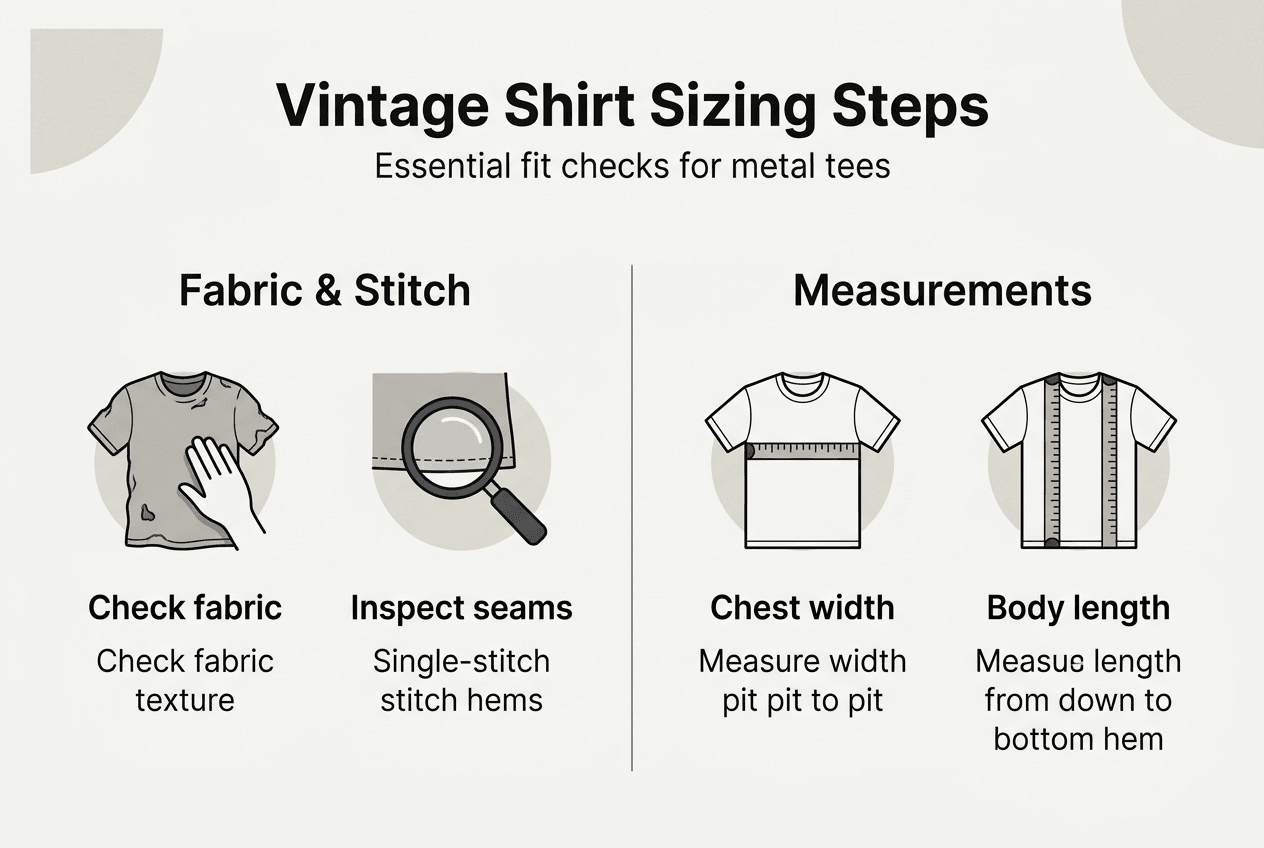
Precise measurement technique separates successful collectors from disappointed buyers. Follow these steps for consistent, accurate results:
- Position the shirt face up on a flat, hard surface like a table or floor
- Smooth all wrinkles and align the shoulder seams evenly
- Fold the shirt vertically so one half overlaps the other perfectly
- Measure chest width from the underarm seam straight across to the opposite edge
- Unfold the shirt and measure length from the shoulder seam’s highest point to the bottom hem’s centre
- For sleeves, measure along the seam from shoulder to cuff, not across the fabric surface
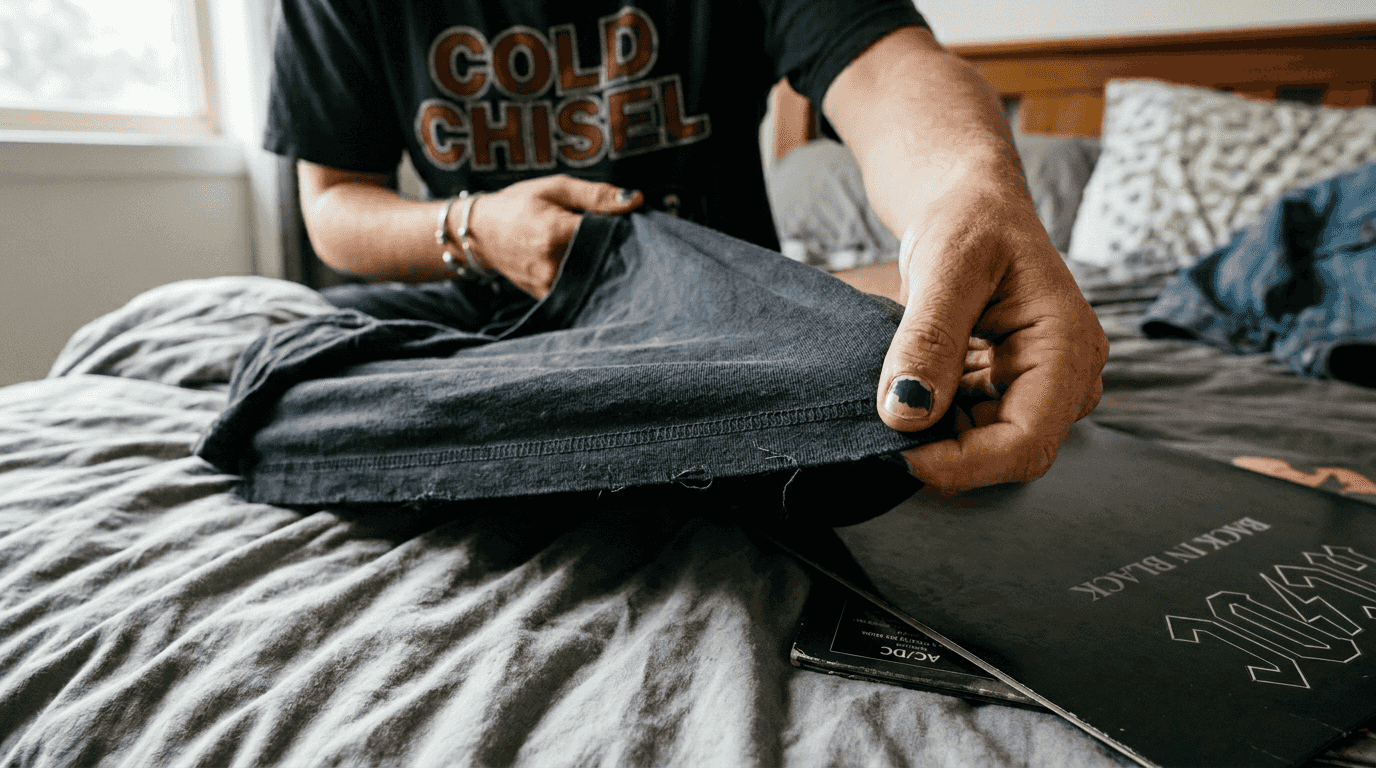
Seam inspection reveals authenticity instantly. Single-stitch construction appears on genuine pre-mid-1990s shirts as a single row of stitching on sleeve hems and bottom bands. Double-stitch seams indicate either modern production or post-1995 manufacturing. This detail alone can confirm or eliminate vintage status.
Fabric composition determines shrinkage potential. Cotton contracts with washing while cotton-poly blends resist shrinkage better. A 100% cotton Metallica shirt from 1991 will behave differently than a 50/50 blend Iron Maiden shirt from 1993. Read the tag carefully or examine the fabric’s hand feel.
Compare your vintage measurements against modern equivalents:
| Vintage Size Tag | Typical Chest Width | Modern Equivalent | Expected Fit |
|---|---|---|---|
| Large | 51-53cm | Small/Medium | Fitted |
| XL | 54-56cm | Medium/Large | True to size |
| XXL | 58-61cm | Large/XL | Relaxed |
Common measurement pitfalls include measuring over wrinkles, pulling the tape too tight, or measuring from incorrect reference points. Trial and error remains unavoidable when starting out, but systematic measuring reduces costly mistakes.
Pro Tip: Measure three times and record the middle value. This approach eliminates outlier errors from inconsistent tape placement or fabric shifting.
Authenticity extends beyond measurements. Check for period-appropriate tags, faded graphics consistent with age, and fabric softness from decades of wear. The guide to identifying dead stock shirts covers unworn vintage pieces with different assessment criteria.
Expert collector Jordan Pierce explains the broader context:
Provenance matters as much as measurements. A shirt with documented tour history and authentic characteristics commands premium prices because collectors know exactly what they’re getting. The combination of proper sizing data and verified authenticity creates confidence in the purchase.
When hunting rare 1990s heavy metal shirts, apply these measurement and authentication techniques consistently. The most valuable pieces combine perfect fit with unquestionable vintage credentials.
Verifying fit and caring for your vintage band shirts
Translating measurements into fit expectations requires comparing dimensions against your body or a modern shirt you already own. Lay your reference shirt flat and measure it using the same technique. If your favourite current shirt measures 56cm chest width and the vintage piece measures 54cm, expect a slightly snugger fit.
Shrinkage history affects current dimensions and future behaviour. A shirt stored unwashed for 30 years retains its original size but will shrink noticeably after the first wash. Previously worn and washed shirts have already contracted, offering more stable sizing. Ask sellers about care history when possible.
Proper maintenance prevents further size loss. Washing inside out on cold protects both graphics and fabric structure. Hot water accelerates cotton shrinkage dramatically. Skip the dryer entirely and hang shirts to air dry, which preserves dimensions and prevents graphic cracking.
Pro Tip: Use a mesh laundry bag for extra protection during washing. This prevents the shirt from tangling with other items and reduces mechanical stress on vintage fabric.
Fit interpretation considers original design intent. Many 1990s metal shirts were deliberately oversized as a style statement. A Pantera shirt that measures large by modern standards might have been intentionally produced that way. Understanding period fashion trends prevents misinterpreting authentic vintage proportions as manufacturing errors.
Fabric composition guides care decisions. The article on top fabrics vintage shirts details how different blends age and respond to washing. Cotton-poly blends tolerate more frequent washing than pure cotton, though both require gentle treatment to maximise lifespan.
Expect some variation even within the same size and brand. Hand-cut vintage production created natural inconsistencies. Two identical tour shirts might measure differently by a centimetre or two. This variation adds to vintage charm rather than indicating quality problems.
Explore rare vintage heavy metal shirts at vintage metal store
Now that you understand how to measure and verify vintage band shirts accurately, you’re ready to explore authenticated pieces with confidence. Vintage Metal Store curates rare 1990s heavy metal tour merchandise with detailed measurements provided for every listing, eliminating guesswork from your purchase decisions.

The collection includes authenticated pieces like this rare Metallica 1992 tour tee with documented provenance and precise sizing data. Browse the complete vintage Metallica shirts Australia range to find your perfect fit using the measurement techniques you’ve learned. The vintage Iron Maiden band shirts collection offers equally impressive pieces from iconic 1990s tours, each verified for authenticity and accurately sized.
Frequently asked questions
How do I know if a vintage band shirt will shrink further after purchase?
Shrinkage depends primarily on fabric composition and washing history. Pure cotton shirts shrink more than cotton-poly blends, especially if they haven’t been washed previously. Ask sellers whether the shirt has been worn and washed, as unwashed vintage pieces will contract noticeably after first cleaning. Proper care with cold water washing and air drying minimises further shrinkage regardless of prior treatment.
Why is the size tag unreliable on vintage heavy metal shirts?
Size tags reflect the manufacturer’s standards at the time of production, which varied dramatically between brands and changed over decades. Shrinkage from washing alters the actual dimensions significantly from the tagged size. Manufacturing inconsistencies meant even shirts from the same production run could vary by several centimetres. Measuring the actual garment provides the only accurate assessment of current fit.
How can I identify a genuine vintage heavy metal band shirt versus a reprint?
Single-stitch seams indicate authentic vintage production from before the mid-1990s. Check fabric composition for period-appropriate blends rather than modern synthetics. Verify provenance through seller reputation and documentation, as authenticity substantially impacts collector value. Modern reprints typically feature double-stitching, brighter graphics, and newer tag styles that differ from genuine vintage construction.
What measurements matter most when buying vintage band shirts online?
Chest width from pit to pit provides the most critical fit indicator, as this determines whether the shirt will be too tight across your torso. Total length from shoulder to hem ensures adequate coverage without excessive length. Sleeve length matters less for most collectors but becomes important if you prefer specific sleeve styles. These three measurements together create a complete sizing profile more reliable than any tagged size.
Can I restore a shrunken vintage band shirt to its original size?
Cotton fibres contract permanently once shrunk, making true restoration impossible. Some collectors report minor success soaking shirts in hair conditioner and gently stretching while damp, but results vary and risk damaging vintage fabric. Prevention through proper care proves far more effective than attempting to reverse shrinkage. Accept shrunken dimensions as permanent and focus on accurate measurement before purchase to avoid disappointment.
Recommended


