



Authentic 1990s heavy metal shirts have surged over 150% in resale value in the last decade, transforming from simple fan merchandise into coveted cultural artifacts. These shirts represent far more than band logos on fabric. They embody rebellion, artistic expression, and community identity within the heavy metal subculture. This guide explores the design motifs, cultural impact, fashion influence, and collector insights that make these shirts highly prized today.
Table of Contents
- Introduction To 1990s Heavy Metal Shirt Culture
- Design And Symbolism Of 1990s Heavy Metal Shirts
- Cultural Impact And Fashion Influence
- Collector Value, Authenticity, And Rarity
- Common Misconceptions About Metal Shirt Design
- Practical Tips For Collectors And Enthusiasts
- Conclusion: The Enduring Legacy Of 1990s Heavy Metal Shirt Design
- Explore Authentic Vintage Heavy Metal Shirts Today
- Frequently Asked Questions
Key Takeaways
| Point | Details |
|---|---|
| Design Symbolism | Skulls, mythical creatures, and dark fantasy art express rebellion and power. |
| Cultural Identity | Shirts function as visual identity markers within heavy metal fan communities. |
| Collector Value | Authenticity, rarity, and provenance determine market worth dramatically. |
| Fashion Influence | Metal shirt aesthetics influenced mainstream and streetwear trends. |
| Common Pitfalls | Bootleg replicas and misconceptions can mislead collectors significantly. |
Introduction to 1990s Heavy Metal Shirt Culture
The 1990s heavy metal scene thrived as a global youth movement where music, identity, and visual expression collided. Fans wore band shirts not just as merchandise but as badges of belonging and defiance. These shirts communicated membership in a rebellious youth subculture that challenged mainstream norms through aggressive sounds and dark imagery.
Band merchandising evolved rapidly during this decade. Tour shirts became limited edition collectibles tied to specific concerts and album cycles. Fans purchased them directly at venues, creating tangible connections to live experiences. Each shirt told a story about which tour you attended, which album you supported, and which musical tribe you identified with.
The history of metal band shirts reveals how these garments functioned as social signals. Wearing a rare tour shirt from a legendary show conveyed insider status. The designs themselves reflected the era’s musical and social dynamics through carefully selected imagery:
- Aggressive typography mirrored the intensity of thrash and death metal sounds
- Dark fantasy art aligned with lyrical themes of mythology and rebellion
- Band logos became instantly recognizable symbols of musical allegiance
- Limited print runs created scarcity that enhanced perceived value
This era established the foundation for today’s vintage collector market. Shirts from the 1990s capture a specific moment when heavy metal culture reached peak commercial success while maintaining underground credibility.
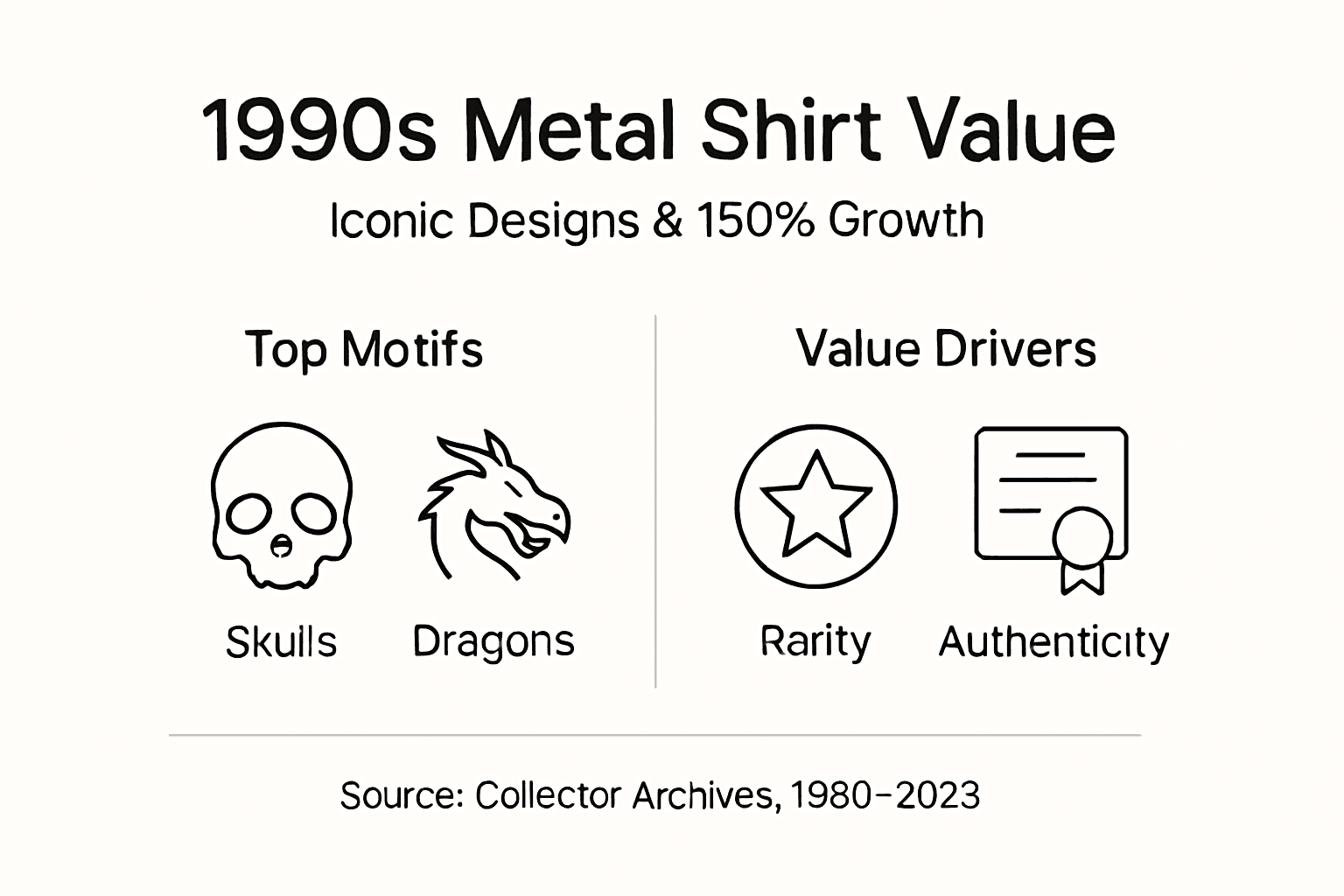
Design and Symbolism of 1990s Heavy Metal Shirts
The visual language of 1990s metal shirts spoke directly to fans who embraced themes of power, death, and resistance. Motifs such as skulls, mythical creatures, and dark fantasy art dominated shirt designs, creating instantly recognizable aesthetics. These elements weren’t random. They conveyed specific cultural meanings within the subculture.
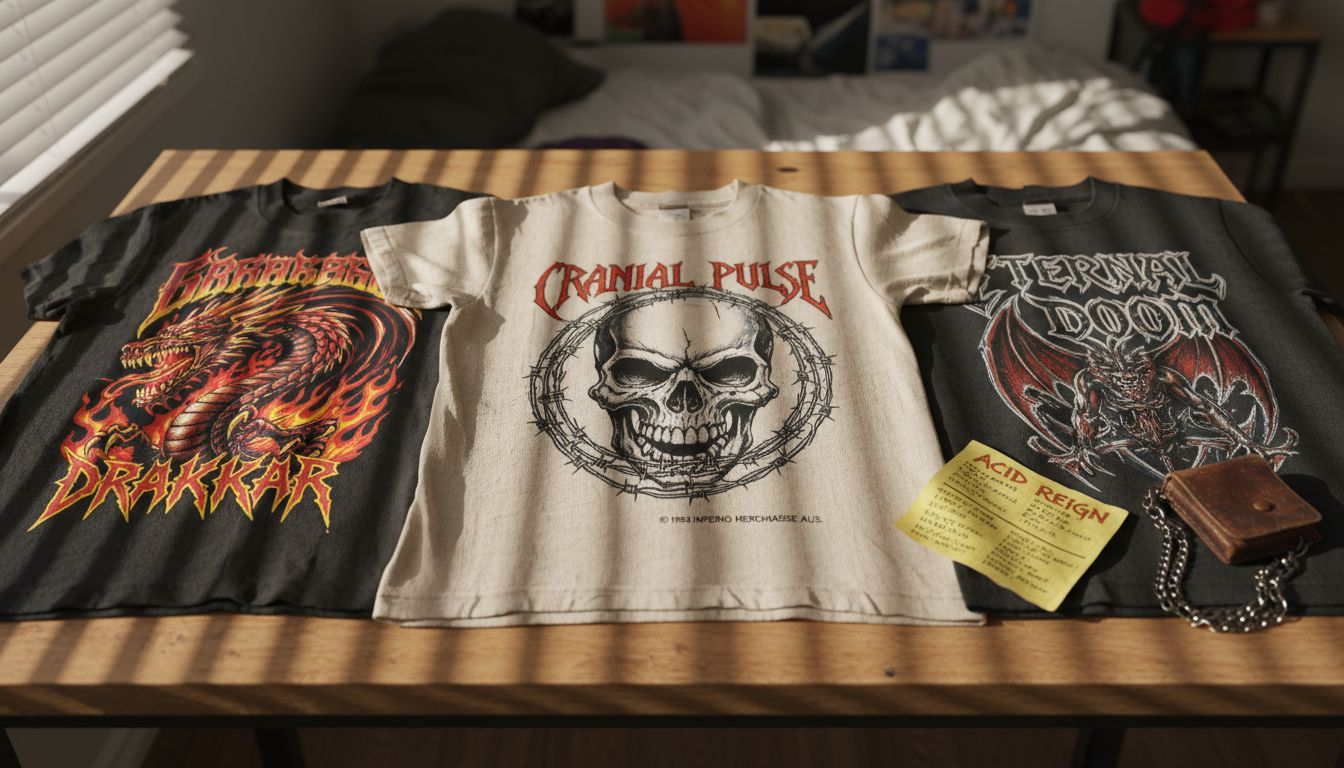
Skulls symbolized mortality and rebellion against societal norms. Dragons and demons drew from mythology to represent strength and otherworldly power. Battle scenes and apocalyptic imagery reflected the aggressive musical soundscapes fans loved. Each design choice reinforced the anti-establishment ethos central to heavy metal.
Typography played an equally critical role. Band logos used jagged, gothic, or illegible fonts that mimicked the harshness of the music itself. The harder the font, the heavier the band’s reputation. Fans could identify bands instantly by logo design alone, creating a visual shorthand for musical identity.
Fashion accessories complemented shirt symbolism. Bullet belts, studded leather, and battle jackets layered over shirts to amplify the rebellious aesthetic. These combinations created complete visual identities that signaled commitment to the subculture.
Pro Tip: Inspect fine print details and artist signatures on vintage shirts. Authentic 1990s prints often include copyright notices, tour dates, or artist credits that bootlegs omit.
The table below compares common design elements and their symbolic meanings:
| Design Element | Symbolic Meaning | Typical Bands |
|---|---|---|
| Skulls & Bones | Mortality, rebellion | Metallica, Slayer |
| Dragons & Demons | Power, mythology | Iron Maiden, Dio |
| Gothic Typography | Aggression, intensity | Death metal bands |
| Apocalyptic Scenes | Anti-establishment | Thrash metal bands |
These designs functioned as transmedia storytelling artifacts, extending band narratives beyond albums and concerts. A shirt from Metallica’s Black Album tour didn’t just advertise the band. It told the story of that specific tour, that album’s themes, and the fan’s participation in metal history. Understanding why vintage t-shirts matter requires recognizing this deeper cultural function.
Cultural Impact and Fashion Influence
Heavy metal shirts from the 1990s shaped youth culture far beyond concert venues. Shirts served as visual communication signaling membership in a global community united by musical taste and rebellious values. Wearing a metal shirt meant declaring independence from mainstream fashion and embracing outsider status proudly.
This visual identity influenced mainstream fashion in unexpected ways. By the mid-1990s, grunge and alternative rock borrowed heavily from metal aesthetics. Streetwear brands noticed the appeal of distressed graphics and bold typography. High fashion designers began incorporating skull motifs and gothic imagery into runway collections, a trend that continues in 2026.
The shirts also functioned as transmedia storytelling devices that communicated band mythology beyond music. Album artwork transformed into wearable narratives. Fans became walking advertisements and cultural ambassadors for their favorite bands. This created a feedback loop where fashion, music, and identity reinforced each other continuously.
Key cultural impacts include:
- Mainstream fashion adoption of metal aesthetics in streetwear and designer collections
- Expression of rebellion, alienation, and community belonging through clothing
- Creation of a global visual language shared by metal fans worldwide
- Influence on youth subcultures beyond music, including skateboarding and gaming communities
The collector importance of vintage shirts stems partly from this cultural crossover. As metal imagery entered mainstream consciousness, original 1990s shirts gained historical significance. They documented a specific moment when underground culture challenged and ultimately influenced popular fashion.
Today’s vintage collectors recognize these shirts as cultural artifacts worth preserving. The vintage metal shirt collection available from specialized dealers reflects this appreciation. These garments tell stories about musical evolution, fan dedication, and the enduring power of visual identity within subcultures.
Collector Value, Authenticity, and Rarity
Collector value for 1990s heavy metal shirts depends on three critical factors: authenticity, rarity, and condition. Limited original production and unique artwork make certain shirts highly sought after. Official tour stock commands premium prices compared to mass-produced retail versions.
Authenticity markers separate valuable originals from worthless bootlegs. Check for:
- Single-stitch collar construction typical of 1990s manufacturing
- Correct era tags showing original licensors and copyright dates
- Print quality matching known tour or album release graphics
- Provenance documentation linking the shirt to specific tours or production runs
The comparison table below shows value differences:
| Shirt Type | Authenticity Markers | Typical 2026 Value Range |
|---|---|---|
| Official Tour Stock | Single-stitch, documented provenance, era-correct tags | $200 to $800+ |
| Licensed Retail | Double-stitch, brand tags, mass production | $50 to $150 |
| Vintage Bootleg | Poor print quality, generic tags, no documentation | $20 to $60 |
| Modern Reproduction | New construction, digital prints, contemporary tags | $15 to $40 |
Rarity multiplies value significantly. Shirts from legendary tours with limited production runs fetch higher prices. A shirt from Metallica’s 1992 tour in excellent condition can command $600 or more. Common retail shirts from the same era might sell for under $100.
Pro Tip: Provenance documentation, such as concert ticket stubs or photos showing the shirt at the event, can double a shirt’s value. Maintain any documentation you acquire with vintage purchases.
Condition preservation maximizes collectible worth. Store shirts flat or on padded hangers away from direct sunlight. Avoid frequent washing. When necessary, wash inside out in cold water and air dry. Understanding what makes a shirt vintage includes knowing how to preserve its original characteristics.
The rarity of heavy metal shirt eras varies by band, tour, and production circumstances. Research specific tours and album releases to identify which shirts had limited runs. This knowledge helps collectors make informed purchasing decisions and avoid overpaying for common items misrepresented as rare.
Common Misconceptions About Metal Shirt Design
Many collectors assume all vintage metal shirts hold equal value, but this misunderstanding leads to poor purchasing decisions. Not every old shirt qualifies as collectible. Mass-produced retail shirts from major chains lack the scarcity and provenance that drive collector interest.
Another misconception suggests complex designs automatically mean higher worth. Design complexity doesn’t correlate directly with collector value. Simple tour shirts with strong provenance often outvalue elaborate retail designs with no historical significance.
Some buyers believe metal fashion represents a uniform aesthetic. In reality, metal culture draws from diverse influences including punk, biker culture, gothic fashion, and fantasy art. Understanding these varied roots helps collectors appreciate design diversity and avoid narrow expectations.
Bootleg and reproduction shirts flood the market, confusing new collectors. Modern printing technology creates convincing fakes that mimic vintage aesthetics. Without knowledge of era-correct construction and print techniques, collectors risk purchasing worthless reproductions at premium prices.
Key misconceptions to avoid:
- Assuming age alone determines collectible value without considering rarity and provenance
- Believing all band shirts from the 1990s are worth significant money
- Expecting uniform design aesthetics across all metal subgenres and eras
- Trusting seller descriptions without verifying authenticity markers personally
- Overlooking the importance of documentation in establishing shirt history
Understanding design context proves crucial. A shirt’s value depends on its connection to specific musical moments, cultural significance, and verifiable authenticity. Learn how to buy second hand metal shirts wisely by educating yourself on these distinctions before making purchases.
Practical Tips for Collectors and Enthusiasts
Verifying authenticity requires systematic inspection of multiple shirt elements. Follow these steps:
- Examine the collar and hem construction for single-stitch seams typical of 1990s manufacturing
- Check tags for era-correct licensors, copyright dates, and manufacturer information
- Inspect print quality for screen-printed texture rather than modern digital printing
- Research the specific tour or album to confirm design accuracy and production details
- Request provenance documentation or evidence linking the shirt to its claimed origin
Identifying key motifs helps distinguish authentic vintage designs from modern reproductions. Look for artist signatures or specific design traits unique to original prints. Many 1990s shirts included small artist credits or copyright notices in the print that bootlegs omit.
Proper care preserves print and fabric longevity. Never use hot water or harsh detergents on vintage shirts. Turn garments inside out before washing to protect graphics. Air dry rather than using machine dryers that crack and fade prints over time.
Best storage practices prevent damage:
- Store shirts flat in acid-free tissue paper or on padded hangers
- Keep garments away from direct sunlight to prevent fading
- Maintain stable temperature and humidity to avoid fabric deterioration
- Use breathable cotton garment bags rather than plastic for long-term storage
Pro Tip: Consult collector communities and online archives for design verification. Websites documenting specific band merchandise histories help confirm authenticity and identify rare variations. The keys for vintage shirt collectors include building knowledge through community engagement and research.
Develop relationships with reputable dealers who provide detailed descriptions and authentication guarantees. Avoid purchasing from sellers who cannot answer specific questions about construction, provenance, or production era. Knowledge protects you from costly mistakes in the vintage market.
Conclusion: The Enduring Legacy of 1990s Heavy Metal Shirt Design
The cultural and artistic importance of 1990s heavy metal shirts extends far beyond their original function as band merchandise. These garments represent a rebellious subculture that used visual identity to challenge mainstream values and build global communities. Their influence on fashion, storytelling, and youth culture continues resonating in 2026.
Collectors preserve this unique heritage by seeking, authenticating, and caring for these cultural artifacts. Each shirt documents musical history, artistic expression, and the passionate dedication of metal fans worldwide. As values continue rising, appreciation for design authenticity and historical context grows stronger.
The legacy lives on through collectors who understand that these shirts symbolize more than nostalgia. They represent a moment when music, art, and identity converged to create something powerful and enduring. Whether you collect for investment, appreciation, or connection to metal culture, these shirts deserve recognition as significant cultural achievements.
Explore Authentic Vintage Heavy Metal Shirts Today
Ready to own a piece of heavy metal history? Discover authenticated 1990s band shirts with verified provenance at Vintage Metal Store. Our curated collection includes rare tour stock and deadstock from legendary bands and tours that defined an era.
Explore exclusive pieces like the Rare Metallica 1992 Tour Tee or browse our complete Vintage Metallica Shirts Collection for more iconic designs. Each shirt comes with detailed authentication and preservation guidance. Visit our store to browse all vintage heavy metal shirts and start building your collection with confidence today.
Frequently Asked Questions
What makes 1990s heavy metal shirts culturally significant?
These shirts reflect rebellion, community identity, and artistic expression within the heavy metal subculture. They function as wearable symbols of fan allegiance and cultural storytelling that connected global communities through shared visual language.
How can I verify the authenticity of a vintage 1990s metal shirt?
Check print quality for screen-printed texture, examine tags for era-correct information, and verify single-stitch construction typical of 1990s manufacturing. Look for provenance documentation such as concert ticket stubs or tour stock records that link the shirt to specific events.
Why do some 1990s metal shirts fetch higher prices than others?
Limited production runs, official tour stock provenance, and excellent condition dramatically raise prices. Bootleg or mass-produced retail shirts lack the scarcity and historical documentation that collectors value, resulting in significantly lower market worth.
How have 1990s metal shirt designs influenced modern fashion?
Metal shirt motifs including skulls, gothic typography, and dark fantasy imagery inspired streetwear and high fashion designers throughout the 2020s. The rebellious aesthetics resonate in modern youth culture, with fashion houses incorporating these elements into contemporary collections. Learn more about the influence of vintage metal shirts on fashion and their lasting impact.
Recommended


