



Collectors know the thrill of finding a genuine vintage heavy metal shirt from iconic tours and decades. Every shirt tells a story, capturing the evolution from simple fan merchandise in the 1970s to elaborate artwork and bold identities by the 1990s. Understanding rarity and authenticity can mean the difference between ordinary memorabilia and prized collector’s items. This guide explores historical milestones, rare tour editions, and expert tips that help identify true value and authenticate your collection.
Table of Contents
- Evolution of Metal Band Shirts Since the 1970s
- Rare Variations from Tours and Decades
- The Role of Merch in Metal Subculture
- Spotting Fakes and Determining True Value
Key Takeaways
| Point | Details |
|---|---|
| Evolution of Metal Shirts | Metal band shirts have transformed from basic designs in the 1970s to elaborate artworks in the 1980s, culminating in a focus on rarity and collectible value in the 1990s and beyond. |
| Collector Insights | Understanding unique characteristics, such as tag construction and print authenticity, is crucial for collectors to identify genuine vintage shirts and assess their value accurately. |
| Cultural Importance | Metal merchandise serves as a visual language for fans, communicating identity and allegiance while also acting as a historical record of music culture. |
| Market Trends | The demand for authentic vintage pieces continues to grow, driven by nostalgia and the interplay of authenticity, condition, and rarity in determining market value. |
content here
Evolution of Metal Band Shirts Since the 1970s
Metal band shirts didn’t appear overnight. They emerged from the late 1960s and early 1970s as a natural extension of heavy metal culture itself. Biker culture, military aesthetics, and blues-rock influences all shaped what would become the iconic metal shirt.
The turning point came in 1978 when Judas Priest appeared on television in full leather gear. That moment embedded the heavy metal look into popular culture permanently. Suddenly, metal wasn’t just music—it was a visual statement.
Early metal shirts from the 1970s featured simple designs and bold band logos. Bands like Black Sabbath and Led Zeppelin kept their imagery dark and mysterious. These shirts became more than merchandise; they signalled membership in an emerging subculture.
The 1980s transformed everything. Bands invested heavily in elaborate artwork and striking visual identities. Here’s what changed:
- Album artwork moved directly onto shirts
- Graphic design became increasingly complex and detailed
- Tour dates started appearing on the back
- Limited runs made certain editions valuable collector’s items
- Bands experimented with bold colours alongside traditional blacks
By the 1990s, metal shirts had evolved into serious collectibles. Heavy metal T-shirt eras reveal how rarity and production methods dramatically affected value. Vintage deadstock from tours became especially sought after.
Metal shirts transformed from simple fan merchandise into wearable art that defined generations. Each era left distinct fingerprints on design, materials, and printing techniques that collectors still recognise today.
The 2000s brought nostalgia—fans started actively hunting vintage pieces. Concert bootlegs and reproductions flooded the market, making authentication critical. Real vintage pieces commanded premium prices.
What drives collector value now isn’t just the band or tour. It’s the combination of age, condition, rarity, and authenticity. A 1980s deadstock shirt in near-mint condition sells for dramatically more than a 2010 reproduction.
Pro tip: When evaluating a metal shirt from the 1970s or 1980s, check the tag construction, ink density, and fabric weave—these details reveal whether you’ve found genuine vintage or a later reprint trying to pass as original.
Here’s a summary of how metal band shirts evolved across decades:
| Decade | Typical Shirt Features | Notable Material Changes |
|---|---|---|
| 1970s | Basic logos, dark imagery | Single-stitch cotton, limited colours |
| 1980s | Elaborate prints, tour dates | Thicker fabric, multi-colour ink |
| 1990s | Collector focus, bold graphic backs | Improved blends, deadstock variants |
| 2000s | Nostalgic styles, bootlegs increase | Softer cotton, reproduction tags |
Rare Variations from Tours and Decades
Not all metal band shirts are created equal. The rarest versions come from specific tours, limited pressings, and particular decades when production methods were less standardised. Understanding these variations is crucial for collectors seeking authentic pieces.
Tour-specific shirts represent pivotal moments in band history. A shirt from Metallica’s 1986 Master of Puppets tour differs dramatically from their 1996 Load tour edition. Each captures a distinct era of the band’s evolution.
Limited tour editions feature unique designs or colours that mark particular events, creating rarity and collectability. These versions capture moments in a band’s history that fans treasure.
Decade-specific variations show distinct production characteristics:
- 1970s: Screen printing with minimal colour separation, single-stitch construction
- 1980s: Multi-colour artwork, thicker cotton blends, band logo refinement
- 1990s: More complex graphics, tour date backs, deadstock variants
- 2000s: Better fabric quality, reproduction markers, bootleg variations emerge
Battle jackets and customised pieces add another layer of rarity. Fans hand-stitched patches, studs, and personalised elements onto jackets and shirts. Bespoke artwork and epoch-specific designs reflect changing music scenes and fan commitment across decades, making certain editions highly prized for their historical significance.
Rarity comes from the intersection of limited production runs, specific tour windows, and authentic aging. A single-stitch 1984 shirt from a band’s breakthrough tour will always outvalue a 2000s reproduction, regardless of condition.
Ex-tour stock—unsold merchandise from actual tours—remains the holy grail for collectors. These deadstock items were stored unworn for decades, preserving original colours and fabric integrity. A deadstock 1989 shirt in pristine condition represents a snapshot of metal culture frozen in time.
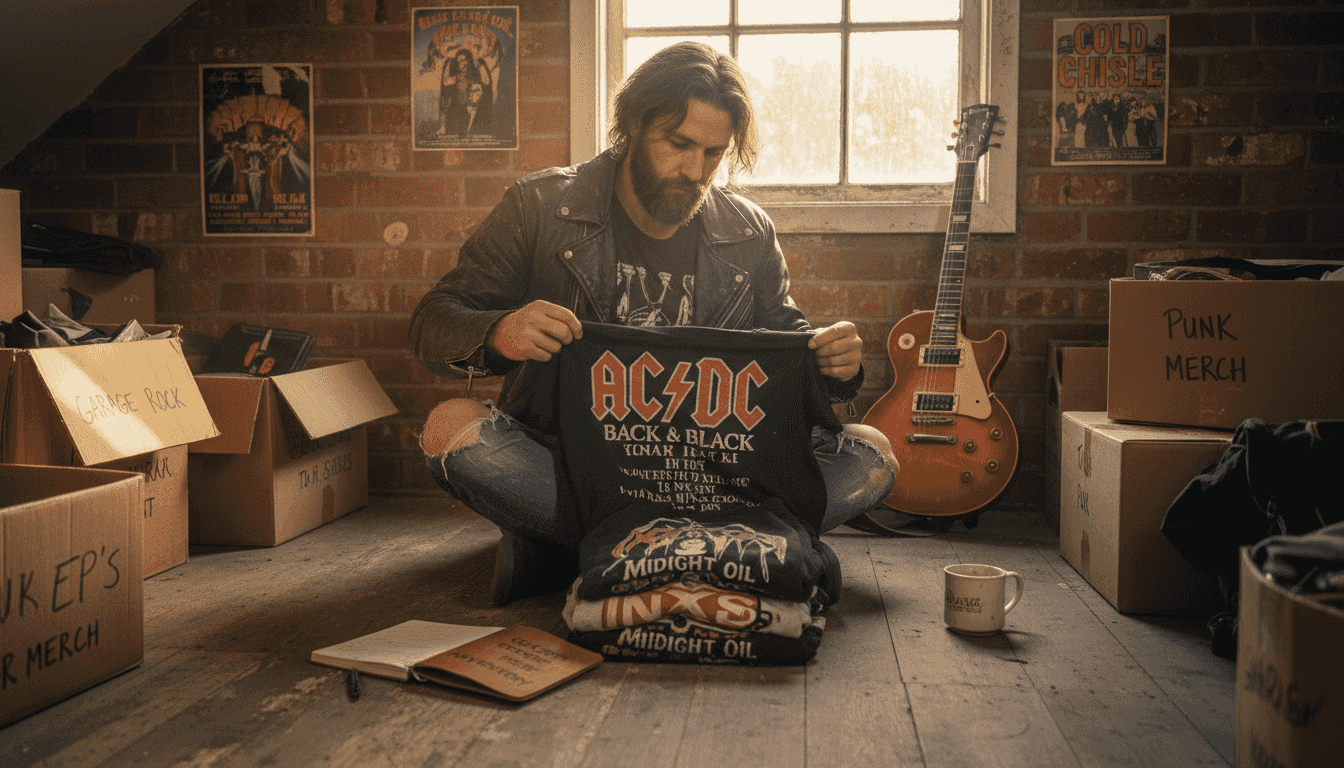
Authentication becomes essential when rarity increases value. Check printing techniques, tag construction, and label placement. Original 1980s tour shirts used specific tags and printing methods that counterfeiters struggle to replicate accurately.
Pro tip: Cross-reference the tour dates on the shirt’s back with the band’s official touring schedule—bootlegs often include incorrect dates or misspelled venue names that reveal them as later reproductions.
The Role of Merch in Metal Subculture
Metal merchandise isn’t just profit margin. It’s the visual language of an entire subculture. Band shirts, patches, and battle jackets communicate membership, allegiance, and musical taste within the metal community.
When you wear a metal shirt, you’re making a statement. You’re declaring your place in a world that values authenticity, rebellion, and artistic expression. This uniform-like quality separates metalheads from mainstream culture.
Band merch and battle jackets serve as pivotal markers for expressing and consolidating metal identity. They communicate membership and reinforce fan solidarity through visual language essential to the metal scene’s collective identity.
Here’s how merch functions within the subculture:
- Visual identification: Instantly recognise fellow metalheads in crowds
- Subcultural capital: Rarer or older shirts boost social standing within fandom
- Historical documentation: Each piece tells a story of a specific era or tour
- Resistance expression: Wearing metal merch challenges mainstream fashion norms
- Financial investment: Vintage pieces appreciate in value over time
Battle jackets exemplify this perfectly. Fans curate personal collections of patches, studs, and pins onto denim or leather jackets. Each jacket becomes a unique autobiography of musical taste and tour attendance.
Tour merchandise holds special significance. When you buy a shirt at a concert, you’re capturing that exact moment in history. Famous heavy metal tour merchandise represents tangible connections to unforgettable live experiences.
Metal merch transforms passive fandom into active subcultural participation. A vintage shirt isn’t just clothing—it’s a badge of belonging to a community that values integrity over conformity.
The economics matter too. Limited runs and deadstock create scarcity. Collectors hunt for specific variants because ownership signals knowledge and dedication within the community.
Authenticity drives this obsession. Bootleg shirts contaminate the collector market, but experienced fans spot fakes immediately. Real vintage pieces carry the weight of genuine history.
Younger metalheads discover bands through older collectors’ curated displays. Merch becomes a teaching tool, passing down metal history across generations. A worn 1987 Slayer shirt tells stories that words cannot.
Pro tip: Document your collection with photos showing tags, printing details, and condition—this builds credibility within collector communities and helps authenticate pieces when trading or selling.
Spotting Fakes and Determining True Value
Fake metal band shirts flood the market constantly. Bootlegs, reproductions, and counterfeit pieces compete with genuine vintage originals. Learning to distinguish authentic pieces from fakes protects your collection and investment.
Authenticity determines everything. A genuine 1985 Iron Maiden shirt worth thousands becomes worthless if it’s a 2005 reprint. The difference often comes down to manufacturing details most casual collectors overlook.
Start by examining the tag construction. Original 1970s and 1980s shirts used single-stitch construction with specific label formats. Modern reproductions use double-stitching and contemporary tag designs that differ noticeably from originals.
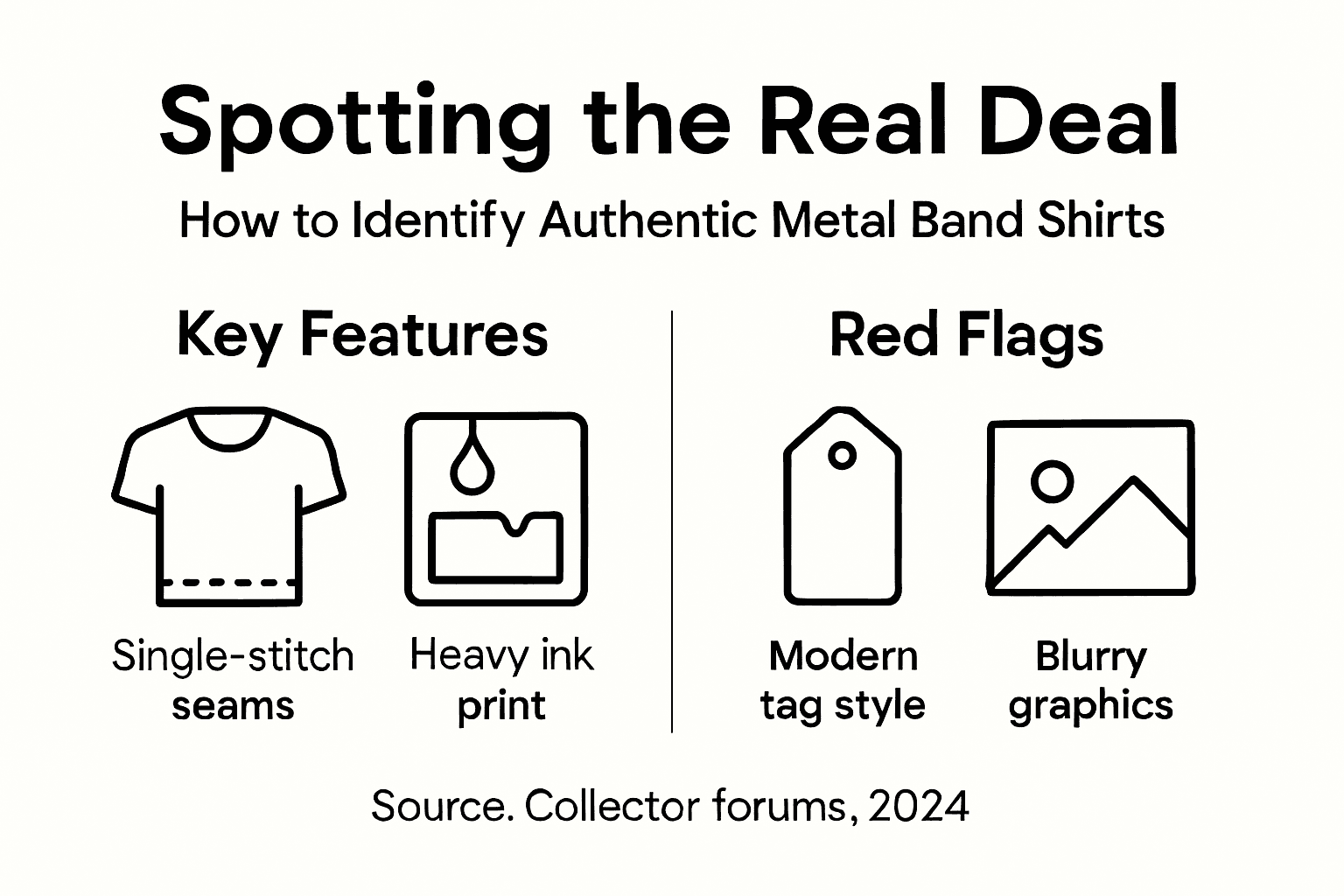
Printing technique reveals authenticity quickly. Vintage screen-printed shirts show ink sitting on top of fabric with visible irregularities. Digital printing used on fakes appears too uniform and flawless, lacking the character of hand-applied screens.
Authenticity verification requires knowledge of manufacturing details, printing techniques, and official licensing. Spotting fakes demands examination of tags, stitching, and print quality by comparing known legitimate designs to suspected copies.
Here’s your authentication checklist:
- Tag placement and format (position on collar or side seam)
- Font consistency across printed text and graphics
- Fabric weight and weave pattern (vintage feels different)
- Ink colour saturation and edge definition
- Seam alignment and stitch count per inch
- Label material—paper, cloth, or woven construction
- Any fading patterns that show authentic aging
Fabric quality, label information, and print precision distinguish authentic pieces from counterfeits. Provenance and historical context also influence value—shirts from key tours or milestone albums fetch premium prices.
A genuine 1986 Metallica Master of Puppets shirt with correct single-stitch construction, proper tag placement, and authentic screen-print irregularities will always outvalue a perfect-looking reproduction, regardless of visual similarity.
Provenance matters enormously. Documented ownership history, tour attendance proof, or purchase receipts boost value significantly. Shirts with unknown origins carry more risk, especially at premium prices.
Market knowledge is essential. Research comparable sales through auction sites, collector forums, and specialist dealers. Understanding what similar pieces sold for recently helps assess fair pricing.
Pro tip: Request detailed photos of the tag, back print, collar seam, and fabric close-up before purchasing—legitimate sellers expect this scrutiny, whilst bootleggers often refuse detailed images or provide only studio shots masking manufacturing flaws.
The table below compares key authentication factors for vintage versus reproduction metal shirts:
| Factor | Authentic Vintage Shirt | Modern Reproduction |
|---|---|---|
| Tag Construction | Single-stitch, dated format | Double-stitch, new tags |
| Fabric Feel | Heavier, distinct weave | Lightweight, smoother texture |
| Print Appearance | Irregular ink, visible layers | Uniform, digital precision |
| Provenance | Documentable, linked to tours | Usually lacks tour-specific history |
Unlock the True Value of Vintage Metal Band Shirts Today
If you have read about the rich history and unique rarity of authentic metal band shirts you know how crucial it is to find genuine pieces that capture the spirit of the 70s 80s and 90s eras. Whether you seek rare limited tour editions or deadstock items preserved in pristine condition exploring our collection of Rare Vintage Heavy Metal Concert Shirts offers you access to authentic merch that tells a story.
Don’t settle for reproductions or bootlegs when you can own a part of metal history. Visit Vintage Metal now and discover expertly curated selections including exclusive Vintage Metallica Shirts Australia from the golden decades of metal. Act today to claim a true collector’s piece that embodies the passion and identity of the metal community.
Frequently Asked Questions
What defines a vintage metal band shirt?
A vintage metal band shirt typically features specific tag construction, fabric quality, and printing techniques that reflect the era it was made, often with single-stitch designs from the 1970s and 1980s.
How can I verify the authenticity of a metal band shirt?
To verify authenticity, examine the tag construction, fabric feel, printing technique, and provenance. Look for signs like single-stitch construction, irregular ink patterns, and documented purchase history.
Why do certain metal band shirts become highly collectible?
Certain metal band shirts become highly collectible due to factors like rarity, specific tour editions, age, and condition. Shirts from notable tours or with unique designs are often more valuable.
What factors influence the value of a metal band shirt?
The value of a metal band shirt is influenced by its age, condition, rarity, authenticity, and the significance of the tour it represents. Limited runs and original vintage pieces typically command higher prices.
Recommended


