



Not every vintage band t-shirt is a gold mine. The truth about what makes them valuable might surprise you. Many collectors misunderstand what determines a band t-shirt’s worth, particularly when it comes to 1990s heavy metal memorabilia. This guide clarifies the historical significance, rarity factors, and strategic collecting approaches that transform ordinary shirts into prized collectibles worth serious attention.
Table of Contents
- Introduction To Band T-Shirts In Heavy Metal Culture
- Historical Significance Of 1990s Heavy Metal Band T-Shirts
- Rarity And Condition: The Backbone Of Collectible Value
- Authenticity Verification: How To Know Your Band T-Shirt Is Legit
- Band T-Shirts As Cultural Identity And Memory
- Common Misconceptions About Collecting Band T-Shirts
- Framework For Evaluating And Building A Valuable Collection
- Conclusion: Why Collecting Band T-Shirts Matters For Heavy Metal Enthusiasts
- Explore Vintage Heavy Metal T-Shirts At Vintage Metal Store
- Frequently Asked Questions
Key takeaways
| Point | Details |
|---|---|
| Cultural symbols | Band t-shirts are iconic identity badges fostering community among metal fans globally. |
| 1990s metal shirts | Prized for unique tour prints and limited production runs under 5,000 units. |
| Value determinants | Rarity, condition, and provenance critically impact collectible worth and market demand. |
| Authenticity checks | Verification prevents counterfeit purchases and protects your investment. |
| Strategic collecting | Enhances both cultural meaning and market value through informed acquisition decisions. |
Introduction to band t-shirts in heavy metal culture
Band t-shirts began as grassroots fan expressions in the 1970s. Metal fans wore them as physical declarations of musical allegiance, transforming concerts into visual celebrations of shared identity. The 1990s marked peak production coinciding with heavy metal’s massive cultural growth and mainstream commercial success.
These shirts play a central role in metal merchandising and fan expression. They serve as physical badges linking fans to metal history and community bonds. Research confirms band t-shirts act as identity badges that foster nostalgia and belonging.
Key cultural functions include:
- Demonstrating musical taste and subcultural membership to fellow fans
- Creating instant recognition and connection at concerts and gatherings
- Preserving visual records of tours, album cycles, and band evolution
- Expressing rebellion and non-conformity through bold artwork and imagery
The intersection of music, fashion, and memorabilia makes vintage metal shirts uniquely collectible. Collectors seeking 1990s heavy metal shirt examples discover these pieces represent far more than clothing. They’re tangible artefacts of metal’s golden era.
Understanding this cultural foundation helps explain why certain shirts command premium prices. Following a heavy metal shirts buying checklist ensures you recognise historically significant pieces when evaluating potential acquisitions.
Historical significance of 1990s heavy metal band t-shirts
The 1990s produced exceptionally collectible metal merchandise. Tours during this decade often featured limited t-shirt runs under 5,000 units, creating instant scarcity. Bands prioritised unique, exclusive tour artwork that captured specific performances and venues.
These shirts mark pivotal band moments. Album launches, breakthrough tours, and festival appearances received commemorative designs that documented metal history. Market data reveals over 50% of high-value sales involve 1990s metal tour shirts, demonstrating sustained collector demand.
| Tour type | Typical production | Current value range |
|---|---|---|
| Stadium tour | 3,000-5,000 units | $150-$800 |
| Club/theatre tour | Under 2,000 units | $200-$1,200 |
| Festival exclusive | 500-1,500 units | $300-$2,000+ |
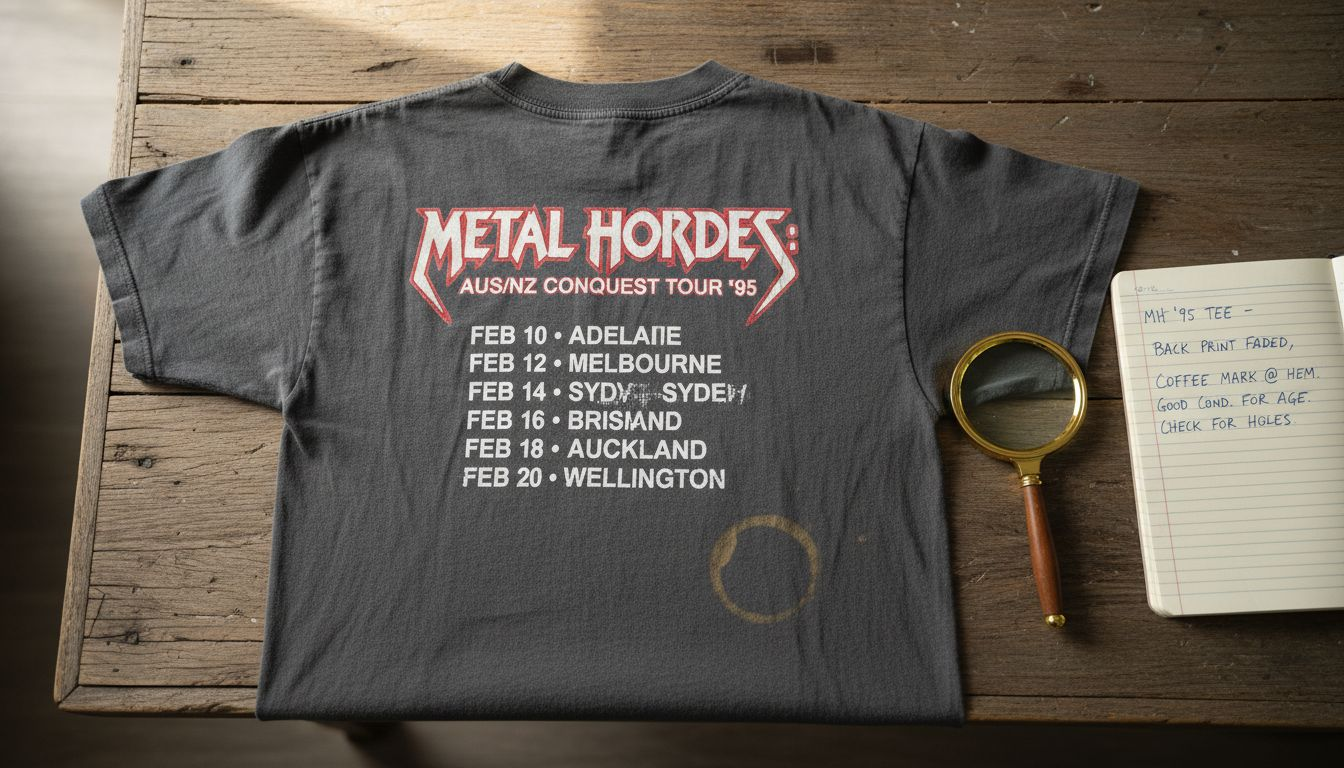
Collectors prize these shirts for their visual artistry and historical documentation. Tour dates printed on backs create verifiable authenticity markers. Specific venue information adds provenance that reproduction shirts lack entirely.
The 1990s heavy metal shirts value surge reflects growing recognition of their cultural importance. Younger collectors discovering metal’s classic era drive increasing demand for authentic period pieces.
Key desirability factors include:
- Limited production ensuring genuine scarcity rather than artificial restriction
- Distinctive artwork reflecting 1990s design aesthetics and printing techniques
- Documentation of legendary performances and career-defining tours
- Connection to albums that shaped heavy metal’s evolution
Those learning to collect rare 1990s heavy metal tees discover that decade’s unique position. The shirts bridge metal’s underground roots with its commercial peak, creating perfect collectible tension.
Rarity and condition: the backbone of collectible value
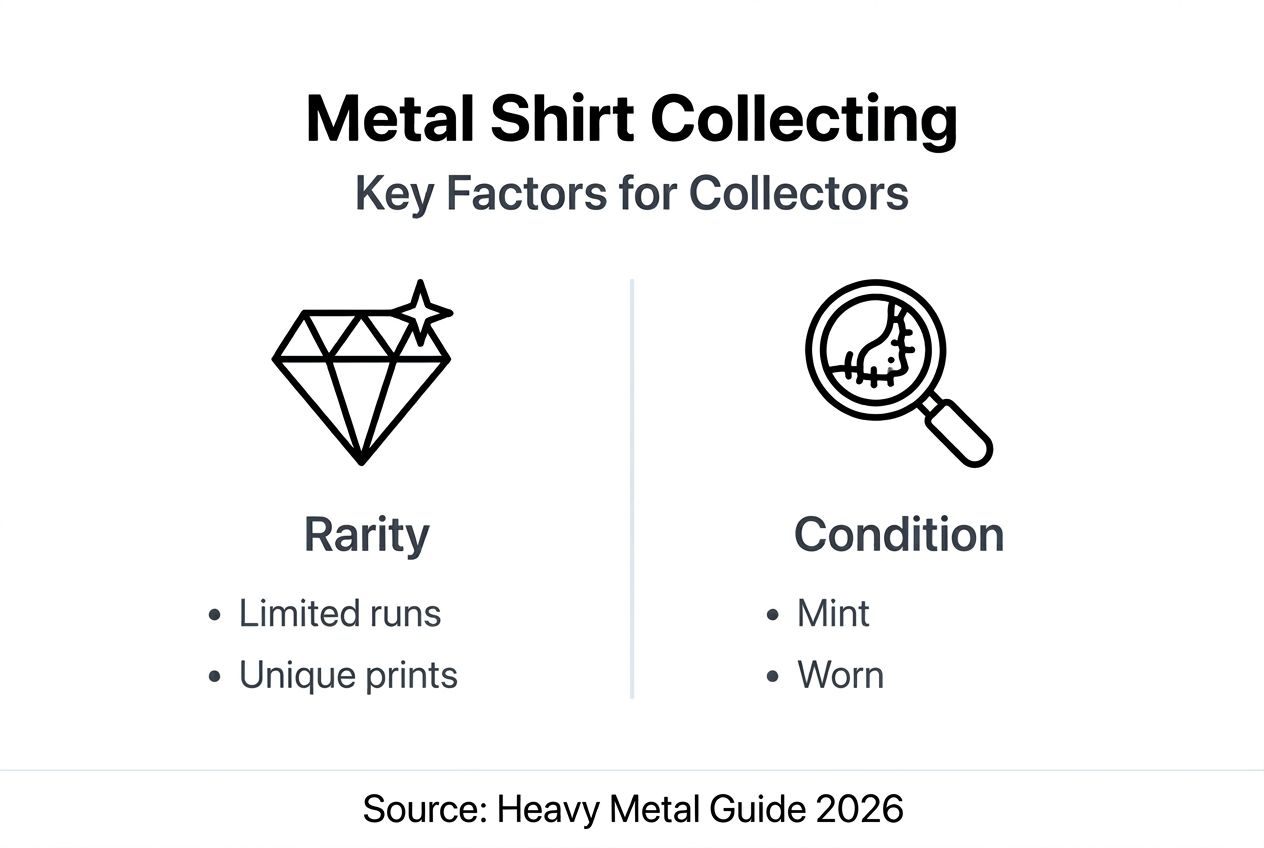
Rarity determines baseline collectible potential. Limited production runs, particularly those under 5,000 units, create natural scarcity that drives collector interest. Tour exclusives distributed only at specific venues achieve even greater rarity through geographic limitation.
Condition dramatically affects market value. Mint condition and deadstock shirts command highest prices from serious collectors. Studies show condition impact swings value 50-80% between mint and worn examples.
| Condition grade | Description | Value multiplier |
|---|---|---|
| Deadstock/mint | Unworn with original tags | 1.0x (baseline) |
| Near mint | Minimal wear, no damage | 0.7-0.9x |
| Excellent | Light wear, intact graphics | 0.4-0.6x |
| Good | Noticeable wear, fading | 0.2-0.3x |
| Poor | Heavy wear, damage | 0.1x or less |
Worn shirts generally lose significant value but may hold nostalgic appeal. Collectors accept wear on extremely rare pieces where mint examples simply don’t exist. However, damage like holes, stains, or graphic deterioration severely diminishes worth.
Ex-tour stock provenance boosts authenticity and demand. Shirts documented as genuine tour merchandise carry verification that reproductions lack. Original receipts, backstage passes, or tour programme documentation strengthens provenance claims.
Collectors must carefully assess condition before purchase:
- Examine graphics for cracking, fading, or peeling
- Check fabric for holes, stains, or structural weakness
- Verify seams and hems remain intact without repairs
- Assess overall preservation including storage effects
Pro Tip: Store vintage shirts flat in acid-free tissue paper inside archival boxes. Hanging stretches fabric over time, whilst direct light fades graphics irreversibly.
Guides on identifying dead stock heavy metal shirts teach recognition of unworn inventory. Understanding what makes a shirt vintage prevents confusion between aged shirts and genuinely collectible pieces.
Authenticity verification: how to know your band t-shirt is legit
Authentication protects collectors from costly counterfeit purchases. The vintage metal market attracts reproductions that mimic original designs. Verification requires systematic examination of multiple authenticity markers.
-
Examine print quality and fabric composition for period accuracy. Original 1990s shirts used screen printing with specific ink characteristics. Fabric blends reflect era-appropriate manufacturing standards.
-
Verify tags and label styles matching production era. Tag fonts, copyright information, and manufacturer details must align with known authentic examples. Reproduction tags often contain anachronistic elements.
-
Assess provenance including original receipts or ex-tour documentation. Verifiable history dramatically strengthens authenticity claims. Tour staff signatures or venue-specific details provide additional confirmation.
-
Beware common counterfeit signs like blurry prints or incorrect fonts. Modern reproductions often exhibit digital printing characteristics distinct from 1990s screen printing. Font inaccuracies reveal fraudulent copies.
-
Use expert guides and checklists for thorough authentication. Research confirms checking print quality, fabric type, tags, and provenance are key verification steps.
Pro Tip: Compare tag stitching against verified authentic examples. Original tags typically show specific thread colours, stitch patterns, and attachment methods that counterfeits rarely replicate perfectly.
The heavy metal shirts buying checklist provides systematic verification steps. Detailed t-shirt authenticity guides offer visual comparisons between authentic and counterfeit examples.
Authentication becomes easier with experience. Build reference knowledge by studying verified authentic shirts. Online collector communities share authentication insights and warning signs about known counterfeit sources.
Band t-shirts as cultural identity and memory
Band t-shirts transcend simple merchandise. They provide tangible links to personal musical experiences and memories. Wearing a shirt from a concert you attended creates physical connection to that moment’s emotional intensity.
They foster community and shared identity among metal fans worldwide. Spotting someone wearing a shirt from your favourite band creates instant recognition. These visual markers facilitate connection between strangers who share musical passion.
Research reveals 68% of metal fans link shirts to personal identity, nostalgia, and community belonging. This emotional connection explains why collectors pursue specific shirts beyond monetary considerations.
Key identity functions include:
- Declaring musical allegiance and subcultural membership publicly
- Preserving personal memories of concerts, discoveries, and life phases
- Signalling authenticity and deep engagement with metal culture
- Creating conversation starters with fellow enthusiasts
Nostalgia for 1990s metal scenes strongly motivates authentic shirt retention. Fans who experienced that era firsthand seek physical reminders of their youth. Younger collectors access that history through vintage pieces they never experienced originally.
“My 1991 Metallica tour shirt isn’t just fabric. It’s the first concert I attended with my best mate, the summer we discovered metal together, and the beginning of a lifelong passion. No amount of money could replace what it represents.”
Collectors often value emotional and cultural connection as much as monetary worth. Strategic collectors balance investment potential with personal meaning. The fan identity and band t-shirts relationship explains why certain pieces generate intense bidding despite modest rarity.
This cultural dimension distinguishes band shirts from generic vintage clothing. They’re wearable archives of musical history and personal biography simultaneously.
Common misconceptions about collecting band t-shirts
Not all vintage band t-shirts increase in value over time. Age alone doesn’t create collectibility. Many older shirts lack rarity, significance, or condition necessary for premium valuations.
Popular bands don’t guarantee high value without rarity or provenance. Mass-produced shirts from famous bands often flood the market. Supply overwhelms demand, depressing prices regardless of band recognition.
Condition often matters more than band name alone. A mint shirt from a moderately popular band typically outvalues a damaged shirt from a legendary act. Market dynamics favour preservation over pure name recognition.
Counterfeit or poorly documented shirts risk financial loss. Reproductions sell for pennies compared to authentic examples. Without verification, you might pay authentic prices for worthless copies.
Proper research and verification prevent common mistakes. Studies confirm value depends heavily on band popularity, rarity, condition, and provenance, not just age or band name.
Frequent misconceptions include:
- Assuming all tour shirts appreciate regardless of production numbers
- Believing band popularity automatically translates to shirt value
- Overlooking condition impact on market worth
- Trusting sellers without independent authentication
- Expecting rapid appreciation on recent purchases
New collectors often overpay for common shirts marketed as rare. Understanding actual scarcity requires research beyond seller claims. The heavy metal shirts buying checklist helps avoid these pitfalls through systematic evaluation.
Educated collectors recognise that strategic acquisition requires patience. Building valuable collections demands knowledge, verification skills, and selective purchasing rather than accumulating every available vintage shirt.
Framework for evaluating and building a valuable collection
Successful collecting requires systematic evaluation. A five-factor framework helps assess potential acquisitions objectively. Each factor contributes weighted importance to overall collectible value.
-
Band significance assesses popularity and influence in metal history. Legendary acts with lasting impact generate sustained collector interest. However, cult bands with devoted followings can command surprising premiums.
-
Rarity evaluates production volume and tour exclusivity. Limited runs under 3,000 units create genuine scarcity. Venue-specific or regional exclusives add geographic rarity beyond production numbers.
-
Condition prioritises mint/deadstock status and preservation quality. Unworn shirts with original tags represent ideal acquisitions. Even minor wear significantly impacts value compared to pristine examples.
-
Provenance confirms authenticity through ex-tour stock or original documentation. Verifiable history eliminates counterfeit risk. Tour receipts, backstage materials, or staff provenance strengthen claims substantially.
-
Cultural impact weighs fan connection and historical relevance. Shirts documenting landmark tours, breakthrough albums, or career-defining moments carry special significance beyond basic collectibility.
| Factor | Weight | High value indicators |
|---|---|---|
| Band significance | 20% | Legendary status, lasting influence, devoted fanbase |
| Rarity | 30% | Under 3,000 units, tour exclusive, regional limitation |
| Condition | 25% | Deadstock/mint, no wear, perfect graphics |
| Provenance | 15% | Ex-tour stock, original documentation, verifiable history |
| Cultural impact | 10% | Landmark tour, breakthrough album, historical moment |
Use this weighted framework to set acquisition priorities:
- Calculate scores for potential purchases across all five factors
- Focus budget on pieces scoring highest in rarity and condition
- Accept lower scores in less critical factors for exceptional pieces
- Build diverse collection balancing various strengths
Pro Tip: Create a spreadsheet tracking evaluation scores for pieces you’re considering. This systematic approach prevents emotional overspending on lower-value items whilst helping identify genuine opportunities.
The expert guide for 1990s heavy metal tees applies this framework to specific acquisitions. Following a comprehensive heavy metal shirts checklist ensures consistent evaluation standards.
Strategic collectors develop acquisition criteria before entering the market. Define your focus areas, budget limits, and quality standards. Disciplined collecting builds more valuable collections than impulse purchasing.
Conclusion: why collecting band t-shirts matters for heavy metal enthusiasts
Band t-shirts capture unique moments of heavy metal history and identity. They’re physical links to performances, albums, and cultural movements that shaped the genre. Each authentic vintage shirt represents preserved history you can wear and display.
Their value results from intertwined rarity, condition, cultural, and provenance factors. No single element determines worth. Strategic collectors evaluate all dimensions simultaneously to identify genuinely significant pieces.
Collecting is both investment and preservation of metal heritage. You’re not just accumulating clothing. You’re safeguarding cultural artefacts that document metal’s evolution and impact.
Strategic acquisition maximises both personal meaning and market worth. The framework and verification skills outlined here empower informed collecting decisions. Knowledge separates successful collectors from those who overpay for common pieces.
As you collect, you sustain the living culture and memory of heavy metal. Future generations will value these preserved artefacts. Your collection becomes part of metal’s ongoing story.
Explore vintage heavy metal t-shirts at Vintage Metal Store
Ready to start or expand your collection with authenticated vintage metal shirts? Vintage Metal Store offers carefully curated pieces matching the collectible criteria discussed throughout this guide.
Browse authentic, high-value 1990s tour tees and rare band shirts verified for quality and authenticity. Each piece undergoes thorough evaluation ensuring you receive genuine vintage memorabilia worth your investment.
Discover exceptional pieces like the rare Metallica 1992 tour tee documenting a legendary tour. Explore comprehensive collections including vintage Metallica shirts Australia and all vintage metal shirts spanning decades of heavy metal history. Expert tips and authenticity guarantees accompany every purchase, supporting your collecting journey with professional guidance.
Frequently asked questions
Are all band t-shirts from the 1990s valuable to collectors?
No, value depends on rarity, condition, provenance, and band significance, not just the decade. Many 1990s shirts are common and hold nostalgic but limited market value. Mass-produced designs from that era often sell for modest prices despite their age.
How can I verify if a vintage metal t-shirt is authentic?
Check print quality, fabric, tags, and provenance documentation carefully. Original 1990s shirts exhibit period-appropriate screen printing, era-correct tags, and verifiable tour history. Refer to the heavy metal shirts buying checklist for detailed step-by-step verification processes.
Why are 1990s metal tour t-shirts more sought after by collectors?
Their rarity, exclusive designs, and link to iconic concerts heighten value and desirability significantly. Research shows 1990s metal tour shirts feature limited runs and unique artwork capturing key band milestones. They represent peak moments in band histories that collectible fans want to own.
Can worn band t-shirts still be collectible?
Worn shirts typically have lower market value due to condition issues affecting graphics and fabric. However, extremely rare shirts or those with exceptional provenance may still command collector interest. Condition impact varies based on piece rarity and historical significance.
Recommended


