


TL;DR:
- Upcycling band tees repurposes old shirts into new items to reduce textile waste and preserve cultural stories. Large companies process hundreds of thousands of shirts into recycled cotton blanks, making sustainable merchandise more viable. DIY projects like tote bags and pillow covers allow individuals to creatively extend the life of their favorite band shirts.
Upcycling band tees is the process of transforming old or unused band T-shirts into new clothing, accessories, or homewares that reduce textile waste and express personal style. The practice sits at the crossroads of sustainable fashion and DIY creativity, and it has grown well beyond bedroom craft projects. Industrial players now process hundreds of thousands of shirts at scale, while individual fans repurpose their favourite tour merch at home with nothing more than scissors and a good idea. Vintage Metal Store sits right in the middle of this culture, curating authentic vintage heavy metal shirts that collectors and creators both love.
What is upcycling band tees and why does it matter?
Upcycling is defined as taking an existing item and converting it into something of equal or greater value, rather than breaking it down into raw materials. Applied to band tees, this means cutting a worn Metallica tour shirt into a tote bag, reworking a faded Iron Maiden tee into a pillow cover, or combining two old shirts into a patchwork jacket. The result is always one of a kind.
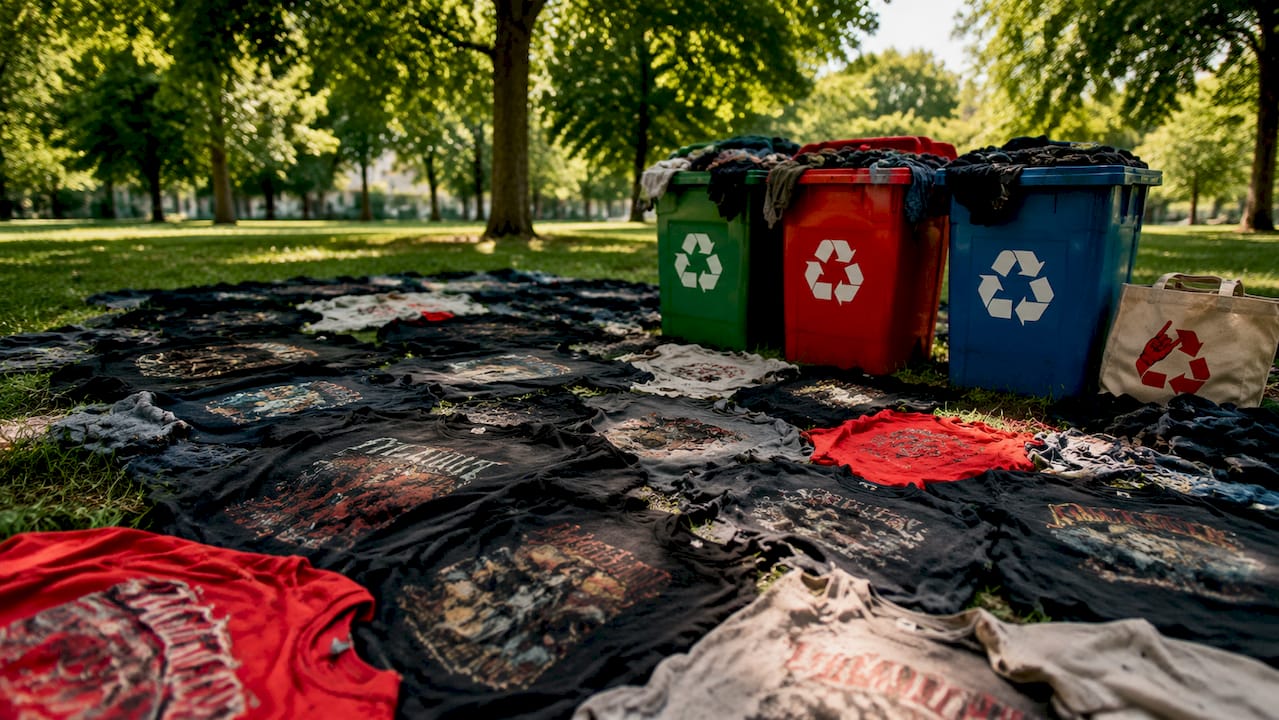
The environmental case is strong. The fashion industry generates enormous volumes of textile waste each year, and band merchandise contributes to that problem when unsold stock or worn shirts end up in landfill. Upcycling diverts that fabric from the waste stream and gives it a second life. The advantages of second hand band shirts extend beyond nostalgia into genuine environmental impact.
Upcycling also preserves cultural history. A 1992 Metallica tour shirt carries a story that a brand new blank never will. Repurposing it into something wearable keeps that story alive rather than burying it in a bin.
Popular DIY methods for upcycling band tees
The best entry point for most people is a no-sew project. DIY no-sew tote bags can be completed in under 30 minutes using only scissors and basic knotting. The technique is simple and requires no prior sewing experience.
Here are five beginner-friendly projects ranked by difficulty:
- Tote bag. Cut off the sleeves and widen the neckline to create handles. Tie the bottom hem with vertical knots spaced about 2 centimetres apart. Flip it inside out and your bag is done.
- Pillow cover. Lay the shirt flat, stuff it with an old cushion insert, and knot or tie the open ends shut. The graphic sits front and centre on the finished cushion.
- Scrunchies and hairbands. Cut horizontal strips from the body of the shirt. Stretch each strip slightly and it curls into a tube. Tie or loop it around a hair elastic.
- T-shirt yarn. Cut the shirt into one long continuous spiral strip. Use the yarn for crochet, macramé, or knitting projects. Heavier cotton shirts produce the best yarn.
- Crop top or cut-off. Mark your cut line with tailor’s chalk, cut straight across, and finish the raw edge with a simple rolled hem or leave it raw for a distressed look.
Pro Tip: Leave at least 2–3 inches of fabric when tying knots on tote bags or pillow covers. Tension-based knots need that margin to hold without unravelling after a few uses.
Each of these projects preserves the original graphic if you plan your cuts carefully. The shirt’s artwork is the whole point, so protect it.
How does industrial upcycling of band tees work?
Individual DIY projects are one thing. Industrial upcycling operates at a completely different scale and shows just how serious the music merchandise industry has become about sustainability.
Bravado processes over 400,000 unsold tour shirts into approximately 280,000 recycled cotton blanks through a partnership with Hallotex in Morocco. That conversion rate reflects the material lost during processing. The production cycle takes around six weeks in a specialised facility.
“Upcycling is a no-brainer for artists who want their merchandise to align with their environmental values.” — Matt Young, Bravado
The cost picture is honest. Upcycled blanks cost 10–20% more than new garments due to the complexity of sorting, processing, and re-spinning cotton fibre. The goal is price parity with virgin production as volume scales up.
| Factor | Industrial upcycling | Virgin production |
|---|---|---|
| Cost per blank | 10–20% higher | Baseline |
| Production time | ~6 weeks | Varies by supplier |
| Environmental impact | Diverts landfill waste | Uses new raw materials |
| Output uniqueness | Recycled cotton blanks | Standard blanks |
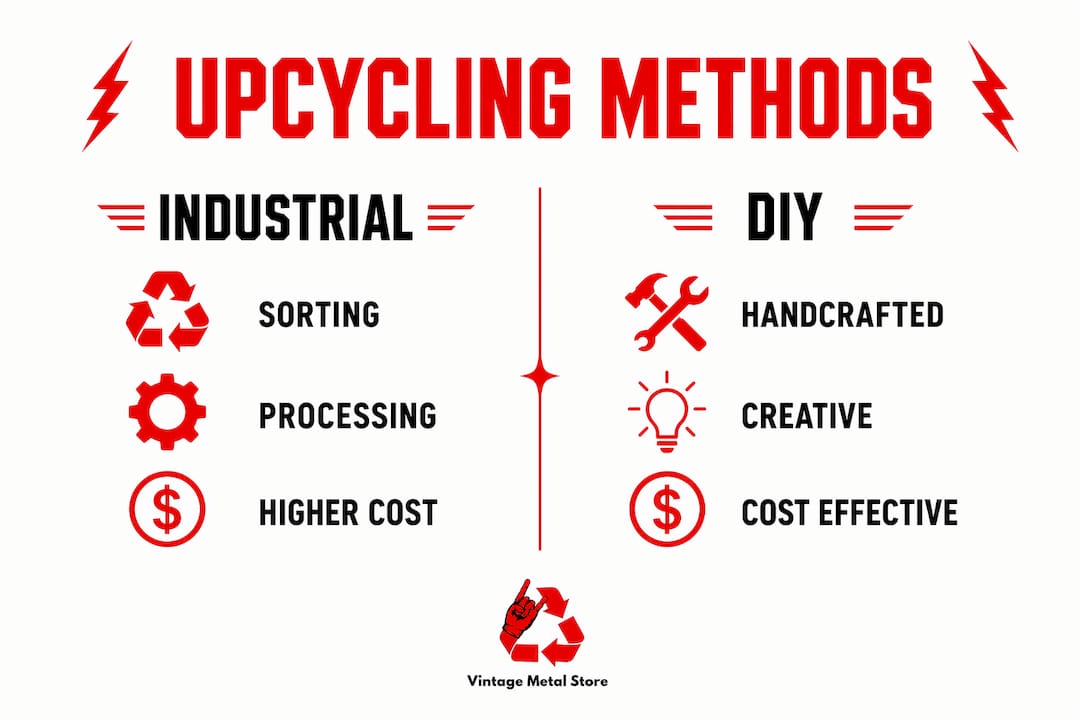
The Bravado and Hallotex model proves that upcycling band merchandise is not just a niche hobby. It is a viable supply chain strategy that major artists and labels are adopting right now in 2026.
Benefits and challenges of upcycling band tees
The benefits of repurposing old band shirts go well beyond saving fabric from landfill.
- Environmental impact. Every shirt diverted from landfill saves water, energy, and raw cotton. Textile production is resource-intensive, and extending a garment’s life by even a few years reduces that footprint meaningfully.
- Unique style. Upcycled band tees gain appeal beyond mass-produced originals. Combining original band graphics with custom modifications adds texture and story that no factory can replicate.
- Creative satisfaction. Turning a worn shirt into something new and functional is genuinely rewarding. The process builds practical skills and produces items with personal meaning.
- Cost range. Small-batch upcycled garments retail between $25 and $190, reflecting the labour involved in combining cotton with denim or other materials. Handmade pieces cost more than mass-produced alternatives, but they are also one of a kind.
The challenges are real too.
- Graphic placement limits your cuts. A centred chest print restricts where you can cut without destroying the artwork. Planning is non-negotiable.
- Fabric constraints. Older shirts may be thin, faded, or fragile. Combining them with heavier materials requires care to avoid tears.
- Durability concerns. No-sew projects rely on knots and tension. They hold well when made correctly but need occasional re-tying over time.
Pro Tip: Overprinting or combining fabrics does not degrade quality. It often adds unique texture and visual depth that makes the finished piece more interesting than the original shirt.
Buying small and buying vintage also feeds directly into the broader shift toward sustainable fashion choices that support independent creators over fast fashion chains.
Creative tips for upcycling your band tees at home
Good results come from preparation, not just enthusiasm. A few practical habits make the difference between a clean finished piece and a ruined shirt.
- Map your cuts with tailor’s chalk. Trace your pattern directly onto the shirt while it is laid flat or worn. Cut slightly larger than your intended line so you can trim back if needed. This preserves the graphic and prevents sizing mistakes.
- Match fabric weights. Lightweight fabrics need iron-on interfacing when combined with heavier band tee cotton. Without it, the lighter fabric distorts and seams pull apart over time.
- Start with the simplest project. A tote bag or scrunchie teaches you how the fabric behaves before you commit to a more complex rework. Confidence builds fast once you have one success.
- Preserve the graphic at all costs. The artwork is the whole reason a band tee has value. Centre your project around it rather than treating it as an obstacle.
- Care for your finished piece properly. Wash upcycled items inside out in cold water on a gentle cycle. Avoid the dryer where possible. The care practices for old T-shirts that apply to vintage shirts apply equally to upcycled ones.
- Experiment with layering. Cut panels from two different band shirts and stitch or knot them together. The result is a wearable piece of music history that tells two stories at once.
The best upcycling projects respect the original shirt while giving it a new purpose. You are not erasing the legacy. You are extending it.
Key takeaways
Upcycling band tees is the most direct way to reduce textile waste while preserving the cultural legacy of heavy metal tour merchandise.
| Point | Details |
|---|---|
| Definition is clear | Upcycling converts old band tees into new items of equal or greater value, not just recycled fibre. |
| DIY is accessible | No-sew projects like tote bags and pillow covers take under 30 minutes with no sewing skills required. |
| Industrial scale is real | Bravado converts over 400,000 unsold shirts into recycled blanks through Hallotex, proving commercial viability. |
| Plan before you cut | Tailor’s chalk and fabric weight matching prevent the most common and costly upcycling mistakes. |
| Cost reflects craft | Small-batch upcycled garments range from $25 to $190, reflecting genuine labour and one-of-a-kind results. |
Why I think upcycling band tees is one of the most honest things you can do with metal culture
I have spent years handling vintage heavy metal shirts, and the ones that move me most are the ones that carry visible history. A faded Slayer tour tee with a fraying collar is not a damaged product. It is evidence of a life lived loudly.
What strikes me about upcycling is that it takes that same honesty and pushes it further. You are not pretending the shirt is new. You are acknowledging what it is and choosing to carry it forward in a different form. That feels deeply aligned with metal culture, which has always valued authenticity over polish.
The environmental argument matters too, but I think the cultural argument is stronger. When you turn a worn band tee into something you use every day, you keep that band’s legacy in circulation. You wear the story rather than archiving it in a drawer or tossing it in a bin. That is worth more than any sustainability metric.
My advice: start with a shirt you love but no longer wear. The emotional connection makes you more careful, more creative, and more satisfied with the result. Upcycling is not about destroying something. It is about refusing to let it disappear.
— David
Vintage Metal Store: where upcycling inspiration starts
If you are looking for the right shirt to start your next project, or simply want to wear the legacy without cutting into it, Vintage Metal Store has you covered.
Vintage Metal Store stocks rare ex-tour stock and dead stock from heavy metal tours across the decades. From a rare Metallica 1992 tour tee to deep catalogue finds, every shirt in the collection carries genuine history. Collectors and DIY enthusiasts both find what they need here. Browse the full range of vintage Metallica shirts and discover pieces worth wearing, reworking, or adding to your collection. Shop now and wear the legacy.
FAQ
What does upcycling band tees mean?
Upcycling band tees means transforming old or unused band T-shirts into new clothing, accessories, or homewares rather than discarding them. The process gives the fabric a second life while preserving the original artwork and cultural value.
Do I need sewing skills to upcycle a band tee?
No sewing skills are required for beginner projects. No-sew tote bags and pillow covers use cutting and knotting techniques that can be completed in under 30 minutes.
How do I avoid ruining the graphic when cutting a band tee?
Trace your cutting pattern with tailor’s chalk on the shirt laid flat, and cut slightly larger than your intended line. This preserves the graphic and gives you room to trim back if needed.
Are upcycled band tee garments worth buying?
Yes. Small-batch upcycled garments combine vintage materials with custom design work, producing one-of-a-kind pieces that retail between $25 and $190. The labour and uniqueness justify the price for collectors and sustainable fashion enthusiasts alike.
How does industrial upcycling of band tees differ from DIY?
Industrial upcycling processes shirts at scale through specialised textile facilities, converting them into recycled cotton blanks for new production. DIY upcycling repurposes individual shirts into finished wearable items at home, preserving the original graphics and personal connection.
Recommended
- Why care for old t-shirts: fabric, culture, and planet – Vintage Metal Store
- 7 Types of Vintage Band Tees Every Collector Should Know – Vintage Metal Store
- Why preserve old band tees? Value, culture and know-how – Vintage Metal Store
- Inside band tee drops: exclusive merch hype and collecting – Vintage Metal Store


