



TL;DR:
- Proper care and repair extend the lifespan of vintage T-shirts, reducing textile waste and environmental impact. Washing at 30°C, storing correctly, and repurposing garments help preserve cultural value and lessen pollution from fast fashion. Consumers can support sustainability by prioritizing garment longevity and responsible stewardship over new purchases.
Caring for old T-shirts is the practice of preserving garment integrity through gentle laundering, repair, and mindful storage to extend usable life and reduce environmental harm. For anyone who owns a vintage Metallica tour tee or a faded concert shirt from the 1990s, the reasons to care for old t shirts go well beyond nostalgia. Textile preservation sits at the intersection of fibre science, circular fashion, and cultural memory. The choices you make about washing temperature, drying method, and storage directly determine whether a garment survives another decade or ends up in a landfill.
Why does caring for old t-shirts matter for fabric and environment?
Textile care is about slowing progressive fibre and ink breakdown from mechanical and chemical stresses during washing, not simply keeping tees looking presentable. Every wash cycle subjects cotton fibres to agitation, heat, and detergent chemistry. Over time, these forces weaken the tensile structure of the fabric and cause surface fuzzing that dulls both colour and print detail.
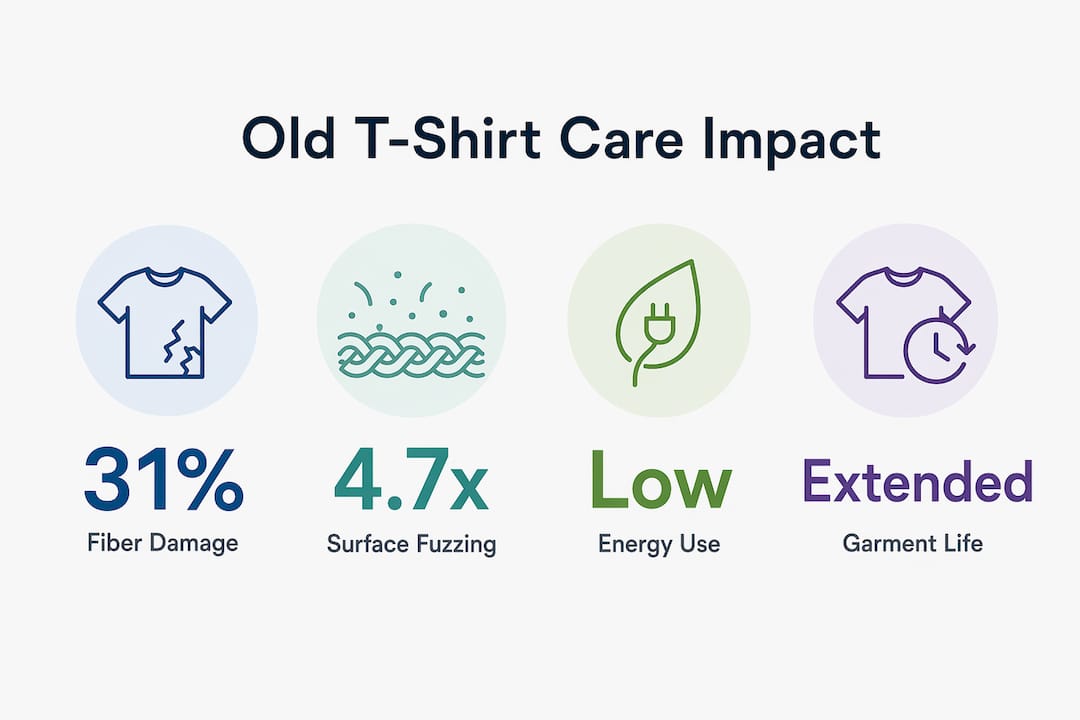
The temperature you choose makes a measurable difference. Washing cotton T-shirts at 60°C causes 31% more tensile strength loss and 4.7 times more surface fuzzing than washing at 30°C across 50 industrial wash cycles. That figure means a shirt washed hot regularly will degrade structurally in roughly half the time of one washed cool.
The environmental cost of laundering is equally significant. A 2026 life-cycle assessment confirms that laundering activities dominate the climate impact of textile use phases, with electricity consumption as the primary driver. Washing less frequently and at lower temperatures directly cuts the carbon footprint of every garment you own.
| Washing temperature | Tensile strength loss | Surface fuzzing increase | Relative energy use |
|---|---|---|---|
| 30°C | Baseline | Baseline | Low |
| 40°C | Moderate increase | Moderate increase | Medium |
| 60°C | 31% above baseline | 4.7x baseline | High |
Pro Tip: Turn vintage tees inside out before washing at 30°C on a gentle cycle. This single habit protects screen-printed graphics from direct agitation and preserves ink adhesion far longer than any specialist detergent.
How does keeping old t-shirts support sustainable fashion?
Extending garment use through proper care is the most reliable leverage point consumers have to reduce fashion’s carbon footprint, more impactful than choosing eco-friendly fabrics at the point of purchase. The logic is straightforward. A shirt that lasts 15 years instead of five displaces the production of two additional garments, each carrying its own water use, dye chemistry, and transport emissions.
Global textile waste totals approximately 92 million tonnes per year and is projected to reach 134 million tonnes by 2030. That trajectory makes garment preservation one of the few consumer-level actions with genuine scale. Keeping a single T-shirt in rotation for an extra three years removes it from that waste stream entirely.
The circular fashion model orders its priorities clearly. The value hierarchy in textiles is to first repair and extend wear, then repurpose, and lastly recycle. Recycling is the last resort because large-scale textile recycling technologies remain inconsistent and limited. The textile circular economy depends heavily on consumer behaviour prioritising garment longevity, not on industrial solutions that may not materialise at scale.
Sustainable fashion choices that prioritise older garments also carry cultural weight. A vintage band tee from a 1992 Metallica tour is not a commodity. It is a document of a specific cultural moment, and its preservation has meaning that no newly manufactured reproduction can replicate. That cultural value reinforces the motivation to care for these shirts beyond any environmental rationale.
- Repair minor damage such as small holes or loose seams before they worsen
- Buy secondhand before buying new to extend the service life of existing garments
- Wash only when genuinely necessary, not after every single wear
- Store shirts folded or hung away from direct sunlight to prevent fading
- Choose sustainable clothing options that prioritise longevity over trend cycles
Pro Tip: Spot-clean stains on vintage tees with a damp cloth and a small amount of mild detergent before reaching for a full machine wash. Most light marks come out without a full cycle, saving both fabric integrity and electricity.
How to care for old t-shirts: practical methods that work
The benefits of old t-shirts are only realised if the garment survives long enough to be worn, repurposed, or passed on. Practical care starts with washing frequency. Most T-shirts worn for a few hours in mild conditions do not need a full machine wash after every use. Airing them out between wears reduces total wash cycles significantly over a year.
When washing is necessary, cold or cool water at 30°C on a gentle or delicate cycle is the correct approach for cotton and cotton-blend vintage shirts. Harsh detergents containing bleach or optical brighteners accelerate ink breakdown and fibre degradation. A pH-neutral or wool-safe detergent used in small quantities is sufficient for most loads.
Drying method matters as much as washing temperature. Tumble dryers subject fabric to sustained heat and mechanical tumbling that accelerates the same degradation processes as hot washing. Air drying flat or on a padded hanger in the shade preserves both shape and colour. Direct sunlight bleaches fabric and fades screen-printed graphics faster than almost any other single factor.
Storage is the final variable. For storing vintage metal T-shirts long-term, acid-free tissue paper, breathable cotton bags, and cool dark environments are the standard approach used by serious collectors. Plastic bags trap moisture and create conditions for mildew growth, which destroys fabric permanently.
Repair before repurposing is the correct order of operations. A small hole near a seam can be hand-stitched in minutes. A fraying collar can be trimmed and re-hemmed. These minor repairs extend the wearable life of a shirt by years and delay the point at which repurposing becomes the better option.
What are the best creative uses for old t-shirts?
Repurposing old T-shirts gives worn or damaged garments a second functional life while keeping them out of landfill. Before starting any project, wash and sanitise the shirt thoroughly to ensure hygiene and fabric manageability, particularly for items destined for kitchen or food-adjacent use.
The range of creative uses for t shirts spans from no-sew projects accessible to anyone through to skilled textile crafts that produce genuinely beautiful objects.
- Cleaning rags and polishing cloths. Cut worn tees into squares and hem the edges. Cotton jersey is highly absorbent and lint-free, making it superior to many commercial cleaning cloths for glass and surfaces.
- Tote bags. Cut off the sleeves, widen the neckline, and sew or knot the bottom hem closed. A single shirt produces a functional, reusable shopping bag in under 20 minutes with no sewing required.
- Memory quilts. Collect panels from significant shirts, such as tour tees, festival shirts, or family garments, and sew them into a quilt. Upcycling into memory quilts strengthens cultural ties by preserving memories embedded in the garment, which motivates care beyond pure environmental rationale.
- T-shirt yarn. Cut a shirt in a continuous spiral strip to produce jersey yarn. This material works for crocheted plant hangers, baskets, pet toys, and hair accessories.
- Pillow covers. A shirt with a graphic print on the front can be sewn into a cushion cover that displays the design as decorative art. This approach is particularly effective for band tees with strong visual imagery.
- Pet toys. Braid strips of jersey fabric into rope toys for dogs. Cotton jersey is safe, durable, and washable, making it a practical choice for this application.
The importance of t shirt preservation is most visible in the memory quilt tradition. A Metallica shirt from the Black Album tour, a Slayer tee from 1991, or a Pantera shirt from the Vulgar Display of Power cycle carries specific cultural information. Assembled into a quilt, these garments become a textile archive of a musical era.
Key takeaways
Caring for old T-shirts through cool washing, repair, and creative reuse is the single most effective consumer action for reducing fashion’s environmental footprint while preserving cultural value.
| Point | Details |
|---|---|
| Wash at 30°C, not 60°C | Hot washing causes 31% more fibre damage and 4.7x more surface fuzzing per cycle. |
| Reduce wash frequency | Laundering electricity is the dominant climate cost of textile use; wash only when necessary. |
| Repair before repurposing | Extending wearable life through repair delivers greater environmental return than upcycling alone. |
| Repurpose with purpose | Memory quilts, tote bags, and t-shirt yarn keep garments out of the 92 million tonne annual textile waste stream. |
| Secondhand beats new | Buying vintage or secondhand displaces new production and its full upstream environmental cost. |
The real value in what you already own
I have handled hundreds of vintage heavy metal shirts over the years, and the ones that survive in genuinely wearable condition share one thing in common. Someone cared for them. Not obsessively, not with expensive specialist products, but consistently. Cool washes, careful storage, a stitch here and there when a seam started to go.
The conventional wisdom in fashion circles tends to focus on what you buy next. Eco-friendly fabrics, certified supply chains, organic cotton. These things matter, but they miss the point for anyone who already owns something worth keeping. The shirt you have is always more sustainable than the shirt you buy to replace it, regardless of what the new one is made from.
What I find genuinely interesting about the vintage metal shirt market is that collectors have been practising circular fashion for decades without calling it that. Buying a tour shirt from 1992 instead of a reproduction keeps the original garment in circulation, preserves its cultural specificity, and avoids the production of a new item entirely. That is the circular economy in practice, driven by taste and passion rather than policy.
The challenge is shifting the mindset from ownership to stewardship. A vintage Slayer shirt or a rare tour tee from a band that no longer exists is not just clothing. It is an object with a history. Treating it accordingly, washing it carefully, repairing it when needed, storing it properly, is not precious or excessive. It is the correct response to something that cannot be replaced.
— David
Find vintage band tees worth preserving at Com

Com stocks genuine vintage heavy metal T-shirts sourced from ex-tour stock and deadstock from bands and tours that defined the genre. These are not reproductions. Every shirt in the catalogue is an original garment with provenance, and the care you put into maintaining it directly determines how long it survives. A rare 1992 Metallica tour tee is exactly the kind of piece that rewards proper care with decades of additional life. Browse the full Metallica vintage shirt collection to find shirts worth adding to your wardrobe and your long-term care rotation.
FAQ
Why should you care for old t-shirts rather than replace them?
Caring for old T-shirts extends their usable life and avoids the full environmental cost of producing a replacement garment. Extending garment use is the highest-impact consumer action for reducing fashion’s climate footprint, according to National Geographic sustainability experts.
What washing temperature is best for old cotton t-shirts?
30°C on a gentle cycle is the correct temperature for vintage or old cotton T-shirts. Washing at 60°C causes 31% more tensile strength loss and 4.7 times more surface fuzzing compared to cool washing.
How do you store vintage t-shirts to prevent damage?
Store vintage T-shirts in a cool, dark environment using acid-free tissue paper or breathable cotton bags. Avoid plastic bags, which trap moisture and create conditions for mildew, and keep shirts away from direct sunlight to prevent fading. For detailed guidance, see vintage metal shirt storage.
What can you do with old t-shirts you no longer wear?
Old T-shirts can be repurposed into cleaning rags, tote bags, memory quilts, t-shirt yarn, pillow covers, and pet toys. Good Housekeeping’s 2026 repurposing guide recommends sanitising the shirt before starting any project, particularly for kitchen or food-adjacent uses.
How does caring for old t-shirts support the circular economy?
Keeping garments in use longer reduces demand for new textile production and delays disposal into the 92 million tonne annual global textile waste stream. The circular fashion hierarchy places repair and extended wear above repurposing, and repurposing above recycling, because each earlier stage delivers greater environmental return.
Recommended
- Why fans collect old shirts: Cultural power of vintage metal tees – Vintage Metal Store
- Top Fabrics for Vintage Shirts: Collector Value Explained – Vintage Metal Store
- Preserve your vintage metal shirts with proper care – Vintage Metal Store
- Collecting tour shirts: their cultural value and impact – Vintage Metal Store


