



TL;DR:
- Proper preservation of vintage shirts involves gentle assessment, cold-water hand washing, flat drying away from sunlight, and storing in acid-free, breathable materials. Using harsh chemicals, machine washing, or plastic storage can cause irreversible damage, reducing the garment’s lifespan and value. Following slow, careful techniques ensures these cultural and monetary treasures remain in top condition for decades.
The best practices for vintage shirt preservation are defined as a set of specialised methods covering assessment, gentle cleaning, flat drying, and archival storage using acid-free materials. Vintage shirts, particularly heavy metal tour merch from the 1980s and 1990s, carry irreplaceable cultural and monetary value. Their single-stitch construction, screen-printed graphics, and aged cotton fibres demand care that goes far beyond a standard machine wash. Get any step wrong and you risk permanent damage to a piece of living metal history. This guide gives you the exact methods used by textile conservators and serious collectors to keep those shirts in top condition for decades.
1. Best practices for vintage shirt preservation start with assessment
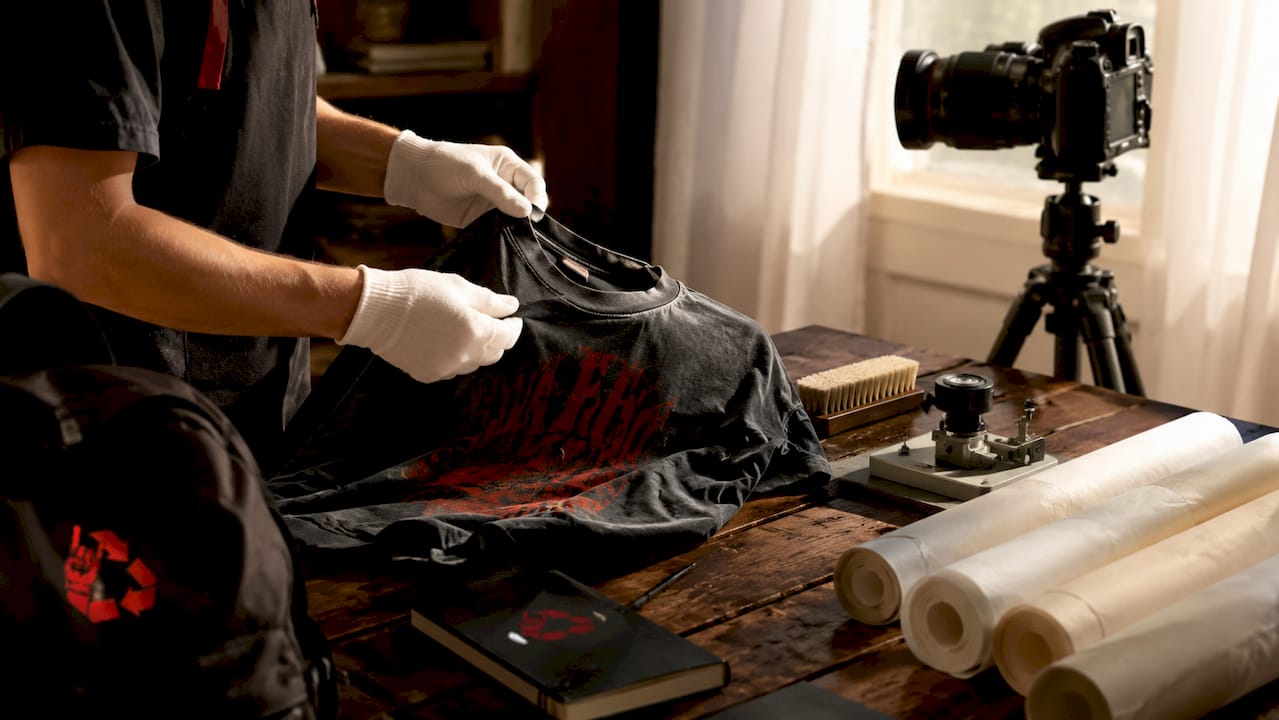
Never clean or store a vintage shirt without first assessing its condition. A quick inspection prevents you from turning a minor flaw into a catastrophic one.
Run through these checks before doing anything else:
- Fabric integrity: Give the fabric a gentle tug in several spots. If fibres separate or the weave pulls apart, the cotton has dry rot. Dry-rotted fabric cannot survive washing and needs stabilisation first.
- Colourfastness: Dampen a white cotton cloth and press it firmly against an inconspicuous area of the print or dye. If colour transfers, the shirt will bleed during washing and needs spot treatment only.
- Embellishments: Check buttons, zips, iron-on patches, and any sewn-on details. Loose embellishments must be secured or removed before any wet cleaning.
- Structural condition: Look for seam separation, thinning at the collar, and stress points at the underarms. These areas need reinforcement before washing adds further strain.
Skipping this step is the single most common mistake collectors make. A shirt that looks fine on the hanger can disintegrate in water if the fibres have already degraded.
Pro Tip: Photograph the shirt under natural light before any treatment. You will have a clear before-and-after record, which is useful for insurance, resale, and tracking the condition of your collection over time.
2. Best cleaning methods for vintage shirts
Hand washing is regarded by experts as the “museum method” for vintage clothing. It gives you full control over water temperature, agitation, and soak time. Machine cycles, even on delicate settings, apply mechanical stress that aged cotton simply cannot handle.
Follow these steps for safe cleaning:
- Fill a clean basin with cold water below 20°C. Hot water causes fibres to contract and dyes to bleed.
- Add a small amount of pH-neutral, phosphate-free detergent such as Orvus Paste. Avoid any detergent containing enzymes or optical brighteners, as these chemicals attack aged protein fibres and degrade screen-print inks.
- Turn the shirt inside out before submerging it. This protects the graphic from direct agitation.
- Soak for 5–15 minutes maximum. Extended soaking weakens fibres and causes dyes to migrate.
- Gently squeeze the soapy water through the fabric. Never wring, twist, or scrub.
- Rinse thoroughly in cold water until no detergent remains. Residual detergent continues to break down fibres after the shirt is stored.
For extremely fragile pieces, spot cleaning is the safer choice. Apply a tiny amount of diluted pH-neutral detergent to a cotton swab and work only on the soiled area.
Dry cleaning solvents and heat can melt internal glues, detach embellishments, and damage delicate fabrics. Dry cleaning is not the safe option many collectors assume it to be. Reserve it only for structured garments where hand washing is genuinely impossible.
Pro Tip: Test your detergent on a hidden seam allowance before applying it to the main fabric. Even pH-neutral products can react unexpectedly with aged dyes or synthetic blends from certain eras.
3. Proper drying and handling after cleaning
How you dry a vintage shirt matters as much as how you wash it. Incorrect drying causes stretching, distortion, colour fading, and permanent shape loss.
Follow these drying principles:
- Lay flat on a clean white towel. Never hang a wet vintage shirt. The weight of wet fabric pulls the weave out of shape, especially at the shoulders and collar. White towels prevent dye transfer from coloured surfaces.
- Roll the shirt in the towel first. Place the shirt flat on a dry white towel, roll them together gently, and press down to absorb excess moisture. Unroll and transfer the shirt to a fresh dry towel for the drying stage.
- Reshape while damp. Gently pull the shirt back to its original dimensions while it is still damp. Once dry, cotton sets in whatever shape it holds.
- Choose a ventilated, stable environment. A room with good airflow and consistent temperature dries shirts evenly. Avoid bathrooms, laundries, or any space with humidity fluctuations.
- Keep away from direct sunlight. UV light fades both fabric colour and screen-print inks rapidly. Dry indoors or in open shade only.
Allow the shirt to dry completely before folding or storing. Storing a damp shirt creates the perfect conditions for mildew growth, which causes permanent staining and fibre damage.
4. Archival storage techniques to protect vintage shirts
Long-term storage for shirts requires more than a clean wardrobe shelf. The materials you use and the environment you store in directly determine how long a vintage shirt survives.
Acid-free tissue paper is the foundation of archival textile storage. Place it between each fold and between garments to prevent permanent crease lines and stop dye migration between pieces. Standard tissue paper is acidic and will yellow and damage fabric over time.
Cotton muslin bags and acid-free cardboard boxes are the correct storage containers for vintage shirts. They allow air circulation, which prevents moisture build-up. Plastic bags trap humidity and create conditions that promote mildew and fibre degradation. Never use them for long-term storage.
| Storage method | Effect on vintage shirts |
|---|---|
| Acid-free tissue paper between folds | Prevents permanent creases and dye migration |
| Cotton muslin bags | Allows airflow, protects from dust, prevents mildew |
| Acid-free cardboard boxes | Blocks light, maintains stable microenvironment |
| Plastic bags or bins | Traps moisture, accelerates mildew and fibre decay |
| Attics, basements, garages | Extreme humidity swings cause cotton to become brittle |
The ideal storage environment is cool, dry, dark, and stable. Climate-controlled conditions are the single most important factor in preventing fabric brittleness and decay. Aim for a consistent temperature and relative humidity, avoiding rooms that experience seasonal extremes.
Refold stored shirts every six months. Permanent crease lines form along the same fold points over time, and periodic refolding redistributes the stress across the fabric. Check for pest activity, moisture, and any new staining at each inspection. For a detailed walkthrough of storage best practices tailored to metal shirts, Vintage Metal Store has published specific guidance for collectors.
5. How to protect vintage shirt prints and graphic designs
The screen-printed graphics on vintage metal tour shirts are often the most valuable and most vulnerable part of the garment. Heat and harsh chemicals are the two primary causes of print cracking, fading, and peeling.
Apply these print-specific care methods:
- Turn the shirt inside out before every wash. Turning shirts inside out reduces direct friction and chemical contact on the print surface during cleaning.
- Avoid all heat during washing and drying. Heat causes the plastisol or water-based inks used in vintage screen printing to crack and separate from the fabric. Cold water and air drying are non-negotiable.
- Use only gentle, enzyme-free detergents. Enzymes and brighteners accelerate print degradation. A pH-neutral detergent with no additives is the only safe choice.
- Wash as infrequently as possible. Frequent washing accelerates deterioration in vintage garments. Air the shirt out between wears and use a garment steamer to refresh it without a full wash. Steam kills surface bacteria and refreshes the fabric without the mechanical stress of washing.
- Store prints face-in. When folding for storage, fold so the graphic faces inward. This protects the print from abrasion against storage surfaces.
For a deeper look at preserving shirt prints, Vintage Metal Store has a dedicated guide covering the specific challenges of vintage metal graphics.
6. Handling and wearing vintage shirts without causing damage
Preservation does not mean a shirt must never leave the box. Collectors who wear their pieces can still protect them with the right handling habits.
Avoid wearing a vintage shirt in conditions that accelerate wear. Direct sunlight, excessive heat, and heavy physical activity all stress aged fabric. If you wear a piece, air it out thoroughly before returning it to storage. Never fold a shirt that still carries body heat or moisture.
When displaying a vintage shirt, use a padded, wide-shouldered hanger rather than a wire hanger. Wire hangers concentrate stress on a single point of the shoulder seam and cause permanent distortion over time. Limit display time to short periods and return the shirt to flat storage for the majority of its life. For collectors managing multiple pieces, a tour shirt preservation workflow helps you track condition and rotation schedules across an entire collection.
Key takeaways
Preserving vintage shirts requires cold-water hand washing with pH-neutral detergent, flat drying away from sunlight, and archival storage using acid-free tissue paper and breathable containers in a climate-controlled environment.
| Point | Details |
|---|---|
| Assess before cleaning | Check for dry rot, colourfastness, and loose embellishments before any wet treatment. |
| Hand wash in cold water | Soak in water below 20°C for 5–15 minutes using a pH-neutral, enzyme-free detergent. |
| Dry flat, never hang | Lay on a white towel away from sunlight to prevent stretching and colour fading. |
| Use acid-free storage materials | Tissue paper, muslin bags, and cardboard boxes prevent crease damage and mildew. |
| Limit washing frequency | Air out and steam vintage shirts between wears to reduce mechanical wear on fibres and prints. |
What I have learned from years with vintage metal shirts
The most damaging thing I see collectors do is treat vintage shirts like modern garments. They throw a 1988 Metallica tour tee into a cold machine wash on “gentle” and think they have done the right thing. They have not. The mechanical agitation alone, even at low speed, is enough to split dry-rotted seams and lift cracked print edges.
The second biggest mistake is storage in plastic. I have opened boxes of shirts stored in sealed plastic bags and found mildew colonies that destroyed the fabric in under two years. Breathable storage is not optional. It is the difference between a shirt that lasts another 40 years and one that crumbles in your hands.
What actually works is boring and slow. Cold water, gentle detergent, flat drying, acid-free tissue, a cool dark room. No shortcuts. The collectors who follow this process consistently have shirts that look like they came off the tour bus yesterday. The ones who cut corners have regrets.
One thing I would add that most guides skip: refolding matters more than people realise. A shirt folded in the same position for five years will develop permanent crease lines that weaken the fabric along those exact points. Set a reminder to refold every six months. It takes two minutes and it genuinely extends the life of the garment.
— David
Rare vintage metal shirts worth preserving properly

You have put in the work to learn how to protect these pieces. Now make sure the shirts in your collection are worth that effort. Vintage Metal Store carries genuine ex-tour stock and deadstock heavy metal shirts, including rare finds like the Metallica 1992 tour tee that serious collectors actively hunt down. Every shirt in the collection is the real thing, sourced from tours and bands that defined the genre. If you are building or expanding your collection of authentic vintage metal pieces, browse the full range of vintage Metallica shirts at Vintage Metal Store and wear the legacy properly.
FAQ
What water temperature is safe for washing vintage shirts?
Wash vintage shirts in cold water below 20°C to prevent dye bleeding, fibre contraction, and print damage. Hot water is the fastest way to ruin an aged cotton garment.
Can I use a washing machine for vintage shirts?
Machine washing is not safe for vintage shirts, even on delicate cycles. Mechanical agitation stresses aged fibres and seams. Hand washing gives you the control needed to clean without causing damage.
How should I store vintage shirts long-term?
Fold shirts with acid-free tissue paper between layers and store them in cotton muslin bags or acid-free cardboard boxes in a cool, dry, dark, and climate-controlled space. Avoid plastic bags and locations with temperature or humidity fluctuations.
How often should I wash a vintage shirt?
Wash vintage shirts as infrequently as possible. Air them out between wears and use a garment steamer to refresh the fabric. Frequent washing accelerates fibre deterioration and degrades screen-printed graphics faster than almost any other factor.
Is dry cleaning safe for vintage shirts?
Dry cleaning is not recommended for most vintage shirts. Dry cleaning solvents and heat can melt internal glues, damage delicate fabrics, and detach embellishments. Gentle hand washing is the preferred method for preserving old apparel.
Recommended
- How to display collector shirts: the complete guide – Vintage Metal Store
- How to organise your heavy metal shirt collection: 4 steps – Vintage Metal Store
- Preserving shirt prints guide for vintage collectors – Vintage Metal Store
- How to Store Vintage Metal T Shirts for Lasting Quality – Vintage Metal Store


