



How to store vintage metal shirts for lasting quality
Vintage heavy metal t-shirts from iconic tours and bands represent irreplaceable pieces of music history, yet improper storage destroys their value and condition faster than most collectors realise. Necklines stretch, prints fade and transfer, and fabrics yellow when stored incorrectly. This guide reveals expert, evidence-backed techniques to preserve your rare metal tees using archival materials, controlled environments, and proper folding methods that prevent the common damage plaguing collections worldwide.
Table of Contents
- What You Need For Storing Vintage Metal Shirts
- Step-By-Step Guide To Folding And Storing Your Metal Shirts
- Best Environmental Conditions And Maintenance Tips
- Common Mistakes To Avoid And Troubleshooting
- Find Rare Vintage Metal Shirts At Vintage Metal Store
Key takeaways
| Point | Details |
|---|---|
| Folding prevents stretching | Proper folding techniques avoid neckline and shoulder deformation that hanging causes over time |
| Acid-free materials protect | Archival tissue paper and boxes prevent chemical degradation, yellowing, and print transfer |
| Environment matters critically | Store at 65-70°F with 40-50% humidity in darkness to prevent fading and mould growth |
| Regular rotation essential | Refold shirts every 3-6 months and inspect quarterly to catch damage early |
| Avoid common mistakes | Never use plastic bags, stacking pressure, or hanging for long-term storage |
What you need for storing vintage metal shirts
Gathering the correct archival materials before you begin ensures your vintage metal shirts receive museum-quality protection from the start. The right supplies create a chemical barrier between your shirts and environmental threats while maintaining breathable conditions that prevent moisture damage.
Using acid-free tissue paper between folds and inside archival boxes prevents chemical degradation and print transfer that ruins vintage graphics. Standard tissue contains lignin and acids that yellow fabric and break down fibres over decades, making archival-grade materials non-negotiable for serious collectors. You’ll need enough tissue to place between each fold and wrap individual shirts completely.
Archival storage boxes made from acid-free cardboard or polypropylene provide the ideal housing for folded shirts. These boxes protect against light exposure, dust, and physical damage whilst allowing air circulation that plastic containers block. Choose boxes sized appropriately for your collection, typically 40-50cm wide to accommodate folded shirts without cramping.
Cotton storage bags offer an excellent alternative for individual shirt protection, particularly for extremely rare pieces. These breathable fabric covers shield against dust whilst preventing the moisture accumulation that plastic creates. Unbleached cotton works best, as dyes can potentially transfer to light-coloured vintage shirts over extended periods.
Pro Tip: Label each storage box or bag with the band name, tour year, and shirt colour using archival-quality tags to avoid unnecessary handling when searching your collection.
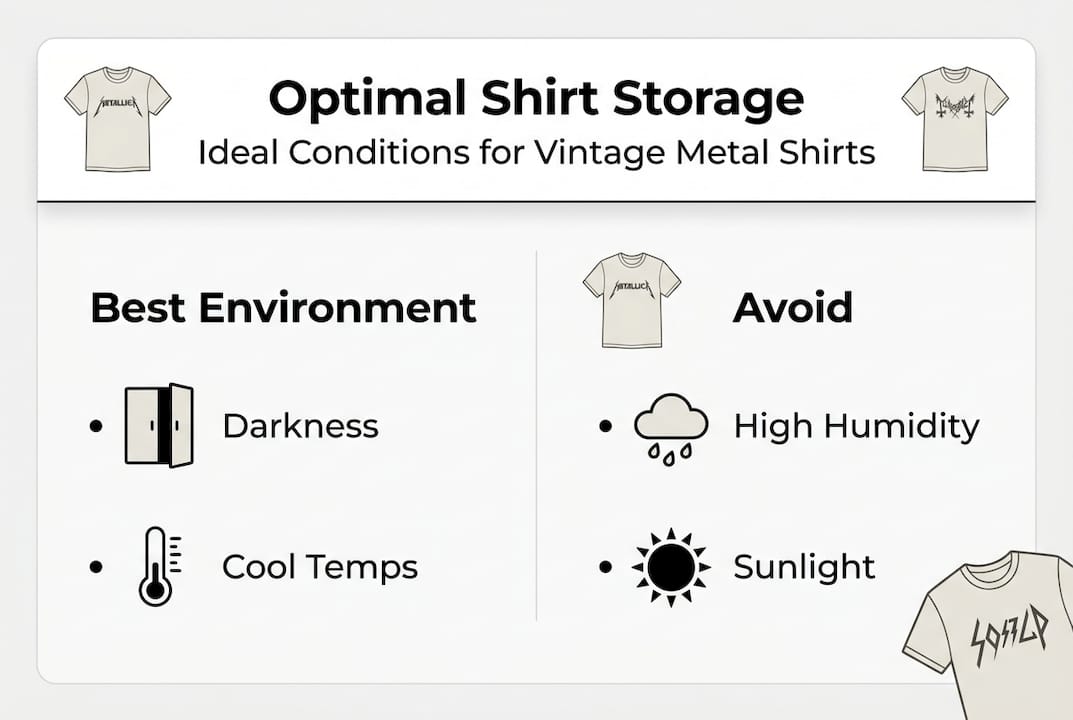
Your storage environment requires careful preparation beyond just materials. Maintaining conditions at 65-70°F with 40-50% relative humidity in complete darkness prevents fading, yellowing, and mould growth that destroys vintage fabric. Install a hygrometer and thermometer in your storage area to monitor conditions consistently.
| Material | Purpose | Avoid |
|---|---|---|
| Acid-free tissue paper | Prevents chemical damage and print transfer | Regular tissue with lignin |
| Archival boxes | Light protection and breathable storage | Plastic containers |
| Cotton bags | Individual shirt protection | Synthetic fabric bags |
| Climate monitor | Track temperature and humidity | Unmonitored spaces |
Darkness proves absolutely critical for preserving print colours and preventing fabric yellowing. Even indirect sunlight causes irreversible fading to vintage graphics and oxidation that ages cotton prematurely. Choose a storage location away from windows, preferably in a cupboard or dedicated storage room where light exposure remains minimal year-round.
Avoid plastic bags, vacuum-sealed packaging, or non-breathable containers entirely. These materials trap moisture against fabric, creating perfect conditions for mildew growth and accelerating chemical breakdown. The short-term space savings never justify the long-term damage to irreplaceable vintage metal t-shirts.
Step-by-step guide to folding and storing your metal shirts
Folding remains the preferred method for long-term storage of vintage heavy metal t-shirts because it prevents the neckline stretching and seam stress that hanging causes through gravitational pull. The technique you use determines whether your shirts maintain their original shape or develop permanent deformation over the years.
-
Lay the shirt face down on a clean, flat surface free from debris or moisture. Smooth out any wrinkles gently with your hands, avoiding excessive pulling that stresses aged fabric.
-
Fold one sleeve across the back, creating a straight line from shoulder to hem. The sleeve should lie flat without bunching or creating pressure points along the shoulder seam.
-
Repeat with the opposite sleeve, ensuring both sides create symmetrical folds. This balanced approach distributes any pressure evenly across the garment.
-
Place a sheet of acid-free tissue paper across the folded sleeves before proceeding. This barrier prevents print transfer and reduces stress on fold lines.
-
Fold the shirt in half vertically, bringing the bottom hem to meet the neckline. Insert additional tissue paper between this fold to cushion the crease.
-
For longer shirts, create one additional horizontal fold, again cushioned with tissue. Avoid excessive folding that creates too many stress points.
-
Wrap the completely folded shirt in a final layer of tissue paper or place it inside a cotton storage bag for individual protection.
Position folded shirts upright in archival boxes rather than stacking them flat. This vertical filing system, similar to organising documents, prevents the crushing weight that stacked storage creates. Shirts stored upright maintain their shape better and allow easier access without disturbing the entire collection.
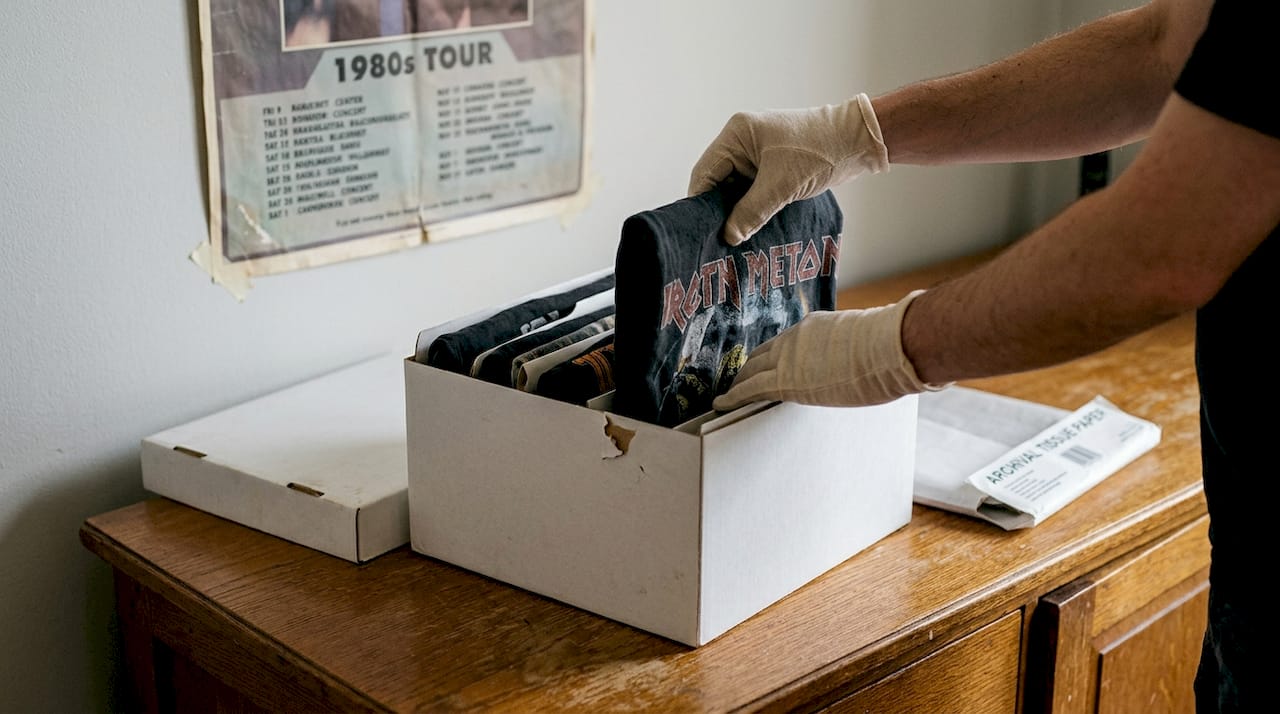
Pro Tip: Photograph your folding technique and storage system to maintain consistency when adding new shirts or reorganising your collection.
Never stack shirts in tall piles, even with tissue between layers. The cumulative weight creates pressure deformation that permanently alters the fabric’s structure and causes prints to adhere to tissue or adjacent shirts. If box space requires some layering, limit stacks to three shirts maximum with substantial tissue cushioning between each.
Store boxes in locations away from direct light sources, including both natural sunlight and artificial lighting. Even brief exposure during retrieval sessions accumulates over time, so work quickly when accessing your collection and immediately return boxes to dark storage. Consider the band shirt care guide for additional preservation techniques beyond storage alone.
Keep storage areas away from potential moisture sources like bathrooms, laundries, or exterior walls prone to condensation. Water damage and mould growth can destroy an entire collection within weeks during humid conditions. Position boxes at least 10cm off the floor using shelving to protect against potential flooding or ground moisture.
Best environmental conditions and maintenance tips
Creating and maintaining optimal storage conditions separates collections that survive decades in pristine condition from those that deteriorate despite careful folding and archival materials. Environmental factors work constantly, making consistent conditions more important than perfect materials alone.
Temperature stability between 65-70°F with relative humidity at 40-50% creates the ideal preservation environment for vintage cotton garments. Fluctuations cause more damage than slightly imperfect but stable conditions, as expansion and contraction cycles stress fibres and accelerate chemical breakdown. Install a quality hygrometer and thermometer, checking readings weekly to catch problems before damage occurs.
Excessive humidity above 60% encourages mould growth, mildew formation, and accelerated fabric degradation through moisture-driven chemical reactions. Conversely, extremely dry conditions below 30% humidity make fibres brittle and prone to cracking. Use a dehumidifier during humid months and a humidifier during dry periods to maintain the target range year-round.
“Proper environmental control preserves vintage textiles for generations, whilst poor conditions destroy irreplaceable pieces within years through preventable damage.”
Complete darkness remains non-negotiable for preventing colour fading and fabric yellowing. Light exposure, particularly ultraviolet radiation from sunlight, breaks down dyes and oxidises cotton fibres. Even fluorescent lighting contains UV components that damage vintage graphics over time. Store shirts in completely dark spaces, using brief, dim lighting only during access sessions.
Avoid hanging vintage metal shirts for long-term storage, as gravitational forces stretch necklines, shoulders, and fabric over months and years. The weight of the shirt itself, particularly heavier vintage cotton, pulls downward constantly when hung. Reserve hanging only for short-term display purposes, using padded hangers that distribute weight across the shoulder area rather than concentrating stress at the neckline.
- Check storage area temperature and humidity weekly using calibrated instruments
- Inspect boxes quarterly for signs of pest activity, water damage, or deteriorating materials
- Rotate and refold shirts every 3-6 months to relieve pressure points and prevent permanent creasing
- Replace acid-free tissue annually, as it absorbs environmental contaminants over time
- Monitor for musty odours indicating mould growth or poor air circulation
Regular rotation and refolding proves essential for long-term preservation. Even with tissue cushioning, fold lines create stress points that can become permanent if left unchanged for years. Schedule refolding sessions every three to six months, using these opportunities to inspect each shirt for damage, verify environmental conditions, and replace tissue as needed.
Quarterly inspections catch problems early, before minor issues become irreversible damage. Look for yellowing spots indicating acid migration, tiny holes suggesting insect activity, or colour changes showing light exposure. Address any problems immediately by improving storage conditions or treating affected shirts appropriately. Understanding vintage t-shirt authenticity helps you recognise age-appropriate wear versus preventable damage.
Air circulation prevents stagnant conditions that encourage mould whilst avoiding excessive air movement that introduces dust and contaminants. Closed boxes in climate-controlled spaces provide ideal circulation, protecting shirts whilst allowing enough air exchange to prevent moisture accumulation. Avoid sealed containers or vacuum storage that eliminate air circulation entirely.
Common mistakes to avoid and troubleshooting
Even experienced collectors make storage mistakes that damage valuable vintage metal shirts, often discovering problems only after irreversible harm occurs. Recognising and avoiding these common errors protects your collection from preventable deterioration.
Hanging shirts for storage represents the single most damaging mistake collectors make. Gravitational stretching over time permanently deforms necklines, elongates shoulders, and distorts the entire garment shape. Vintage cotton, already weakened by decades of age, stretches far more readily than modern fabrics. Reserve padded hangers exclusively for temporary display, returning shirts to folded storage within days.
Plastic bags and containers trap moisture against fabric, creating perfect conditions for mould growth and accelerated chemical degradation. Many collectors use plastic thinking it provides protection, not realising the sealed environment concentrates humidity and prevents air circulation. This mistake causes more collection damage than almost any other storage error.
- Never store shirts in plastic bags, even temporarily
- Avoid stacking folded shirts in tall piles that create crushing pressure
- Don’t use regular cardboard boxes containing acids that transfer to fabric
- Never store in attics, basements, or garages with uncontrolled temperature swings
- Avoid mothballs or chemical pest deterrents that damage vintage fabric
Stacking shirts in tall piles, even with tissue between layers, creates cumulative weight that deforms lower garments and causes prints to transfer or stick to protective materials. The pressure also sets permanent creases that alter the shirt’s appearance and reduce collector value. Always store shirts upright in filing-style arrangement or limit stacks to three shirts maximum.
Yellowing indicates acid migration from storage materials or environmental oxidation. If you notice yellowing, immediately replace all tissue and boxes with fresh archival materials, verify your storage environment maintains proper conditions, and consider professional conservation for severely affected pieces. Early intervention prevents yellowing from becoming permanent.
Mould appears as fuzzy growth or discoloured spots, typically starting in high-humidity conditions or areas with poor air circulation. Address mould immediately by isolating affected shirts, reducing storage humidity below 45%, and consulting textile conservation professionals for treatment options. Never attempt aggressive cleaning without expert guidance, as improper treatment causes more damage than the mould itself.
| Storage method | Neckline preservation | Print protection | Long-term viability |
|---|---|---|---|
| Folded with tissue | Excellent | Excellent | Best for collections |
| Hanging on padded hanger | Poor | Good | Display only |
| Hanging on wire hanger | Very poor | Good | Never recommended |
| Stacked without tissue | Fair | Poor | Avoid |
Insect damage shows as small holes or threadbare areas, often accompanied by tiny larvae or adult insects. Common fabric pests include clothes moths and carpet beetles that feed on natural fibres. Combat infestations by thoroughly cleaning the storage area, freezing affected shirts at -18°C for 72 hours to kill pests, and using cedar blocks (not mothballs) as natural deterrents.
Temperature fluctuations cause expansion and contraction cycles that stress aged fibres and accelerate deterioration. Attics and garages experience extreme temperature swings that make them unsuitable for vintage textile storage, despite their convenient space. Choose climate-controlled interior locations even if it means reducing your collection size to fit available proper storage.
Recognising the difference between appropriate age-related patina and preventable damage helps you assess whether your storage methods work effectively. Vintage shirts naturally develop slight colour softening and minor fabric thinning over decades. However, stretched necklines, yellowing, mould, or print degradation indicate storage problems requiring immediate correction. Proper long-term metal shirt storage prevents these issues whilst allowing natural, value-preserving ageing.
Find rare vintage metal shirts at Vintage Metal Store
Now that you understand expert storage techniques for preserving your collection, discovering authentic vintage metal shirts in premium condition becomes your next priority. Vintage Metal Store specialises in rare, genuine heavy metal tees from iconic tours and bands, offering collectors verified authentic pieces worthy of archival storage methods.

Explore curated collections featuring vintage Metallica shirts in Australia, including extraordinary finds like the rare Metallica 1992 tour tee that represents the pinnacle of collectible band merchandise. Each shirt arrives ready for your expert storage system, having been carefully preserved and authenticated by vintage specialists who understand the value of proper handling. Access comprehensive guides, expert articles, and trusted advice that connects your passion for collecting with the knowledge needed to protect these irreplaceable pieces of music history for future generations.
FAQ
How should I fold vintage metal shirts to avoid damage?
Fold shirts flat with sleeves crossed over the back, then fold vertically and horizontally as needed to fit storage boxes. Place acid-free tissue paper between each fold to cushion creases and prevent print transfer. This method distributes pressure evenly and avoids the neckline stress that hanging creates.
Can I hang my vintage heavy metal shirts for storage?
Avoid hanging for long-term storage because gravitational forces stretch necklines, shoulders, and fabric permanently over time. Vintage cotton weakens with age and stretches far more readily than modern materials. Use padded hangers only for short-term display periods, returning shirts to folded storage within days to prevent deformation.
What is the best environment to store vintage band shirts?
Store shirts at 65-70°F with 40-50% relative humidity in complete darkness to prevent fading, yellowing, and mould growth. Use climate-controlled interior spaces away from windows, avoiding attics, basements, or garages with temperature fluctuations. Monitor conditions weekly with a hygrometer and thermometer to maintain stable preservation environment.
How often should I check and refold my collection?
Rotate and refold shirts every three to six months to relieve pressure points and prevent permanent creasing at fold lines. Inspect your collection quarterly for signs of yellowing, mould, pest activity, or environmental damage. Replace acid-free tissue annually as it absorbs contaminants over time, and address any problems immediately to prevent irreversible harm.
Why can’t I use plastic bags for storing vintage shirts?
Plastic bags trap moisture against fabric, creating sealed environments that encourage mould growth and accelerate chemical degradation. Unlike breathable archival materials, plastic prevents air circulation essential for preventing stagnant conditions. Use acid-free boxes or cotton bags instead, which protect shirts whilst allowing necessary air exchange that preserves fabric long-term.
Recommended
- How to Store Vintage Metal T Shirts for Lasting Quality – Vintage Metal Store
- Top Fabrics for Vintage Shirts: Collector Value Explained – Vintage Metal Store
- Vintage band shirt care guide for collectors 2026 – Vintage Metal Store
- How to Buy Second Hand Metal Shirts for Collectors – Vintage Metal Store


