



TL;DR:
- A bootleg band shirt is an unauthorized garment featuring altered band logos or imagery, often created out of fan creativity rather than deception. Unlike counterfeit merchandise, bootlegs are legally grey and do not aim to pass as official products, serving as cultural symbols within music fandom. Their designs vary from playful parodies to authentic-looking pieces, with identification relying on tag details, print quality, and provenance.
A bootleg band shirt is an unauthorised T-shirt that creatively appropriates a band’s logos or designs without permission, and its defining characteristic is intent. Unlike a counterfeit, it does not try to pass itself off as official merchandise. It exists in its own category: unofficial, often inventive, and deeply embedded in music fan culture. Whether you have spotted one at a market stall, inherited one from a relative’s record collection, or stumbled across one online, understanding what separates a bootleg from a fake or a genuine tour shirt matters enormously for collectors and fans alike.
What is a bootleg band shirt, exactly?
A bootleg band shirt sits in a specific grey zone between fan creativity and intellectual property infringement. The garment uses a band’s name, imagery, or iconography without any licence or authorisation from the artist or their label. What makes it a bootleg rather than a counterfeit is that it does not market itself as authentic. A bootleg typically features an altered design, a subversive twist, or a nostalgic reimagining that signals its unofficial origins.
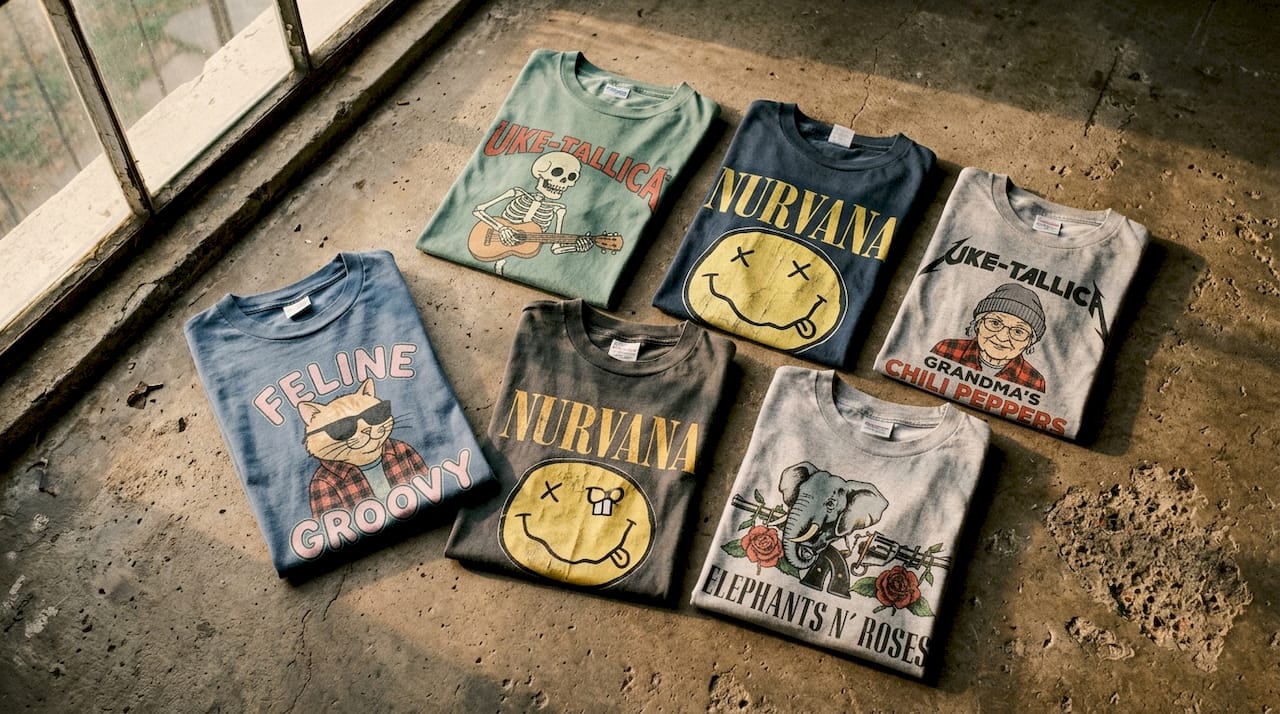
Classic examples include shirts sold outside concert venues in the 1980s and 1990s, often featuring artwork that the band itself never approved. Metallica, Iron Maiden, and Black Sabbath all had thriving bootleg shirt ecosystems around their tours. These shirts were not trying to fool anyone into thinking they came from the official merch table. They were cheaper, often more creative, and sometimes more interesting than what the band was actually selling inside the venue.
The designs on bootleg shirts range from playful parodies to straight-up logo lifts with minor colour changes. Some are genuinely beautiful pieces of outsider graphic design. Others are crude screen prints on thin cotton. The quality varies wildly because there is no quality control, no brand standard, and no accountability to the artist.
How do bootlegs differ from fakes and official merch?
The three categories of band shirts, official, bootleg, and counterfeit, are frequently confused, but they operate on entirely different principles. Official merchandise is licensed, produced under contract with the artist or their management, and sold through authorised channels such as venue merch tables, official online stores, or retailers like Hot Topic. It carries licensing information, consistent quality, and the artist’s approval.
Bootleg items are more creative and often obviously different from official designs. They cater to fans’ nostalgia and desire for something unique rather than attempting to deceive buyers into thinking they hold an official product. A bootleg Slayer shirt with a hand-drawn skull that never appeared on any official release is a bootleg. A shirt printed to look exactly like an official Slayer tour tee, with fake licensing tags and identical artwork, is a counterfeit.
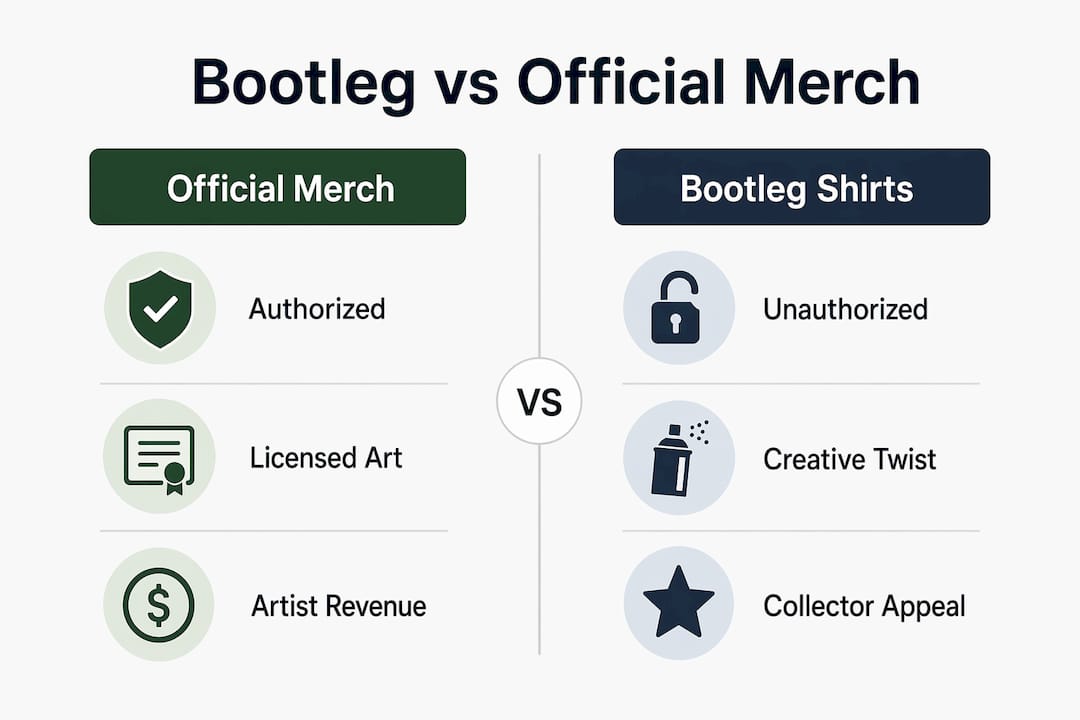
Counterfeit merch actively harms artists and consumers. It diverts revenue from the artist, deceives buyers who believe they are purchasing something genuine, and undermines the value of authentic collectibles. Bootlegs occupy a more complex position because they embrace their unofficial status through altered designs and creative twists.
| Category | Intent | Design | Legal status |
|---|---|---|---|
| Official merch | Authorised sale | Licensed artwork | Fully legal |
| Bootleg shirt | Creative expression | Altered or unofficial | Legally grey |
| Counterfeit shirt | Deceive the buyer | Copied to look genuine | Illegal |
Pro Tip: When buying second-hand band shirts, ask the seller directly whether the item is official, bootleg, or vintage tour stock. A seller who knows their product will answer without hesitation.
Why bootleg band shirts matter in music culture
Bootleg concert merchandise has always been more than just a cheap alternative to official stock. It represents a form of fan participation in the cultural life of a band. Phish fans built a thriving bootleg community around unofficial merchandise, treating it as a form of DIY artistic expression that existed alongside and sometimes in conversation with official releases. That community dynamic is not unique to Phish. It appears across heavy metal, punk, hip-hop, and indie scenes globally.
The cultural role of bootleg shirts reflects several intersecting forces in music fandom:
- Fan creativity: Bootlegs allow fans to express their relationship with a band in ways official merch never could, including parody, homage, and personal artistic interpretation.
- Accessibility: Official tour merch is expensive and often sells out. Bootlegs fill that gap for fans who want a wearable connection to a show or era.
- Nostalgia: Many bootleg shirts from the 1980s and 1990s are now sought-after collector items precisely because they capture a raw, unofficial energy that polished official merch lacks.
- Subculture identity: In scenes like thrash metal and hardcore punk, wearing a bootleg was sometimes a badge of authenticity, proof you were at the show or deep enough in the scene to find one.
- High and low fashion crossover: Bootleg band shirts have crossed into high fashion, with designers referencing or directly appropriating the aesthetic for runway collections.
The tension between fan creativity and artist rights is real and growing. Intellectual property enforcement is intensifying across the music industry, with labels and management companies filing injunctions and seizure orders at major events. HYBE, the management company behind BTS, pursued legal action against multiple parties selling unauthorised BTS merchandise ahead of US tour dates, seeking trademark infringement remedies. That level of enforcement signals that the legal and commercial stakes around unofficial band apparel have risen significantly.
How to spot a bootleg shirt: a practical checklist
Identifying a bootleg band shirt requires attention to physical detail, design context, and seller behaviour. Collectors who examine tag designs, stitching patterns, and wear evidence can usually distinguish a genuine vintage shirt from a modern reprint or a bootleg made to look old. Here is a practical process for evaluating any band shirt you are considering buying.
- Check the tag. Official shirts from specific eras carry recognisable tags. Single-stitch hem construction and particular tag designs help date shirts to the 1980s or early 1990s. A shirt claiming to be from a 1988 tour but carrying a modern Gildan tag is either a reprint or a fake.
- Examine the print quality. Bootlegs often show inconsistent ink coverage, slightly off-register colours, or designs that do not match any known official artwork. This is not always a negative, but it is a clear identifier.
- Look for licensing information. Official shirts carry copyright notices, licensing text, or official band merchandise branding on the tag or the shirt itself. The absence of any such information points toward bootleg or counterfeit status.
- Research the design. Cross-reference the artwork against known official releases, tour programmes, and collector databases. If the design does not appear in any official catalogue, it is almost certainly a bootleg.
- Assess the seller’s transparency. Educated buyers look for provenance and detailed photographs. A seller who refuses to photograph the tag, the stitching, or the full print is a significant red flag regardless of the price.
- Evaluate wear patterns. Genuine vintage shirts show natural, consistent fading and wear. Artificially distressed reprints often show wear in unnatural locations or with a uniform pattern that looks manufactured.
Pro Tip: Search the specific tour name and year on collector forums like Steve Hoffman Music Forums or dedicated Facebook groups before purchasing. Other collectors have often already documented what official shirts from that tour look like.
Understanding band tee authenticity is the single most valuable skill a collector can develop, and it applies equally to spotting bootlegs and genuine vintage pieces.
Value, legality, and ethics of owning bootleg shirts
Owning a bootleg band shirt is not illegal in most jurisdictions. Selling one is a different matter entirely. Bootleg shirts infringe on the trademark and copyright held by the artist or their label, which means commercial sale exposes the seller to legal action. Artists and labels take legal action against bootleg merchandise sellers to protect their trademarks, and enforcement has become more aggressive as the vintage and resale market has grown.
For collectors, the value question is nuanced:
- Historical bootlegs from the 1980s and 1990s often carry genuine collector value because they are rare, culturally significant, and represent a specific moment in a band’s history. A bootleg Metallica shirt from outside a 1986 Master of Puppets show is a piece of music history.
- Modern bootlegs produced today carry far less collector value. They are not rare, they lack historical context, and they exist in a market where enforcement is active.
- Misrepresented bootlegs are the real danger. A bootleg sold as an official vintage shirt is fraud, and buyers who pay premium prices for what turns out to be an unofficial print have limited recourse.
The ethical dimension is worth taking seriously. Bootleg items fill gaps that official merch does not cover, and many fans see them as a legitimate form of cultural participation. At the same time, artists and their teams invest in merchandise as a meaningful revenue stream, particularly for touring bands where merch sales can represent a substantial portion of income. Buying a bootleg from a commercial seller rather than an official source does divert that revenue. The distinction between a fan who made one shirt at home and a commercial operation printing thousands for profit matters both legally and ethically.
For anyone serious about licensed band shirts and understanding what separates official from unofficial, the collector community has developed detailed resources that go well beyond surface-level identification.
Key takeaways
Bootleg band shirts are unauthorised garments defined by creative intent rather than deception, and understanding that distinction separates informed collectors from buyers who get burned.
| Point | Details |
|---|---|
| Core definition | A bootleg shirt is unlicensed but not designed to deceive, unlike a counterfeit. |
| Cultural significance | Bootlegs represent fan creativity and nostalgia, especially in metal and punk scenes. |
| Identification skills | Check tags, stitching, print quality, and provenance before buying any vintage shirt. |
| Legal exposure | Selling bootleg shirts risks trademark and copyright infringement action from artists. |
| Collector value | Historical bootlegs from the 1980s and 1990s can hold genuine value; modern ones rarely do. |
My take on bootlegs after years in the vintage metal market
The bootleg conversation gets muddled because people conflate three very different things: fan-made one-offs, commercial bootleg operations, and outright counterfeits. In my experience handling vintage heavy metal shirts, the most interesting bootlegs are the ones that were clearly made by someone who loved the band. You can see it in the design choices, the weird colour combinations, the artwork that does not quite match anything official but somehow captures the spirit of the era better than the official shirt did.
What I find frustrating is the modern commercial bootleg market, which has nothing to do with fan culture and everything to do with profit. These operations print thousands of shirts, sell them at premium prices to people who do not know the difference, and contribute nothing to the culture. They also make life harder for legitimate collectors because they flood the market with items that look old but are not.
My honest advice: if you are buying bootlegs, buy them because you love the design and understand what you are getting. Do not pay vintage prices for a modern print. Learn to read a tag. Ask questions. The types of heavy metal shirts worth owning are the ones with a real story behind them, whether official, bootleg, or somewhere in between.
— David
Find genuine vintage metal shirts at Com
At Com, the focus is entirely on authentic vintage heavy metal shirts, ex-tour stock, and genuine deadstock from the bands and tours that defined the genre. Every piece in the catalogue has been assessed for authenticity, so you are never paying vintage prices for a modern reprint or a misrepresented bootleg. If you want a shirt with a real story behind it, the rare Metallica 1992 tour tee is exactly the kind of piece that defines what genuine tour stock looks like. Browse the full range of vintage heavy metal shirts and find something that belongs in a serious collection.
FAQ
What makes a bootleg shirt different from a fake?
A bootleg shirt is an unauthorised garment that does not attempt to pass as official merchandise, while a fake or counterfeit is designed to deceive the buyer into thinking they are purchasing a genuine product. Bootlegs typically feature altered or original designs; fakes copy official artwork exactly.
Are bootleg band shirts illegal to own?
Owning a bootleg shirt is generally not illegal in Australia or most other jurisdictions. Selling bootleg shirts commercially is a different matter, as it infringes on the artist’s trademark and copyright, and labels have pursued legal action against sellers.
How can I tell if a vintage band shirt is a bootleg?
Check the tag era, stitching construction, and whether the design matches any known official release. Single-stitch hems and period-correct tags are strong indicators of genuine vintage shirts, while absent licensing information and unverifiable artwork suggest a bootleg.
Do bootleg band shirts have collector value?
Historical bootlegs from the 1980s and 1990s can carry genuine collector value because of their rarity and cultural context. Modern commercial bootlegs rarely hold significant value because they lack historical provenance and are produced in large quantities.
What is the difference between bootleg concert merchandise and official tour merch?
Official tour merch is licensed, produced with the artist’s approval, and sold through authorised channels. Bootleg concert merchandise is produced without any licence or authorisation, often sold outside venues, and typically features designs the artist never approved.
Recommended
- Licensed band shirts explained: insider guide for collectors – Vintage Metal Store
- 7 Iconic Types of Heavy Metal T Shirts for Collectors – Vintage Metal Store
- 7 Types of Vintage Band Tees Every Collector Should Know – Vintage Metal Store
- Tribute band shirts: collector value & metal fan insights – Vintage Metal Store


