



TL;DR:
- Many vintage band T-shirts are fake, with licensed shirts bearing clear trademarks and copyright notices.
- Authentic shirts feature proper tags, quality prints, and provenance, distinguishing them from bootlegs.
- Licensing ensures merchandise authenticity, affecting a shirt’s value and historical significance to collectors.
Not every vintage tee bearing a famous logo is the real thing. Collectors are routinely fooled by bootlegs, unauthorised reprints, and tribute fakes that look convincing enough to command serious money. A licensed band shirt uses a band’s protected branding, including trademarked names and logos alongside copyrighted artwork and photography, with explicit permission from the rights holders through a formal licensing arrangement. For serious heavy metal collectors, understanding this distinction is the difference between owning a genuine artefact of music history and an expensive piece of cotton that holds zero resale value.
Table of Contents
- What does ‘licensed’ really mean for band shirts?
- Licensed vs bootleg: How collectors tell the difference
- Why licensing matters: More than just legal rights
- Nuances every collector should know: Edge cases and exceptions
- Why authenticity will only get more valuable: A collector’s truth
- Shop real licensed band shirts from legendary tours
- Frequently asked questions
Key Takeaways
| Point | Details |
|---|---|
| True licensing matters | An official band shirt is only licensed if the copyright or trademark owner has granted permission via a contract. |
| Spotting fakes saves money | Collectors use specific visual and legal cues to separate authorised merch from bootlegs. |
| Edge cases exist | Personal use and resale are treated differently under IP law and collector culture. |
| Value is rising | Licensed vintage shirts from iconic tours are becoming more valuable as authentic examples become scarcer. |
What does ‘licensed’ really mean for band shirts?
The word “licensed” gets thrown around loosely in collector circles, but it carries specific legal weight. When a band or their management authorises a merchandise company to produce shirts, they enter a formal contract granting defined permissions. That contract is the licence.
Two separate areas of intellectual property are typically involved. Trademarks protect the band’s name, wordmark, and logos. Think of the Iron Maiden logo or the Metallica typeface. These are registered marks, and using them without permission is trademark infringement. Copyright, on the other hand, protects the original artwork, album covers, and photography printed on the shirt. Eddie from Iron Maiden, for example, is copyrighted character artwork. A legitimate licensed shirt requires clearance on both fronts.
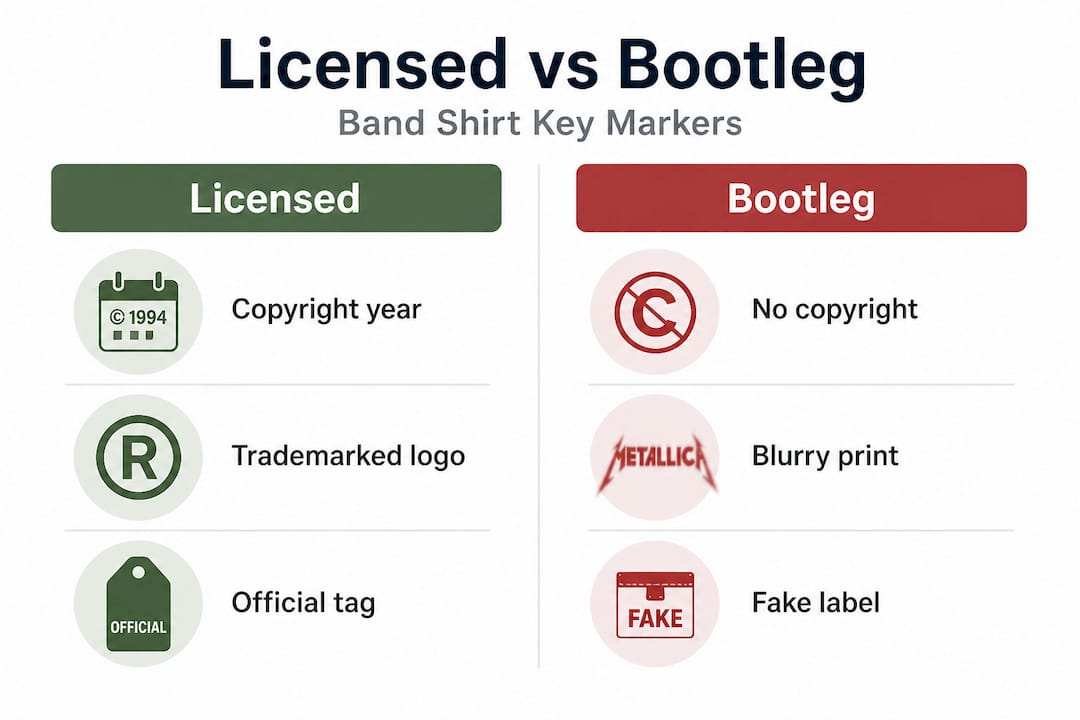
Licensing is a contract-based permission system where the licensor (the band or rights holder) grants a licensee the right to use the intellectual property for merchandise, typically within specific territories and product categories, while retaining quality control over how the brand is presented. This is why official shirts from major 1990s tours were produced by specific companies like Winterland, Brockum, and Giant. Each was an authorised licensee with a contract.
For collectors, this has real consequences. Understanding what a band tee actually is and how it differs from a generic printed shirt is the starting point for building a serious collection. Licensed shirts often have identifiable tags, copyright lines, and licensee branding that bootlegs simply cannot replicate accurately.
Key intellectual property elements on a licensed shirt:
- Trademarked band name and logo
- Copyrighted artwork or photography
- Licensee name and location (e.g. “Winterland Productions, San Francisco”)
- Copyright notice with year (e.g. © 1992 Metallica)
- Country of manufacture (often USA for genuine 1990s stock)
| Element | Licensed shirt | Unlicensed shirt |
|---|---|---|
| Copyright line | Present, accurate year | Missing or incorrect |
| Licensee tag | Named manufacturer | Generic or absent |
| Artwork clarity | Sharp, contract-approved | Often pixelated or off |
| Fabric weight | Typically heavier cotton | Often thin, low quality |
| Country of origin | Stated clearly | Vague or incorrect |
The collector value of a genuinely licensed shirt is tied directly to this provenance. It proves the shirt existed as part of an official campaign and that money from its sale reached the band.
Licensed vs bootleg: How collectors tell the difference
With licensing foundations clear, here’s how seasoned collectors reliably distinguish official shirts from counterfeits and dodgy reprints.
Rights holders and their merchandising partners actively enforce against bootlegs and unauthorised merchandise, which tells you everything about how seriously the industry treats the distinction. The enforcement happens because bootlegs genuinely erode both the band’s income and the integrity of the collector market.
There are several consistent physical markers that separate genuine licensed shirts from fakes. Bootleg shirts often get the small details wrong: the copyright year doesn’t match the tour, the licensee tag is absent or generic, the artwork resolution is slightly blurry because it was scanned from a photo rather than produced from original files. Learning to spot these inconsistencies takes time, but it’s the core skill of any serious collector.
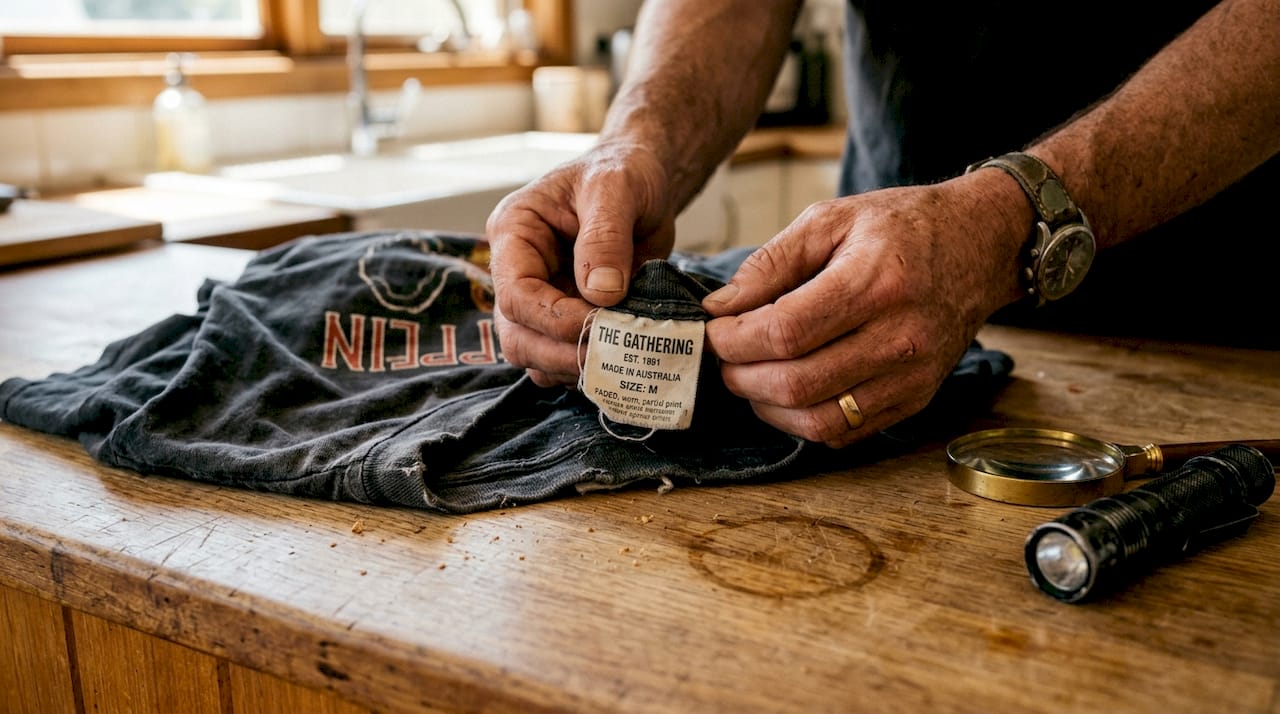
Understanding the different types of heavy metal T-shirts helps enormously here because ex-tour stock, deadstock, and second-hand official shirts each have different authentication markers. A deadstock shirt from a warehouse will feel and look different from a worn tour shirt that’s been washed many times, even if both are genuine.
5-step process for verifying a licensed shirt:
- Check the tag. Genuine 1990s shirts carry tags from known licensees. Research which company held the licence for that band and that tour. Brockum handled many major metal acts. Giant and Winterland also covered a large portion of the market.
- Read the copyright line. This is usually printed on the inside back of the shirt hem or on the tag itself. The year should match or precede the tour date. If a shirt claims to be from a 1992 tour but the copyright reads 1994, something is wrong.
- Assess the print quality. Official shirts used quality screen printing with proper registration. Colours are saturated and lines are crisp. Bootlegs often show colour bleeding, misaligned prints, or washed-out artwork.
- Verify the fabric. Genuine 1990s USA-made shirts commonly used Hanes Beefy-T or similar heavyweight blanks. They have a particular feel and weight that modern reprints rarely match. Check the country of origin label.
- Cross-reference with collector databases. Communities like the Metal Hammer archives, specialist collector forums, and resources like the heavy metal shirts buying checklist provide detailed references for known genuine shirts.
Pro Tip: Be cautious of sellers who describe a shirt as “vintage style” or “inspired by” rather than naming the original tour and licensee. These phrases are often signals that the shirt is a reprint or tribute, not authentic deadstock. Also check the authentic vintage band tees checks before buying anything at a premium.
Faded tags are a genuine collector trap. A bootleg manufacturer can artificially age a tag. Always look at the overall consistency of ageing: real wear shows across the entire shirt, not just the tag or the print.
Why licensing matters: More than just legal rights
Understanding how to spot authentic shirts leads directly into the bigger question: why does licensing matter for collectors, fans, and band culture?
Licensing isn’t just administrative paperwork. It’s the mechanism that connects a band’s creative identity to the physical objects their fans carry through life. When Metallica licensed their 1992 “Don’t Tread on Me” tour artwork to an official manufacturer, they were controlling exactly how their brand appeared in the world. That control is what makes the shirt meaningful.
Music merchandise requires careful management of IP rights and the negotiation of formal licensing agreements that define exactly what rights are granted and how the branding can be commercialised. For bands in the 1990s, merchandise revenue was often substantial, sometimes exceeding record royalties for major touring acts.
From a collector’s perspective, the benefits of owning a genuinely licensed shirt stack up quickly:
- Verified authenticity gives you a shirt with a documented chain of production
- Scarcity because licensed runs were finite, tied to a specific tour or release
- Resale value that holds or appreciates, particularly for iconic tours
- Cultural significance as a physical record of a moment in heavy metal history
- Band legacy support because your investment ultimately validated the band’s commercial ecosystem
“The market is increasingly distinguishing between shirts that were genuinely part of a band’s official output and those that were simply printed with a logo. Provenance is everything now.”
Rights holders take action against counterfeit merchandise with increasing frequency, which simultaneously protects the collector market and raises the stakes for anyone holding bootleg stock. If you’re building a collection for long-term value, unlicensed shirts are dead weight.
Explore vintage band tees and tour merchandise tips to understand exactly which tours produced the most sought-after licensed pieces. The 1990s were a golden era for major metal tours, and the shirts from that period represent some of the most valuable collectibles in the market today.
Nuances every collector should know: Edge cases and exceptions
Even with strong knowledge, some licensing cases live in the grey area. Let’s unpack the practical rules that catch many collectors out.
The most misunderstood edge case is the difference between personal use and commercial resale. Wearing an unlicensed shirt carries far lower legal risk than selling one, because infringement risk escalates sharply when commercial supply or consumer confusion about band endorsement enters the picture. If you’re buying shirts purely to wear and enjoy, you have more latitude. If you’re building a resale business, every shirt needs to be genuine.
Territory-specific licensing adds another layer of complexity. A shirt produced for a band’s Australian leg of a 1990s world tour may carry different licensee information than the USA version of the same shirt. Both can be genuinely licensed. Collectors sometimes dismiss the Australian or European variants as less authentic, but this reflects a misunderstanding of how territory licences work. In fact, territory-specific shirts from major tours can be rarer than their US counterparts, simply because smaller runs were produced.
Tribute and replica shirts occupy a separate, complicated space. A tribute band shirt, for example, celebrates a band’s music but does not carry the original band’s official licensing. These have their own collector value within niche communities, but they should never be misrepresented as official merchandise. Similarly, sample band T-shirts from the production process are rare, genuine artefacts but exist in a unique category because they were never meant for commercial release.
Key edge cases every 1990s tour tee collector should understand:
- Territory licences are legitimate and can produce rarer variants
- Sample shirts from official licensees are authentic but not retail stock
- Tribute shirts have collector value but must not be sold as official merchandise
- Deadstock shirts (never sold during the tour) often carry full original tags and are among the cleanest authenticity markers available
- Shirts printed after a tour ended using leftover artwork are still licensed if produced under the original contract
Pro Tip: Always ask the seller for any paperwork, tags, or provenance information they have. A reputable dealer in genuine deadstock will typically know the source of their stock, whether it came from a warehouse, a tour manager’s personal collection, or a former merchandise company employee. Vague sourcing is a red flag.
Why authenticity will only get more valuable: A collector’s truth
Here’s a view you won’t hear often enough: most collectors are still underestimating how sharply the market will divide between authenticated, licensed stock and everything else. We’re already seeing it happen.
The myth that “any old 1990s band tee is valuable” is being dismantled by the market itself. As more savvy collectors enter the space and more information becomes available, the premium is concentrating around shirts with verifiable provenance. A Pantera shirt with a Brockum tag and a clear 1994 copyright line is worth dramatically more than a shirt from the same era with an unidentifiable tag and a fuzzy print, even if both look “vintage” at a glance.
Digital authentication tools, including blockchain-based provenance tracking and high-resolution imaging databases, are beginning to enter the collectibles space. They aren’t mainstream yet for band shirts, but the direction is clear. Within a few years, collectors with documented shirts will have a significant advantage in the resale market.
Legal action against bootleg merchandise is also increasing. Rights holders are cracking down not just on manufacturers but on sellers. This puts pressure on the secondary market to clean up its act and it concentrates demand on genuinely licensed stock.
Our honest advice: start treating provenance as seriously as condition. A shirt in excellent condition with zero documentation is still a gamble. A shirt in good condition with a clear licensee tag, a copyright notice, and a known source is a genuine asset. The advantages of buying second hand band shirts from reputable sources are significant, because provenance is often traceable when you buy from experienced dealers rather than anonymous marketplace listings.
The collectors who will win over the next decade are the ones building relationships with trusted sources and treating authentication as non-negotiable, not optional.
Shop real licensed band shirts from legendary tours
If you’ve made it this far, you already think like a serious collector. Now the question is where to find the real thing without wasting money on fakes.
At Vintage Metal, we specialise in verified ex-tour stock and genuine deadstock from the greatest heavy metal tours in history. Every shirt in our catalogue has been assessed for authenticity, from licensee tags through to print quality and provenance. If you want a rare Metallica 1992 tour tee with the documentation to back it up, we have it. Browse our full range of rare heavy metal concert shirts or go straight to our vintage Metallica shirts collection. These are pieces of history, not reprints.
Frequently asked questions
What makes a band shirt officially licensed?
A band shirt is officially licensed when the design uses the band’s trademarked names, logos, or copyrighted artwork with formal permission from the rights holders, documented through a licensing arrangement. The licence typically names the manufacturer and specifies the territories and products covered.
How do I tell if my vintage band tee is licensed or a bootleg?
Check for an identifiable licensee tag, a copyright notice with a matching year, and sharp screen-printed artwork on period-appropriate fabric. Rights holders actively enforce against unauthorised products, so genuine licensee information is a strong positive signal worth researching carefully.
Is owning or wearing an unlicensed band shirt illegal?
Personal wear carries minimal legal risk, but commercial resale significantly raises the infringement risk because selling unlicensed shirts can create consumer confusion about official band endorsement and constitutes commercial supply of infringing goods.
Why are 1990s tour shirts so collectible?
1990s licensed tour shirts were produced in finite runs by contracted licensees, giving them built-in scarcity and documented authenticity. As rights holders increasingly enforce against fakes, the gap in value between genuine licensed stock and unlicensed alternatives continues to widen, making verified originals more sought after every year.
Recommended
- 7 Iconic Types of Heavy Metal T Shirts for Collectors – Vintage Metal Store
- Sample band t-shirts: Rare finds and collector value – Vintage Metal Store
- Tribute band shirts: collector value & metal fan insights – Vintage Metal Store
- Why old band shirts cost more: a collector’s value guide – Vintage Metal Store


